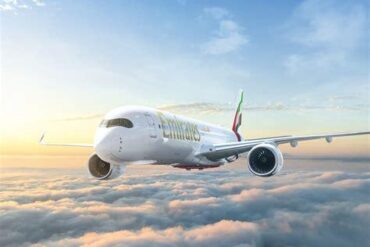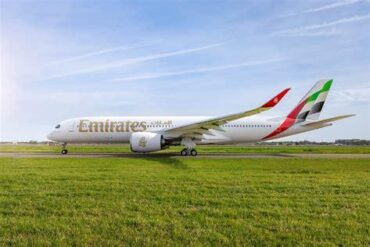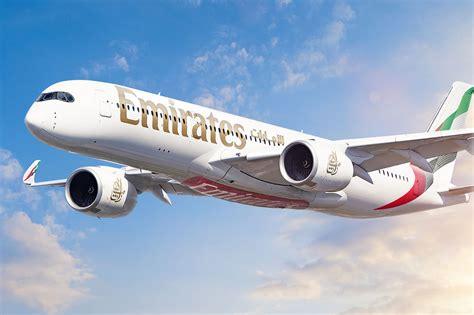
Emirates is preparing to make a significant change to one of its long-haul routes between the Middle East and the United States, replacing the Boeing 777-200LR with the Airbus A350-900 on its daily Dubai–Orlando service. The aircraft change is scheduled to take effect on November 1, 2026, giving passengers on the lengthy nonstop connection between Dubai International Airport (DXB) and Orlando International Airport (MCO) access to one of Emirates’ newest aircraft.
The move is notable because the A350 has so far had only limited exposure on Emirates’ US network. Although the airline has already used the type on an American route, that deployment was temporary. The Orlando operation will therefore represent the first long-term Emirates A350 service to the United States, marking an important step in the aircraft’s introduction across the carrier’s international network.
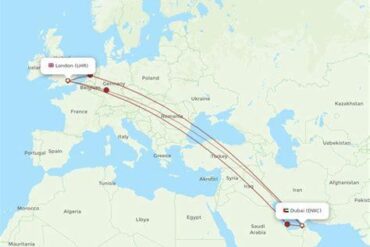
The Dubai–Orlando route covers roughly 7,800 miles and typically requires around 16 hours of flying time westbound, depending on winds and routing. Emirates has operated the route with the Boeing 777-200LR, an aircraft specifically associated with very long-range operations, but the A350-900 brings a newer cabin, different seating arrangements, and additional premium-economy capacity to the route.
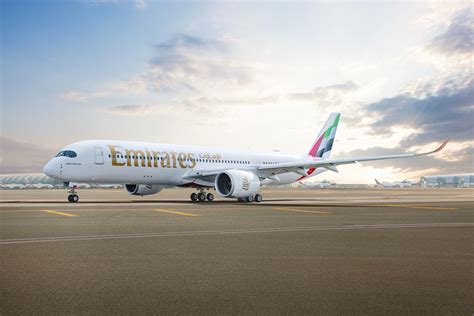
Emirates Airbus A350-900 Takes Over Dubai–Orlando Route
According to the latest schedule change, Emirates will introduce the A350-900 on the daily EK219/EK220 rotation beginning November 1, 2026. EK219 is scheduled to depart Dubai at 3:05 AM local time, arriving at Orlando International Airport at 10:20 AM the same day. The timing allows passengers to leave the Emirates hub during the early morning and reach central Florida before midday.
The return flight, EK220, is scheduled to depart Orlando at 8:20 PM local time following approximately a ten-hour turnaround. It will operate overnight toward the Middle East and is scheduled to arrive in Dubai at 7:10 PM the following day. The schedule gives the service a familiar long-haul pattern, with the westbound journey taking place largely during daylight hours and the return flight crossing the Atlantic overnight.
The aircraft change is particularly interesting because the Boeing 777-200LR currently assigned to the route has 276 seats, while Emirates’ A350 configurations contain between 298 and 312 seats. Despite being smaller than some of Emirates’ larger widebody aircraft, the A350 can therefore provide more seats on the Orlando service while offering a substantially newer passenger cabin.
First Long-Term Emirates A350 Service to the United States
The Orlando deployment carries additional significance because Emirates has been relatively selective about where it has sent its A350-900. The airline temporarily introduced the aircraft on its Dubai–Boston service in April 2026, replacing the Boeing 777-300ER for 12 rotations before returning the route to the Triple Seven.
That Boston deployment demonstrated that Emirates was willing to use the A350 on US routes, but its short duration did not establish a permanent A350 presence in the American market. Orlando changes that equation. From November, the A350 is scheduled to become the regular aircraft on the route, making Florida the aircraft’s first sustained US destination for Emirates.
The timing also reflects the rapid growth of the airline’s A350 fleet. Emirates currently has 27 A350s in its fleet, according to fleet data cited in the reference material, with another 46 aircraft on order. As more aircraft arrive, Emirates has increasing flexibility to introduce the type on established routes rather than limiting it to new services or temporary substitutions.
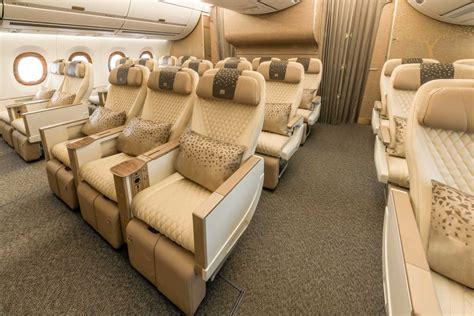
What Passengers Get on Emirates’ A350
One of the biggest changes for Orlando passengers will be inside the aircraft. Emirates operates two A350-900 seating configurations, identified as 359G and 359U, with both offering three classes of service.
The 359G layout contains 32 Business Class seats, 21 Premium Economy seats, and 259 Economy Class seats, for a total of 312 passengers. The 359U configuration also has 32 Business Class seats but increases Premium Economy to 28 seats while reducing Economy to 238 seats, resulting in 298 seats overall.
The most important Business Class difference concerns seat access. Emirates’ A350 uses a 1-2-1 Business Class arrangement, meaning every passenger has direct access to the aisle. That is a meaningful change from the 777-200LR configuration previously used on the Orlando route, where Business Class was arranged in a 2-2-2 layout.
For passengers seated in the window positions, the difference is particularly noticeable. On the A350, travelers do not need to climb over another passenger to reach the aisle. The newer aircraft also provides a less densely configured Premium Economy and Economy cabin, with seven seats across in Premium Economy and nine across in Economy, compared with eight and ten respectively on the 777-200LR.
Why Emirates Is Changing the Aircraft on Orlando
The aircraft swap comes against an interesting backdrop for the Orlando route. Cirium data cited in the reference material shows that Emirates filled approximately 69.87% of the seats offered between Dubai and Orlando during the 12 months ending June 2026.
That figure indicates that the route has not historically achieved the same level of seat utilization as some of Emirates’ stronger long-haul markets. Introducing the A350 could give the airline another tool for making the service more attractive without changing its daily frequency.
The newer aircraft also allows Emirates to introduce its Premium Economy product to more travelers. Emirates Chairman and CEO Sheikh Ahmed bin Saeed Al Maktoum previously highlighted the A350’s additional capacity and its role in expanding access to the airline’s latest inflight products.
For travelers between Dubai and Florida, the result will be a major aircraft change rather than a change in the basic city pair. The daily nonstop connection remains, but from November 2026, passengers will increasingly associate the route with Emirates’ newest-generation widebody rather than the long-range 777-200LR.
A New Chapter for Emirates’ A350 Network
The Dubai–Orlando deployment is therefore more than a routine equipment substitution. It establishes the Airbus A350-900 as a long-term aircraft on an Emirates US route, while giving the carrier additional opportunities to showcase its latest cabin products on one of its longest American services.
With dozens more A350s still scheduled for delivery, Orlando is unlikely to be the final US destination to see the aircraft. For now, however, the November 1, 2026 change gives passengers on this approximately 16-hour Emirates route a new way to cross the Atlantic, with a quieter-generation aircraft, direct-aisle-access Business Class, and a modern three-class cabin replacing the veteran 777-200LR.