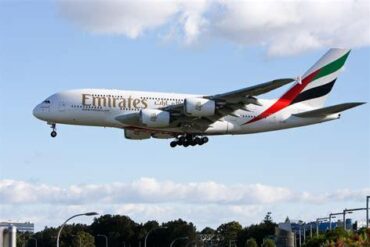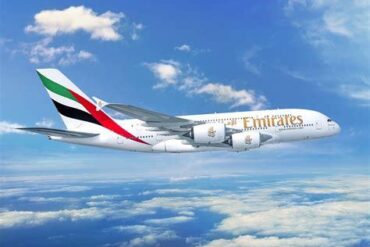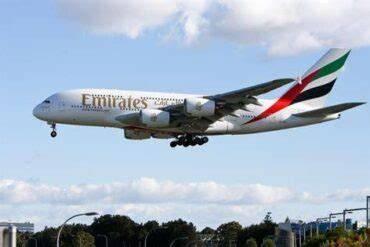
Emirates has finally brought the Airbus A380 back to Osaka Kansai International Airport (KIX), restoring one of its most important Japan routes after a 185-day absence. The return marks another significant step in the airline’s gradual recovery from the severe disruption that affected its long-haul network earlier in 2026. For passengers traveling between Dubai International Airport (DXB) and Osaka, the iconic double-decker is once again the aircraft connecting the two cities every day.
The restored service is particularly significant because Osaka was among the Emirates destinations where the A380 return was repeatedly delayed. Although the Dubai–Osaka route itself remained operational, the airline relied on the Boeing 777-300ER while the much larger A380 stayed away. That meant Emirates preserved the connection but operated with a different capacity profile. The latest schedule changes finally put the superjumbo back on the route.
The timing also matters for Emirates’ broader A380 recovery. The airline remains by far the world’s largest operator of the type and continues to invest heavily in its flagship aircraft. Osaka’s return demonstrates that Emirates is not simply maintaining the A380 as a legacy aircraft; it is actively redeploying the superjumbo where demand and network requirements justify its considerable capacity.
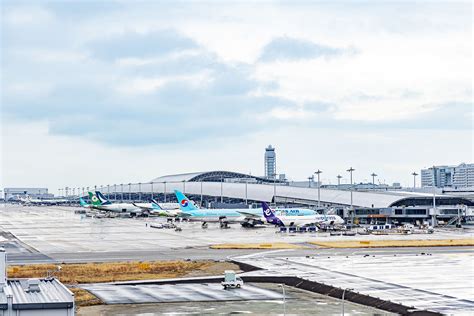
Emirates Airbus A380 Returns to Osaka
The restored service is operated as EK316 from Dubai to Osaka and EK317 from Osaka to Dubai. Emirates is scheduled to operate the A380 on the route daily, giving travelers a consistent double-decker experience in both directions.
EK316 leaves Dubai at 3:00 a.m. and arrives at Kansai International Airport at 5:15 p.m. local time, with the flight taking just over nine hours under the current schedule. The return EK317 departs Osaka at 11:45 p.m. and arrives in Dubai at 4:35 a.m. the following day.
The westbound journey can become considerably longer during the winter season. With prevailing winds affecting the flight across Asia and toward the Middle East, the Osaka–Dubai sector can stretch beyond 11 hours during the peak of winter. That makes this more than simply another A380 deployment: it is a substantial long-haul operation connecting one of Japan’s major metropolitan regions with Emirates’ global hub.
For passengers, the aircraft itself is arguably as important as the schedule. Emirates’ A380 has become closely associated with spacious cabins, multiple classes of service and the airline’s distinctive onboard experience. Depending on the configured aircraft, passengers can access Economy Class, Premium Economy, Business Class and First Class, while eligible passengers can also experience the famous A380 onboard bar and shower facilities.
A Route With More Than Two Decades of History
Emirates’ relationship with Osaka predates its A380 operation by many years. The airline launched its Dubai–Osaka service in 2002, making Kansai its first destination in Japan. The route established an important nonstop connection between Japan and the Gulf region at a time when Emirates was rapidly expanding its international network.
The A380 arrived much later. Emirates introduced the superjumbo on the Osaka route in 2018, initially using a 489-seat, three-class configuration. The larger aircraft was selected because demand had grown sufficiently to support a major capacity increase. Emirates said at the time that moving to the A380 increased capacity on the route by approximately 38%.
That first chapter of A380 service was interrupted by the COVID-19 pandemic. Emirates suspended passenger operations on the route in March 2020 as international aviation entered an unprecedented period of disruption. When Osaka returned to the Emirates network in July, the airline initially relied on the smaller Boeing 777-300ER while it rebuilt its global schedule.
The A380 eventually returned to Kansai in June 2024, as demand strengthened and anticipation surrounding Expo 2025 Osaka created additional reasons to increase capacity. Emirates deployed a refurbished four-class A380 featuring Premium Economy, adding approximately 910 seats per week compared with the 777-300ER it replaced.
That makes the latest restoration the third return of A380 service to Kansai, highlighting just how important Osaka has become within Emirates’ Japan strategy.

Why the 11-Hour Osaka Route Matters
The Dubai–Osaka route is strategically valuable because it connects Japan’s Kansai region directly with Emirates’ enormous global network. Dubai functions as a major transfer point for passengers traveling between Japan and destinations across Europe, Africa, the Middle East and beyond.
The A380 is particularly well suited to routes where Emirates expects strong demand but does not necessarily want to keep adding additional daily frequencies. A single A380 movement can transport significantly more passengers than a typical widebody aircraft, allowing the airline to increase seat availability without requiring another takeoff and landing slot.
This becomes especially relevant at airports such as Kansai, where capacity, scheduling and international connectivity all influence the economics of long-haul service. The A380 allows Emirates to concentrate substantial passenger capacity into one daily rotation while maintaining a relatively simple schedule.
The restoration also sends an important signal about Osaka’s place in the Emirates network. Rather than reducing its commitment after the prolonged disruption, the airline has chosen to put its largest passenger aircraft back on the route.
Seven Emirates A380 Destinations Are Still Waiting
Osaka’s return is encouraging, but Emirates’ A380 network has not yet returned completely to its earlier configuration. Seven destinations that received the A380 in September 2025 do not have the aircraft this September, although none has lost Emirates service altogether.
Instead, the airline is using Boeing 777-300ER aircraft on these routes. Copenhagen, Glasgow, Prague and Houston are currently scheduled to receive daily 777-300ER service. Washington Dulles also retains a daily 777, while Düsseldorf receives two daily 777-300ER flights. Moscow Domodedovo is being served with three daily 777-300ER flights.
The numbers reveal an important distinction. Emirates has not simply removed capacity from these markets. In several cases, it has increased the number of flights to compensate for the absence of the A380.
Moscow is the clearest example. The city had two daily A380 departures from Dubai in September 2025, while the current schedule provides three daily 777-300ER departures. Düsseldorf has similarly moved from one daily A380 flight to two daily 777-300ER flights.
That strategy gives Emirates greater scheduling flexibility while it continues rebuilding its A380 fleet deployment. It also demonstrates why looking only at aircraft type can sometimes produce a misleading picture of an airline’s capacity decisions.
A380 Returns Accelerate in October and November
The remaining A380 gaps are already scheduled to narrow. Copenhagen, Glasgow, Prague and Moscow are expected to regain daily A380 service from October 1. Moscow will continue to retain one additional 777-300ER flight even after the A380 returns, creating a potentially larger overall capacity offering than it had a year earlier.
The next stage arrives in November. Emirates plans to restore daily A380 service to Houston George Bush Intercontinental Airport and Washington Dulles International Airport. Düsseldorf is also scheduled to regain the superjumbo, with two daily A380 flights planned.
These dates should nevertheless be treated as scheduled targets rather than permanent guarantees. Emirates has already moved several restoration dates during 2026, with some planned summer returns subsequently postponed as the airline continued using 777-300ER aircraft.
Emirates Is Also Rebuilding Its Japan Network
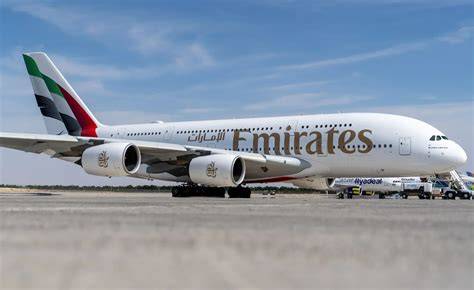
The A380’s return to Osaka is only part of Emirates’ wider Japanese recovery. The airline currently operates three daily flights to Japan: a daily A380 to Osaka, a daily A380 to Tokyo Narita Airport and a daily Boeing 777-300ER to Tokyo Haneda Airport.
That represents 21 weekly flights, but Emirates’ original plans called for a larger Japanese operation.
The airline had announced a second daily Narita service using a retrofitted four-class 777-300ER. The additional EK320/EK321 rotation was originally planned for May 1, which would have lifted Emirates to 28 weekly flights and more than 22,500 weekly seats between Dubai and Japan.
That expansion was delayed by the broader disruption and is now scheduled for October 26. If the additional Narita frequency launches as planned, Emirates will finally reach the four-daily-flight Japan schedule it had originally targeted.
The combination of Osaka’s A380 restoration and the planned second Narita rotation therefore provides a much clearer picture of the airline’s intentions. Japan remains a substantial market rather than a network being gradually downsized.
Emirates Continues Investing in the Superjumbo
The return to Osaka also fits into Emirates’ enormous investment in its A380 fleet. By July, 47 Emirates A380s had completed full cabin refurbishments under the airline’s approximately $5 billion retrofit program, which ultimately covers 110 A380s and 109 Boeing 777s.
That investment is difficult to reconcile with the idea that the A380 is simply being kept alive until retirement. Emirates is instead modernizing a large portion of its superjumbo fleet and giving the aircraft an extended role in its long-term network.
The airline has repeatedly emphasized the popularity of the A380 among customers. Its spacious cabin, distinctive two-deck layout and premium onboard features have made it one of the most recognizable aircraft in commercial aviation.
For Emirates, the economics are also compelling on the right routes. When demand is high enough, an A380 can provide enormous seat capacity through a single daily flight. That makes it particularly useful at major international airports where additional frequencies may be less practical or less valuable than deploying a larger aircraft.
What Osaka’s A380 Return Means
The return of the Emirates Airbus A380 to Osaka is therefore more significant than a simple aircraft swap. It restores a flagship aircraft to one of Japan’s most important international gateways, increases available capacity and strengthens the direct connection between Kansai and Dubai.
It also represents another piece of Emirates’ post-disruption network reconstruction falling into place. The airline has retained service to destinations that temporarily lost their A380s, often using additional 777 frequencies to protect connectivity. Now, as more A380s return to service, Emirates can progressively restore the capacity structure that existed before the disruption.
For passengers flying between Osaka and Dubai, the result is straightforward: the A380 is back, operating daily on one of Emirates’ major long-haul routes. With further A380 restorations planned across Europe and North America and another expansion in Japan expected later in October, the world’s largest A380 operator is steadily putting its superjumbo network back together—one major route at a time.