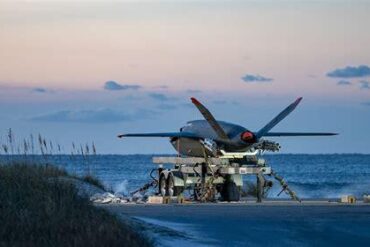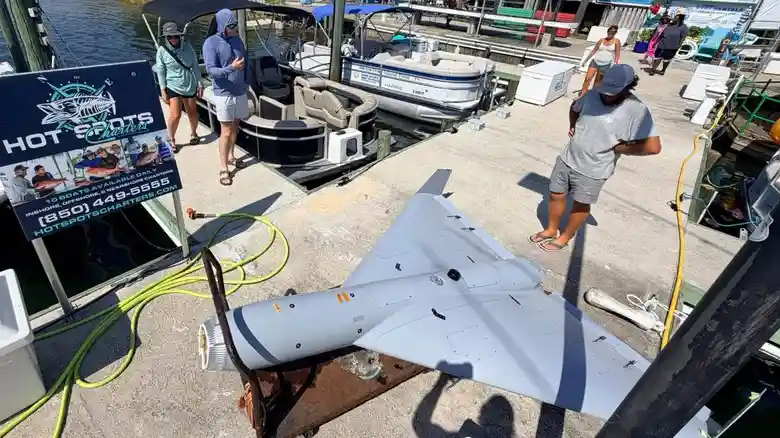
The waters off Florida produced an extraordinary catch when a fishing charter recovered a US Air Force attack drone that had recently impacted the sea during a routine test near Eglin Air Force Base. What initially looked like an unusual piece of equipment turned out to be a LUCAS one-way attack drone, a system developed as the United States adapts to the rapidly changing realities of modern warfare.
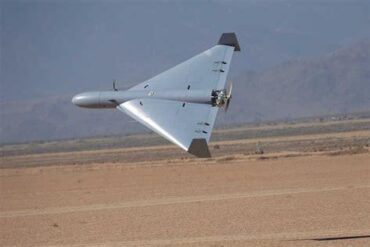
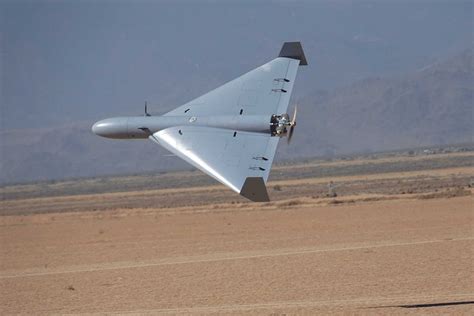
The discovery is notable because LUCAS is closely related to the FLM 136 target drone developed by SpektreWorks and designed with characteristics resembling Iran’s HESA Shahed-136. The Shahed has become one of the most recognizable one-way attack drones used in the Russia-Ukraine war, where relatively inexpensive unmanned aircraft have demonstrated how mass-produced systems can influence battlefield operations.
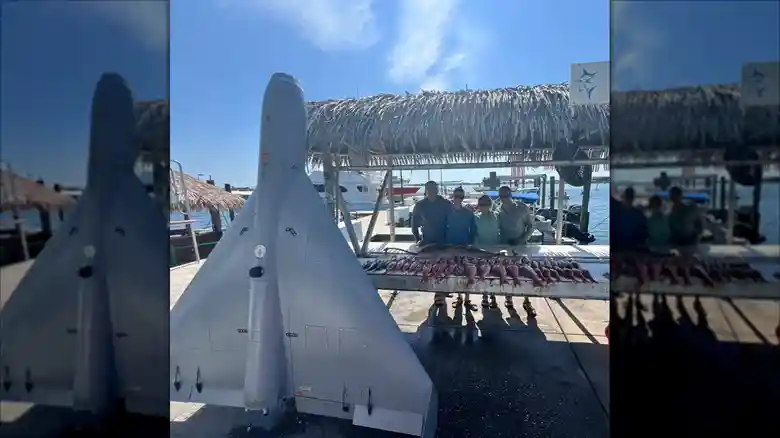
Florida Fishing Charter Finds Lost Military Drone
According to the reference report, a public affairs spokesperson for Eglin Air Force Base said the LUCAS drone impacted the water during a routine test. The incident occurred two days before the fishing charter discovered the aircraft, turning an ordinary day on the water into an unexpected encounter with a piece of developing military technology.
The charter later stated on Facebook that the US Army recovered the drone. Military outlets subsequently confirmed the recovery, adding an unusual ending to what could otherwise have been an ordinary test-flight mishap.
The drone’s recovery also provides a rare glimpse into a weapons program that is normally kept away from public view. Unlike conventional military aircraft, a relatively compact one-way attack drone can be inexpensive enough to accept losses during testing and potentially during combat.
LUCAS Shows America’s Changing Drone Strategy
The Low-cost Uncrewed Combat Attack System, or LUCAS, reflects a significant change in how the US military approaches unmanned warfare. The United States has operated armed drones for decades, with the MQ-1 Predator becoming an important armed platform after its first weaponization in 2001.
LUCAS belongs to a different category. Rather than carrying expensive sensors and returning to base, a one-way attack drone is designed to reach a target and destroy itself. The approach emphasizes low cost, range, mass production, and expendability, characteristics that have become increasingly important as drones proliferate across modern battlefields.
The US reportedly began using LUCAS drones on February 28, 2026, after only eight months of development. Reported government costs range from approximately $35,000 to $55,000 per aircraft, depending on the source and accounting involved.
From Battlefield Lessons to American Testing
The LUCAS program illustrates how combat experience overseas can influence American weapons development. The US military has traditionally relied heavily on sophisticated and expensive aircraft, but the spread of inexpensive drones has created pressure to develop systems that can be deployed in much greater numbers.
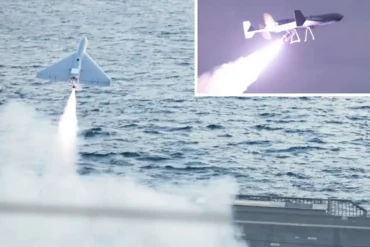
The US Navy has also tested the LUCAS concept, successfully launching the drone from a warship in December 2025. That demonstration suggests the system is being considered beyond land-based operations.
For Florida’s fishermen, however, the program became real in a much more unexpected way: a lost military drone surfaced as an extraordinary catch. The recovery offered a rare physical reminder that the next generation of warfare is increasingly being shaped by small, expendable unmanned aircraft rather than only by traditional combat jets and missiles.