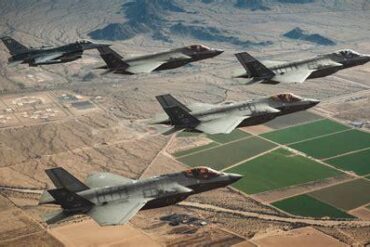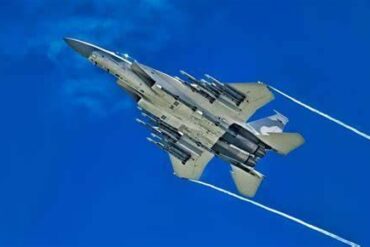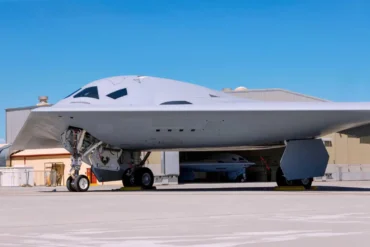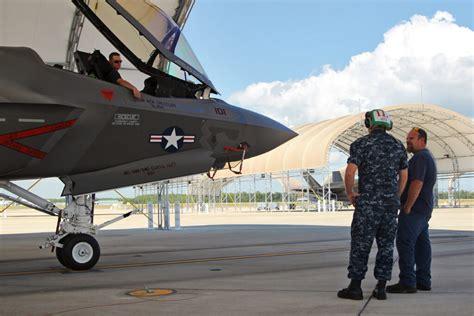
Eglin Air Force Base is not simply one of the largest military installations in the United States—it is one of the most important centers of defense innovation anywhere in the world. Located in northwest Florida, the base combines an immense testing range, world-class laboratories, elite personnel, and decades of operational experience into a single military ecosystem capable of transforming experimental technologies into combat-ready capabilities. While advanced stealth aircraft, precision-guided weapons, and cutting-edge electronic warfare systems often receive the spotlight, every one of those capabilities must first prove itself somewhere. For countless Air Force programs, that place is Eglin Air Force Base.
Unlike conventional military bases that primarily focus on housing operational units, Eglin functions as the United States Air Force’s primary laboratory for developing, testing, evaluating, and refining the systems that define modern warfare. Every missile, bomb, sensor, communication network, guidance package, electronic warfare suite, and integrated combat system must survive exhaustive testing before entering operational service. The ability to conduct those evaluations on an enormous scale gives Eglin an advantage that few military facilities worldwide can rival.
Its reputation as an “unstoppable” installation is not built upon defensive fortifications alone. Instead, it comes from an unmatched ability to accelerate military innovation while reducing operational risk. Whether evaluating next-generation precision weapons, testing network-centric combat systems, or validating entirely new concepts for multi-domain warfare, Eglin continuously ensures America’s technological advantage remains several steps ahead of potential adversaries.
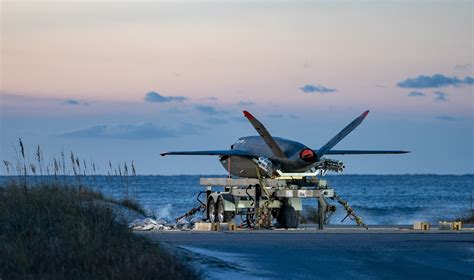
A Military Installation Built on Extraordinary Scale
Perhaps the most remarkable characteristic of Eglin Air Force Base is its sheer size. Covering approximately 726 square miles (1,875 square kilometers) of land, the installation occupies an area larger than many American cities and even some independent countries. More than seventy dedicated testing and training areas are distributed throughout this enormous property, allowing multiple complex military activities to occur simultaneously without interfering with one another.
The scale extends far beyond its physical boundaries. Eglin manages more than 130,000 square miles of controlled airspace over the Gulf of Mexico together with approximately 123,000 square miles of water testing range. This unique combination of land, sea, and air creates one of the largest integrated military proving grounds anywhere on Earth.
Such enormous operating space enables engineers and test crews to conduct complete end-to-end evaluations of sophisticated weapon systems. Rather than examining isolated components inside laboratories, they can observe an entire mission—from aircraft takeoff and target acquisition to weapon release, flight trajectory, terminal guidance, and final impact. This comprehensive testing environment produces far more realistic performance data than smaller facilities could ever achieve.
The geographical isolation also contributes significantly to operational flexibility. Sensitive weapons programs, classified aircraft systems, electronic warfare evaluations, and live-fire exercises can proceed with minimal interference from civilian air traffic while maintaining exceptionally high levels of safety.
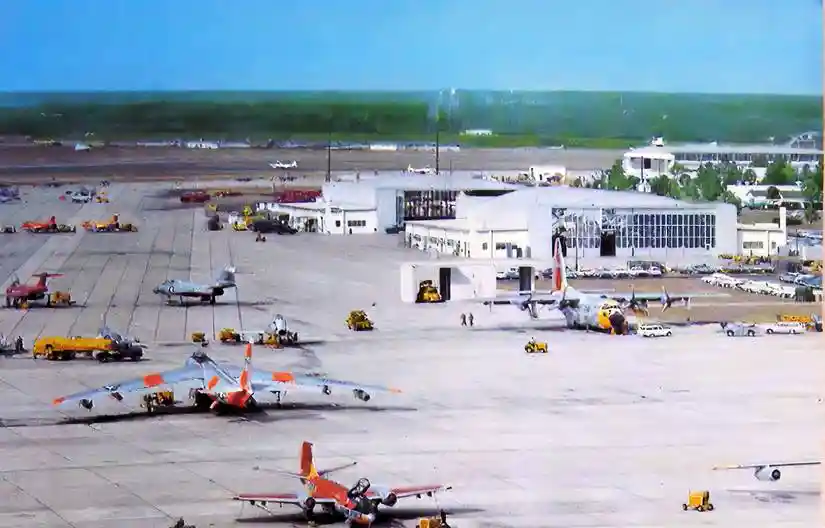
From World War II Origins to America’s Premier Test Center
Eglin’s history reflects the evolution of American airpower itself. During the buildup before World War II, military planners recognized the urgent need for an isolated location capable of supporting aircraft armament testing and aerial gunnery training. In June 1940, land from the Choctawhatchee National Forest was transferred to the War Department, establishing what would become one of the Air Force’s most strategically valuable installations.
Throughout World War II, thousands of pilots trained across Eglin’s extensive ranges while engineers continuously refined aircraft weapons and bombing techniques. The base played an important role in developing tactics against German V-1 flying bomb launch sites and helped improve numerous combat procedures that would later support Allied operations across Europe.
Following the war, the beginning of the Cold War dramatically expanded Eglin’s responsibilities. Aircraft became faster, missiles more sophisticated, and electronics increasingly important. Testing individual bombs was no longer sufficient; engineers needed facilities capable of evaluating entire integrated combat systems.
This transformation eventually led to the establishment of the Air Force Armament Center and later the 96th Test Wing, which today serves as the Air Force’s premier developmental testing organization.
The 96th Test Wing Turns Innovation Into Combat Capability
At the center of Eglin’s operations is the 96th Test Wing, arguably one of the most technically sophisticated organizations within the United States Air Force. Its mission extends far beyond simply recording flight data or conducting isolated experiments.
Instead, the Wing manages the complete developmental testing lifecycle for countless military programs. Engineers become involved during the earliest stages of system development, helping identify design challenges before prototypes even reach the runway. As projects mature, pilots, maintainers, analysts, software specialists, and weapons experts collaborate to validate every aspect of system performance.
Every flight generates enormous quantities of telemetry. Sensors continuously monitor aircraft performance, weapon guidance accuracy, electronic emissions, structural loads, engine behavior, communications, navigation systems, and environmental conditions. Teams analyze this information in extraordinary detail to identify weaknesses that could become critical during combat.
Unlike operational squadrons whose primary mission is combat readiness, the 96th Test Wing intentionally pushes aircraft and weapon systems beyond their expected operating limits. Engineers deliberately explore performance boundaries because discovering limitations during testing is far preferable than discovering them during wartime.
This rigorous process significantly improves reliability before new capabilities reach frontline units.
Why Testing Matters More Than Building Advanced Weapons
Modern military technology is extraordinarily complex. A precision-guided bomb must communicate with aircraft computers, satellite navigation systems, targeting pods, onboard sensors, mission planning software, and command networks before successfully reaching its target.
Every individual subsystem may function perfectly on its own while still experiencing unexpected problems when integrated together. Eglin exists specifically to identify these issues.
The installation evaluates:
- Precision-guided munitions
- Electronic warfare systems
- Advanced radar technologies
- Navigation and positioning equipment
- Aircraft avionics
- Command-and-control networks
- Countermeasure systems
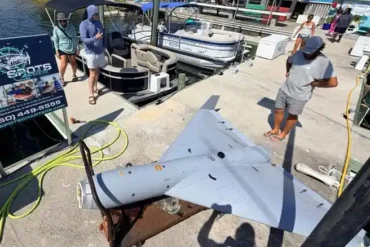
- Unmanned aerial vehicles
- Sensor integration technologies
- Software-driven mission systems
Instead of assuming new technology will work under battlefield conditions, Eglin requires every capability to prove itself repeatedly across increasingly demanding scenarios.
The Eglin Gulf Test Range Creates Realistic Combat Conditions
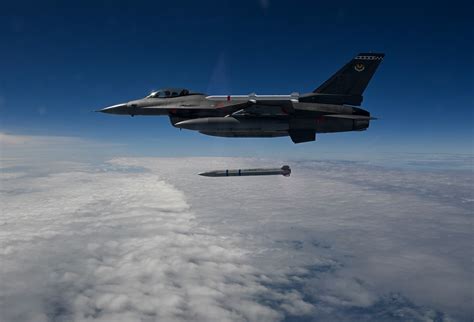
One of Eglin’s greatest strategic advantages is the Eglin Gulf Test and Training Range, which stretches across enormous portions of the Gulf of Mexico.
Unlike traditional weapons ranges that primarily support bomb drops, the Gulf Test Range enables complete mission simulations involving aircraft, ships, satellites, radar installations, electronic warfare assets, and multiple command centers operating simultaneously.
This allows developers to observe how systems behave within realistic operational environments rather than carefully controlled laboratory conditions.
Weapons can be tracked from release through target impact using advanced telemetry stations distributed across land and sea. Radar systems monitor every phase of flight while engineers collect enormous datasets describing performance, guidance accuracy, aerodynamic behavior, electronic signatures, and communications reliability.
These capabilities allow military planners to understand not only whether a weapon functions correctly but precisely how and why it performs under varying operational circumstances.
Multi-Domain Warfare Demands Multi-Domain Testing
Modern conflicts no longer occur exclusively in the air, on land, or at sea. Military operations now integrate cyber warfare, satellite communications, electronic attack, intelligence gathering, autonomous systems, and artificial intelligence into a single operational framework.
Recognizing this shift, Eglin established the Multi-Domain Test Force (MDTF) to evaluate how future military systems function across every operational domain simultaneously.
Rather than testing aircraft independently, MDTF exercises examine complete combat ecosystems.
Aircraft exchange targeting information with satellites. Naval vessels communicate with airborne sensors. Cyber specialists attempt to disrupt friendly networks while electronic warfare teams evaluate signal resilience. Artificial intelligence assists command decisions as operators assess overall mission effectiveness.
Exercises such as Emerald Flag, Orange Flag, Black Flag, and Gray Flag replicate operational environments where every system must interact seamlessly despite contested conditions.
This approach reflects the reality that tomorrow’s wars will depend less upon individual platforms and far more upon integrated networks capable of sharing information instantly across multiple domains.

World-Class Facilities Expand the Boundaries of Military Testing
Eglin’s extensive infrastructure allows engineers to evaluate technologies under conditions impossible to reproduce elsewhere.
Among its most famous facilities is the McKinley Climatic Laboratory, capable of exposing full-sized aircraft to some of the harshest environmental conditions imaginable. Aircraft can experience Arctic temperatures, tropical humidity, heavy snow, freezing rain, intense desert heat, and severe icing without ever leaving the laboratory.
Testing inside controlled environments enables engineers to discover weaknesses that could otherwise remain hidden until aircraft encounter extreme weather during operational deployments.
Additional facilities specialize in areas including:
- Guided weapon seeker evaluation
- Electro-optical sensor testing
- Infrared signature analysis
- Radio-frequency spectrum evaluation
- Electronic warfare validation
- Integrated mission software testing
- Command-and-control network analysis
- Telemetry processing and data fusion
Each laboratory contributes another layer of confidence before equipment enters military service.
Santa Rosa Island Extends Testing Beyond Traditional Boundaries
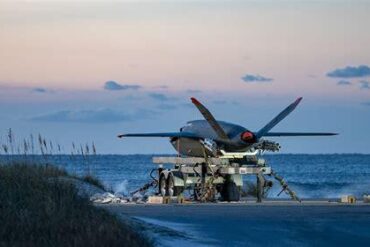
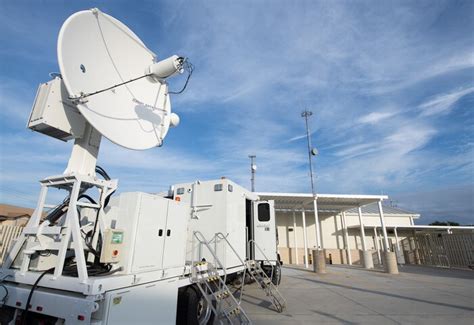
Santa Rosa Island serves as another essential component of Eglin’s testing ecosystem. Its instrumentation towers, tracking equipment, and open-range facilities support highly realistic evaluations of precision-guided weapons and advanced sensors.
Because the island overlooks extensive overwater ranges, engineers can safely conduct long-distance line-of-sight evaluations involving missiles, targeting systems, aircraft sensors, and communications equipment.
Telemetry gathered from these events feeds directly into system refinements, allowing designers to improve software, hardware, and operational procedures before production begins.
The result is a continuous feedback cycle where testing rapidly informs engineering decisions.
The Human Expertise Behind Every Successful Test
Even the world’s most advanced facilities would accomplish little without exceptional personnel.
Eglin employs thousands of engineers, scientists, software developers, analysts, maintainers, cybersecurity specialists, logisticians, and highly experienced test pilots. Their expertise spans virtually every discipline required to evaluate modern combat systems.
Test pilots routinely fly aircraft carrying experimental hardware that has never previously operated under actual flight conditions. Engineers monitor every system in real time while analysts immediately begin reviewing telemetry moments after each mission concludes.
Maintainers prepare aircraft to exacting standards because even minor configuration differences can affect highly sensitive measurements. Data scientists process enormous volumes of information generated during every exercise, identifying subtle trends that may influence future designs.
This interdisciplinary collaboration represents one of Eglin’s greatest competitive advantages.
Why Eglin Remains Essential to America’s Military Future
As military technology becomes increasingly digital, interconnected, and software-driven, testing requirements continue expanding in both complexity and scale.
Future aircraft will rely heavily upon autonomous decision-making, artificial intelligence, distributed sensing, cloud-based battle management, advanced networking, and resilient communications. These capabilities cannot simply be demonstrated inside laboratories—they must survive realistic operational environments involving cyber attacks, electronic interference, degraded communications, and rapidly changing tactical situations.
Eglin provides exactly that environment.
Its combination of vast testing ranges, specialized laboratories, elite personnel, and integrated multi-domain exercises allows military planners to validate technologies long before they appear in operational squadrons. Every successful evaluation reduces uncertainty, improves reliability, shortens acquisition timelines, and ultimately increases combat effectiveness.
Why Eglin Air Force Base Is Considered Unstoppable
The description of Eglin Air Force Base as “unstoppable” reflects far more than its impressive physical size. Its true strength lies in its unmatched ability to transform ambitious concepts into dependable operational capabilities. Every generation of American airpower has benefited from the work performed across its runways, laboratories, telemetry stations, and testing ranges.
Rather than serving merely as another Air Force installation, Eglin functions as the proving ground where tomorrow’s military technologies earn the confidence required for combat deployment. It continuously evaluates new weapons, aircraft systems, electronic warfare capabilities, communications networks, and multi-domain operational concepts under conditions designed to expose every possible weakness before adversaries ever have the opportunity.
That relentless commitment to testing, refinement, and innovation explains why Eglin remains one of the most strategically important military installations in the United States. Its vast ranges, sophisticated infrastructure, highly skilled workforce, and ability to integrate every aspect of modern warfare ensure it will continue shaping American airpower for decades to come. In an era where technological superiority often determines battlefield success, few places contribute more directly to maintaining that advantage than Eglin Air Force Base.