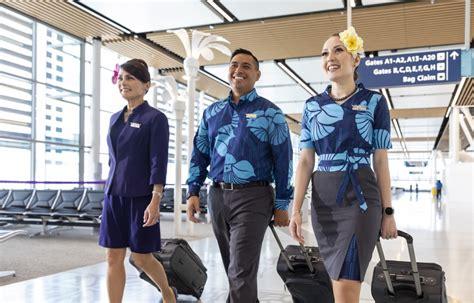
The merger between Hawaiian Airlines and Alaska Airlines is beginning to reshape more than route networks and reservation systems. It is now changing the visual identity of cabin crews, particularly on international flights departing from Seattle-Tacoma International Airport. Around 250 Hawaiian Airlines flight attendants have reportedly been instructed to leave behind some of the airline’s most recognizable cultural uniform elements — including floral hairpieces, lei, and aloha shirts — when operating flights marketed under the Alaska Airlines brand.
The move may appear minor from the outside, but within the airline industry, uniforms carry enormous symbolic weight. For Hawaiian Airlines employees, the airline’s appearance standards have long reflected the spirit of Hawaii itself, blending hospitality, cultural pride, and visual warmth into the onboard experience. Asking crew members to remove those elements on select routes highlights the increasingly delicate balancing act facing Alaska Air Group as it attempts to integrate two airlines with dramatically different identities.
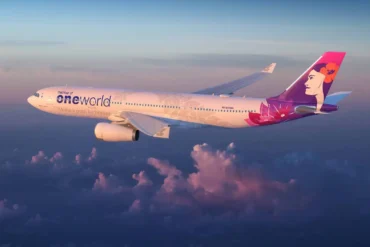
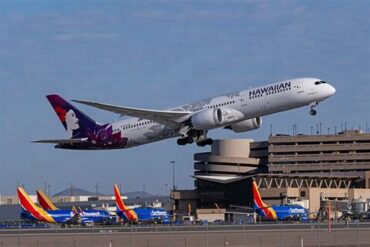
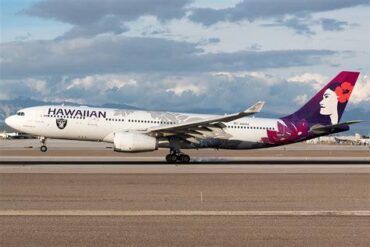
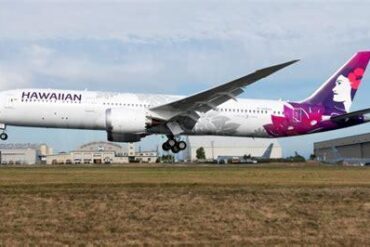
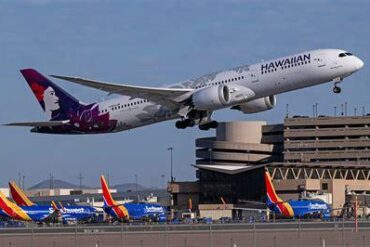
The policy changes are primarily affecting long-haul international services from Seattle, many of which are operated using Hawaiian’s Boeing 787-9 Dreamliners. Although the aircraft and some crew members come from Hawaiian Airlines, the flights are being presented to passengers as Alaska-branded operations. That distinction has created new appearance requirements intended to maintain a consistent Alaska Airlines visual identity throughout the cabin.
Alaska Air Group Pushes For Separate Brand Identities During Integration
Unlike many airline mergers that immediately erase one carrier’s identity, Alaska Air Group is pursuing a more complicated strategy. Executives are attempting to preserve both the Hawaiian Airlines and Alaska Airlines brands while simultaneously merging backend operations into a unified corporate structure.
That means passengers may still see distinct onboard experiences depending on the route they book, even while the airlines increasingly share scheduling systems, operational resources, and aircraft utilization. Flights connected directly to Hawaii continue to embrace Hawaiian’s traditional branding, including island-inspired service touches and culturally expressive uniforms. International routes from Seattle, however, are being positioned differently.
The company appears determined to maintain Alaska Airlines’ Pacific Northwest-focused image on those flights. As a result, crews assigned to Alaska-branded services are expected to follow Alaska’s more understated appearance guidelines rather than Hawaiian’s colorful presentation style.
This strategy allows Alaska Air Group to market two distinct customer experiences simultaneously. Hawaiian Airlines remains associated with island hospitality and leisure travel, while Alaska Airlines continues emphasizing its established mainland network and Seattle-based global expansion ambitions. Maintaining those distinctions is viewed internally as essential while the merger process continues.
Executives have acknowledged that the transition has not been simple for employees. Alisa Onishi, managing director of Hawaii marketing for Hawaiian and Alaska, admitted the company understood the emotional impact of the decision while defending the broader branding strategy behind it.
“We had to make difficult decisions that will be hard for our employees to adjust to, but ultimately as we explain why we are making these decisions the employees will understand,” Onishi said in comments reported by West Hawaii Today.
Why Hawaiian Airlines Uniform Traditions Matter To Employees
For many Hawaiian Airlines crew members, the issue extends far beyond dress code compliance. The airline’s visual presentation has been deeply connected to Hawaiian culture for decades, becoming one of the most recognizable aspects of the carrier’s identity across the Pacific aviation market.
Floral accessories, aloha attire, and culturally rooted styling are not treated internally as decorative extras. They are viewed as symbols of local heritage and a reflection of the airline’s longstanding approach to hospitality. Hawaiian Airlines built much of its reputation around creating an onboard atmosphere that felt unmistakably connected to the islands, even before passengers arrived in Honolulu, Maui, or Kona.
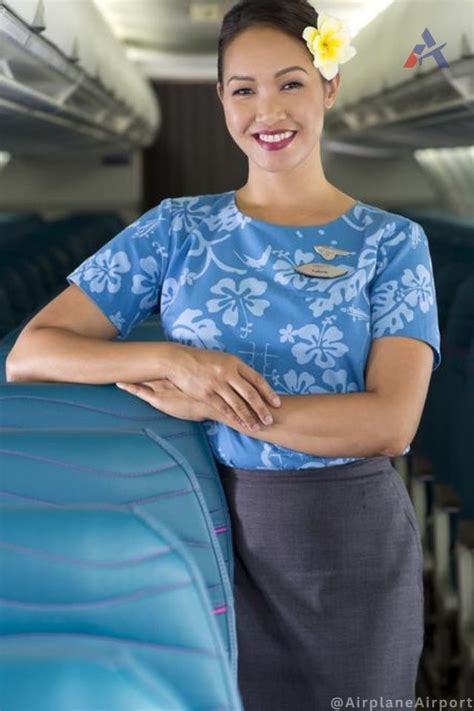
For flight attendants who voluntarily bid into international widebody operations, the new restrictions have reportedly created frustration and uncertainty. Some crew members now find themselves switching presentation styles depending on which brand is attached to a specific route. A flight to Asia or other international destinations from Seattle may require a more neutral Alaska Airlines appearance, while Hawaii-focused services still permit traditional Hawaiian styling.
That inconsistency has become one of the central tensions emerging from the merger. Employees are being asked to adapt not only operationally but also culturally, often on a flight-by-flight basis.
The timing of the changes also matters. Hawaiian Airlines employees are already navigating significant uncertainty as Alaska Air Group continues consolidating systems and planning for deeper operational integration. Uniform rules have therefore become a highly visible symbol of broader transformation occurring behind the scenes.
Seattle Emerges As The Center Of Alaska’s International Expansion
Seattle-Tacoma International Airport has become increasingly important in Alaska Airlines’ long-term strategy. The carrier has expanded aggressively into international markets in recent years, particularly following its acquisition of Hawaiian Airlines and access to long-haul aircraft capabilities.
Hawaiian’s Boeing 787 fleet now plays a central role in Alaska’s ambitions to compete more aggressively on international routes from the Pacific Northwest. While Alaska Airlines historically focused on domestic and regional operations, the merger provides an opportunity to strengthen long-haul connectivity without building an entirely new widebody operation from scratch.
That operational shift explains why branding consistency has become such a sensitive issue. Alaska executives appear eager to establish a recognizable premium international identity centered around Seattle, especially as the airline expands partnerships within the oneworld alliance and competes against larger global carriers.
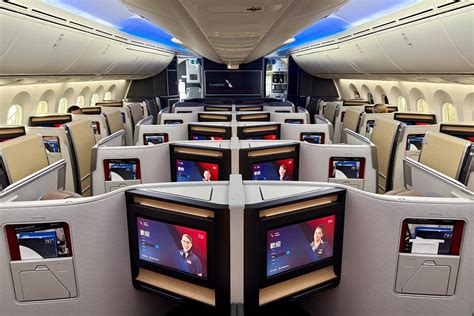
The challenge lies in achieving that goal without weakening the cultural value Hawaiian Airlines brings to the combined company. Hawaiian’s identity remains one of the strongest leisure aviation brands in the United States, particularly among travelers seeking an experience associated with Hawaii’s hospitality traditions.
Executives therefore face a difficult balancing act. Too much integration risks diluting Hawaiian Airlines’ uniqueness. Too little integration could create operational inefficiencies and inconsistent branding across the network.
Hawaiian Airlines Heritage Still Expected To Influence Future Branding
Despite the current restrictions, Alaska Air Group has indicated that Hawaiian cultural influence will continue playing a role in the future of the combined operation. Company leaders have reportedly discussed updated uniform concepts and future design collaborations involving Hawaiian cultural creators.
Those conversations suggest the current policies may represent a transitional phase rather than a permanent elimination of Hawaiian identity from international operations. Management appears focused on stabilizing branding structures first before introducing more carefully coordinated cultural elements later in the integration process.
The broader merger continues advancing through major milestones, including shared reservation platforms and the eventual goal of operating under a single operating certificate. Behind the scenes, operational integration is accelerating rapidly even while the public-facing brands remain distinct.
Passengers are already seeing evidence of this dual-brand strategy onboard. Hawaiian Airlines continues emphasizing island-inspired menus, Hawaii-based beverage partnerships, and relaxed hospitality traditions. Alaska Airlines, meanwhile, maintains branding tied closely to the Pacific Northwest and its growing global ambitions from Seattle.
The debate surrounding uniforms ultimately reveals something much larger than appearance policy. It illustrates how airline mergers affect culture, employee identity, and customer perception in ways that extend far beyond aircraft paint schemes or route maps.
For Hawaiian Airlines flight attendants, the removal of leis and aloha shirts on certain Seattle routes represents a visible reminder that one of America’s most culturally distinctive airlines is entering a new era — one where preserving heritage must coexist with the realities of corporate consolidation and international expansion.