A 27% decline in Canadian air return trips from the United States is doing more than weakening one segment of Air Canada’s network. It is forcing the carrier to rethink where its future international passengers will come from, how its hubs should function, and which aircraft can profitably serve markets beyond Canada’s traditional transborder core. The result is visible in the airline’s ambitious Summer 2027 schedule, where five new international destinations reveal a broader strategic transformation.
Air Canada is adding Guangzhou, Oslo, Shannon, Basel and Dubrovnik to its network while increasing frequencies on several existing overseas routes. On the surface, these additions look like normal network growth. In reality, they represent an attempt to reduce the airline’s dependence on Canadian-US traffic by turning Toronto, Montreal and Vancouver into increasingly important international connecting hubs.
The shift comes as travel between Canada and the United States has weakened sharply. Data cited by Yahoo Finance Canada indicates that Canadians’ return trips by air from the US were 27% lower in July 2026 than in July 2024, while Air Canada’s own flight volumes between Canada and the United States declined by 13% over the same period. For an airline with extensive domestic and transborder operations, such a change has consequences well beyond individual route cancellations or lower frequencies.
Air Canada’s response is not simply to replace American destinations with European or Asian destinations. Instead, the carrier is attempting to create a network in which Canada itself becomes part of the journey for travelers who may have no reason to visit Canada. That means attracting passengers from elsewhere in North America and connecting them through Canadian airports to Europe, Asia and other international markets.
A 27% US Travel Decline Is Changing Air Canada’s Network Strategy
The US market has historically been fundamental to Air Canada’s network because of its enormous geographic scale, proximity to Canada and ability to generate both local and connecting traffic. Toronto Pearson, Montreal-Trudeau and Vancouver International Airport have all benefited from passengers moving between Canadian cities and destinations throughout the United States.
The transborder market also supports Air Canada’s wider international operation. A passenger traveling from a US city to Europe, for example, can potentially connect through Toronto rather than beginning the journey in Canada. This makes US traffic valuable not only because of its own destination demand, but because it can feed long-haul flights departing from Canadian hubs.
When US travel from Canada declines, that feed becomes less dependable. Air Canada therefore needs to expand the number of international passengers available to its hubs. Its Summer 2027 schedule points directly toward that objective, with more than 125 international routes to over 85 destinations outside the United States and as many as 169,000 international seats every week.
Overseas flight volumes are expected to rise by approximately 8% compared with Summer 2026. That is a significant expansion at a time when the airline’s traditional US market is under pressure.
The critical question is where those passengers will originate. Canada’s population alone cannot automatically fill an increasingly large collection of long-haul aircraft, particularly on routes operating several times per week. Air Canada’s answer is to pursue more connecting traffic and exploit Canada’s position between major global markets.
Canada’s Geography Gives Air Canada a Global Opportunity
Air Canada’s geographic position is unusual. Toronto is relatively well placed for connecting traffic between North America and Europe, Montreal provides another major transatlantic gateway, while Vancouver sits on the Pacific side of the continent and can connect North American traffic with Asia.
That creates the foundation for a sixth-freedom strategy, in which an airline carries passengers between two foreign countries through its own home country. For Air Canada, the concept could mean passengers traveling between the United States and Europe through Toronto, or passengers moving between the United States and Asia through Vancouver.
This model changes the role of Air Canada’s hubs. They are no longer simply airports where Canadians begin international journeys. They become transfer points capable of combining Canadian demand with international connecting passengers.
The Summer 2027 network provides a clear indication of this ambition:
| Summer 2027 Air Canada expansion | Planned operation |
|---|---|
| International routes | 125+ |
| Destinations outside the US | 85+ |
| Weekly international seats | Up to 169,000 |
| Overseas flight-volume growth | About 8% |
| New destinations | 5 |
The five new destinations are especially revealing because they cover different regions and different types of demand. Guangzhou strengthens Asia, while Oslo, Shannon, Basel and Dubrovnik expand Air Canada’s European footprint.
This is not simply a strategy of adding more large markets. It is an attempt to build a broader international network with different levels of capacity and different types of passenger demand.
The A321XLR Opens Smaller European Markets
The Airbus A321XLR is central to this strategy because it gives Air Canada a long-range aircraft with significantly less capacity than a traditional widebody. That matters when an airline wants to establish nonstop service to a market that may not consistently generate enough passengers for a Boeing 787 or Airbus A330.
Toronto-Oslo, Toronto-Shannon and Montreal-Basel illustrate the concept particularly well. Air Canada plans to operate these services with the A321XLR, allowing the airline to reach European destinations while controlling the amount of capacity placed into each market.
The aircraft is configured with 14 lie-flat Signature Class seats and 168 economy seats. That creates a 182-seat long-haul aircraft with a premium cabin while avoiding the much larger seat count associated with widebody aircraft.
Toronto-Oslo is scheduled for four weekly flights, while Toronto-Shannon will operate three times per week. Montreal-Basel is planned for four weekly services. These frequencies provide meaningful nonstop connectivity without requiring Air Canada to commit a large widebody aircraft to every flight.
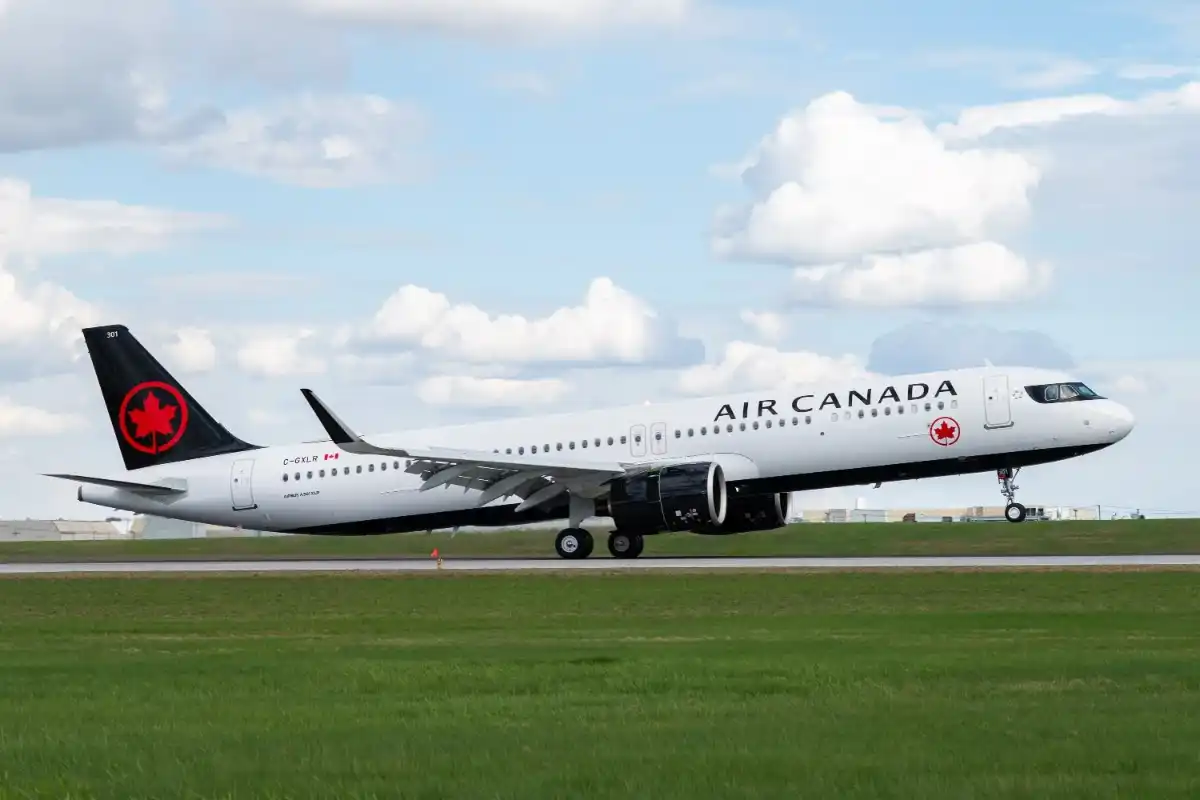
The A321XLR therefore gives Air Canada something strategically important: flexibility. The carrier can establish international routes with relatively modest capacity, observe seasonal demand, build connecting traffic and adjust frequencies without exposing itself to the same capacity risk associated with a much larger aircraft.
This is particularly useful in Europe, where Air Canada already has a substantial network but can still identify smaller cities and underserved markets. The aircraft effectively expands the range of markets that can be considered viable.
Guangzhou Shows the Importance of Air Canada’s Asian Expansion
The Vancouver-Guangzhou route demonstrates a different part of Air Canada’s global strategy. Beginning May 4, 2027, the service is scheduled to operate three times per week using a Boeing 787.
The route is strategically significant because Guangzhou is a major southern Chinese market, while Vancouver is naturally positioned for transpacific connections. Air Canada is also expected to become the only North American airline offering nonstop service to Guangzhou, according to Points Miles & Bling.
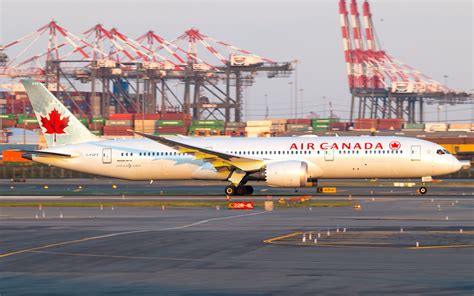
The route also highlights how geopolitical restrictions have changed long-haul airline operations. With Russian airspace remaining closed to Western carriers, airlines operating between North America and Asia have had to consider alternative routings. More southerly tracks can affect flight time, fuel consumption, payload and aircraft utilization.
That makes aircraft selection increasingly important. A long-haul route is not judged only by the distance between two airports. The actual operating environment, routing restrictions and available payload all influence whether an international service can generate sustainable economics.
Air Canada’s expansion in China is already broader than Guangzhou. Canada-China two-way capacity reached approximately 772,800 seats in Summer 2026, representing a 33.5% year-over-year increase. Air Canada’s own capacity increased by 43.2% to approximately 288,500 seats, according to Aviation Week.
The airline’s estimated market share consequently increased from about 34.8% to 37.3%. Air Canada also plans to increase Toronto-Shanghai service to daily and expects as many as 24 weekly flights across Beijing, Shanghai and Guangzhou.
Guangzhou is therefore not an isolated experiment. It is part of a broader Asian network designed around Vancouver and Toronto.
Air Canada Is Building a Two-Speed Long-Haul Fleet
The airline’s aircraft strategy increasingly mirrors its network strategy. Instead of relying on one type of aircraft for international expansion, Air Canada can use different aircraft according to the size and characteristics of each market.
The A321XLR is suited to thinner long-haul routes where nonstop service is attractive but passenger volumes may not justify a widebody. The Boeing 787, meanwhile, provides the range and capacity required for major intercontinental markets.
That distinction is particularly visible in Summer 2027 planning. A321XLR aircraft will serve several thinner European routes, while 787s will be used on services to Asia and other markets requiring greater capacity.
Air Canada is also planning Airbus A330-300 service on Toronto-Nice twice weekly, demonstrating that its international fleet will continue to include multiple widebody platforms rather than moving entirely toward a single aircraft family.
The Boeing 787-10 is another important component of the future fleet. Air Canada originally ordered 18 aircraft before reducing the order to 14. Production delays have affected deliveries, with the first 787-10 expected later in 2026 and planned to enter service during 2027.
That additional capacity arrives at a critical time. Air Canada is trying to grow international flying while simultaneously making its network more flexible. More widebody aircraft provide additional opportunities, but they also create a need for strong year-round demand and efficient utilization.
The Biggest Challenge Is Not Adding Routes
Air Canada’s route map can expand quickly on paper. The harder task is filling those aircraft with passengers whose travel patterns make the new network economically sustainable.
The sixth-freedom strategy depends on travelers accepting Canadian hubs as convenient alternatives to established international transfer points. A passenger from the United States traveling to Europe must have a reason to connect through Toronto rather than another major hub. Similarly, a traveler heading from North America to Asia must find Vancouver competitive in terms of schedule, total journey time and connection experience.
That makes the quality of the hub network just as important as the number of destinations.
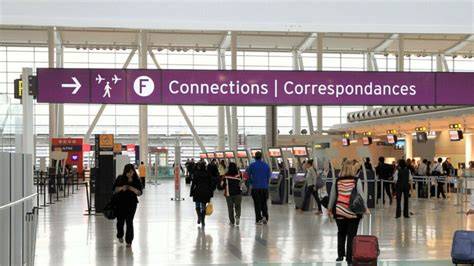
The strategy also depends on timing. A large international network works best when domestic and transborder flights arrive at Canadian hubs in coordinated waves, allowing passengers to connect efficiently onto long-haul departures. If those connections are poorly timed, adding destinations does not automatically create the sixth-freedom traffic Air Canada needs.
The airline must therefore coordinate fleet allocation, schedules, airport capacity and connecting banks. The 27% decline in US travel has created pressure, but it has also highlighted an opportunity to diversify the sources of demand supporting Air Canada’s international network.
Air Canada’s Global Carrier Ambition Is Becoming Visible
The five new Summer 2027 destinations provide a useful snapshot of where Air Canada is heading. Guangzhou, Oslo, Shannon, Basel and Dubrovnik are different markets, yet together they show an airline seeking greater geographic diversity.
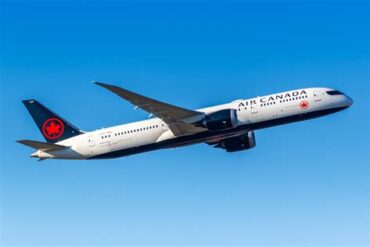
The A321XLR allows Air Canada to reach smaller European markets without the capacity burden of a widebody. The Boeing 787 gives the carrier the range and capacity necessary for challenging transpacific routes. Toronto, Montreal and Vancouver can then combine local Canadian demand with passengers traveling between other countries.
That combination is the foundation of Air Canada’s ambition to become what Chief Commercial Officer Mark Galardo has described as a “true global airline.”
The transformation does not mean Air Canada is abandoning the United States. The US remains geographically close, commercially important and deeply integrated with the Canadian aviation market. Instead, the changing travel environment is encouraging the airline to reduce its dependence on one major source of demand.
The 27% decline in Canadian air return trips from the United States has therefore become a catalyst for a much larger network rethink. Rather than simply shrinking capacity in response, Air Canada is attempting to build a network capable of generating demand from a wider geographic base.
The ultimate test will be whether Toronto, Montreal and Vancouver can become more than Canadian gateways. If the airline can consistently attract passengers from across North America and connect them efficiently to Europe and Asia, its international network will become less dependent on the strength of Canadian-US travel.
Summer 2027 could consequently represent more than another season of route announcements. It marks a point at which Air Canada is redesigning its international network around connectivity, long-range narrowbodies and global traffic flows. The five new destinations are only the visible part of that strategy. The deeper change is the attempt to make Canada itself a strategic stop on journeys that may begin and end somewhere else.