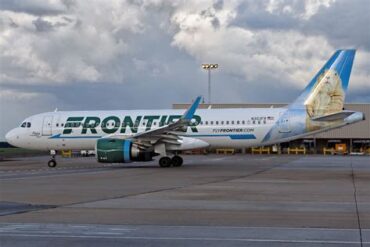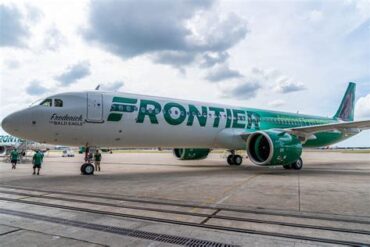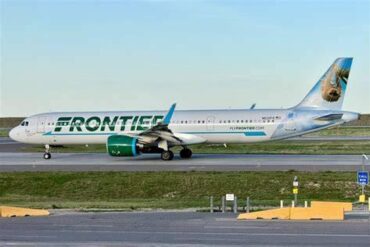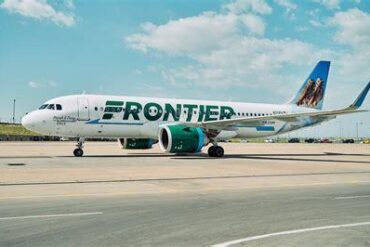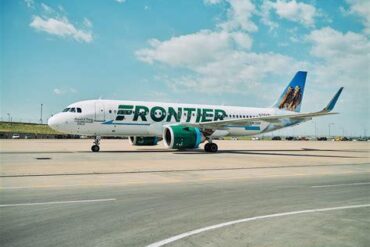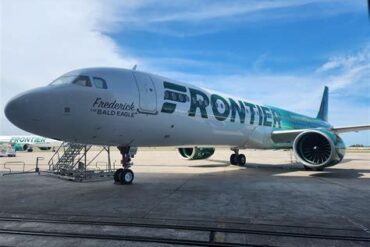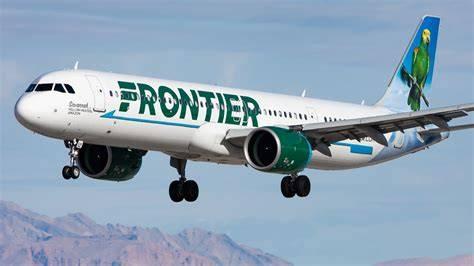
Frontier Airlines is making a significant adjustment to its Phoenix Sky Harbor International Airport (PHX) network for the final months of 2026, with 10 routes disappearing compared with the same period last year. The changes represent a notable contraction at one of the ultra-low-cost carrier’s long-standing airports, even as Frontier continues expanding its overall schedule.
Between September and December 2026, Frontier plans to serve 86 airports across the United States and internationally, with an average of approximately 313 daily departures. That represents a 12% year-over-year increase across the airline’s wider network. Phoenix, however, is moving in the opposite direction, falling to Frontier’s ninth-busiest airport by scheduled service.
The Phoenix reduction is particularly striking because Frontier has maintained a presence at PHX for 31 years. Compared with September through December 2025, the carrier is removing about 11% of its flights from the airport while eliminating several city pairs that had only recently entered its network.
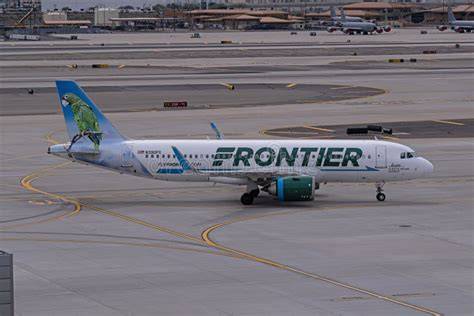
Frontier Airlines Routes Cut From Phoenix Sky Harbor
The discontinued services reveal a clear pattern: many of the routes struggled to build enough demand or faced intense competition from larger carriers. Frontier’s Phoenix-Seattle Paine Field route is perhaps the clearest example.
The Phoenix–Paine Field (PHX–PAE) service covered roughly 985 nautical miles and operated only from June through December 2025. Frontier offered approximately 50 departures, generally twice per week. According to U.S. Department of Transportation data cited in the reference material, the service carried just 8,680 round-trip passengers while achieving a remarkably low 45.1% load factor.
That performance looked especially weak beside Alaska Airlines’ established operation between the same markets. Alaska carried 101,389 passengers during the comparable period, recording an 81.6% load factor while offering substantially more frequencies. For a low-cost carrier dependent on high aircraft utilization and strong seat occupancy, Frontier’s results provided little reason to continue the route.
Other Phoenix routes also produced mixed results. The carrier ended service to Portland, Kansas City, Reno, St. Louis, San Antonio, Seattle, Spokane, Chicago Midway and Cincinnati, with several routes having been introduced or restored only within the past few years.
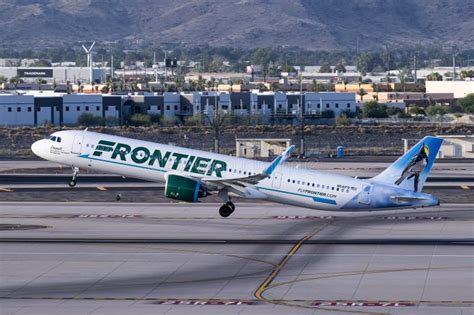
Why Frontier Is Pulling Back on 10 Phoenix Routes
The numbers behind the cuts provide useful clues about Frontier’s strategy. Not every discontinued route was unsuccessful, and some actually posted respectable load factors. Cincinnati, for example, recorded a 78.8% load factor, while Chicago Midway reached 86.3%. Seattle also achieved 81.1%, showing that route elimination does not necessarily mean an individual service performed badly.
Instead, Frontier appears to be evaluating its aircraft capacity at a network level. An aircraft committed to a mature but highly competitive route may generate less value than the same aircraft deployed elsewhere. The airline’s aggressive schedule growth elsewhere means that every aircraft and flight hour must compete for a place in the network.
The replacement of Chicago Midway with Chicago O’Hare is particularly important. Rather than completely abandoning the Chicago market from Phoenix, Frontier is shifting its operation to O’Hare, giving passengers access to the much larger airport while allowing the carrier to consolidate its Chicago presence.
Frontier Adds Phoenix–Minneapolis Service
While 10 routes are being removed, Frontier is adding just one new Phoenix link in the September-to-December comparison: Minneapolis–St. Paul International Airport (MSP).
The PHX-MSP market stretches approximately 1,109 nautical miles and has previously been part of Frontier’s network. Service operated from January 2023 through April 2025 before returning in February 2026. During the final months of 2026, Frontier plans to operate the route twice weekly, primarily using the 186-seat Airbus A320neo, although A321-family aircraft may also appear.
The route enters a highly competitive market. Delta Air Lines dominates the schedule because Minneapolis is one of its major hubs, while Sun Country Airlines, American Airlines and Southwest Airlines also provide service. Frontier therefore faces a crowded market where frequency, price and schedule convenience will all matter.

Frontier’s Phoenix Network in Fall 2026
Despite the cuts, Frontier will retain 15 routes from Phoenix during the final months of 2026. These include Austin, Chicago O’Hare, Cleveland, Dallas/Fort Worth, Denver, Detroit, Houston, Las Vegas, Los Angeles, Minneapolis-St. Paul, Orange County, Orlando, Salt Lake City, San Diego and San Francisco.
The airline expects an average of 18 daily departures from PHX, although the schedule will vary considerably by day. Frontier’s busiest planned days will reach 24 departures, beginning October 9 and continuing on selected Mondays, Fridays, Saturdays and Sundays through November 30.
That figure remains well below Frontier’s record Phoenix activity. The airline reached its highest-ever level at PHX in March 2026, when the schedule offered 37 daily departures. The difference highlights how dramatically Frontier is fine-tuning its Phoenix operation rather than simply abandoning the airport.
Ultimately, the 10 route cuts from Phoenix appear less like a retreat from the Arizona market and more like a targeted network reset. Frontier is removing several weaker or strategically less attractive city pairs while preserving major markets and adding Minneapolis. For travelers, the biggest impact will be fewer nonstop options to several U.S. cities, but Frontier’s remaining Phoenix schedule will still provide a substantial low-cost presence as the 2026 holiday travel season approaches.