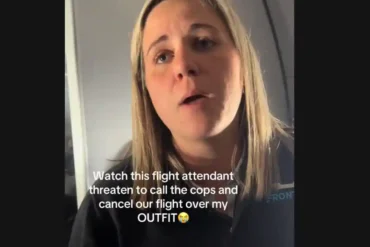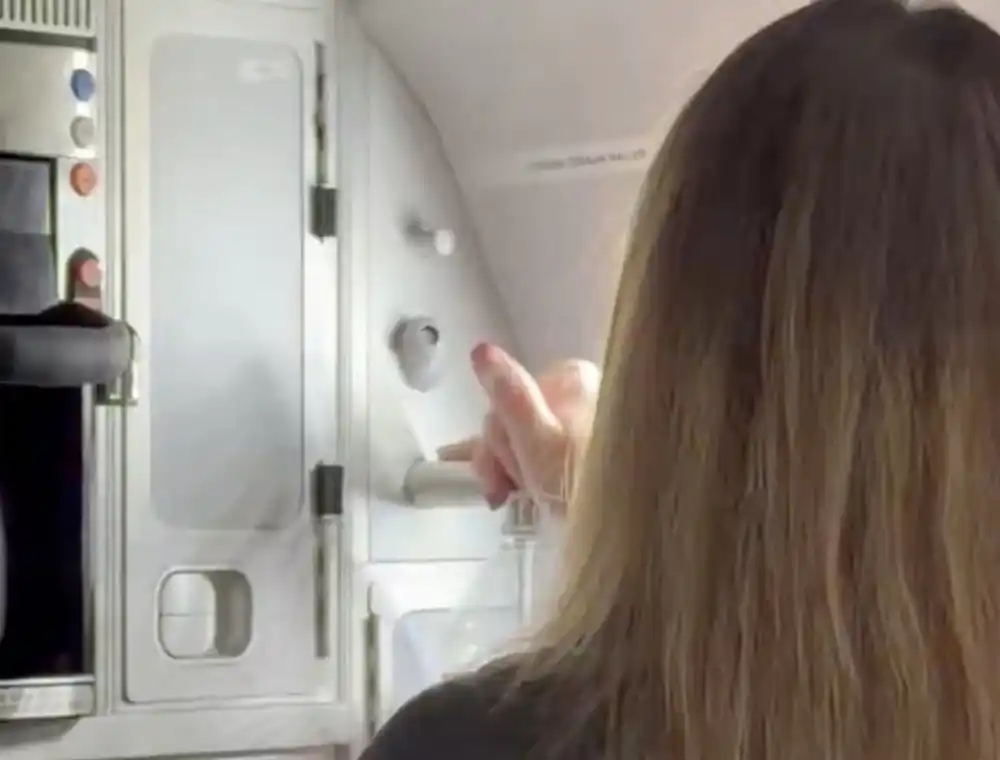
A Frontier Airlines flight attendant has faced criticism after a passenger recorded the crew member filling empty plastic water bottles from an aircraft galley dispenser during a flight from Los Angeles International Airport (LAX) to Denver International Airport (DEN). The 43-second video, posted to X on September 25 by passenger Erica Mena, quickly drew attention because the bottles appeared similar to containers passengers might associate with commercially bottled water.
Mena identified the service as Frontier flight 2342 and questioned why water coming from the aircraft’s onboard system was being transferred into bottles. The footage does not, however, establish exactly what the bottles were intended for, whether they were subsequently given to passengers, or whether the crew member was following an internal Frontier procedure.
That distinction is important because the video shows a service practice, but it does not by itself demonstrate a violation of aviation regulations or prove that passengers received contaminated water. The central issue is therefore not simply whether aircraft water is safe to drink. It is also about what passengers reasonably understand when they are handed a bottle that appears to contain commercially bottled water.
What the Frontier Airlines Water Bottle Video Shows
The footage shows a Frontier crew member using a galley water dispenser to fill plastic bottles during the Los Angeles-Denver flight. According to Mena’s account, the bottles were being prepared for distribution. The unusual appearance of the process prompted criticism because passengers commonly expect bottled water to remain inside a sealed commercial container until it is opened.
Reporting surrounding the video has not established whether the bottles were new, previously used, or originally associated with commercially bottled water. It also has not established whether they were intended for passengers, crew members, or another onboard purpose. Frontier has not publicly explained the circumstances described in the available material.
That missing context matters. An aircraft galley dispenser does not necessarily supply water that is unsafe for drinking. Aircraft potable water is regulated, and airlines are required to operate water systems under federal requirements. At the same time, water from an aircraft’s onboard plumbing is fundamentally different from water that has remained sealed in a commercial bottle.
For passengers, the visual distinction can be significant. A sealed bottle communicates one thing: the water came from a controlled commercial container that has not been exposed to the aircraft’s plumbing system. Watching a crew member fill an empty bottle from a dispenser communicates something quite different, even if the water itself meets applicable drinking-water standards.
How Aircraft Drinking Water Is Regulated
The Environmental Protection Agency’s Aircraft Drinking Water Rule establishes requirements for covered aircraft water systems. Airlines must maintain water-system inventories, follow sampling programs, carry out required disinfection and flushing procedures, and take corrective action when testing identifies problems.
Aircraft drinking-water systems create challenges that are different from those faced by conventional municipal systems. An aircraft can receive water at multiple airports, operate through several destinations in one day, and rely on hoses, servicing equipment, tanks, plumbing and other components during ground operations.
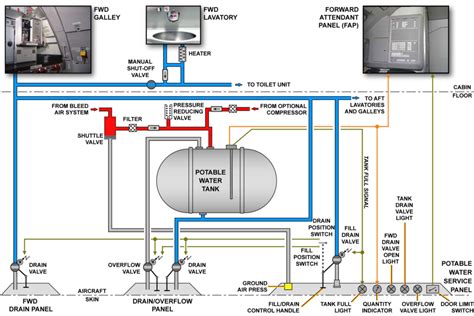
The quality of the water loaded at an airport is therefore one part of the overall system. The equipment used to transfer that water and the condition of the aircraft’s onboard plumbing also matter. Federal oversight involves several agencies, with the EPA responsible for the aircraft drinking-water framework, while the FAA oversees relevant airline operations and maintenance requirements and the FDA regulates certain aspects involving food, beverages and related equipment.
Historical testing helps explain why aircraft potable water has received scrutiny. During a 2004 EPA sampling program, 17.2% of 169 randomly selected passenger aircraft tested positive for total coliform bacteria. Earlier testing found total coliform in 12.7% of 158 aircraft, while two aircraft also tested positive for E. coli.
Those results contributed to greater attention to aircraft drinking-water management and the development of the regulatory framework that governs these systems today. Importantly, the presence of total coliform is not itself proof that passengers were exposed to a disease-causing pathogen. It is primarily an indicator that conditions may exist in which other organisms could be present.
Frontier’s Water Safety Data Adds Context
The broader available data concerning Frontier Airlines provides additional context to the controversy. A 2026 study from the Center for Food as Medicine and Longevity examined more than 35,000 aircraft-water samples collected between October 2022 and September 2025.
Frontier received a reported water-safety score of 4.80 out of 5, with 13 of 952 tested locations producing total-coliform-positive results. That represents approximately 1.37% of the tested Frontier locations in the study. The study also recorded no maximum-contaminant-level violations involving E. coli for Frontier.
Separate analysis of underlying regulatory data cited by Simple Flying indicated that roughly 3% of aircraft-water tests were positive for total coliform. That percentage should not be interpreted as meaning that 3% of passengers were exposed to unsafe drinking water. A positive total-coliform result is an indicator used in water-quality monitoring and does not automatically mean that harmful pathogens were present.
These figures provide an important counterweight to conclusions based solely on a short social-media video. The video raises a legitimate question about service practices and passenger expectations, but it does not establish that Frontier supplied contaminated water.
Why Passengers Question Aircraft Tap Water
The controversy reflects a broader perception problem surrounding aircraft tap water. Passengers often distinguish sharply between bottled water and water served from an aircraft dispenser. Bottled water is associated with a sealed container and a clearly defined commercial source. Aircraft water, by contrast, travels through a system that must be maintained and monitored throughout an aircraft’s operating life.
That does not automatically make aircraft water unsafe. It does mean that passengers may have different expectations depending on how the water is presented. If water is poured into a cup from a galley dispenser, travelers generally understand that it came from the aircraft’s potable-water system. If water is placed into a bottle that resembles commercially packaged bottled water, the distinction becomes less obvious.
The Frontier incident therefore raises a question of transparency as much as water quality. Without additional information from the airline, it is impossible to determine whether the crew member’s actions were routine, permitted, intended for passengers, or connected to a specific service procedure.
What the Frontier Video Does and Does Not Prove
The available evidence supports a relatively narrow conclusion. A Frontier flight attendant was filmed filling plastic bottles from an aircraft galley dispenser during a flight from Los Angeles to Denver. A passenger objected to the practice, and the video generated criticism online.
What the footage does not establish is equally important. It does not prove that the bottles contained contaminated water, that passengers were deceived into believing the water was commercially bottled, or that Frontier violated federal aircraft drinking-water regulations.
The incident nevertheless highlights why clear labeling and transparent service practices matter in aviation. Passengers are entitled to understand what they are being served, while airlines must ensure that onboard water systems remain compliant with applicable safety requirements. Until Frontier provides further details about the specific circumstances, the video is best understood as evidence of an unusual-looking onboard practice rather than proof of a confirmed water-safety failure.