For millions of air travelers, one of the most familiar rituals at a US airport security checkpoint could soon become a thing of the past. The Transportation Security Administration (TSA) is considering allowing certain TSA PreCheck passengers to carry full bottles of water through security, potentially ending one of the most frustrating parts of the long-standing airport liquids restrictions. The proposal would not immediately eliminate the nationwide 3-1-1 liquids rule, but it could mark an important first step toward a more technology-driven approach to screening.
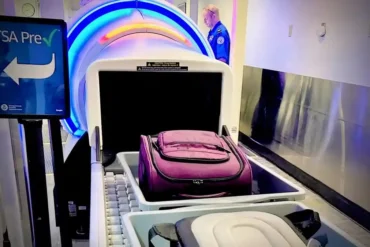
Under the proposal, the exception would initially apply only to selected TSA PreCheck members traveling through airports equipped with advanced Computed Tomography (CT) scanners and automated detection systems. These systems can create detailed three-dimensional images of carry-on bags and help determine what is inside containers. The technology could therefore give TSA officers a much clearer picture of whether a bottle contains ordinary water or something potentially dangerous.

TSA Could Allow Full Water Bottles for PreCheck Travelers
The potential change is significantly narrower than simply abolishing the 3.4-ounce, or 100ml, liquid restriction. According to the reported proposal, TSA is specifically considering allowing water bottles for eligible PreCheck passengers rather than permitting all larger containers of liquids, including shampoo, lotion, gels and other toiletries.
That distinction matters because the existing liquids policy remains firmly in place across the United States for now. Travelers should therefore continue to assume that containers exceeding 3.4 ounces (100ml) are prohibited in carry-on baggage unless an applicable exception exists. TSA has not identified which airports would receive the proposed water-bottle exemption first, and officials have acknowledged that the agency does not yet have enough suitable equipment or funding to introduce the capability nationwide.
The proposal is part of a broader transformation of the TSA PreCheck experience, rather than an isolated attempt to make airport security more convenient. Next-generation checkpoints are increasingly combining automated identity verification, facial recognition, CT baggage screening and advanced passenger scanners. Together, these technologies are designed to reduce manual intervention while allowing security officers to concentrate on situations that require closer examination.
The idea of relaxing the liquids rule is not entirely new. Former Homeland Security Secretary Kristi Noem publicly questioned the restrictions in July 2025, shortly after TSA ended its routine requirement for many passengers to remove their shoes. At the time, she suggested that liquid restrictions could become another major area for modernization, although she also indicated that an immediate announcement was not expected.
New TSA eGates Are Changing the Security Checkpoint
The proposed water-bottle exception is closely connected to the rollout of new TSA eGates, although the two technologies perform different jobs. An eGate is primarily designed to verify the passenger’s identity and eligibility, while CT scanners and their associated detection software examine the contents of carry-on luggage.
The distinction is important because an eGate does not determine whether a bottle contains water. Instead, it can automate the process of confirming who the traveler is and whether that passenger is authorized to use the particular screening lane. Advanced identity systems can use facial matching to connect the traveler with information already held by the government, reducing the need for a traditional manual identification check.
Meanwhile, CT scanners provide security officers with a manipulable 3D image of the contents of a carry-on bag. Unlike older X-ray systems, which provide a more limited view, CT technology allows officers and automated systems to examine objects from multiple angles. The resulting data can also be analyzed by algorithms designed to identify prohibited materials and potential threats.
This combination is at the heart of TSA’s next-generation checkpoint strategy. Identity verification becomes increasingly automated, baggage inspection becomes more sophisticated, and passenger screening can incorporate advanced body-scanning technology. The ultimate objective is not simply to make security faster, but to make it more targeted.
Charlotte, Los Angeles and Newark Are Testing the Future
Several major US airports are already providing glimpses of how this system could eventually work. Charlotte Douglas International Airport (CLT) began testing eight eGates at Checkpoint 2 during the summer, while the technology has also been trialed at Los Angeles International Airport (LAX) and Ronald Reagan Washington National Airport (DCA).
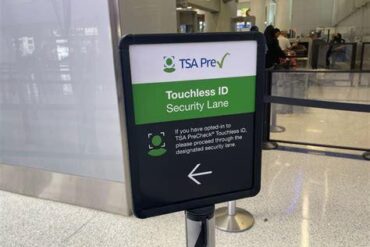
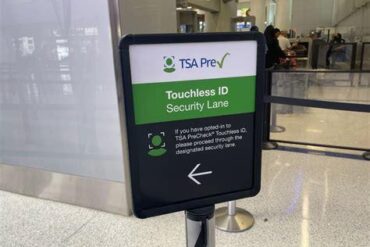
Newark Liberty International Airport has introduced eGates for eligible United Airlines passengers using PreCheck Touchless ID in Terminal C. The system allows qualifying travelers to verify their identity through facial recognition, although the introduction of eGates does not mean that the passenger or baggage bypasses physical security screening.

DCA is another particularly significant airport because its checkpoint redevelopment included infrastructure designed around advanced credential authentication and CT screening. LAX, meanwhile, has been testing CT carry-on scanners since 2018, giving it years of experience with the technology that could eventually support broader changes to liquids screening.
Harry Reid International Airport (LAS) has taken the concept further through TSA’s Innovation Checkpoint. There, PreCheck passengers have tested combinations of facial identification, automated baggage handling and advanced screening equipment. Yet despite the technology already operating at these airports, none has been officially confirmed as an initial location where travelers will be permitted to take full water bottles through security.
That uncertainty illustrates one of the biggest challenges facing TSA. The technology exists, but it is not deployed consistently enough to support a nationwide policy change.
The 3-1-1 Liquids Rule Is Unlikely to Disappear Overnight
The US liquids restriction dates to the August 2006 transatlantic liquid-bomb plot, when conspirators planned to use drink containers to conceal components of explosives. The resulting restrictions became one of the most recognizable features of modern airport security, with the United States eventually adopting the familiar 3.4-ounce container limit for liquids carried through checkpoints.
Two decades later, CT screening provides a potential technological alternative to treating every liquid container according to the same blanket rule. Instead of relying solely on container size, more sophisticated screening could allow security systems to analyze what a container actually contains.
Europe provides an indication of what such a transition might look like. Some major British airports, including London Heathrow and London Gatwick, have introduced CT-based screening that permits significantly larger liquid containers, in some cases up to two liters. However, the policy has not been implemented uniformly across the country. Airports including Manchester and London Luton have continued to enforce the 100ml restriction despite having newer screening technology.
That experience highlights why US travelers should not expect a simple nationwide announcement eliminating the liquids rule. Even with advanced scanners, airport security policies can remain dependent on the equipment installed at individual checkpoints.
Travelers Could Face Different Rules at Different Airports
A gradual US rollout could create an unusual situation in which a passenger’s ability to carry a full bottle of water depends on several factors at once. The airport, terminal, checkpoint, screening technology and PreCheck eligibility could all potentially influence what is permitted.
The experience at Newark already demonstrates how narrowly these systems can initially operate. Its new eGates are limited to eligible United passengers in Terminal C who have TSA PreCheck and Touchless ID, while physical security screening remains part of the process. If a future water-bottle exemption follows a similar model, a passenger could potentially carry a full bottle through security at one airport but be required to empty it before a return flight elsewhere.
For frequent travelers, that could be confusing. A full bottle successfully passing through one checkpoint would not necessarily establish that the same bottle would be accepted at another airport. The UK’s uneven experience with CT screening suggests that passengers may need to check security requirements for each airport on an itinerary until the technology becomes standardized.
More Than 20 Million Travelers Could Benefit
The potential impact is substantial because TSA PreCheck has already grown into a massive trusted-traveler program. TSA announced more than two years ago that membership had surpassed 20 million active participants, while enrollment has continued at roughly three million new members annually.
The expansion of PreCheck Touchless ID is also changing how eligible travelers interact with checkpoints. Instead of repeatedly presenting physical identification, participating passengers can use biometric verification to confirm their identity. As this infrastructure expands, TSA gains a larger platform on which to build increasingly automated screening processes.
The proposed water-bottle exception would therefore represent more than a convenience for thirsty passengers. It would demonstrate how TSA could gradually replace broad restrictions with risk-based screening supported by advanced technology.
For now, however, travelers should continue following the existing 3-1-1 rule unless TSA or a participating airport explicitly announces otherwise. The prospect of carrying a normal bottle of water through security is becoming more realistic, but the technology and funding needed to make that experience universal are still developing.
The eventual end of the 100ml rule, if it comes, is therefore likely to happen incrementally rather than through a single nationwide change. eGates can verify the traveler, CT scanners can examine the bag, and automated detection can analyze potential threats, but all three elements must work together at sufficient scale before TSA can confidently relax restrictions across the country. For passengers, the long-standing ritual of dumping a water bottle may finally be nearing its end—but for now, the safest assumption remains that the 100ml rule is still in effect.