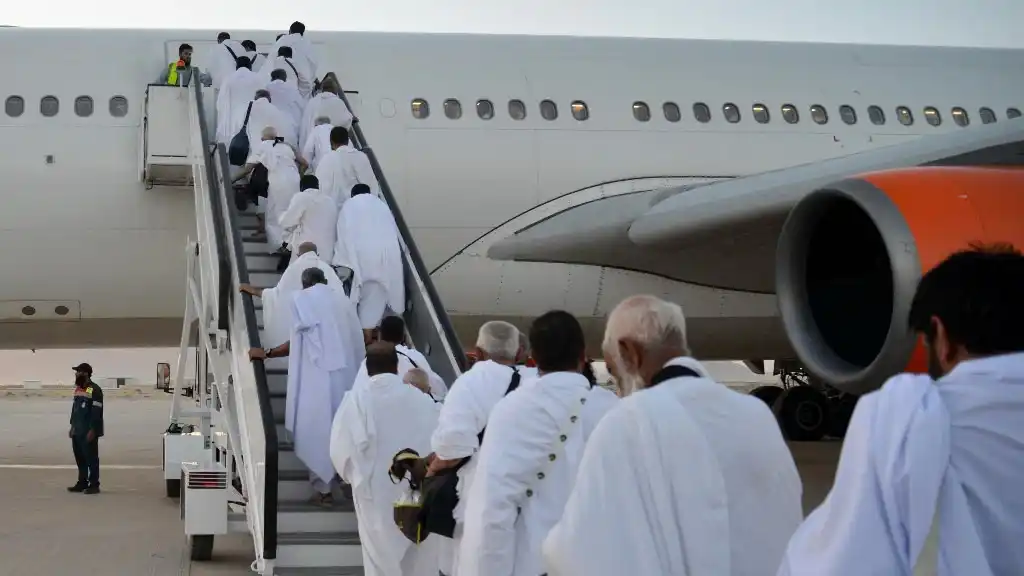
In recent days, Saudia Airlines has come under intense scrutiny following two harrowing incidents that marred the return flights for Indonesian pilgrims participating in the 2025 Hajj pilgrimage. These events have ignited widespread concern regarding both passenger safety and the efficacy of aviation security measures during one of the busiest travel periods of the year. The first incident occurred on June 20, when a flight from Saudi Arabia to Surabaya tragically ended in the deaths of two elderly passengers just moments before landing. Less than 24 hours later, another Saudia flight was diverted mid-air due to a reported threat, prompting emergency protocols that raised alarms about the airline’s operational integrity.
Fatal Medical Emergency Onboard Return Hajj Flight
The ill-fated flight, part of Hajj Group 29, touched down at Juanda International Airport in Surabaya at approximately 04:50 AM local time. This flight carried Indonesian pilgrims returning home after fulfilling their religious obligations in Saudi Arabia. Reports indicate that both deceased passengers suffered from health complications during the journey—one succumbing to hypertension and the other to cardiac arrest. The altitude changes and adverse weather conditions may have exacerbated their already fragile health situations. Despite the presence of medical personnel onboard, attempts to revive them proved futile.
Upon landing, standard protocols were enacted to manage the situation with the utmost dignity and sensitivity. The remains of the deceased were subsequently transported back to their home region in East Java for burial. This tragic event adds to the growing list of fatalities associated with the Hajj pilgrimage this year, raising questions about the preparedness of airlines to handle medical emergencies among elderly travelers. Officials have called for enhanced medical preparedness and thorough pre-departure health screenings for older pilgrims, who are particularly vulnerable during such physically taxing journeys.
Security Scare Leads to Flight Diversion
In a shocking turn of events, just a day after the medical incident, another Saudia flight, designated SV5688, faced a serious security threat while en route from Jeddah to Surabaya. Carrying 376 passengers, the aircraft was forced to make an unplanned landing at Kualanamu International Airport in North Sumatra due to a mid-air threat communicated through air traffic coordination channels. The flight crew acted swiftly, activating emergency protocols to ensure the safety of everyone onboard.
At 09:27 AM Western Indonesian Time on June 21, the Airbus A330 successfully landed and was directed to an isolated section of the tarmac for emergency handling. Passengers and crew members were evacuated without incident, and both individuals and their luggage underwent comprehensive security inspections. Fortunately, no suspicious items or explosive devices were discovered during the searches, providing some relief amid the tense atmosphere.
National Security Response Activated
The reported threat triggered an immediate response from national security agencies, which deployed counterterrorism units to lead the investigation. Standard threat assessment protocols were applied to ascertain the credibility of the threat and its potential implications. This incident marked the second scare involving Saudia Airlines within the same week, following another flight diversion on June 17 due to a similar false alarm. Authorities are working diligently to trace the origin of these threats and to determine if they were coordinated efforts.
Despite the lack of evidence pointing to foul play, the recurrence of such incidents has raised significant concerns about security vulnerabilities during the high-volume travel associated with the Hajj pilgrimage. As thousands of pilgrims return home over a condensed period, the pressure mounts on airline operators and government agencies to reassess existing protocols concerning passenger health and flight security.
Implications for Hajj Operations and Passenger Welfare
The dual incidents involving Saudia Airlines have cast a glaring spotlight on the vulnerabilities inherent in large-scale Hajj return operations. With tens of thousands of pilgrims journeying back to Indonesia within a short timeframe, there is an urgent need for airline operators and authorities to reevaluate their strategies regarding passenger health and flight security. The focus must be particularly acute on elderly travelers, whose health risks escalate under the physical and emotional stress of prolonged travel.
Experts are advocating for enhanced onboard medical facilities, real-time health monitoring tools, and more rigorous health screening processes as essential measures to minimize risks in future operations. Additionally, aviation security specialists are calling for improved collaboration between airports, airlines, and national intelligence units to effectively manage threats without unnecessarily disrupting flight schedules or inciting public panic.
The recent incidents highlight a critical juncture for Saudia Airlines and the broader aviation community. As the 2025 Hajj season draws to a close, the lessons learned from these unfortunate occurrences must inform future practices to safeguard the well-being of passengers and restore confidence in air travel during one of the most significant periods of pilgrimage worldwide.