Premium economy has become one of the most recognizable products in modern airline cabins, but paying for it does not automatically mean paying for the most useful upgrade. For many travelers, the real question is not whether premium economy is better than standard economy, but whether its additional benefits justify a fare that can be dramatically higher. On shorter flights especially, a seat with several extra inches of legroom can deliver much of the comfort passengers actually notice without adding the cost of a separate cabin.
That distinction has become increasingly important as airlines have expanded the range of paid seating products available to economy passengers. A traveler may now face several choices between the cheapest economy seat, an extra-legroom economy seat, a full premium economy cabin, and business class. These products can overlap in comfort, yet their prices and included benefits can differ sharply. Understanding what each upgrade actually provides is therefore more useful than simply assuming that the most expensive economy option is the best value.
Premium economy itself was created to occupy the space between traditional economy and business class. Before the early 1990s, major airlines generally operated with no more than three broad cabin classes, and many travelers once had only economy and first class as meaningful choices. The arrival of business class changed that structure, particularly after Qantas introduced business seating in the late 1970s as a way to attract passengers who wanted more comfort without paying for first class.
British Airways, TWA, Pan Am, and other major airlines subsequently adopted business class, establishing the intermediate cabin as an important part of long-haul travel. Then came another gap to fill. EVA Air’s Evergreen Class, introduced in 1992 on its Boeing 747-400 fleet, demonstrated how a dedicated cabin between business and economy could offer substantially greater comfort without approaching business-class pricing.
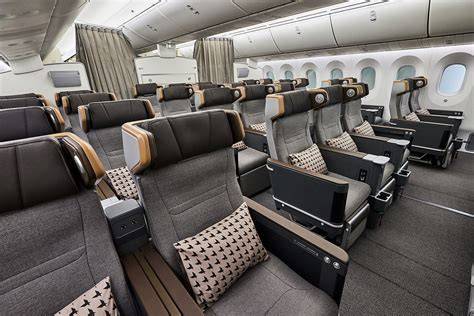
Evergreen Class used wider seats arranged in a 2-2-2 configuration in the forward sections of the 747, compared with the denser 3-4-3 arrangement elsewhere on the aircraft. The concept helped establish the modern premium economy model: give passengers more personal space, a more comfortable seat, and additional service while keeping the product clearly below business class in price and complexity.
Virgin Atlantic developed a similar intermediate product in 1992, while other airlines experimented with different ways of selling additional comfort within economy. By 2000, British Airways had introduced World Traveller Plus, helping turn premium economy into a mainstream long-haul product. Air New Zealand followed in 2004, while Qantas, Cathay Pacific, Lufthansa, Singapore Airlines, American Airlines, Delta Air Lines, United Airlines, and Emirates subsequently introduced their own versions.
Why Premium Economy Has Become So Expensive
The expansion of premium economy was not simply driven by passenger demand for wider seats. Airlines also discovered that the cabin could generate significant revenue from a relatively small amount of aircraft space. That economic incentive has encouraged carriers to expand premium cabins and invest heavily in their products.
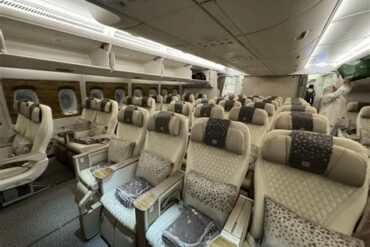
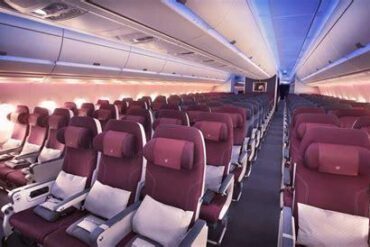
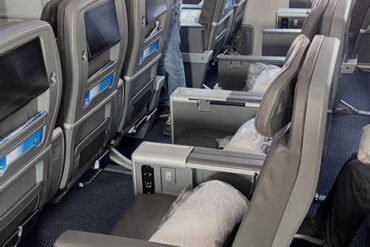
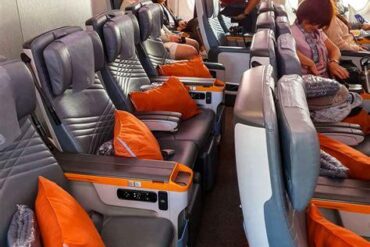
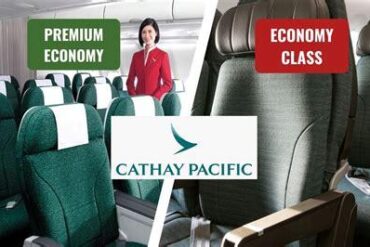
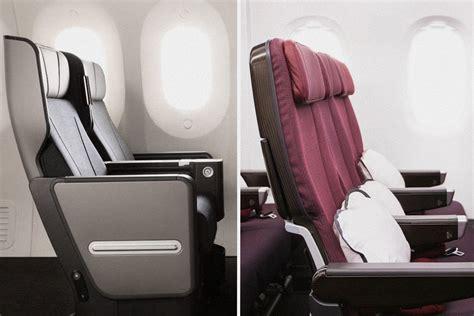
The result is a premium economy experience that can look very different from the product introduced decades ago. Depending on the airline, passengers may receive a wider seat, greater seat pitch, improved meals, amenity kits, priority services, additional checked baggage, enhanced entertainment, and other benefits. On some aircraft, the seats themselves are substantially different from economy seats rather than simply being standard seats with more space.
That package can be attractive on a long overnight flight. However, the price difference can become difficult to justify when the journey is relatively short. Premium economy fares can commonly reach 1.5 to three times the price of standard economy, depending on the airline, route, travel date, and demand. At that level, passengers are no longer paying merely for a few extra inches of legroom. They are paying for an entire bundle of cabin and service benefits.
Recent pricing trends have also reinforced the issue. Data cited from the Global Business Travel Association and TMC Altour projected average economy fares at around $536, while premium-segment fares were forecast substantially higher. The figures cover broader premium travel categories rather than representing a universal premium economy fare, but they illustrate the growing gap between basic economy pricing and the cost of premium travel.
For travelers who mainly want physical space, that gap is crucial.
Extra-Legroom Economy Targets the Most Noticeable Benefit
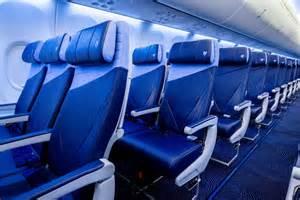
Extra-legroom economy seating takes a different approach. Instead of creating a completely separate cabin experience, airlines usually retain the standard economy seat and service while increasing the distance between rows. The most familiar examples are exit-row seats, although many airlines also designate dedicated extra-legroom sections toward the front of the economy cabin.
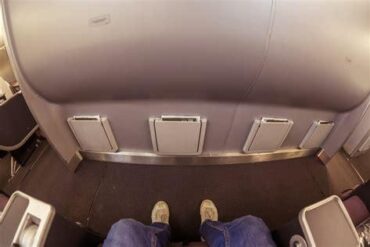
The appeal is straightforward. Seat pitch is one of the physical characteristics passengers notice most during a flight, particularly when sitting for several hours. A few additional inches can make it easier to stretch the legs, change position, work on a laptop, or simply avoid feeling compressed into the seat in front.
Typical economy seating varies widely. US ultra-low-cost carriers can operate around 28 to 30 inches of pitch, while conventional US narrowbody economy often falls around 30 to 32 inches. Extra-legroom products can reach approximately 35 to 38 inches, creating a substantial difference without necessarily moving the passenger into a separate cabin.
Premium economy can also offer roughly 34 to 38 inches of pitch, depending on the airline and aircraft. That overlap is important. If a passenger’s primary objective is simply to obtain more room for the legs, an extra-legroom economy seat can sometimes provide a surprisingly similar physical benefit at a much lower price.
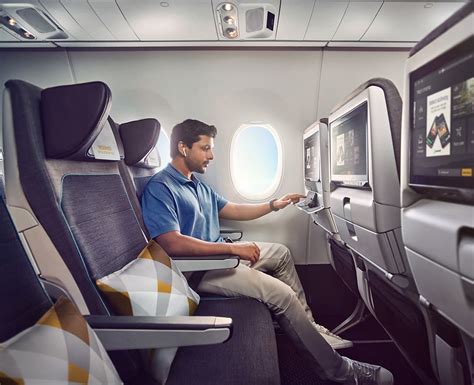
Pricing varies dramatically, but research cited in the supplied material found extra-legroom fees ranging from only a few pounds on some short-haul flights to nearly $270 on certain long-haul services. Separate US research placed the average premium for more spacious economy seating at roughly $88.
That creates a very different value proposition from buying a complete premium economy ticket.
When Extra Legroom Makes More Sense
The strongest case for extra-legroom economy usually appears on short and medium-length flights. On a two- or three-hour journey, passengers have less time to benefit from premium meals, amenity kits, bedding, additional baggage allowances, or a substantially wider seat. In many cases, the most immediate problem is simply having enough room to sit comfortably.
Consider a traveler booking a domestic flight where standard economy costs $200 and an extra-legroom seat costs another $50 to $90. The additional charge may provide the specific improvement that matters most without requiring the traveler to pay hundreds of dollars more for a premium cabin.
The calculation becomes particularly interesting when premium economy is not substantially different from economy in actual seat design. Some premium economy cabins offer wider seats, greater recline, improved meals, and more generous service. Others may provide a relatively modest physical improvement while attaching a considerable fare premium. The details of the aircraft therefore matter almost as much as the airline’s brand.
A passenger who spends most of the flight reading, working, watching a movie, or simply sitting upright may place much greater value on legroom than on a premium meal. Someone taking a daytime regional flight may also have little use for an amenity kit or additional bedding.
The situation changes on overnight long-haul flights. There, a wider seat, additional recline, better dining, priority services, and more generous baggage allowances can become significantly more valuable. Eight or twelve hours in an aircraft can expose every difference between economy and premium economy, particularly when the passenger is trying to sleep.
Airline-Specific Products Can Change the Calculation
There is no universal definition of extra-legroom economy. Airlines use different names, seat configurations, and benefit packages, which means passengers should examine the actual product rather than relying on the label.
United Economy Plus, Alaska Premium Class, and Hawaiian Extra Comfort, for example, use dedicated branding for more spacious economy seating. Depending on the airline and route, these products can include benefits beyond additional legroom, such as priority boarding, complimentary drinks, or access to preferred overhead storage.
That creates an important middle ground. A passenger may not receive the complete premium economy experience, but the extra-legroom fare can include enough additional benefits to make the upgrade feel more substantial than simply moving to another row.
Qatar Airways provides another unusual example with its Comfort+ seating on certain Boeing 777-300ER aircraft inherited from previous operators. Because these aircraft retain particular interior configurations, passengers can encounter a physically different economy seat while remaining within the airline’s economy cabin and receiving the corresponding economy service.
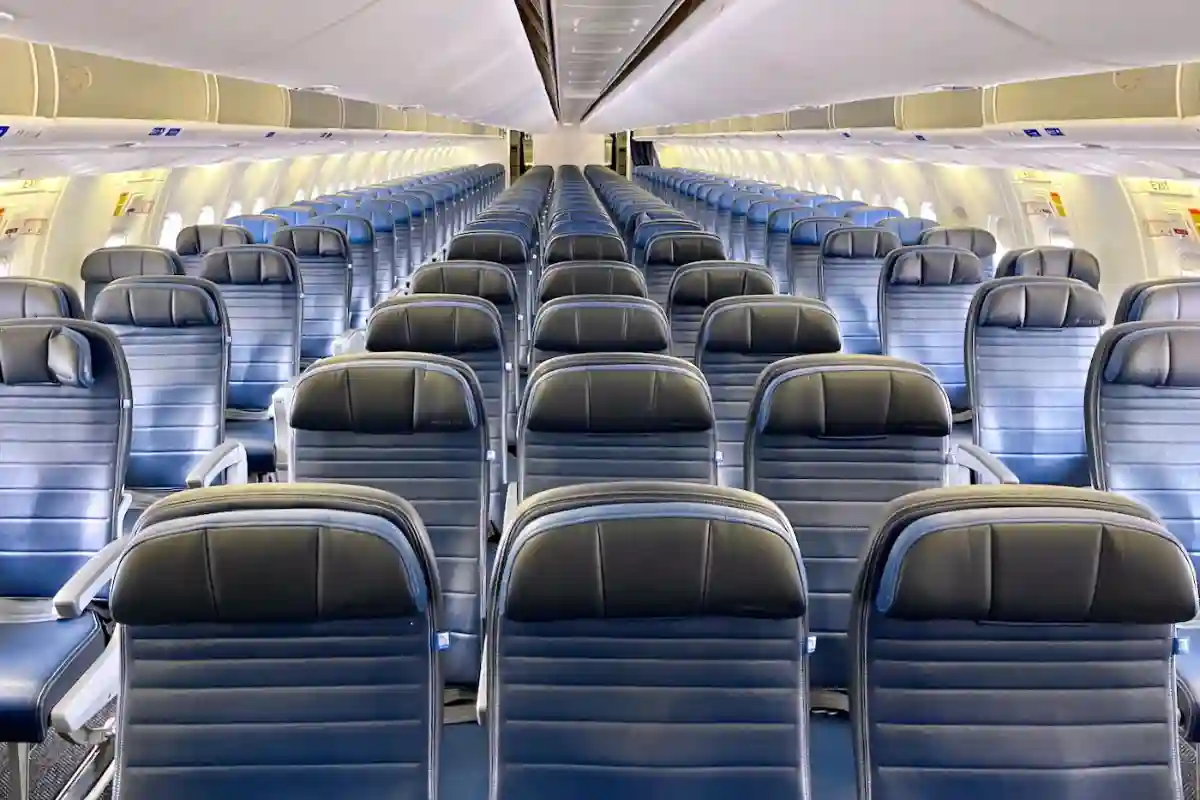
These examples demonstrate why passengers should check the aircraft and exact seat map before paying for an upgrade. Two seats described as extra-legroom can provide very different experiences. One may simply offer four additional inches of pitch, while another could have a different recline angle, better location, priority boarding, or additional onboard benefits.
Seat Pitch Is Important, But It Is Not Everything
Legroom is highly visible, but it should not become the only measurement. Seat width, recline, cushioning, tray-table design, seat location, proximity to lavatories, and overhead-bin availability can all affect comfort.
An exit-row seat, for instance, can provide excellent legroom while introducing other considerations. Depending on the aircraft, the seat may have a fixed armrest containing the tray table, restricted recline, or proximity to an emergency exit. Some passengers also dislike sitting near high-traffic areas.
Likewise, a front-row extra-legroom seat may provide more space but place the traveler beside a galley or lavatory. A passenger who values quiet may therefore prefer a slightly less spacious seat farther back. The best choice depends on what the traveler actually values rather than the number printed beside the seat pitch.
Aircraft type also matters. An extra-legroom seat on a narrowbody aircraft may feel very different from premium economy on a widebody aircraft. Even within the same airline, older and newer cabins can have different seat widths, entertainment systems, storage arrangements, and recline characteristics.
The $100 Question Matters More Than the Cabin Label
Research cited from Upgraded Points found that 84% of surveyed frequent travelers considered ticket price important when purchasing flights. Nonstop service mattered to 59%, flight time to 39%, while legroom and seat comfort mattered to 37%. Free baggage was identified by 34%.
The same research found that 39% of frequent travelers had previously paid extra for additional space, while another 39% would consider doing so. Yet only about one-fifth said they would be comfortable paying more than $100 for the privilege.
That threshold helps explain why extra-legroom economy has become such an important product. There is a large group of travelers who value additional space but do not necessarily want to pay premium-cabin prices. Airlines can monetize that demand without rebuilding the cabin or adding the complete service package associated with premium economy.
For passengers, the decision can therefore be reduced to a practical question: what discomfort are you actually trying to solve?
If the answer is cramped legs, extra-legroom economy may address the problem directly. If the answer is a desire for a wider seat, greater recline, better meals, additional baggage, priority services, and greater overall separation from economy, premium economy may provide benefits that a seat with extra pitch cannot reproduce.
Short Flight or Long Haul Changes the Value
Flight duration is one of the most useful ways to evaluate the upgrade. On a short flight, paying for extra legroom can be an efficient way to improve comfort without spending heavily on benefits that will have little time to matter.
On a long-haul overnight journey, however, premium economy can become more compelling because the passenger interacts with the upgraded product for many more hours. A wider seat and greater recline can influence sleep, while additional baggage, improved meals, priority services, and other benefits can become more valuable during a long travel day.
The difference is particularly relevant for travelers who would otherwise consider business class. Premium economy can serve as a substantial step up without approaching the cost of a lie-flat seat. In that situation, the extra-legroom economy seat may no longer provide enough additional comfort.
Still, even on long flights, price remains central. If premium economy costs twice as much while offering only a modest improvement over a well-positioned extra-legroom economy seat, the passenger has to decide whether the additional services are genuinely useful.
How to Choose Between Premium Economy and Extra Legroom
The most practical approach is to evaluate the entire fare difference rather than the cabin name. Check the seat pitch and width, determine whether the seat reclines differently, examine the baggage allowance, and identify which priority services are included. Then look at the aircraft itself, because the same airline can offer very different products on different fleets.
For a short daytime flight, paying a relatively modest fee for 35 to 38 inches of legroom can solve the main comfort problem without paying for a larger premium package. For an overnight international journey, premium economy may provide meaningful advantages through a wider seat, greater recline, better food, additional baggage, and a more complete service experience.
There is also a third option: do nothing and keep the standard economy seat. If the flight is short, the standard seat is acceptable, and the upgrade fee is high, saving the money may make more sense than buying comfort that will only be noticeable for a limited period.
Premium economy was created to bridge the distance between economy and business class, and extra-legroom economy now occupies another part of that same spectrum. The two products can overlap, but they solve different problems. One sells a broader upgraded travel experience; the other can focus primarily on physical space.
The smartest way to evaluate either product is therefore to look beyond the cabin label. If legroom is the main priority, extra-legroom economy can provide the most direct improvement. If the goal is a broader upgrade in comfort and service, premium economy offers considerably more. The price difference, flight length, aircraft, seat design, and included benefits ultimately determine how much value each option provides on a particular journey.