Commercial aircraft windows are among the most familiar features of modern air travel, yet they may also be one of the least efficient parts of an airliner. Passengers see them as essential: they provide daylight, a view of the world below, and a psychological connection with the outside environment. But from an engineering perspective, every window represents a deliberate interruption in what would otherwise be a strong, continuous fuselage structure. That tension lies at the heart of journalist Brad Brownell’s provocative argument that airplane windows are an “irredeemable nuisance” and that future commercial aircraft could be better without them.
Brownell, writing for Jalopnik’s Planelopnik outlet, approached the subject from the perspective of a transportation journalist rather than a conventional aviation engineer. His argument is deliberately sweeping. Instead of accepting the passenger window as an unavoidable part of aircraft design, he asked what would happen if manufacturers started treating the fuselage as an uninterrupted pressure vessel. The answer involves potentially lower weight, fewer structural complications, reduced thermal loads, and new possibilities for cabin design. It also raises an uncomfortable question for airlines: how much of the conventional passenger experience exists because it is technically necessary, and how much survives simply because travelers expect it?
Why Airplane Windows Weaken the Fuselage
A pressurized airliner fuselage experiences repeated cycles of stress throughout its operational life. During cruise, the pressure inside the cabin is substantially greater than the surrounding atmosphere, causing the fuselage to expand slightly. During descent and after landing, that pressure differential disappears. Every flight therefore subjects the aircraft structure to another cycle of loading and unloading.
A smooth cylindrical pressure vessel distributes these forces efficiently. The uninterrupted skin provides a continuous load path around the fuselage, allowing engineers to achieve the necessary strength without adding excessive structural material. A passenger window interrupts that continuity. Once an opening is cut into the pressure vessel, engineers must reinforce the surrounding structure so that stresses can travel safely around it rather than concentrating at the edge of the opening.
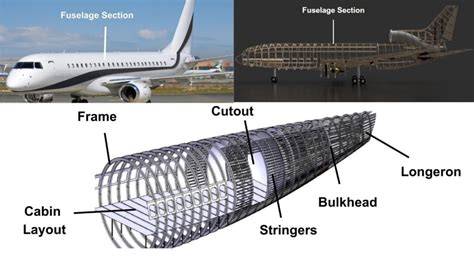
That reinforcement comes in several forms, including frames, doublers, strengthened window surrounds, seals, and other structural components. The window itself is also not simply a piece of transparent material inserted into a hole. Typical aircraft windows use multiple acrylic layers designed to withstand pressure differences, environmental conditions, and accidental damage. Each component adds weight that would not be necessary if that section of the fuselage were simply solid.
The difference may appear insignificant when considering one window. An additional few pounds is hardly meaningful on an aircraft weighing tens or hundreds of thousands of pounds. The problem is multiplication. A large passenger aircraft can contain roughly a hundred or more windows, and the structural reinforcement around those openings adds further mass. Over an aircraft’s service life, carrying that additional weight on every flight requires additional fuel or reduces the amount of payload available for passengers and cargo.
The Hidden Cost of Carrying Passenger Windows
Aircraft manufacturers spend enormous amounts of effort removing unnecessary weight. A kilogram saved from an airframe can be valuable because the aircraft carries that mass on every flight, whether the journey lasts 45 minutes or 15 hours. Engineers therefore examine everything from seat structures and insulation to wiring, galleys, lavatories, and cabin fittings when attempting to improve efficiency.
Windows complicate that philosophy because they are a passenger amenity rather than a component directly responsible for propulsion or flight control. Their weight includes not only the transparent panes but also surrounding structures and seals. They must remain securely attached to the fuselage while enduring thousands of pressure cycles, temperature changes, vibration, cleaning, ultraviolet exposure, and occasional impacts.
The long-term maintenance burden is another consideration. Acrylic surfaces can develop crazing, scratches, discoloration, and other forms of environmental degradation. Seals can age, while window assemblies may eventually require inspection or replacement. A solid section of fuselage still requires maintenance, of course, but it does not contain the same collection of transparent components and seals that must perform reliably throughout the aircraft’s service life.
For an airline, the consequences are ultimately economic. Extra structural mass translates into higher fuel consumption, while maintenance requirements translate into labor and replacement costs. The individual penalty of one window is small, but the cumulative effect becomes much more interesting when multiplied across an entire fleet operating thousands of flights every year.
Windows Also Bring a Thermal Penalty
The argument against aircraft windows does not end with structural weight. Transparent surfaces also influence the thermal environment inside an aircraft, particularly while it is sitting on the ground.
On a hot day, sunlight passing through aircraft windows can rapidly heat cabin surfaces and the air immediately around them. The effect can be particularly noticeable at airports in hot or desert climates, where an aircraft may sit on a ramp under intense sunlight before passengers board. Ground crews must keep the cabin at a tolerable temperature, often using the aircraft’s auxiliary power system or external air-conditioning equipment.
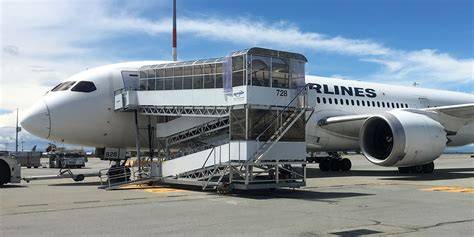
A completely solid fuselage could provide a more continuous thermal barrier. Better insulation would reduce direct solar radiation entering through transparent areas and potentially make the cabin easier to manage thermally. The benefit would not eliminate the need for air conditioning, but it could reduce some of the heat load that cooling systems have to overcome.
This becomes especially relevant as airlines seek to reduce fuel consumption and airport emissions. Auxiliary power units consume fuel while an aircraft is parked, and ground-support equipment also has an energy cost. A windowless cabin could therefore influence more than the aircraft’s cruise performance. Its effects could begin while the aircraft is still sitting at the gate.
A Windowless Cabin Could Change Interior Design
Traditional aircraft windows also impose constraints on cabin designers. Passenger rows do not always align perfectly with the windows because the aircraft’s structural frames, doors, galleys, lavatories, air-conditioning systems, and other internal equipment determine where seats can be installed.
That is why the familiar promise of a “window seat” can sometimes produce an amusing result. A passenger may pay for a window seat only to discover that the window is positioned several inches ahead or behind the seat, or that a structural panel occupies the expected viewing area. The problem is not necessarily poor design by the airline. It is the inevitable result of trying to arrange a commercial cabin around a structure that was engineered for many competing requirements.
Without passenger windows, designers could create a continuous sidewall and position seats more freely. Cabin panels could be designed around uniform geometry, rather than around dozens of individual openings. Digital displays could potentially cover large sections of the sidewall, showing an exterior view, artificial scenery, information, or simply a calming visual environment.
Such a system could also solve another familiar problem: the passenger who controls the window shade controls the amount of sunlight entering an entire portion of the cabin. On a long-haul flight, one person can close a shade because they want to sleep while another passenger wants daylight. Digital cabin displays could theoretically provide individualized control without allowing direct sunlight to affect neighboring passengers.
Could Cameras Replace Aircraft Windows?
The strongest argument for retaining windows is not passenger entertainment. It is situational awareness.
During an emergency landing or evacuation, cabin crew may need to determine what is happening outside the aircraft before opening an exit. A fire, spilled fuel, debris, damaged landing gear, or water surrounding an aircraft can change which exits are safe to use. Traditional windows provide a simple and independent way to make that assessment.
Brownell’s argument is that technology could increasingly replace this function. Modern cameras and optical sensors can produce exterior images that are clearer, more flexible, and potentially available from positions that traditional passenger windows cannot provide. High-definition cameras could be mounted at strategic points around the aircraft, with their feeds displayed to the flight crew and cabin crew.
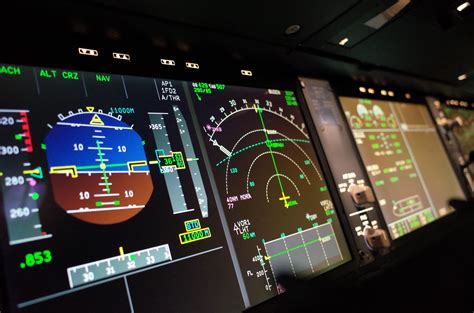
Infrared sensors could potentially provide additional information in darkness or poor visibility. Multiple cameras could also provide views from different angles, giving crews information that a small passenger window cannot. A traditional window offers one fixed field of view. A digital system could theoretically provide several selectable views.
There is an important distinction, however. Cameras require power, software, sensors, wiring, displays, and redundancy. A conventional window does not need an electrical connection to show the outside world. That simplicity is one reason the technology cannot simply be assumed to make windows obsolete. Any replacement system would need to be extremely reliable and carefully integrated into the aircraft’s safety architecture.
A possible compromise would therefore involve removing most passenger windows while retaining small, reinforced optical openings around emergency exits. The aircraft would gain much of the structural advantage of a solid fuselage while preserving direct visual inspection capability where it matters most.
The Passenger Psychology Problem
Engineering may provide convincing reasons for eliminating windows, but passenger psychology creates a much larger obstacle.
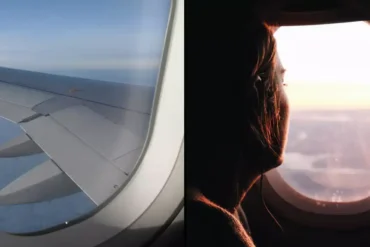
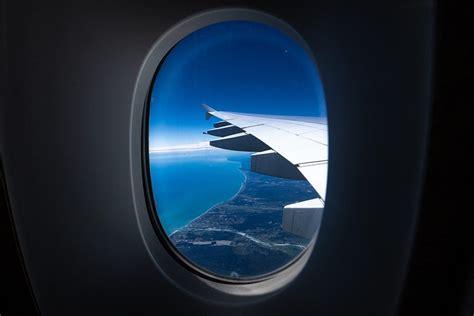
For many travelers, looking through an aircraft window is inseparable from the experience of flying. The view during climb, the sight of clouds below the wing, city lights at night, and the first glimpse of a destination all provide emotional value that cannot easily be expressed in kilograms or fuel savings.
Airbus interior specialists have previously pointed to passenger acceptance as a major barrier to completely enclosed aircraft cabins. Travelers may associate windows with openness and safety, while a windowless cabin could create feelings of confinement for people who dislike enclosed spaces.
Brownell’s counterargument is that modern economy cabins already provide an extremely controlled environment. Passengers sit closely together, have limited personal space, and spend hours inside a sealed tube without access to the outside environment. From this perspective, the window may provide psychological relief without actually changing the fundamental nature of the experience.
There is also a curious contradiction in modern cabin design. Airlines continue to market windows as a premium feature while simultaneously increasing seating density. The passenger may therefore have a beautiful view of the Earth while sitting in a cabin where shoulder room and personal space are increasingly limited.
The Airbus A321LR Window Incident Shows the Vulnerability
The theoretical weaknesses of fuselage openings become more tangible when an aircraft experiences actual window damage.
In October 2023, a Titan Airways Airbus A321LR departing London Stansted experienced pressurization problems and unusual cabin noise after climbing above 14,000 feet. Investigators subsequently found that intense filming lights used during a ground production had damaged window components. Two window panes were ultimately found to have fallen out during the flight.
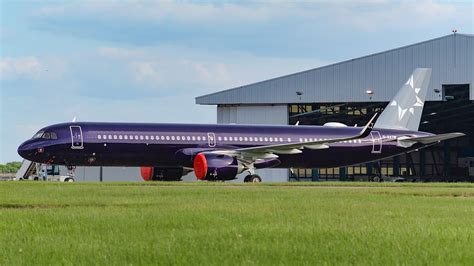
The incident did not demonstrate that passenger windows are inherently unsafe. Modern aircraft windows are designed with substantial redundancy, and serious window failures remain uncommon. It did, however, demonstrate that a window assembly is a system containing multiple components that can be affected by heat, handling, aging, and environmental conditions.
A solid fuselage section eliminates that particular category of failure. It does not make the aircraft invulnerable, because every aircraft structure has potential failure modes. But reducing the number of openings in a pressure vessel can reduce the number of locations requiring specialized reinforcement and sealing.
Why Commercial Airliners Still Need Their Windows
Despite the engineering case, passenger windows are unlikely to disappear from conventional airliners anytime soon. The issue is not simply whether manufacturers can build a strong aircraft without them. They clearly can. Military transports and cargo aircraft demonstrate that aircraft can operate successfully without rows of passenger windows.
The real challenge is the commercial passenger.
Airlines sell transportation, but they also sell an experience. A traveler choosing a seat expects certain features, and the ability to look outside is one of the most deeply established expectations in aviation. Removing that feature would require airlines to persuade millions of passengers that digital screens, external cameras, or artificial displays provide an equivalent experience.
There would also be certification challenges surrounding any new visual system. A camera-based replacement would need redundancy, protection against failures, reliable power supplies, suitable display systems, and procedures for situations in which the digital system became unavailable. Aviation tends to favor simple systems that fail predictably, and a transparent window has an enormous advantage in that respect.
Could Future Aircraft Finally Go Windowless?
The idea becomes more plausible when considered alongside emerging aircraft materials and cabin technologies. Composite fuselages already allow manufacturers to rethink traditional structural arrangements, while large digital displays are becoming increasingly capable. A future aircraft could theoretically use external cameras to capture the world and reproduce those images on cabin walls, creating an immersive digital environment without cutting dozens of openings into the pressure vessel.
Such an aircraft might even offer something traditional windows cannot: selectable views. A passenger could potentially see the wing, look downward toward the ground, display a forward-facing view, or switch to an information-rich visualization. The cabin could also become darker without requiring individual window shades, giving airlines more control over the environment during overnight flights.
Yet the psychological value of a real window remains difficult to reproduce. There is something fundamentally different about looking through transparent material and seeing the actual sky rather than watching a screen displaying a camera feed. Passengers may accept artificial alternatives for entertainment, but that does not mean they will regard them as equivalent.
The airplane window therefore survives in a strange position. It is structurally inconvenient, adds weight, requires maintenance, introduces thermal challenges, and constrains cabin architecture. At the same time, it remains one of the most recognizable and emotionally important features of passenger aviation.
Brad Brownell’s argument is provocative precisely because it exposes that contradiction. From a purely engineering perspective, a continuous fuselage has obvious advantages. From a commercial perspective, however, the aircraft is not merely a machine designed to move efficiently through the atmosphere. It is also a product experienced by human beings.
For now, that human preference keeps the window firmly embedded in airliner design. The technology needed to replace it may already be emerging, but convincing passengers to surrender their view of the sky could prove considerably harder than building the aircraft itself.