In the ever-evolving world of aerospace innovation, Otto Aerospace has emerged as a visionary force, pushing the boundaries of both design and passenger experience. Their latest concept, the Phantom 3500, is poised to redefine the very notion of luxury aviation. But unlike other jets vying for opulence through extravagant interiors or gold-plated flourishes, the Phantom 3500 reimagines the fuselage itself—removing windows entirely—and replacing them with a revolutionary technology known as “SuperNatural Vision.”
SuperNatural Vision: A Windowless View of the World
In traditional aircraft design, windows are both a structural liability and an aerodynamic compromise. While passengers love gazing out of them, engineers loathe their impact on hull integrity and drag. Otto Aerospace dares to challenge this compromise with SuperNatural Vision, an immersive display system that wraps around the cabin walls.
Instead of small portholes, high-resolution panoramic displays—six feet wide—blanket the interior. These digital panels project real-time, color-enhanced footage from external cameras seamlessly stitched together, offering passengers an uninterrupted, lifelike view of the outside world. Otto’s CEO, Paul Touw, has described the sensation as “surreal,” claiming that one can even see the curvature of the Earth without leaving their seat.

This immersive vision is not merely a gimmick—it is an architectural innovation. By eliminating windows, the aircraft’s hull gains exceptional structural integrity, leading to a smoother aerodynamic profile and, ultimately, greater fuel efficiency. The result is a synthesis of technological marvel and elegant simplicity.
Carbon Fiber Fuselage and Aerodynamic Mastery
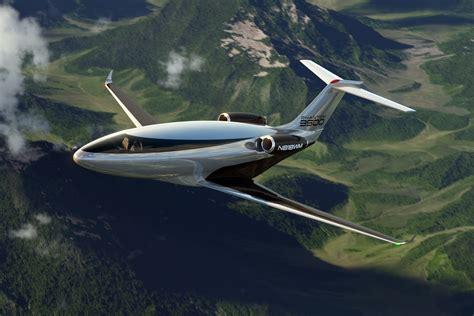
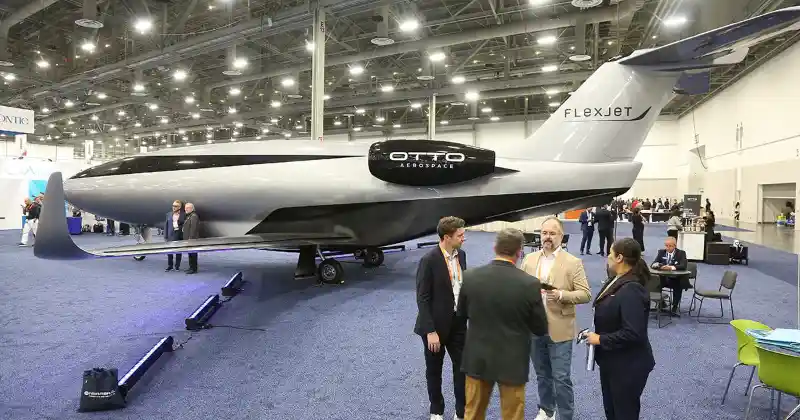
The Phantom 3500’s sleek, torpedo-like frame is made entirely of carbon-fiber composites, a material known for its strength-to-weight ratio. This not only contributes to weight reduction but also enables a design that allows air to glide over the body like a frictionless liquid.
Inside, this design philosophy manifests as opulence in spaciousness. The jet boasts a stand-up height of 6 feet 5 inches, an expansive cabin length of 22 feet, and a width of 7.5 feet. With an internal volume of 800 cubic feet, the cabin offers exceptional comfort for up to nine passengers, providing ample space to work, relax, or socialize mid-flight.
A Virtuous Cycle of Efficiency
Otto Aerospace refers to the Phantom 3500’s innovations as part of a “virtuous cycle of efficiency“—a system in which each design improvement amplifies the benefits of the others.
- The aircraft’s low drag fuselage allows it to consume approximately 60% less fuel compared to existing private jets.
- This fuel savings enables the use of engines that are 42% smaller, reducing overall weight.
- Lighter engines allow for lighter landing gear and structural components.
- Collectively, these efficiencies result in up to 50% lower operating costs.
These cascading benefits extend beyond economics. Reduced emissions, quieter operation, and lower maintenance demands all contribute to the Phantom 3500’s sustainability profile. Touw even envisions a future where flying private could cost less than a business class seat.
Altitude and Range: Performance Beyond the Clouds
The Phantom 3500 is not just built for comfort and efficiency; it is also a machine of impressive performance. Designed to cruise at 590 mph at an altitude of 51,000 feet, it flies significantly higher than commercial airliners, which typically travel between 31,000 and 42,000 feet. This means passengers soar above turbulent weather, enjoying smoother rides and spectacular views.
The jet is projected to have a range of 3,200 nautical miles with four passengers on board. This allows non-stop flights between destinations such as New York to London, San Francisco to Miami, or Paris to Dubai, putting global business and leisure travel within seamless reach.
Not Just a Concept: Backed by Investment and Vision
Skeptics may point out that the Phantom 3500 has yet to take flight—and they would be correct. As of late 2025, the jet remains in the pre-flight development stage, with available imagery consisting of ultra-realistic digital renderings. However, Otto Aerospace has demonstrated more than wishful thinking. The company has already flown the Celera 500L, a propeller-driven technology demonstrator used to validate the laminar flow and aerodynamic principles that now underpin the Phantom 3500.
The Phantom 3500 is a clean-sheet design, built upon the success and data of the Celera. The first flight of this futuristic jet is projected for late 2027.
A Bold Launch Partner and Financial Momentum
Despite its untested status, the Phantom 3500 has attracted powerful allies. Flexjet, one of the leading fractional jet ownership companies in the United States, has committed to the aircraft in a big way—placing a landmark order of 300 jets. This bold vote of confidence signals strong belief in Otto’s ability to deliver.
Otto’s financial trajectory supports such optimism:
- $250 million raised from private investors
- An additional $515 million incentive package secured to build a high-tech production facility in Florida
These capital infusions are more than financial lifelines—they are endorsements of Otto’s engineering credibility and commercial viability. The factory investment, in particular, promises to usher in a new aerospace manufacturing hub in the Southeastern U.S., providing jobs, stimulating innovation, and serving as a launchpad for future models.
Windowless Travel: The Future of Aviation Design?
The windowless cabin of the Phantom 3500 may seem radical, but it could mark the beginning of a broader industry trend. By removing traditional structural constraints, aircraft designers can pursue previously unimaginable shapes, materials, and interior configurations.
More importantly, passengers no longer have to choose between form and function. SuperNatural Vision offers a visual experience more immersive than traditional windows, transforming the cabin from a mere travel vessel into an observational lounge in the sky.
There are, of course, psychological and perceptual challenges to overcome. Some passengers might initially find the absence of physical windows disconcerting. However, Otto’s goal is to enhance comfort through digital innovation, creating environments that feel both natural and extraordinary. As digital display technology improves—with higher resolutions, dynamic lighting, and interactive capabilities—the experience could become even more compelling than gazing through a pane of glass.
Final Thoughts: Phantom 3500 and the Dawn of the Next Aviation Era
The Otto Phantom 3500 is not just another private jet vying for market share. It is a revolution in aviation philosophy, reimagining how aircraft are built, how they perform, and how passengers engage with the world outside. By daring to eliminate one of the most iconic features of flight—the window—Otto Aerospace has unlocked a cascade of innovations that span from materials science and aerodynamics to passenger experience and sustainability.
While its projected launch date in 2027 means we must wait to witness its full potential, the building blocks are already solidly in place. With serious financial backing, a major launch customer, and a growing team of aerospace experts, Otto has set its sights on not just launching a new aircraft, but leading a paradigm shift in private aviation.
For now, we watch the skies and the renderings—but soon, we may be watching the curvature of Earth from a seat without a window, surrounded by digital skies more real than ever imagined.