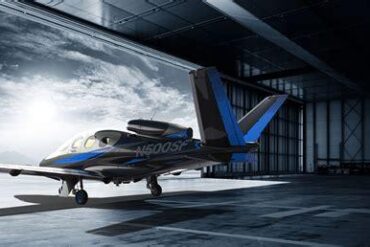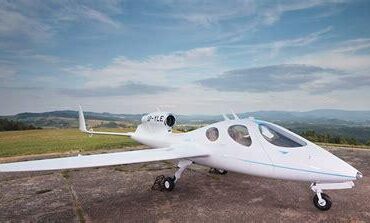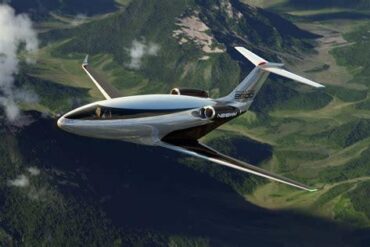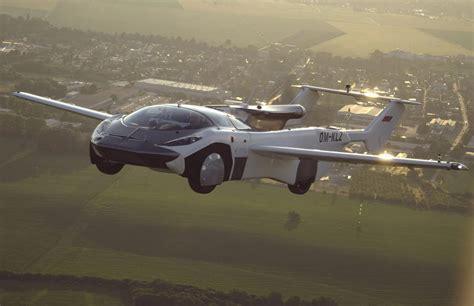
In the realm of futuristic transport, the Klein Vision AirCar emerges not merely as a concept, but as a revolutionary hybrid that bridges the gap between automotive and aerospace engineering. Designed by Professor Štefan Klein and his team at Klein Vision, this two-seat flying car, certified as an aircraft in Slovakia in January 2022, marks a critical milestone in the evolution of roadable aircraft.
The AirCar is the culmination of decades of design ambition. Klein, having previously worked on the AeroMobil, set out to create a more refined and versatile flying vehicle. What distinguishes the AirCar is not just its capacity to fly, but its elegant duality—it is a fully road-legal sports coupe that transforms into an aircraft in just over two minutes.
Design Philosophy and Engineering Mastery
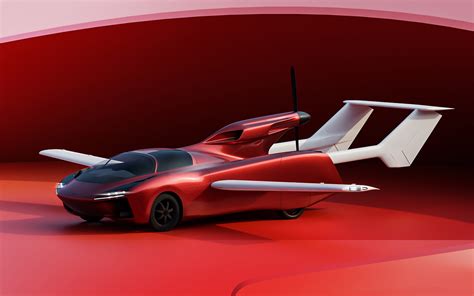
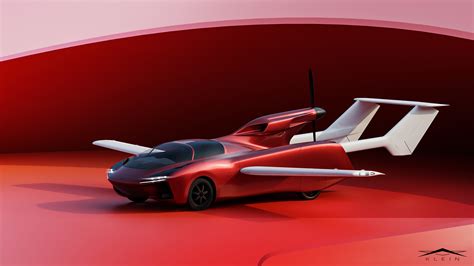
At first glance, the AirCar appears as a sleek, futuristic sports car with an aerodynamic body. However, beneath its sculpted carbon-fiber composite frame lies an intricate semi-monocoque structure over a steel subframe, engineered to withstand the aerodynamic stresses of flight while maintaining roadworthiness.
Key to its functionality are over 20 programmable servo motors that autonomously adjust wings, tailbooms, and aerodynamic surfaces to enable seamless transformation. The pusher propeller, neatly integrated between the fuselage and extending tail, remains fixed in place, a testament to the meticulous spatial engineering involved.
On the road, the retracted tail functions much like a rear spoiler, producing aerofoil-like downforce, enhancing grip and handling. In the air, the same tail, extended and stabilized, becomes crucial to maintaining lift and control.
Propulsion and Performance Metrics
The prototype AirCar is powered by a 1.6-liter BMW engine, delivering 104 kilowatts (139 horsepower) on standard automotive gasoline. This powertrain enables the vehicle to take off at approximately 120 kilometers per hour (75 mph) after a 300-meter (980 ft) takeoff run. Once airborne, it cruises comfortably at 170 km/h (92 knots), with a maximum operational ceiling of 4,572 meters (15,000 ft).
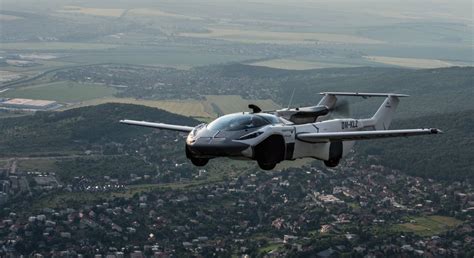
Its maximum range of 1,000 kilometers (620 miles) and cruising altitude of 2,500 meters (8,200 ft) make it suitable for medium-range intercity flights. What truly sets the AirCar apart is its transformation time—a precise 2 minutes and 15 seconds to switch from road vehicle to aircraft mode, significantly reducing logistical friction.
Development Journey and Certification Milestones
The development of the AirCar began in the late 1980s, rooted in Klein’s early fascination with combining automotive freedom with airborne mobility. After splitting from AeroMobil, Klein co-founded Klein Vision with Anton Zajac to pursue a fresh vision.
The prototype took its maiden flight on October 22 or 27, 2020, followed by a landmark 35-minute intercity flight between Nitra and Bratislava airports in June 2021. This event not only showcased the vehicle’s capabilities but also its potential in replacing conventional urban and regional transport modes.
By January 2022, the AirCar was officially type certified as an aircraft in Slovakia, signifying compliance with stringent airworthiness standards. Road certification, while still pending full regulatory greenlight, is anticipated to follow soon as Klein Vision continues to refine and test subsequent models.
Technological Innovations and Future Upgrades
A second pre-production prototype is underway, expected to feature a monocoque fuselage and a more robust 220 kW (300 hp) engine, greatly enhancing its flight characteristics and potentially expanding its payload capacity. With lightweight materials, integrated avionics, and precision control systems, the AirCar reflects the cutting edge of aerospace innovation.
Additionally, the AirCar is equipped with a safety parachute system, offering an extra layer of protection in emergencies—an essential feature as we consider personal flying vehicles entering the public domain.
Cultural Moment and Public Demonstrations
In a notable fusion of art and technology, Jean-Michel Jarre, the electronic music legend, took flight aboard the AirCar in April 2024. This event underscored the AirCar’s transition from technical marvel to cultural icon, resonating with audiences beyond aviation circles.
These public flights have played a pivotal role in shifting perceptions, transforming the idea of flying cars from science fiction to tangible reality. Each demonstration garners global attention, further fueling interest and investment in the urban air mobility (UAM) sector.
Regulatory Pathways and Market Readiness
While aircraft certification is a major achievement, road approval presents a separate challenge. The AirCar must meet crash safety standards, lighting requirements, and emissions regulations in each country it hopes to operate in. Klein Vision is currently engaging with European Union and international regulators to fast-track dual-approval pathways.
Once certified for road use, the AirCar could revolutionize regional commuting, particularly in areas where highway congestion and limited airport infrastructure pose bottlenecks.
Comparative Context in the Flying Car Landscape
The AirCar competes with a limited but growing class of roadable aircraft including the Terrafugia Transition, PAL-V Liberty, and AeroMobil. However, few rivals offer a comparable balance of road agility, air performance, and transformation efficiency.
Unlike tilt-rotor VTOL vehicles, the AirCar uses a conventional runway for takeoff and landing, which may limit urban usage but vastly simplifies the engineering and certification process, especially with existing infrastructure.
Challenges Ahead and Strategic Vision
Key hurdles include mass production scalability, pilot training requirements, and infrastructure adaptation. The vehicle’s reliance on runways may initially confine it to regional airports. Nonetheless, with smart infrastructure planning—such as vertiports with short runway strips—the operational landscape could dramatically shift.
From a cost perspective, Klein Vision aims to position the AirCar as a premium personal mobility solution, targeting business executives, intercity commuters, and government agencies seeking flexible aerial alternatives.
Conclusion: A Pioneering Leap in Mobility Evolution
The Klein Vision AirCar stands as a bold testament to what is possible when visionary design meets precision engineering. As it nears commercial readiness, it heralds a new era of hybrid mobility, one where the freedom of the road converges with the boundless potential of the sky.
Its legacy, however, will not be defined solely by its innovation, but by its ability to integrate seamlessly into our everyday lives—transforming how we travel, connect, and live in the 21st century.