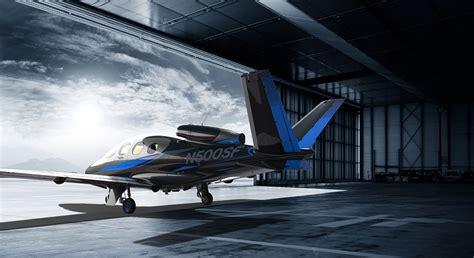
The Cirrus Vision SF50 stands as a groundbreaking achievement in aviation—merging simplicity, safety, and elegance into a single-engine personal jet. As the world’s first certified very light jet (VLJ) with a whole-airframe parachute system and autoland technology, the SF50 redefines what private aviation can offer individual owners and small business operators.
Since its entry into service in December 2016, the SF50 has surpassed 615 deliveries by the end of 2024, quickly establishing itself as the best-selling business jet in its category year after year. Behind its commercial success lies a compelling story of innovation, resilience, and design excellence.
Origins of a Vision: Development History of the SF50
The story of the SF50 began in 2003, when Alan and Dale Klapmeier, founders of Cirrus Aircraft, set out to disrupt the private jet market. Their goal was audacious: create a sub-$1 million jet that would cruise at 300 knots, climb to 25,000 feet, and be equipped with Cirrus’s now-iconic Cirrus Airframe Parachute System (CAPS). The early prototype, unveiled in 2007 and flown in 2008, generated enormous excitement—but also encountered the brutal economic realities of the 2008 recession.
Despite financial turbulence and the departure of the Klapmeier brothers in 2009, momentum never fully stopped. By 2011, Cirrus had garnered over 400 deposits, but it was the 2012 investment by Chinese aerospace company CAIGA, injecting $150 million, that pushed the project into final development.
The conforming prototype took flight on March 24, 2014, and by October 28, 2016, the SF50 earned its FAA type certification. Just two months later, the first customer jet was delivered, marking a major turning point in personal aviation.
Engineering Excellence: Design and Structure
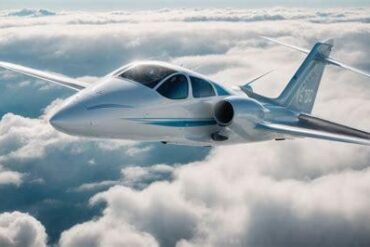
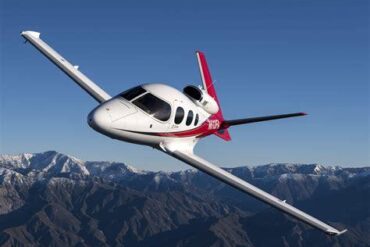
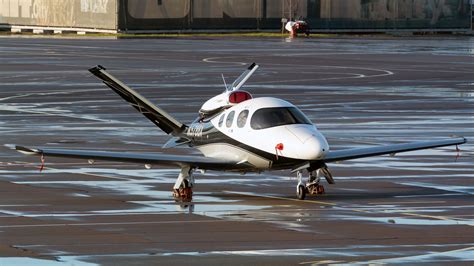
The Vision Jet’s unmistakable silhouette, defined by its V-tail and over-fuselage engine placement, is not just an aesthetic choice—it’s a function-driven design that balances aerodynamics, engine efficiency, and noise reduction.
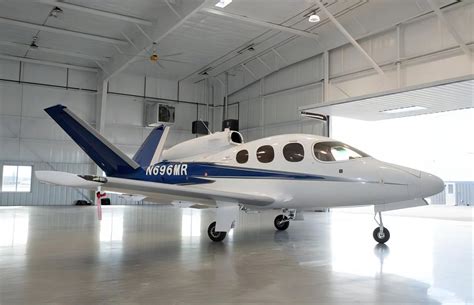
Constructed entirely from carbon-fiber composite materials, the SF50 achieves both lightweight performance and structural durability. It fits comfortably within a 40-foot hangar, making it as accessible logistically as it is operationally. The pressurized cabin provides a comfortable experience at altitudes up to 31,000 feet, maintaining a differential of 6.4–7.1 psi.
The Williams FJ33 turbofan, generating 1,900 lbf of thrust, powers the SF50 through a wide range of performance envelopes. With a stall speed of 64–67 knots and a glide ratio of 14.7:1, it behaves more like a turboprop in slow-speed handling—ideal for short runways and lower operating costs.
Cabin Comfort and Ergonomics
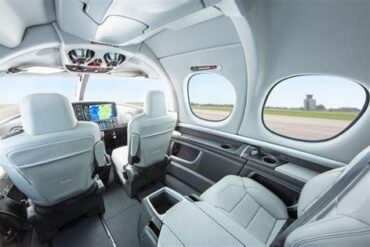
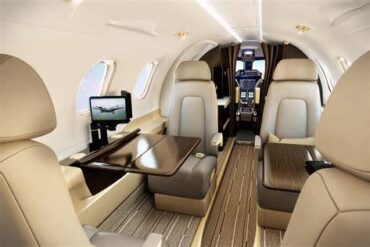
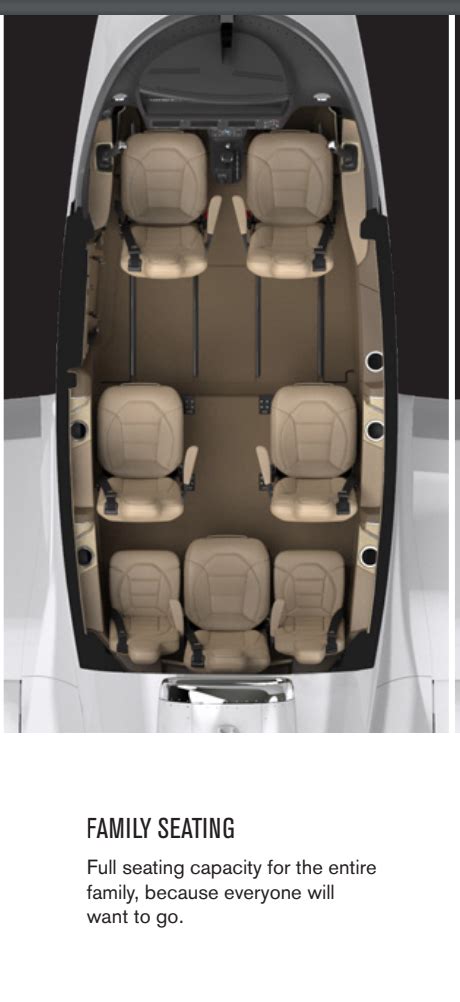
The cabin configuration sets the SF50 apart from traditional light jets. Measuring 5.1 feet wide by 4.1 feet high, the cabin can seat up to seven passengers in a 1+2+2+2 layout, including a flexible sliding center seat for versatility in load distribution.
Visibility is a key design feature. With large panoramic windows and an uncluttered flight deck, the Vision Jet provides a flying experience that is both engaging and relaxing. The Garmin G3000 avionics suite, standard in the G2 model, supports a low workload and intuitive interface, empowering single-pilot operations with confidence.
Performance Parameters: Range, Speed, and Economy
In real-world operations, the SF50 cruises efficiently at 300 knots, with a maximum speed of 311 knots in the G2 variant. The aircraft delivers a range of 1,100 to 1,200 nautical miles, depending on configuration and payload. With a service ceiling of 28,000 feet for early models and 31,000 feet for G2 and G2+, it handles both short hops and regional missions with ease.
Fuel consumption varies between 45–69 gallons per hour, translating to significantly lower operating costs compared to twin-engine light jets. The SF50 offers an attractive alternative to traditional turboprops like the Pilatus PC-12 or King Air 200, especially when factoring in acquisition cost and simplicity.
Safety Leadership: CAPS and Autoland
Safety is where the Vision Jet truly differentiates itself. All models include the revolutionary Cirrus Airframe Parachute System (CAPS)—the only FAA-certified whole-airframe parachute in a jet aircraft. In the event of a critical failure, the parachute system can safely lower the entire aircraft and occupants to the ground.
Starting with the G2+ variant introduced in 2021, Garmin Safe Return Autoland became standard. This system allows a passenger to initiate a fully automated emergency landing at the nearest suitable airport with a single button press. From navigation to gear deployment and final touchdown, the system requires no pilot input—saving lives when the unexpected happens.
There have been two documented CAPS deployments in the SF50 fleet, both resulting in zero fatalities. Moreover, safety bulletins issued in 2019–2020, addressing AoA sensor issues and amplifier-related fire risks, were resolved promptly without injury.
Model Evolution: G2 and G2+ Enhancements
The Vision Jet has undergone significant refinement since its first delivery. In 2019, the G2 model introduced critical upgrades:
- RVSM certification (allowing 31,000-ft flight)
- Autothrottle system for smoother climbs and descents
- Higher cruise speed of 311 kt
- Base price: $2.38 million
Two years later, the G2+ Vision Jet arrived with:
- 20% improved takeoff performance
- Extended range capabilities
- Inflight Wi-Fi connectivity
- Safe Return Autoland as standard
- Typical equipped price: ~$3.25 million
These improvements cater to an increasingly sophisticated clientele, positioning the Vision Jet as a go-to aircraft for owner-operators seeking modernity, automation, and assurance.
Operational Footprint and Reliability
By April 2023, 439 Vision Jets were registered in the U.S. alone—a testament to its popularity and reliability. Operators frequently praise its low maintenance needs, predictable operating costs, and ease of handling. Many cite the turboprop-like performance at low speeds as a key differentiator, offering a smoother transition for pilots stepping up from high-performance piston aircraft.
Cirrus Aircraft maintains a robust support network, including service centers across North America, Europe, and Asia, making ownership logistically feasible for international clients.
Awards and Industry Recognition
In 2017, the Vision Jet earned aviation’s highest honor—the Robert J. Collier Trophy, awarded for “the greatest achievement in aeronautics or astronautics in America.” Industry reviewers consistently applaud the aircraft for combining safety, accessibility, and innovation in a way no other VLJ has achieved.
Publications such as Flying Magazine and AOPA Pilot have lauded its value proposition, low learning curve, and real-world usability. For private pilots aspiring to own a jet without a crew, no other aircraft offers this blend of simplicity and safety.
Specifications Summary: Cirrus Vision Jet G2
- Crew: 1
- Passengers: Up to 6
- Length: 30 ft 11 in
- Wingspan: 38 ft 9 in
- Empty Weight: 3,550 lb
- Max Takeoff Weight (MTOW): 6,000 lb
- Thrust: 1,846 lbf (Williams FJ33)
- Max Speed: 311 knots
- Range: 1,200 nautical miles
- Service Ceiling: 31,000 ft
- Fuel Capacity: 2,000 lb
- Avionics: Garmin G3000
Conclusion: A New Standard in Personal Jet Travel
The Cirrus Vision SF50 represents more than a technological achievement—it marks a philosophical shift in private aviation. With its uncompromising safety features, streamlined design, and owner-pilot focus, it invites a new class of aviators to the jet experience. Whether for personal travel or executive use, the Vision Jet delivers modern performance in a package that is approachable, intelligent, and secure. It is not just a jet—it is the future of personal flight.