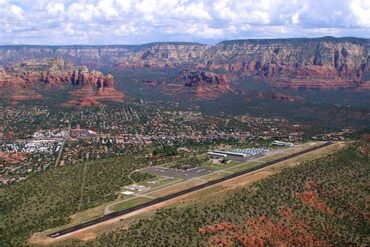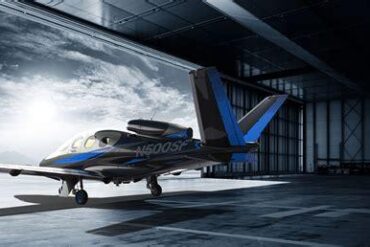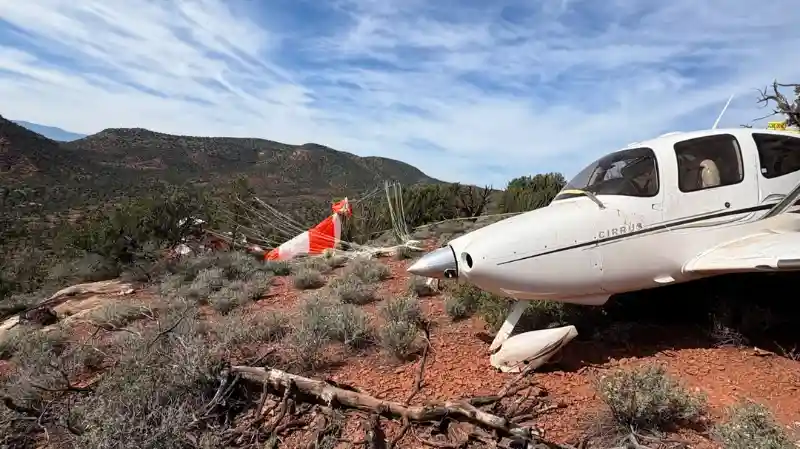
On a clear morning near Sedona, Arizona, a Cirrus aircraft’s emergency parachute system—known as CAPS (Cirrus Airframe Parachute System)—was successfully deployed. The incident resulted in no injuries, and it reignited discussion among aviation professionals, engineers, and enthusiasts on the safety, history, and mechanics behind CAPS technology.

The First Real-World CAPS Activation: A Defining Moment
The CAPS system first proved its value in 2002 during a dramatic incident handled by an air traffic controller at Addison Airport, Texas. A Cirrus pilot experiencing an aileron control failure made repeated fly-bys, hoping for a resolution. Eventually, the pilot diverted to an uninhabited, wooded area, choosing to deploy the CAPS system. Once activated, the pilot became noticeably calmer, maintaining radio contact with the tower until near touchdown. He reportedly stated that everything was now “out of his hands,” and that he would just “enjoy the ride.”
This successful deployment, with no injuries or fatalities, marked a pivotal moment in general aviation safety. The psychological shift from panic to calm after deployment became a recurring theme in CAPS incident reports.
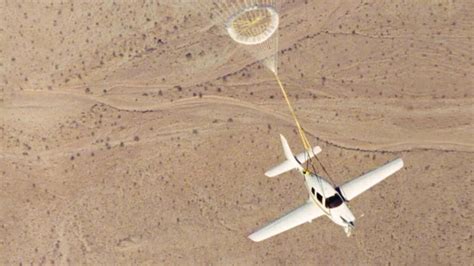
Understanding CAPS: Cirrus Airframe Parachute System
The CAPS system, while common knowledge today, was once a controversial innovation. Around Addison Airport, controllers and pilots were initially skeptical, joking about the concept of a parachute for a plane. However, the parachute hatch is highly visible from above, making the system well-known among air traffic professionals and pilots alike.
Notably, referring to the system as “Cirrus CAPS” is technically redundant since CAPS stands for Cirrus Airframe Parachute System. Still, the naming persists colloquially, reflecting the deep brand association with the feature.
Choosing the Right Terrain for Deployment
In the recent Sedona event, questions arose about the pilot’s decision to avoid the airport and instead opt for a remote, tree-covered area. Critics suggested an airport might offer better rescue response and infrastructure. However, trees offer critical impact absorption compared to concrete runways.
Addison Airport, in the historical 2002 incident, is enveloped by dense urban sprawl, tall buildings, and highways—offering virtually no viable emergency landing zones. The pilot chose a wooded area just a few miles away with short mesquite trees, adjacent to a golf course. This decision not only ensured a softer landing but also allowed general aviation (GA) spotters to help locate the aircraft for emergency responders.
CAPS Performance: Deployment and Recovery Statistics
The CAPS system has seen substantial use since its inception. As of September 21, 2021, CAPS had been activated 126 times, with 107 successful deployments. As of October 24, 2019, 21 aircraft had been repaired and returned to service post-deployment.
While some believe the system renders the aircraft a total loss, others offer data-backed optimism:
- A CAPS-certified technician stated training materials indicated a 75% return-to-service rate for aircraft post-deployment.
- The decision to repair or write off a plane often hinges on economics: an older 2006 G2 model may not justify repair costs compared to a $1M+ G6 or G7.
Technical Insights: Structural Impact and Design Features
Upon CAPS activation, several key structural components absorb impact:
- The landing gear takes the brunt of ground forces.
- Nylon webbing straps, embedded beneath the aircraft’s composite skin, rip through the fuselage as the chute deploys.
- The composite structure may delaminate, reducing the feasibility of repair.
A former Cirrus employee described installing CAPS systems as the most meaningful job of his career, despite leaving under controversial circumstances. His pride underscores the system’s profound life-saving potential.
Aircraft Attitude and Descent Behavior
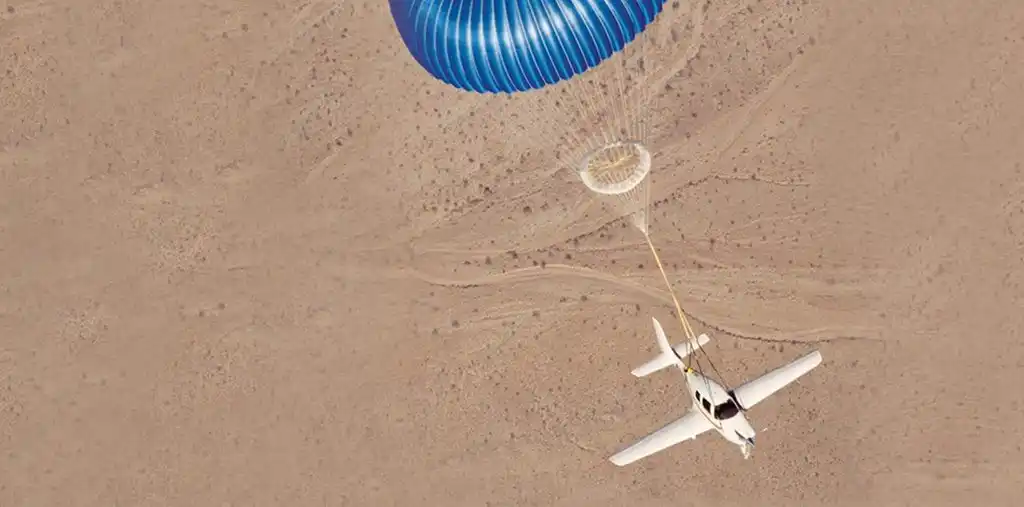
Contrary to assumptions that CAPS brings the aircraft straight down, initial descent is nose-down, stabilizing to a more level attitude through line cutters about 10 seconds after deployment. This staged stabilization helps control energy distribution on impact.
Seats and restraints in Cirrus aircraft are equipped with energy-absorbing materials and airbags. These systems combine with the parachute to dramatically improve survival odds during off-field landings.
Propeller and Engine Considerations
In several CAPS deployments, observers noted missing or damaged propeller blades. Hypotheses include:
- Running engines causing blades to bend or snap on ground impact.
- Composite props failing due to imbalance during descent.
Maintenance experts pointed out that when props hit the ground while spinning, they typically bend, not break at the root. The presence or absence of nose cone damage helps determine if the propeller struck the ground during landing or separated mid-air.
CAPS Deployment Protocols and Checklists
Standard operating procedures include cutting the engine mixture before or during CAPS deployment to reduce the risk of post-landing fire or rotating components. However, it’s unclear how consistently this step is followed under emergency stress. The official CAPS deployment cover checklist includes this item, and best practice suggests all Cirrus pilots rehearse it regularly.
Cultural Shift: Pilots and Engineers on CAPS Impact
The aviation community’s perception of CAPS has evolved from skepticism to reverence. Numerous commenters in the Sedona thread expressed deep gratitude to the engineers and factory workers behind the system. One poster even joked that activating CAPS should require writing a two-page thank-you letter to the Cirrus engineering team.
A former CAPS installer now working outside Minnesota reflected on his time at Cirrus as the most fulfilling work of his career. Despite management issues and abrupt dismissal, he continues to work on Cirrus planes and answers technical questions about CAPS, highlighting his enduring belief in the product.
This personal pride is echoed by many current and former Cirrus employees, creating a culture of dedication and safety innovation within the community.
Conclusion: A Milestone in General Aviation Safety
The recent CAPS deployment near Sedona joins a growing list of successful saves, once again validating the investment, design, and training efforts behind Cirrus’ parachute system. With no injuries, strategic use of terrain, and visible structural resilience, the event encapsulates how technology and pilot decision-making can align to preserve life.
This incident reinforces the importance of CAPS training, emergency preparedness, and maintaining aircraft within defined envelope parameters for deployment. It also contributes to ongoing discussions around airframe repairability, descent physics, and the psychological dimensions of in-flight emergencies.
Cirrus has not only changed the expectations for general aviation survivability but also helped cultivate a culture where safety innovation is embraced, and engineers are celebrated just as much as pilots.