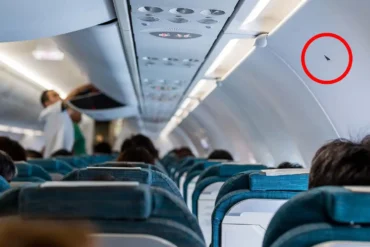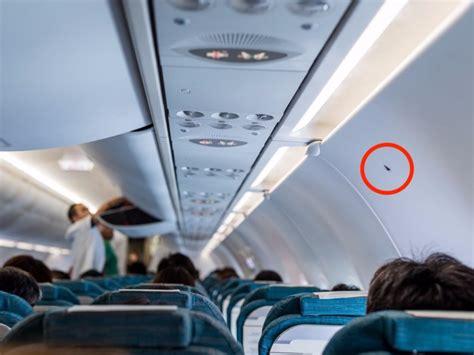
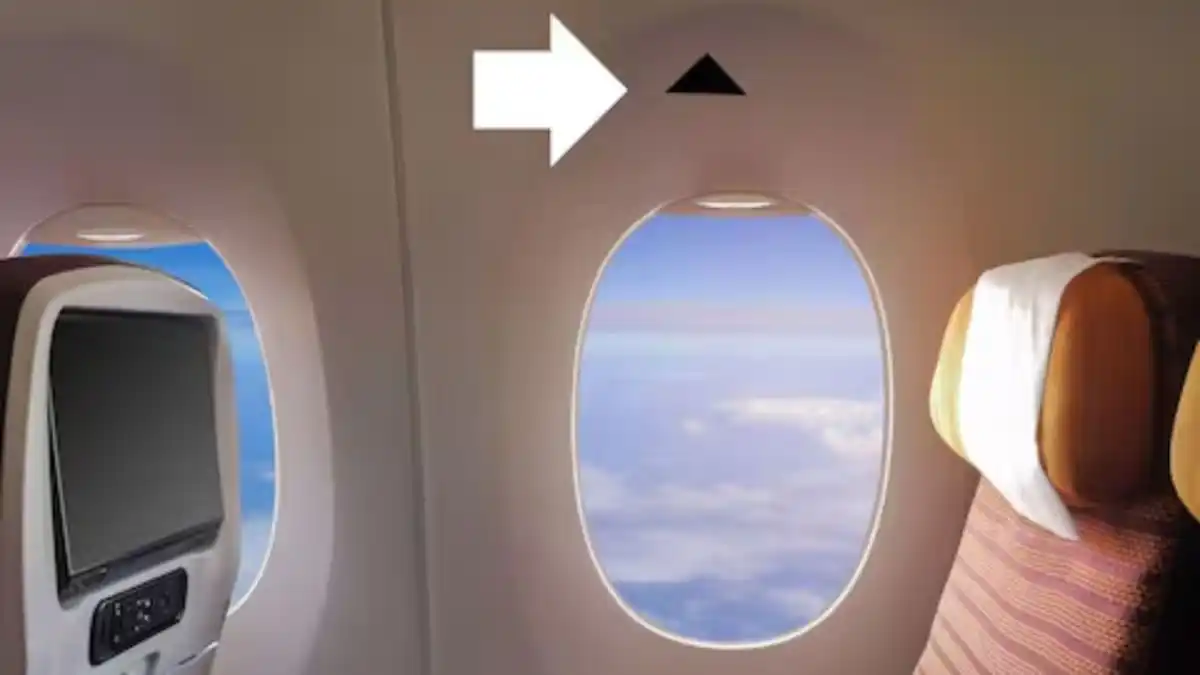
If you’ve ever glanced up while sitting in a window seat on a commercial aircraft, you might have noticed a small black triangle sticker above certain windows. These unassuming markers are not decorative, nor are they random. In fact, they serve a critical safety and operational purpose that goes unnoticed by the majority of passengers. From enabling wing inspections to ensuring in-flight balance, these triangles are a subtle but powerful tool in aviation.
Why Only Certain Windows Feature Triangle Stickers
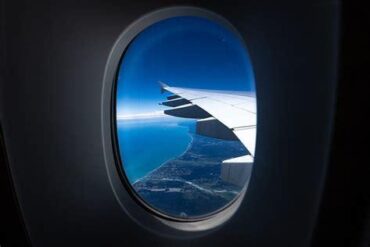
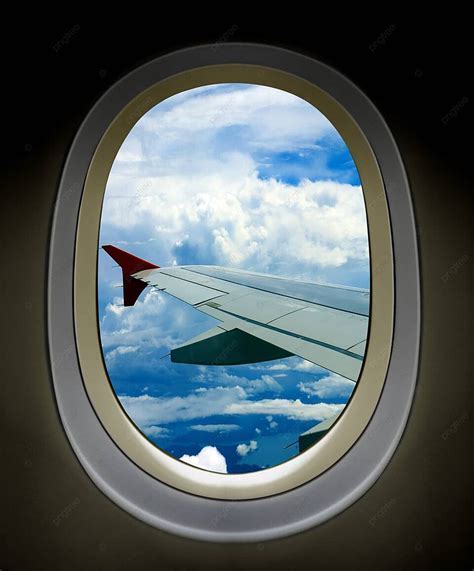
Not every window is created equal on a commercial aircraft. The triangle symbols are positioned with precision — usually two on each side of the fuselage — to mark the windows that offer the best view of the aircraft’s wings. These windows align directly with the leading edge and trailing edge of the wing — two of the most mechanically dynamic and structurally sensitive areas.
During routine checks or in-flight anomalies, flight attendants and crew can quickly identify these windows and use them to visually inspect vital components such as:
- Flaps – hinged surfaces that increase lift during takeoff and landing
- Slats – movable panels that modify airflow on the wing’s leading edge
- Spoilers – panels that disrupt lift and assist in descent and braking
Rather than inspecting multiple windows throughout the cabin, flight attendants can head directly to the triangle-marked seats for a quick and efficient view of the aircraft’s most crucial wing areas.
Critical During Emergencies and Mechanical Failures
One of the primary reasons these triangles exist is to support safety procedures during emergency scenarios or technical glitches. While modern aircraft are equipped with state-of-the-art sensors and cockpit indicators, there is still no substitute for a clear line of sight when things go wrong.
These triangle seats allow the cabin crew to visually confirm problems such as:
- Ice accumulation on the wing
- Loose or damaged components
- Improper deployment of flaps or slats
There have even been documented cases where flight attendants spotted potential hazards like missing panels or mechanical irregularities simply by looking out these specific windows. Their trained eyes, guided by the triangle markers, often become the final line of defense before a pilot makes crucial decisions.
The Connection Between Triangle Seats and Aircraft Balance
Another lesser-known purpose of triangle seats involves weight distribution and flight stability. Aircraft must maintain a carefully calculated center of gravity (CG) to ensure optimal performance, fuel efficiency, and in-flight balance.
In flights that are underbooked or carrying fewer passengers, airline crew may ask certain individuals to move to triangle rows. This isn’t random; it’s a strategic decision based on the fact that these rows often fall closest to the plane’s center of gravity. Occupying these seats helps the aircraft maintain better longitudinal balance — particularly important during takeoff, landing, and turbulence.
Passengers seated in these triangle-marked areas may also experience less motion sickness. That’s because wing-adjacent seats tend to feel less of the plane’s vertical movements, making them ideal for individuals sensitive to motion.
A Perfect View: Why Triangle Seats Are a Photographer’s Favorite
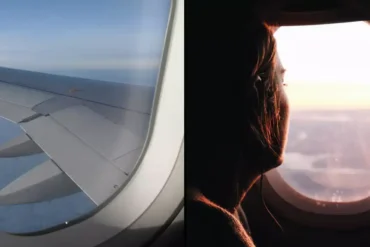
If you love snapping in-flight photos of the wings, clouds, or sunrise horizon, you’ve likely sat in a triangle seat without realizing it. Because these windows offer the clearest, most unobstructed view of the wings in action, they’ve become a favorite among aviation photographers and enthusiasts.
Retired aerospace engineer Lee Ballentine once referred to these triangle-aligned windows as the “William Shatner seat,” referencing the iconic episode of The Twilight Zone where a gremlin wreaks havoc on a plane’s wing. The nickname playfully acknowledges the drama that can unfold — and be observed — from these uniquely situated windows.
From a technical standpoint, these views allow passengers to witness:
- Flaps and slats extending or retracting during various flight phases
- Spoilers deploying upon landing
- Icing or de-icing procedures in real time
On select Airbus models, the triangle windows are even used to visually verify the landing gear status, offering a backup method when onboard instruments malfunction.
The Triangle System Is Still Relevant in Modern Aviation
Despite enormous technological advances in aviation — from fly-by-wire systems to real-time telemetry — the triangle marker system remains in place for one key reason: reliability. It’s an old-school technique that doesn’t fail, even if power does. Unlike electronic systems that can experience software bugs, a simple visual check never crashes or needs rebooting.
Pilots, maintenance staff, and flight attendants are trained to respect and utilize the triangle system regularly. The Federal Aviation Administration (FAA) and international regulatory bodies have not mandated these stickers, but many aircraft manufacturers and airlines continue to apply them as part of internal safety and inspection protocols.
It’s not just about tradition — it’s about redundancy, fail-safe procedures, and layered safety systems. Even in the 2020s, where augmented reality and AI-powered diagnostics are being tested in cockpits, there is still value in a simple black triangle sticker.
How the Triangle Seats Reflect Broader Aviation Philosophy
The inclusion of triangle seat markers is a subtle example of the aviation industry’s deep commitment to safety through redundancy. Modern aircraft systems are not designed with one safeguard — they’re designed with multiple backups. The triangle symbol represents that very principle: a manual check that backs up the digital world.
It’s also a testament to how human factors are considered in aircraft design. The placement of these markers isn’t just for engineers or pilots. They’re meant for real-time decision-making by cabin crew, who might need to respond within seconds.
Even airline seating algorithms sometimes account for triangle rows during automatic check-in processes, making sure that balance, safety, and visual access are preserved.
Fun Fact: Triangle Seats Are the Best for Nervous Flyers
Though not officially promoted as such, triangle seats are ideal for anxious or motion-sensitive passengers. Being close to the wing — particularly near the CG — means that you feel less of the plane’s pitch and roll. You’re sitting in a zone that experiences the least amount of movement during turbulence.
Combine that with the peace of mind that you’re in a seat strategically chosen for safety checks, and it’s not hard to see why frequent flyers and crew members alike prefer this spot.
It’s the aviation equivalent of sitting in the calm eye of a storm. No wonder triangle seats are often recommended by savvy travelers and seasoned pilots.
Final Thoughts: A Tiny Triangle With Outsized Importance
So next time you board a plane and notice a small triangle above your window, take a moment to appreciate its significance. It marks a spot of intense operational importance, balancing form, function, and foresight.
From ice inspections to gremlin references, from balancing weight to calming turbulence — that little triangle packs more utility than most passengers will ever know. In the intricate world of aviation, where safety is engineered into every bolt and sticker, the triangle symbol reminds us that sometimes the most powerful tools are also the smallest.
Whether you’re a nervous flyer, a wing-view enthusiast, or just someone who values the art of precision in engineering, the triangle seat deserves a spot on your next flight plan.