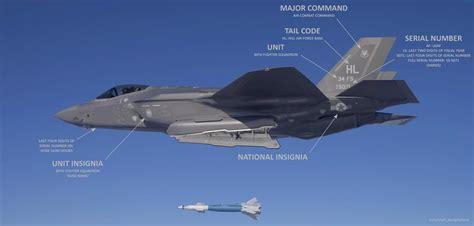
If you stand on a modern United States Air Force flight line long enough, eventually your eyes stop focusing on the obvious things. The angular stealth contours of a Lockheed Martin F-22 Raptor, the massive intakes of a McDonnell Douglas F-15 Eagle, or the dull gray paint designed to disappear against cloud cover all begin to blend into the background. What starts to matter instead are the tiny details. A faded stencil beneath a canopy. A crew chief’s handwritten inscription hidden near a panel seam. A small green star painted below the cockpit that looks insignificant until someone explains what it represents.
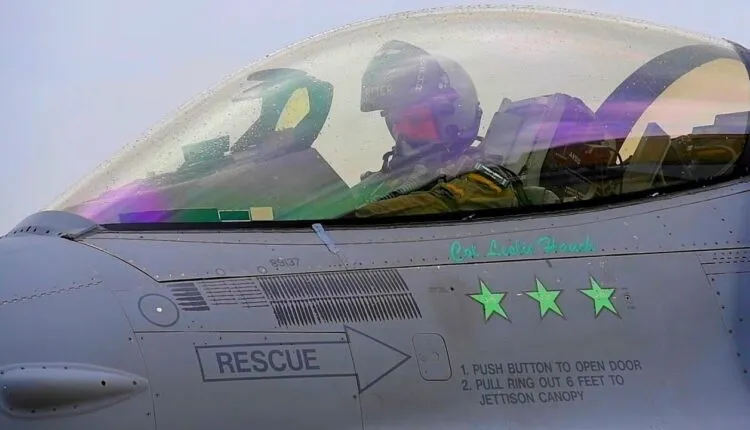
That tiny symbol may mark a confirmed aerial victory. It may commemorate a combat mission flown over hostile territory. It may symbolize a helicopter destroyed during a strike sortie, or a swarm of Iranian drones intercepted in the dark skies above the Middle East. In some cases, it may even contain an inside joke understood only by the squadron that painted it there.
These markings are more than decoration. They are fragments of living combat history attached directly to the aircraft themselves. Long before digital mission logs, encrypted combat databases, and helmet-mounted displays, military aviators found a simpler way to record achievement: they painted it onto the machine.
The tradition survives because fighter pilots, maintainers, and squadron commanders still see value in visible combat history. Every mark tells a story that official paperwork rarely captures emotionally. A row of bomb silhouettes reveals operational tempo. A green star represents a moment measured in seconds during an aerial engagement where one pilot survived and another did not. Together, these symbols transform combat aircraft into historical documents.
How Victory Markings Became Part Of Military Aviation Culture
The practice of painting victory symbols on combat aircraft emerged during the chaos of the Second World War, when aerial warfare reached an unprecedented scale. Pilots were flying multiple missions a day across Europe and the Pacific, air combat casualties were staggering, and military aircraft began developing personalities of their own.
Before WWII, some pilots informally tracked victories, but there was no widespread or standardized visual system. That changed rapidly once air forces realized morale mattered almost as much as machinery. Pilots wanted visible recognition. Ground crews wanted proof that the aircraft they maintained were surviving combat. Squadron commanders recognized the propaganda and morale value instantly.
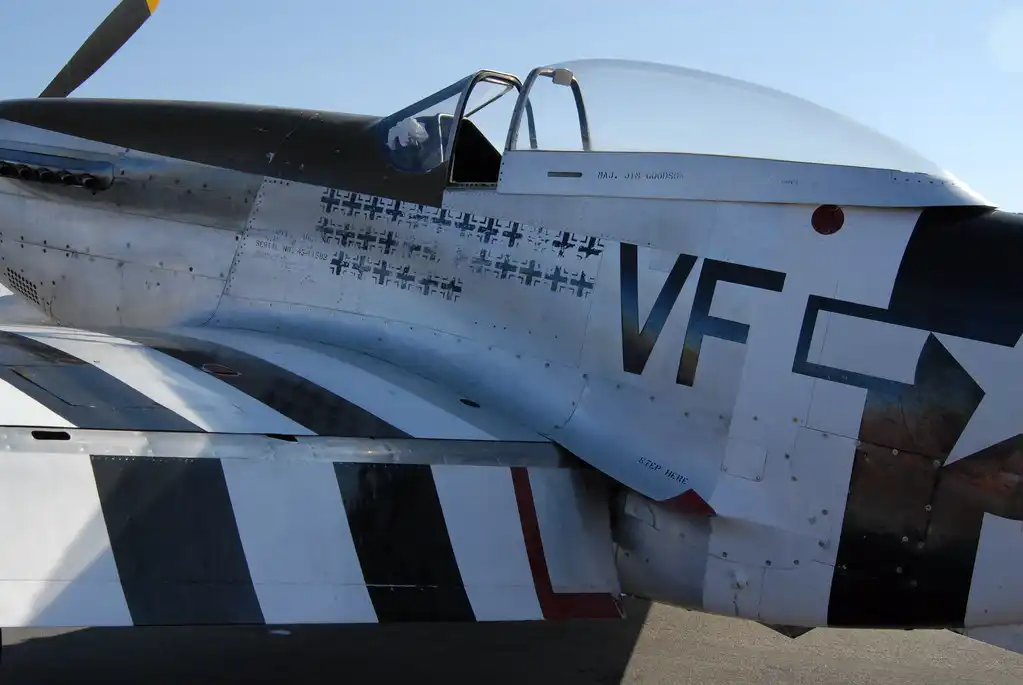
American fighter pilots in Europe usually painted miniature German crosses or enemy aircraft silhouettes beneath the cockpit after confirmed kills against the Luftwaffe. In the Pacific Theater, Japanese Rising Sun symbols became the preferred marking. Bomber crews expanded the idea further by adding bomb silhouettes for completed missions.
The distinction mattered enormously. A kill marking represented a destroyed enemy aircraft. A bomb symbol represented participation in a completed strike mission. The markings functioned almost like a combat résumé painted directly onto aluminum skin.
Perhaps no aircraft embodied this culture more famously than the Boeing B-17 Flying Fortress known as the “Memphis Belle.” Its fuselage displayed rows of mission symbols documenting 25 bombing missions over Europe alongside enemy fighter kills. Those markings transformed the bomber into an instantly recognizable symbol of American airpower.
Unlike modern military regulations, WWII victory markings evolved organically. Squadrons invented their own styles. Pilots personalized layouts. Artists among the ground crews experimented with placement, size, and color. Commanders often tolerated enormous creative freedom because the markings boosted morale and strengthened squadron identity.
Meanwhile, Germany’s Luftwaffe adopted a far more rigid system. German pilots frequently used vertical tally bars known as Abschussbalken painted onto the tail. For legendary ace Erich Hartmann, whose astonishing 352 confirmed kills remain unmatched in aviation history, those bars became nearly absurd in scale.
The visual culture surrounding these aircraft became inseparable from the men who flew them. Nose art, mission tallies, and victory symbols transformed military hardware into intensely personal objects. Aircraft ceased being anonymous tools and became extensions of squadron identity.
Why Kill Markings Carried Real Psychological Weight
Victory markings were never merely decorative. They served several practical psychological purposes that military leadership quietly understood even when regulations did not formally acknowledge them.
For pilots, kill markings represented validation. Aerial combat is chaotic, confusing, and terrifyingly fast. Official confirmation of a kill often took days or weeks through gun-camera analysis and witness reports. Painting the symbol on the aircraft finalized the event emotionally. It converted memory into visible history.
For maintenance crews, those symbols created pride and ownership. Crew chiefs often spent more time with an aircraft than its assigned pilot did. Seeing “their jet” accumulate mission tallies reinforced the sense that they were active participants in combat success rather than background personnel.
There was also a strategic propaganda dimension. Photographs of highly decorated aircraft circulated in newspapers, recruiting campaigns, and military publications. The markings provided instantly understandable visual proof of effectiveness. A bomber covered in mission symbols projected endurance. A fighter carrying enemy insignias projected dominance.
Yet the markings also reflected darker realities. Every symbol represented destruction and, often, death. Fighter pilots frequently described complicated feelings after aerial victories. The markings celebrated professional success while simultaneously memorializing lethal encounters.
That tension became increasingly visible after WWII as warfare evolved and public attitudes toward combat shifted.
The Korean War Proved The Tradition Would Survive The Jet Age
When the Korean War erupted in 1950, military aviation entered an entirely new era. Propeller-driven dogfights vanished almost overnight as jet fighters battled at transonic speeds over the infamous corridor known as MiG Alley.
Many military planners assumed traditional victory markings would disappear alongside piston-engine aircraft. They were wrong.
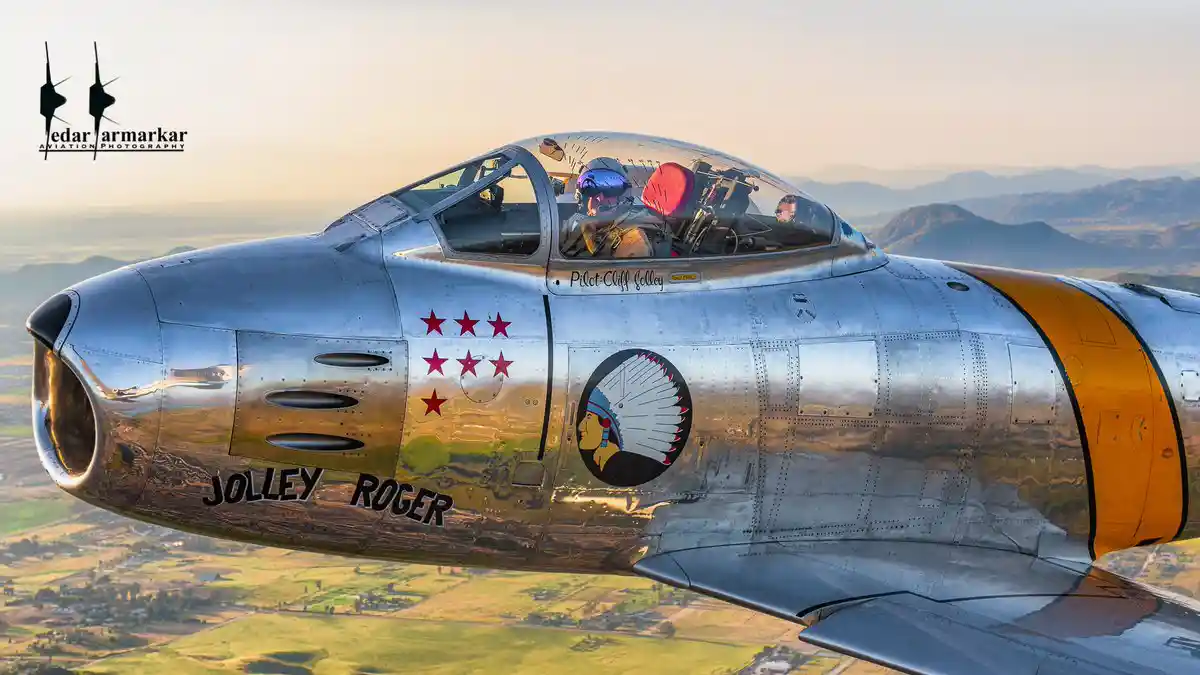
American pilots flying the North American F-86 Sabre quickly revived the practice after engaging Soviet-built MiG-15 fighters over North Korea. The markings returned to familiar locations beneath cockpit rails, visually connecting the new jet generation with the pilots who had fought over Europe only a few years earlier.
Korea produced America’s first jet aces. Joseph McConnell achieved 16 confirmed victories. James Jabara became America’s first jet ace. Their aircraft carried victory markings that looked remarkably similar to WWII-era examples despite the technological leap separating the wars.
The continuity mattered culturally. Jet combat felt radically different from WWII dogfighting. Closing speeds were dramatically higher, engagements lasted seconds rather than minutes, and pilots often barely glimpsed the enemy before firing. Yet painting victory symbols onto the aircraft preserved a psychological connection to earlier generations of fighter pilots.
At the same time, Korea exposed the lack of formal standards. Some pilots painted red stars. Others used MiG silhouettes. Placement varied between squadrons. Sizes differed wildly. The Air Force still lacked official guidance governing appearance or symbolism.
That informality persisted because aerial victories remained relatively common during Korea. Once air combat became rarer and politically more sensitive in Vietnam, attitudes toward the markings began changing.
Vietnam Changed The Meaning Of Fighter Jet Symbols
The Vietnam War fundamentally altered how American military aviation viewed combat symbolism. It was not simply another air war. It became a cultural and political crisis that reshaped the relationship between military imagery and public perception.
Early Vietnam doctrine assumed guided missiles had made traditional dogfighting obsolete. The McDonnell Douglas F-4 Phantom II initially entered combat without an internal cannon because planners believed beyond-visual-range missile combat would dominate future wars.
Reality proved brutally different.
North Vietnamese pilots flying MiG-17s and MiG-21s repeatedly forced American aircraft into close-range engagements where missile reliability collapsed. US kill ratios dropped sharply compared to Korea, shocking military leadership and exposing serious flaws in training doctrine.
This failure triggered sweeping reforms, including the creation of the US Navy Fighter Weapons School, better known as United States Navy Fighter Weapons School, alongside USAF Aggressor programs designed to simulate enemy tactics realistically.
Victory markings survived Vietnam, but their tone changed noticeably.
F-4 crews commonly painted red stars onto intake splitter plates after confirmed kills, yet the markings often appeared smaller and less flamboyant than WWII examples. The war’s political controversy created discomfort around overt celebration of combat achievements. Commanders increasingly emphasized professionalism over flamboyance.
Nose art and aggressive imagery also faced tighter scrutiny. Elaborate shark-mouth designs and provocative artwork became less common in frontline units. Military leadership recognized that highly visible combat symbolism could generate negative reactions at home during an unpopular war.
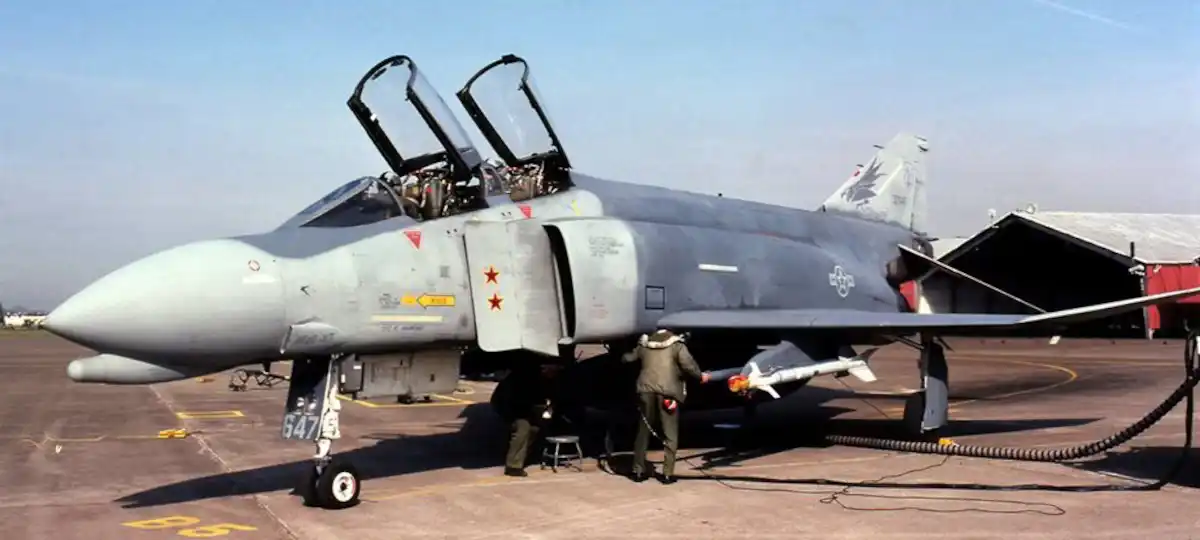
Vietnam introduced another important shift: aerial victories became rarer. Modern missile combat, restrictive rules of engagement, and increasingly advanced air defenses reduced opportunities for traditional dogfighting. As kills declined, victory markings became exceptional rather than routine.
The symbolism therefore gained greater weight. A single kill mark on a Vietnam-era fighter could represent years of operational flying rather than weeks.
Desert Storm Revived Combat Markings On A Massive Scale
Operation Desert Storm in 1991 marked the first time since Korea that American airpower faced a sizable opposing air force during sustained combat operations.
The Iraqi Air Force fielded modern Soviet-designed aircraft including MiG-29 Fulcrums, MiG-25 Foxbats, and MiG-23 Floggers. Within weeks, coalition aircraft effectively annihilated Iraqi air resistance.
The McDonnell Douglas F-15C Eagle dominated the conflict’s air-to-air engagements, scoring the overwhelming majority of confirmed USAF aerial victories without losing a single American fighter in aerial combat.
As victory markings returned prominently to USAF aircraft, Desert Storm also expanded the tradition beyond fighter kills.
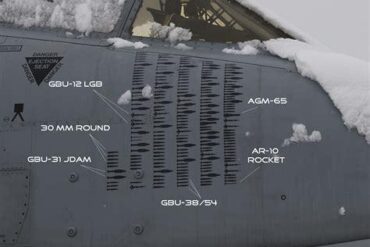
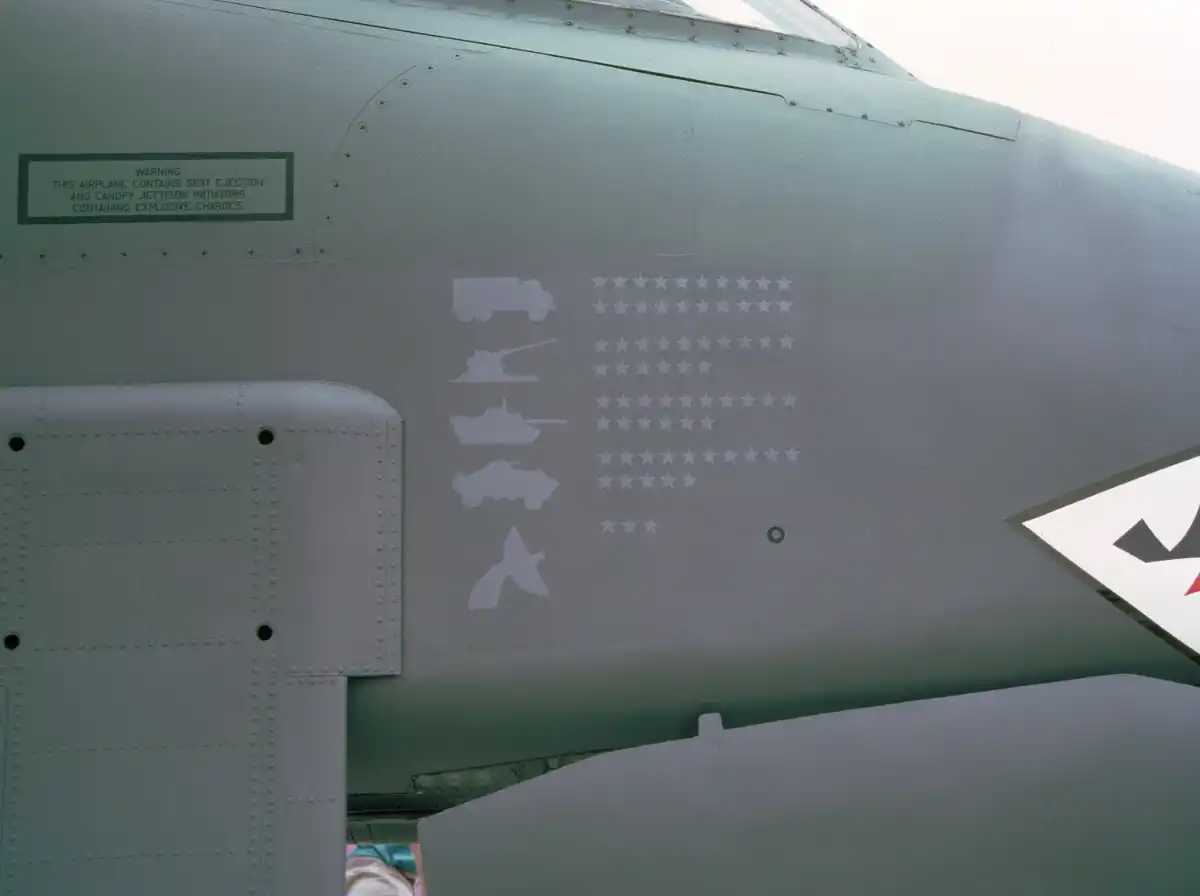
The Fairchild Republic A-10 Thunderbolt II became especially famous for its unofficial combat tallies. A-10 crews painted tank silhouettes, artillery symbols, and vehicle markings representing the staggering destruction inflicted on Iraqi ground forces.
The numbers were extraordinary. A-10s destroyed hundreds of tanks, artillery positions, and armored vehicles during thousands of sorties. Unlike fighter kill marks, these tallies often represented cumulative battlefield destruction rather than individually verified events.
Some markings documented uniquely dramatic moments. Two A-10 pilots even scored helicopter kills using the aircraft’s monstrous GAU-8 Avenger cannon, leading to helicopter silhouettes appearing on their fuselages.
Meanwhile, the stealthy Lockheed F-117 Nighthawk adopted WWII-style bomb mission tallies after precision strike operations over Baghdad. The symbolism deliberately echoed earlier bomber traditions despite the radically different technology involved.
Perhaps the most fascinating Desert Storm marking appeared on an McDonnell Douglas F-15E Strike Eagle that achieved the type’s only confirmed air-to-air victory. During a strike mission, the crew destroyed an Iraqi helicopter with a bomb as it lifted off. The aircraft later carried a single green star commemorating the unusual kill.
Desert Storm revealed that modern combat markings had evolved into two parallel traditions. Fighters focused on verified aerial victories. Strike aircraft increasingly emphasized cumulative mission achievement.
The US Air Force Eventually Turned Kill Symbols Into Official Regulations
For decades, victory markings existed largely as unofficial tradition tolerated by commanders rather than governed by strict rules. That changed in 2010 when the USAF formally standardized aerial victory markings.
The regulation specified exact dimensions, colors, borders, and typography. The official aerial victory symbol became a green star with tightly controlled proportions. The rulebook even clarified placement and size requirements.
The decision reflected two realities.
First, the Air Force wanted consistency across the fleet. Decades of informal creativity had produced wildly different interpretations.
Second, actual aerial victories had become extremely rare. Modern American air superiority is often so overwhelming that enemy aircraft rarely survive long enough to engage US fighters directly. As a result, jets carrying official green stars became extraordinarily uncommon.
Within the world’s largest air force, only a handful of active aircraft now display verified aerial victory markings. Some surviving examples date back to Desert Storm.
The rarity transformed green stars into elite symbols within fighter culture. Seeing one on a modern flight line immediately identifies an aircraft connected to genuine aerial combat history.
Yet while official regulations standardized air-to-air kill markings, they left considerable ambiguity surrounding drones, ground targets, and unofficial symbols.
That ambiguity opened the door for the next evolution in fighter jet iconography.
Drone Warfare Is Forcing The Tradition To Evolve Again
Modern aerial warfare increasingly involves targets that previous generations of fighter pilots never imagined: unmanned drones, cruise missiles, and autonomous attack systems.
The existing USAF rulebook was written primarily around manned aircraft kills. Drone warfare complicates that framework enormously.
In April 2024, United States Air Force F-15E Strike Eagles assigned to the 494th Expeditionary Fighter Squadron participated in the multinational defense of Israel during Iran’s massive drone and missile attack.
The pilots shot down more than 80 Iranian drones in a single night.
When the aircraft returned to RAF Lakenheath, fresh markings appeared on the jets. Missile silhouettes and drone-related symbols lined the noses of the aircraft, visually documenting one of the largest drone interception operations in modern military history.
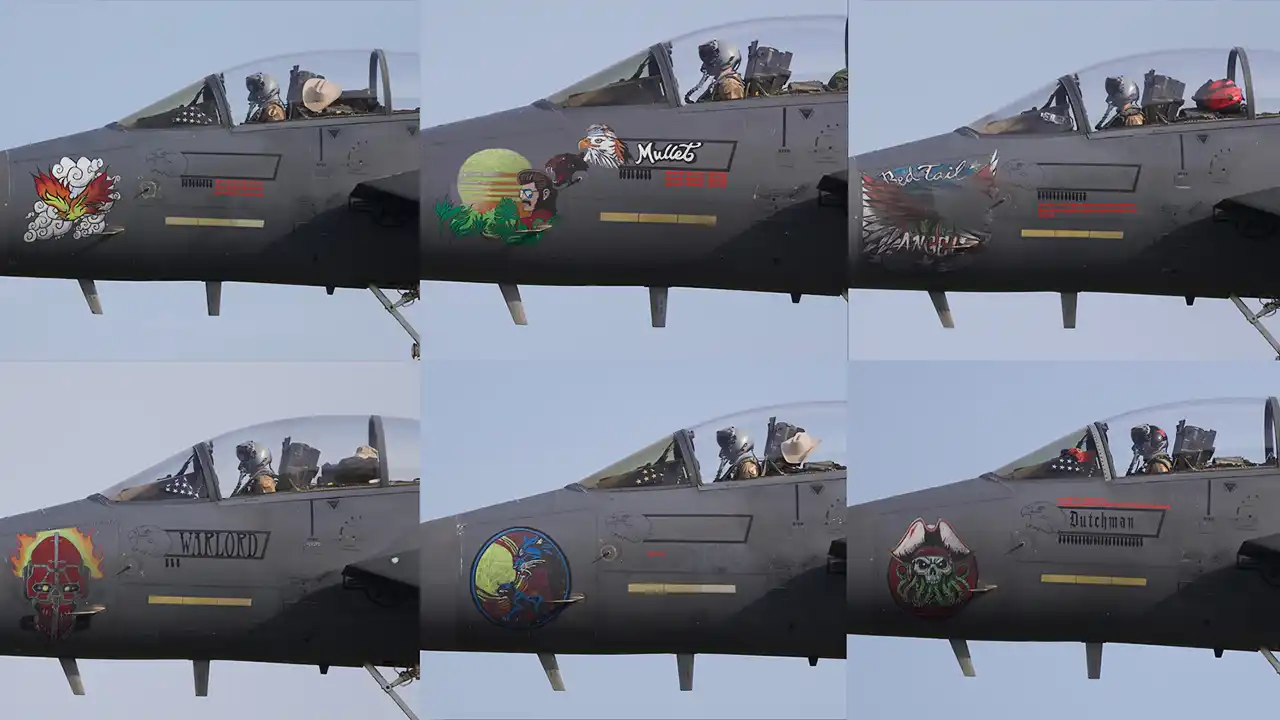
The markings immediately raised fascinating questions. Does destroying an unmanned drone qualify as an aerial victory equivalent to downing a piloted fighter? Should drone kills receive official green stars? Or do they belong to an entirely different category?
The Air Force has not fully resolved the issue, but fighter culture already has. Pilots and maintainers continue documenting achievements visually regardless of whether regulations perfectly account for emerging technologies.
That flexibility has always been central to the tradition’s survival.
The Funniest Fighter Jet Symbols Often Mean Absolutely Nothing
Not every marking represents lethal combat.
Unofficial symbols, inside jokes, and bizarre squadron humor have existed alongside official markings since WWII. Some became legendary precisely because nobody outside the unit fully understood them.
One of the strangest examples involved a US Navy LTV A-7 Corsair II flown by Commander J.R. “Shooter” Sanders. The aircraft displayed rows of camel silhouettes painted like kill markings.
To this day, aviation historians still debate what the camels actually represented. Ground targets? Mission types? A prank? The answer remains uncertain.
This mixture of deadly seriousness and dark humor reflects the psychology of military aviation communities. Fighter squadrons operate under extreme pressure, and humor frequently becomes part of how crews process combat stress.
Even modern stealth fighters occasionally carry subtle unofficial artwork, hidden references, or temporary mission markings applied during deployments.
These symbols remind observers that despite increasingly computerized warfare, combat aviation remains profoundly human.
Why These Tiny Symbols Still Matter In The Digital Age
In an era dominated by satellite tracking, encrypted databases, AI-assisted targeting, and real-time combat analytics, painted symbols on aircraft might seem obsolete.
Yet they endure because they provide something digital systems cannot: immediate emotional storytelling.
A green star beneath a cockpit communicates combat experience instantly to anyone on the flight line. Rows of bomb symbols reveal operational intensity at a glance. Informal artwork captures squadron identity more effectively than official reports ever could.
These markings also preserve continuity between generations of aviators separated by enormous technological change. The pilot flying a fifth-generation stealth fighter today still recognizes the same symbolic language used by a P-51 Mustang pilot over Europe in 1944.
That continuity matters deeply within military culture. Fighter aviation places enormous importance on lineage, tradition, and inherited identity. Victory markings create visible connections across decades of warfare.
The symbols also reveal something broader about how humans interact with machines in war. Combat aircraft may represent cutting-edge engineering, but crews still personalize them instinctively. Pilots still form emotional attachments. Ground crews still take pride in “their” jets.
Aerial victory markings survive because they transform military hardware into narrative objects. Every symbol adds another chapter.
And somewhere tonight, on a dimly lit flight line far from public view, a crew chief may already be preparing paint for the next one.