For decades, the phrase “Air Force One” has dominated the public imagination whenever presidential aviation is discussed. The unmistakable blue-and-white Boeing 747 carrying the President of the United States became more than transportation long ago. It evolved into a symbol of continuity, military reach, crisis management, and American influence. Yet in 2026, the global landscape of VIP aviation stretches far beyond Washington. Governments across the world now operate increasingly sophisticated fleets that function as airborne command centers, diplomatic stages, and strategic statements of national ambition.
Modern presidential aircraft are no longer judged purely by luxury. Range, survivability, communications capability, redundancy, and geopolitical symbolism now shape the aircraft leaders choose to fly. Some nations prioritize self-reliance through domestically produced jets. Others rely on modified commercial airliners that can discreetly switch between state and civilian service. A growing number of countries are building entire fleets instead of relying on a single flagship aircraft.
The result is an extraordinary category of aviation where politics, engineering, security, and image projection converge at 40,000 feet. From Boeing 747s fitted with military-grade defenses to Airbus A330s capable of shifting between troop transport and diplomatic missions, the world’s most impressive government VIP fleets reveal as much about national strategy as they do about aviation itself.
Air Force One Remains The Benchmark For Presidential Aviation
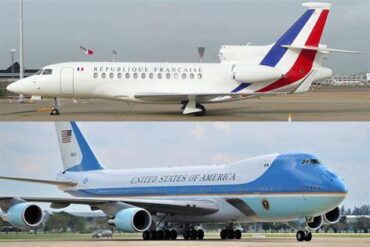
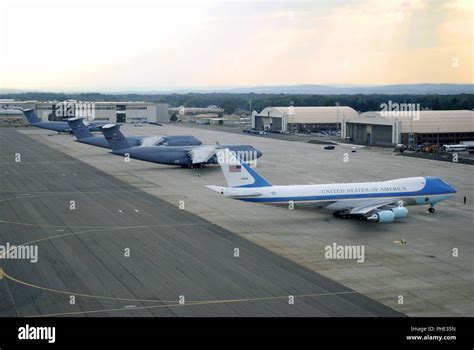
Even as other nations modernize their fleets, Air Force One continues to set the global benchmark for executive air transport. Technically, the call sign applies to any US Air Force aircraft carrying the sitting president, but in practical terms it refers to the pair of Boeing VC-25A aircraft derived from the Boeing 747-200B platform.
Since entering service in the early 1990s, these aircraft have represented the highest level of airborne governmental capability ever integrated into a passenger aircraft. Behind the elegant exterior lies an aircraft engineered for worst-case scenarios. Air Force One is designed to ensure that the President of the United States can continue governing during military conflict, global emergencies, or catastrophic attacks.
Inside the aircraft, the cabin resembles a compact strategic headquarters rather than a luxury airliner. Secure communication systems allow encrypted contact with military commanders, intelligence agencies, world leaders, and nuclear command infrastructure anywhere on Earth. Conference rooms, executive offices, sleeping quarters, staff work areas, and medical facilities transform the aircraft into a fully functioning mobile White House.
Its defensive systems remain among the most secretive aspects of the aircraft. Analysts widely believe the VC-25A incorporates electronic countermeasures, radar jamming systems, hardened electronics, and missile defense technologies capable of surviving sophisticated threats. The aircraft can also refuel in midair, theoretically allowing it to remain airborne indefinitely during national emergencies.
Historically, Air Force One evolved alongside America’s expanding geopolitical reach. Early presidents traveled aboard modified propeller aircraft before the jet age introduced Boeing 707-based VC-137 aircraft during the Cold War. The arrival of the Boeing 747 platform in 1990 dramatically increased operational range, onboard capacity, and survivability at a time when the United States stood as the world’s dominant superpower.
That evolution continues today through the delayed but highly anticipated VC-25B program, which will replace the aging VC-25As with modified Boeing 747-8 aircraft. The new generation promises updated avionics, improved efficiency, advanced communications architecture, and next-generation mission systems. Despite years of budget scrutiny and production setbacks, the project underscores a critical reality: for the United States, presidential aviation is viewed as a strategic national asset rather than mere transportation.
China’s Flexible Boeing 747 Strategy Reflects Quiet Confidence
China’s approach to presidential aviation contrasts sharply with the American model. Rather than maintaining a permanently dedicated presidential aircraft instantly recognizable around the world, Beijing relies on specially prepared Boeing 747-400 aircraft operated by Air China.
This strategy reflects China’s broader preference for operational flexibility and controlled symbolism. Aircraft such as B-2447 and B-2472 can be temporarily converted for state missions whenever President Xi Jinping travels internationally. Commercial seating sections are removed and replaced with secure communication suites, conference facilities, workspaces, and private accommodations tailored to the requirements of each diplomatic mission.
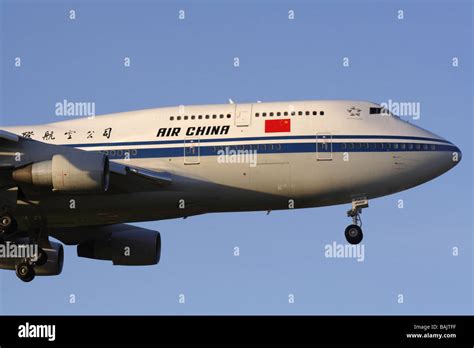
The arrangement offers several strategic advantages. Unlike Air Force One, which remains permanently tied to presidential duties, China’s aircraft can return to commercial operations once state visits conclude. This reduces idle time while maximizing fleet efficiency. It also avoids concentrating national symbolism into a single identifiable aircraft.
The Boeing 747-400 remains exceptionally well suited for long-range diplomacy. Its enormous range, four-engine redundancy, and spacious cabin provide ample room for security personnel, government delegations, journalists, and communication systems during intercontinental travel. Although newer twin-engine aircraft are generally more fuel efficient, the 747’s operational resilience and prestige still make it attractive for VIP transport.
China’s use of commercial aircraft for state travel also subtly blurs the line between civilian aviation and government operations. That ambiguity can enhance flexibility while reducing public attention surrounding presidential movements. The strategy mirrors broader Chinese diplomatic tendencies that often favor measured projection of influence rather than overt spectacle.
Several Asian nations follow variations of this model. South Korea, Vietnam, Singapore, and Turkmenistan have all utilized modified flag-carrier aircraft for official transport rather than investing exclusively in dedicated presidential jets. The philosophy reflects a regional preference for adaptability, cost efficiency, and lower-profile operations.
Russia’s Ilyushin Il-96 Embodies Aviation Self-Reliance
Russia’s presidential fleet represents an entirely different philosophy centered on domestic industrial independence. President Vladimir Putin primarily travels aboard specially modified Ilyushin Il-96-300PU aircraft operated by the Rossiya Special Flight Squadron.
Unlike Western leaders who rely heavily on Boeing or Airbus platforms, Russia’s VIP aviation strategy emphasizes complete national control over design, manufacturing, and maintenance. The Il-96 itself was developed during the final years of the Soviet Union and remains one of the few Russian-built widebody airliners ever produced.
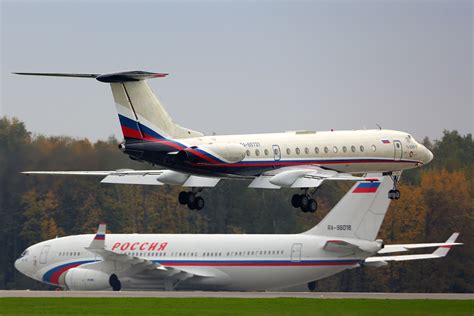
The aircraft may lack the international fame of the Boeing 747, but it serves as a powerful geopolitical symbol. By flying aboard domestically manufactured aircraft, the Kremlin reinforces narratives of sovereignty, resilience, and technological independence, particularly amid sanctions and deteriorating relations with Western suppliers.
Internally, the Il-96 presidential variants reportedly feature lavish interiors with ornate design elements, private offices, secure briefing rooms, and dedicated workspaces for senior officials. The aircraft functions as a flying Kremlin capable of supporting high-level diplomatic and military decision-making during extended flights.
Like Air Force One, Russia’s VIP fleet reportedly incorporates advanced communication systems and defensive technologies designed to withstand electronic warfare and missile threats. Much of the aircraft’s true capability remains classified, but aviation analysts believe the modifications are extensive.
Operationally, the Il-96 faces disadvantages compared to newer twin-engine airliners. It consumes more fuel and lacks the economic efficiency of modern Boeing 777s or Airbus A350s. Yet efficiency is not the primary objective. The aircraft’s significance lies in what it represents politically: a refusal to depend on foreign aerospace manufacturers for one of the state’s most visible strategic assets.
That symbolism matters enormously in modern diplomacy. Presidential aircraft are not simply logistical tools; they are airborne declarations of national priorities. In Russia’s case, the Il-96 communicates endurance, autonomy, and centralized state power every time it lands at a foreign capital.
Turkey Built One Of The World’s Most Diverse VIP Fleets
Few nations have expanded their VIP aviation capabilities as aggressively as Turkey. Over the past decade, Ankara assembled a remarkably diverse fleet that mirrors the country’s increasingly assertive regional and global posture.
At the center of the fleet stands the Boeing 747-8 registered as TC-TRK, among the newest and most technologically advanced jumbo jets ever built. Originally owned by the Qatari royal family, the aircraft later entered Turkish government service and quickly became one of the most recognizable state aircraft operating today.
The 747-8 combines extraordinary range with enormous cabin volume, allowing Turkey to transport large diplomatic delegations across continents without relying on stopovers. Its modernized design also delivers better fuel efficiency and quieter operation than earlier 747 generations.
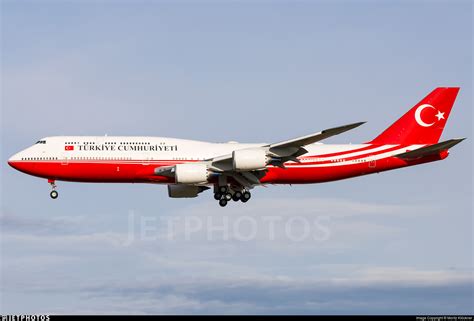
Turkey’s fleet extends well beyond the flagship 747-8. The government also operates Airbus A340s, Airbus A330s, and multiple business jets configured for varying mission profiles. This multi-aircraft strategy reflects a growing trend among governments seeking operational redundancy and scheduling flexibility.
Different aircraft can be deployed depending on the nature of the mission. Regional diplomatic tours may require smaller aircraft, while transcontinental summits demand larger platforms capable of supporting security teams, advisers, media personnel, and communications infrastructure.
The interiors of these aircraft reportedly feature advanced secure communications, conference areas, executive suites, and highly customized cabin layouts designed for extended international travel. Yet beyond functionality lies another important dimension: image projection.
Turkey’s investment in high-profile aircraft reflects its broader ambition to position itself as a major geopolitical power straddling Europe, Asia, and the Middle East. The visual impact of a presidential Boeing 747-8 arriving at foreign airports sends a deliberate message about national status and strategic confidence.
Increasingly, modern VIP fleets operate as extensions of state branding. Aircraft liveries, cabin architecture, arrival ceremonies, and even aircraft selection contribute to diplomatic theater. Turkey understands that reality particularly well.
Boeing 777 And Airbus A330 Aircraft Dominate Modern VIP Transport
While iconic jumbo jets capture headlines, the real transformation in presidential aviation is occurring through the widespread adoption of modern twin-engine widebody aircraft such as the Boeing 777 and Airbus A330.
Governments increasingly favor these aircraft because they strike an effective balance between operational capability, fuel efficiency, maintenance practicality, and cabin flexibility. The shift mirrors broader trends within commercial aviation, where twin-engine aircraft have steadily displaced older four-engine designs on long-haul routes.
India and Japan both transitioned toward Boeing 777-300ER aircraft for VIP operations, replacing aging Boeing 747 fleets. The 777 platform offers exceptional range, reliability, and payload capacity while consuming significantly less fuel than older jumbo jets.
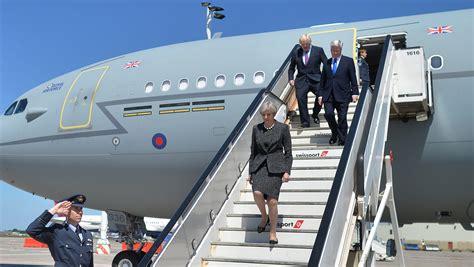
Meanwhile, European governments embraced the Airbus A330 as a versatile multi-role solution. The United Kingdom’s Royal Air Force operates A330 Voyager aircraft capable of serving simultaneously as military tankers, troop transports, and VIP aircraft. France similarly relies on Airbus A330 variants for presidential travel.
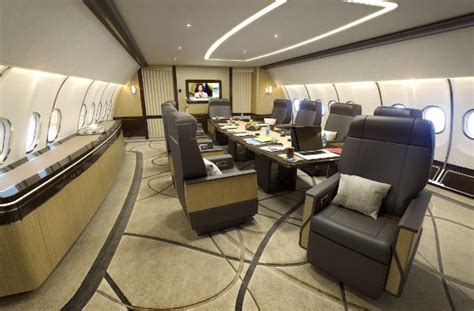
Canada, Australia, and Brazil also utilize Airbus widebodies for official transport. In many cases, these aircraft maintain dual-purpose roles that combine governmental duties with military logistics operations. This flexibility dramatically improves cost efficiency compared to maintaining fully dedicated fleets.
What makes the Boeing 777 and Airbus A330 particularly attractive is their adaptability. Cabins can be configured with executive offices, meeting rooms, communications suites, media seating, and sleeping quarters without requiring entirely bespoke aircraft development.
Modern twin-engine aircraft also benefit from advanced avionics, lower operating costs, improved environmental performance, and global maintenance support networks. For many governments, these advantages outweigh the symbolic prestige once associated exclusively with four-engine giants like the Boeing 747.
Still, prestige remains relevant. The aircraft a leader chooses can subtly communicate political priorities. Widebody twin-engine jets project modernity, pragmatism, and efficiency, while large four-engine aircraft often symbolize raw power and historical status.
Some Leaders Intentionally Fly Commercial Airlines
Not every government embraces highly customized VIP fleets. In some countries, leaders deliberately avoid dedicated presidential aircraft altogether, choosing instead to fly aboard commercial airlines as a political statement.
Mexico became one of the most notable examples after selling its Boeing 787 presidential aircraft to Tajikistan in 2023. The move formed part of a wider austerity campaign intended to demonstrate fiscal restraint and solidarity with ordinary citizens.
The Boeing 787 Dreamliner previously served as one of the most advanced presidential aircraft in Latin America. Its sale generated intense international attention because it represented a dramatic departure from the traditional symbolism associated with state aviation.
Supporters viewed the decision as evidence of humility and responsible governance. Critics argued that abandoning dedicated VIP aircraft compromised security, operational flexibility, and diplomatic capability.
Commercial travel introduces substantial logistical challenges for heads of state. Security coordination becomes more complicated, scheduling flexibility disappears, and onboard communications capabilities remain limited compared to military-operated aircraft.
Nevertheless, the symbolic power of flying commercially can be politically valuable. Leaders seeking to cultivate populist images often view commercial travel as evidence of accessibility and restraint.
There are rare precedents even among major powers. In 1973, during the energy crisis, US President Richard Nixon famously flew aboard a commercial United Airlines flight designated “Executive One.” The gesture aimed to demonstrate solidarity with fuel conservation efforts during a period of national economic anxiety.
Despite such examples, dedicated VIP fleets are unlikely to disappear. Modern governments require secure communications, rapid deployment capability, medical support, intelligence coordination, and operational autonomy that commercial aviation simply cannot provide consistently.
As geopolitical tensions intensify and diplomatic schedules become increasingly demanding, state aircraft continue evolving into highly specialized strategic platforms rather than luxury symbols alone.
Presidential Aircraft Now Function As Strategic Power Projections
The world’s most impressive government VIP fleets reveal how aviation intersects with diplomacy, security, and national identity in the twenty-first century. Whether it is the heavily fortified Air Force One, China’s discreet Boeing 747 conversions, Russia’s domestically built Il-96 fleet, or Turkey’s expansive collection of widebody aircraft, each approach reflects distinct political priorities.
Presidential aviation today is about far more than transporting leaders comfortably between capitals. These aircraft serve as mobile command centers, secure communication hubs, emergency continuity platforms, and highly visible instruments of geopolitical messaging.
In many ways, the aircraft themselves have become extensions of national strategy. Their size, origin, configuration, and operational philosophy all communicate something important about how governments see themselves and how they wish to be perceived internationally.
The era when presidential aircraft merely symbolized prestige has passed. In 2026, they increasingly symbolize preparedness, resilience, technological capability, and strategic ambition. The skies above diplomatic summits now host some of the most advanced and politically significant aircraft on Earth, each carrying not only heads of state, but also carefully crafted narratives of national power.