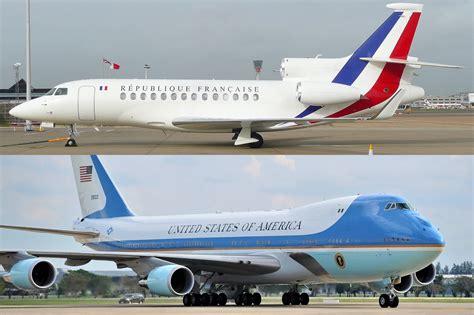
Modern government VIP aircraft occupy a strange place in public perception. To critics, they are extravagant luxuries designed to shield political elites from the realities faced by ordinary citizens. To governments, however, these aircraft are something entirely different: mobile command centers, sovereign infrastructure, and symbols of state continuity. The billions spent on presidential jets are rarely about leather seats or prestige alone. They are rooted in national security, diplomatic mobility, crisis management, and geopolitical signaling.
The politics surrounding VIP jets reveal far more than aviation procurement debates. They expose how governments define power, how leaders project authority abroad, and how states justify immense expenditures in an age of rising public scrutiny. From the United States’ troubled Air Force One replacement program to China’s unusually cautious approach to presidential transport, official aircraft have become flying reflections of political systems themselves.
For many nations, the aircraft carrying the head of state is not merely transportation. It is an airborne extension of government authority that must remain operational under virtually any condition imaginable.
In a world shaped by cyberwarfare, geopolitical instability, terrorism, and strategic competition, the ability to move leadership securely across continents has become a core element of modern statecraft.
Why Governments Refuse To Depend On Commercial Airlines
The most common public question surrounding presidential aircraft is deceptively simple: why not fly commercial? On the surface, the argument seems logical. Commercial aviation is safe, efficient, and vastly cheaper than maintaining a specialized fleet of government aircraft. Yet for national leaders, commercial aviation fails to satisfy the operational realities of modern governance.
A president or prime minister does not merely travel with aides and luggage. They travel with classified communications systems, military advisors, intelligence personnel, security detachments, medical teams, and sometimes nuclear command authority. Commercial airliners are not built to support those requirements.
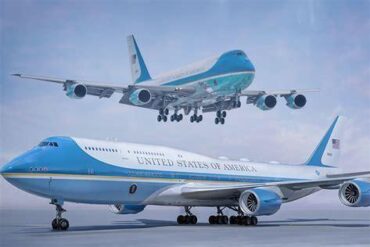
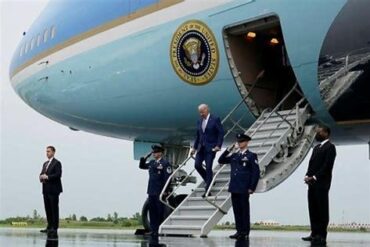
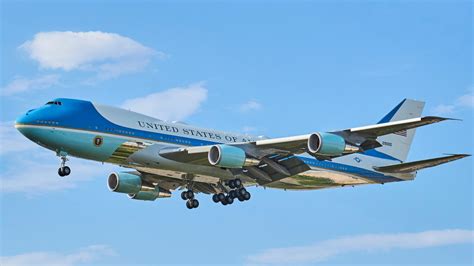
Aircraft such as the American VC-25A, widely recognized as Air Force One when carrying the president, function as heavily modified airborne command centers. Beneath the recognizable Boeing 747 exterior lies a sophisticated network of encrypted communications equipment, secure satellite links, hardened electronics, and defensive systems designed to ensure uninterrupted command capability during emergencies.
The significance of these systems becomes obvious during geopolitical crises. A head of state cannot afford to lose contact with military leadership because a regional communications network collapses or a civilian airport experiences disruption. Dedicated government aircraft ensure that political leadership remains connected even if ground infrastructure becomes compromised during war, cyberattacks, or large-scale disasters.
Continuity of government is one of the least publicly discussed but most important reasons behind VIP aviation spending. Nuclear powers in particular require guaranteed command-and-control capability under all circumstances. The aircraft carrying national leadership effectively becomes a survivable node of state authority.
Medical capability is equally important. Most VIP aircraft contain advanced onboard medical facilities capable of stabilizing serious emergencies during long-haul missions. In some cases, the aircraft can function almost like a limited airborne hospital. This reduces dependence on foreign medical infrastructure and provides additional operational flexibility during diplomatic travel.
Security considerations extend far beyond terrorism. Intelligence agencies increasingly fear cyber intrusion, surveillance vulnerabilities, and electronic compromise. Dedicated aircraft allow governments to control communications architecture, onboard hardware, and maintenance procedures at a level impossible within commercial operations.
The result is that presidential aircraft increasingly resemble military assets disguised as civilian transport.
The United States And The Endless Air Force One Controversy
No country better illustrates the political complexity of VIP aviation than the United States. Air Force One has evolved into one of the most recognizable symbols of American power, yet the aircraft itself has become the center of years of procurement controversy, budget criticism, and industrial frustration.
The current VC-25A fleet entered service in 1990 during the administration of President George H. W. Bush. Based on the Boeing 747-200B platform, the aircraft represented the pinnacle of airborne government capability at the time. More than three decades later, however, aging airframes, outdated components, and increasing maintenance demands have created mounting pressure for replacement.
The replacement effort eventually became one of the most politically scrutinized aviation programs in the United States.
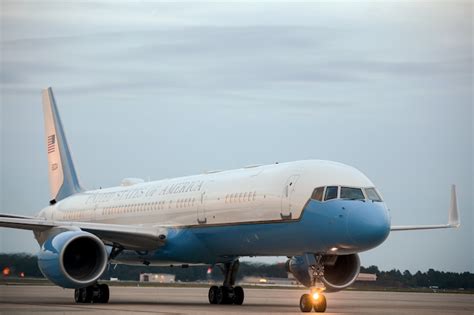
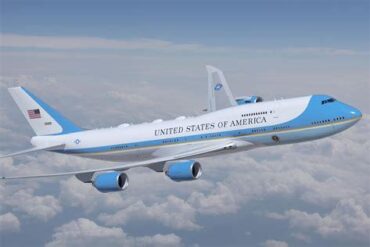
In 2018, Boeing secured a fixed-price contract worth approximately 3.9 billion dollars to develop two replacement VC-25B aircraft based on the Boeing 747-8 platform. Initially promoted as a relatively controlled modernization effort, the project soon encountered severe complications.
Integrating military-grade communications, electromagnetic shielding, defensive countermeasures, and classified systems into a commercial airframe proved extraordinarily difficult. Every subsystem required extensive redesign, testing, and security certification. Labor shortages involving personnel with high-level security clearances further slowed progress, while supply chain instability created additional delays.
By the mid-2020s, projected program costs had reportedly climbed above 6 billion dollars.
Public criticism intensified because the aircraft themselves became symbolic political targets. Opponents framed the program as wasteful government excess, while supporters argued that no compromise could be made regarding presidential security and operational continuity.
The debate became even more politically charged when the United States accepted a Boeing 747-8i previously owned by Qatar’s royal family as an interim presidential aircraft. Critics questioned the ethics, optics, and geopolitical implications of accepting such a high-value foreign asset, even as officials defended the decision as a practical short-term solution during delays to the VC-25B program.
What makes the American case particularly fascinating is that Air Force One operates simultaneously as military infrastructure and political theater. Every delay becomes national news. Every paint scheme change sparks debate. Every procurement decision becomes a proxy battle over government spending and presidential symbolism.
Few aircraft in history have carried so much political baggage before even leaving the runway.
Germany’s Reliability Crisis And The Cost Of Embarrassment
Germany’s VIP aviation strategy underwent dramatic transformation after a series of humiliating technical failures exposed the risks of operating an aging government fleet.
For years, Germany relied heavily on Airbus A340 aircraft for official state travel. Although functional, the fleet became increasingly associated with reliability problems. Mechanical issues repeatedly disrupted diplomatic schedules and generated uncomfortable headlines.
The defining moment arrived in 2018 when Chancellor Angela Merkel experienced a serious aircraft malfunction while traveling to the G20 summit in Argentina. The aircraft suffered technical failure mid-flight, forcing an unscheduled landing and ultimately requiring Merkel to continue the journey using commercial aviation.
The incident was more than a logistical embarrassment. It damaged perceptions of German preparedness and administrative competence at the international level.
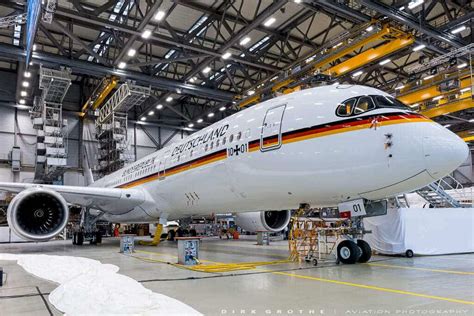
Germany responded aggressively by accelerating modernization plans centered on the Airbus A350-900. The newer aircraft offered dramatically improved reliability, range, fuel efficiency, and technological capability compared to the aging A340 fleet.
But modernization involved more than replacing airframes. The aircraft underwent extensive modifications incorporating secure communications systems and advanced defensive technologies, including missile countermeasure systems designed to protect against infrared-guided threats.
The political lesson from Germany’s experience was unmistakable: reliability itself carries diplomatic value.
A delayed presidential aircraft can disrupt summits, undermine confidence, and project weakness. Leaders arriving late to critical international meetings because of mechanical breakdowns send unintended geopolitical signals. In the realm of diplomacy, perception matters almost as much as capability.
Germany’s modernization effort demonstrated how quickly governments are willing to spend billions when national reputation becomes entangled with aviation reliability.
France And Italy Use VIP Aircraft To Reflect National Priorities
Government aircraft decisions often reveal deeper industrial and strategic philosophies. France and Italy provide two sharply contrasting examples of how nations approach the balance between operational effectiveness and domestic aerospace interests.
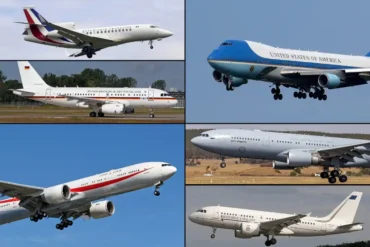
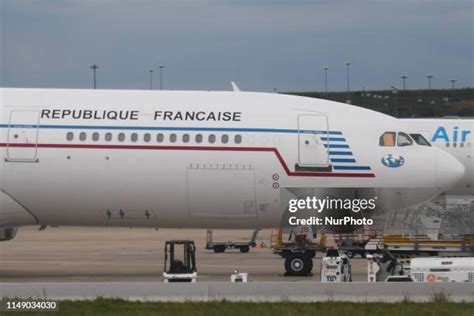
France has long viewed aerospace manufacturing as an extension of national sovereignty. Unsurprisingly, its VIP fleet heavily emphasizes domestically produced aircraft. The French government operates an Airbus A330-200 as its primary presidential transport while also utilizing Dassault Falcon 7X business jets for regional travel and shorter diplomatic missions.
This approach reinforces France’s commitment to supporting European aerospace manufacturing while simultaneously showcasing domestic industrial capability on the world stage.
Every arrival of a French presidential aircraft quietly promotes the country’s aerospace sector.
Italy has pursued a more pragmatic path focused heavily on operational performance. Its transition toward Gulfstream G650ER aircraft reflects a willingness to prioritize capability regardless of national manufacturing origin.
The Gulfstream G650ER offers exceptional range, speed, and reliability, making it highly attractive for global diplomatic operations. Italy’s fleet also serves the logistical needs of the Vatican during papal travel, adding symbolic and operational significance beyond standard governmental missions.
The contrast between France and Italy highlights how VIP fleets often function as tools of industrial policy. Aircraft procurement decisions can support domestic manufacturing ecosystems, strengthen strategic alliances, or demonstrate technological independence.
Even choices that appear purely technical frequently carry deep political meaning.
China’s Deep Suspicion Of Dedicated Presidential Aircraft
China’s approach to presidential aviation stands apart from nearly every other major power. Unlike the United States, Russia, or France, China does not maintain a permanently dedicated aircraft exclusively reserved for its head of state.
This unusual strategy emerged from longstanding security fears tied to surveillance and technical compromise.
According to widely discussed accounts, Chinese authorities once discovered suspicious anomalies aboard a Boeing aircraft intended for government use, raising fears that the aircraft may have been compromised with hidden surveillance devices or unauthorized systems. Whether every detail of those claims was accurate mattered less than the institutional impact the incident created.
The event fundamentally reshaped China’s philosophy toward presidential transport.
Instead of relying on a permanently assigned aircraft, China typically utilizes specially prepared Air China aircraft for official travel. Before presidential missions, these aircraft undergo extensive inspections, technical sweeps, and interior modifications designed to establish secure operational environments.
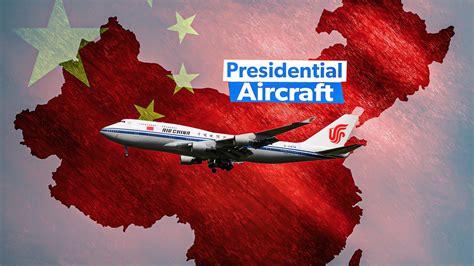
Secure communication systems are temporarily installed, cabin layouts are reconfigured for government delegations, and security teams conduct exhaustive verification procedures that can take weeks to complete.
After the mission concludes, the aircraft eventually returns to normal commercial service.
The approach is operationally cumbersome compared to maintaining a dedicated presidential fleet, yet it reflects China’s overriding concern with technical integrity and surveillance risk. In Beijing’s strategic culture, control over hardware and communications security outweighs the efficiencies gained from permanent specialization.
China’s system also demonstrates that VIP aviation does not follow a universal template. Different political systems prioritize different vulnerabilities.
For some nations, visibility and prestige dominate procurement decisions. For others, secrecy and internal security concerns drive every aspect of operational planning.
VIP Jets As Instruments Of Political Symbolism
While security and operational capability dominate official explanations, symbolism remains impossible to separate from presidential aviation.
VIP aircraft are carefully choreographed instruments of state image.
The arrival of a presidential aircraft abroad communicates prestige, technological sophistication, economic power, and national confidence. Large widebody aircraft painted in national colors create dramatic visual projections of authority that smaller transport arrangements simply cannot replicate.
Air Force One, in particular, evolved into one of the most recognizable political symbols in modern history. Its visual identity became inseparable from the projection of American global influence. Similar symbolism exists in Russia, France, Saudi Arabia, and numerous other states where government aircraft function as extensions of national branding.
This symbolic dimension explains why governments often resist proposals to scale back or simplify official fleets despite public criticism.
A government aircraft is not judged solely by transportation efficiency. It is evaluated through the lens of diplomacy, visibility, deterrence, and prestige.
In many cases, the aircraft itself becomes part of the diplomatic event.
Foreign visits involving heads of state are heavily staged exercises in optics. Every detail matters, from security convoys to ceremonial receptions to the aircraft parked prominently on the tarmac behind national leaders.
The politics surrounding these aircraft therefore become deeply emotional because they touch broader questions about leadership legitimacy, public trust, and national identity.
Why Governments Continue Spending Billions On VIP Aircraft
The enormous costs attached to presidential aviation programs guarantee recurring political backlash. Taxpayers often question why governments spend billions on aircraft while facing pressure in healthcare, infrastructure, or education budgets.
Yet governments continue approving these expenditures because the strategic logic remains compelling.
Dedicated VIP aircraft provide operational independence, secure communications, military survivability, diplomatic flexibility, and continuity of government during crises. They eliminate dependence on commercial infrastructure while allowing leaders to maintain command authority under virtually any condition.
For major powers, these aircraft are not considered luxuries. They are viewed as critical sovereign assets.
That does not eliminate political controversy. Every procurement program still becomes vulnerable to accusations of overspending, secrecy, or elitism. The public visibility of presidential aircraft ensures that these debates remain emotionally charged.
But beneath the controversy lies a hard geopolitical reality: governments are unwilling to risk national leadership mobility in an increasingly unstable world.
VIP jets ultimately represent far more than transportation. They embody how states balance security, prestige, resilience, and political accountability in the modern era. Every aircraft reflects a nation’s priorities, anxieties, industrial ambitions, and strategic worldview.
Behind the polished exteriors and ceremonial arrivals lies something far more serious than luxury aviation.
These aircraft are flying embodiments of state power itself.