When a head of state steps onto an aircraft, the moment is never just about transportation. The aircraft itself becomes a statement of ideology, military capability, industrial strength, political culture, and even national psychology. Some governments choose enormous flying command centers wrapped in symbolism and technological supremacy. Others deliberately reject luxury, preferring commercial airliners or modest dual-use aircraft to project humility and fiscal discipline.
The world’s VIP aircraft fleets form an airborne map of political values. Every choice — from a customized Boeing 747 to a military Airbus tanker or an ordinary commercial seat — reveals what a country wants citizens and rivals to believe about its leadership. In many ways, these aircraft are not simply machines. They are rolling constitutions at 40,000 feet.
The contrast between nations is striking. The United States operates one of the most sophisticated flying military headquarters ever built. Norway’s prime minister may board a routine Scandinavian Airlines flight beside ordinary passengers. Qatar’s ruler travels in a palace-like Boeing 747-8 outfitted with extravagant interiors that rival luxury hotels. Britain carefully balances royal prestige with public scrutiny through dual-use military aircraft. China, meanwhile, sits at the crossroads of ambition and dependency, still relying on foreign-built jets while aggressively developing its own aviation industry.
These aircraft tell stories long before engines start.
The political symbolism attached to national leader transport has grown enormously since the Cold War. Modern heads of state are expected to remain connected, protected, and operational anywhere on Earth. Their aircraft now function as mobile governments, diplomatic stages, crisis centers, and carefully crafted propaganda tools. The result is a fascinating intersection of aerospace engineering and political messaging.
Why Presidential Aircraft Matter Beyond Transportation
For major powers, the aircraft carrying the national leader serves as a visible projection of sovereignty. A presidential jet landing overseas represents more than diplomacy; it demonstrates industrial capacity, military readiness, and logistical reach. The aircraft becomes a national ambassador before the leader even exits the cabin.
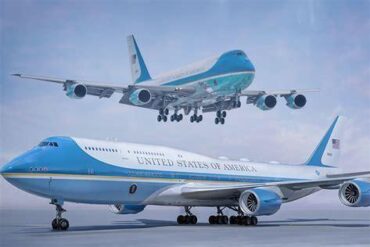
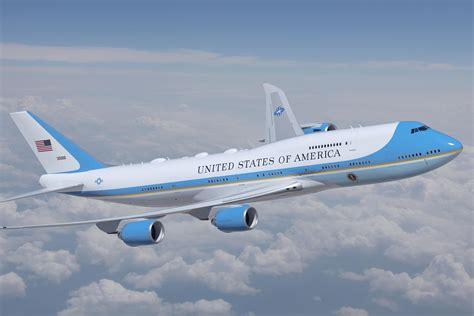
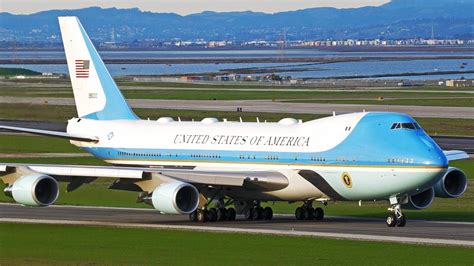
The United States perfected this concept with the VC-25A fleet, commonly known as Air Force One whenever the president is onboard. Based on the Boeing 747-200 platform, these aircraft are far more than luxury transports. They contain hardened communications systems, secure command facilities, electronic defenses, medical capabilities, and operational redundancy designed for worst-case scenarios. In the event of national catastrophe, Air Force One can function as an airborne White House.
Its sheer size matters politically as much as operationally. The four-engine Boeing 747 projects unmistakable authority. It is instantly recognizable and deliberately imposing. Even among giant commercial aircraft, the VC-25A radiates strategic power.
That symbolism explains why the replacement program selected the Boeing 747-8 rather than a smaller alternative. While newer twin-engine aircraft might offer efficiency advantages, none possess the same physical presence. The United States understands that perception itself is part of geopolitical influence.
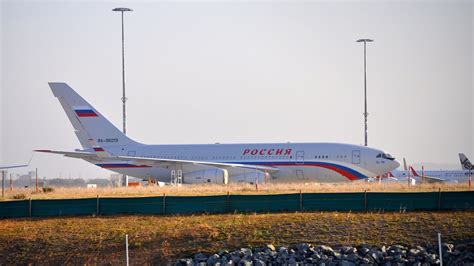
Russia follows a similar philosophy through the use of the Ilyushin Il-96, the largest passenger aircraft ever developed by the Soviet and Russian aerospace industries. Though smaller than a 747, the Il-96 represents something deeply important to Moscow: strategic independence. Using domestically built aircraft allows Russia to demonstrate resilience, national pride, and technological self-sufficiency despite economic decline and sanctions pressure.
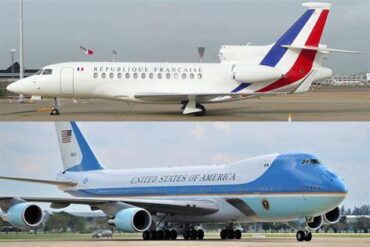
France also embraces aviation nationalism. French leadership routinely travels aboard Airbus aircraft and Dassault Falcon business jets, reinforcing France’s long-standing commitment to supporting domestic aerospace champions. The French state understands that presidential visibility creates prestige not only for government institutions but also for national industries.
The Politics Of Flying Palaces
Not all VIP aircraft focus primarily on military readiness. In wealthy monarchies and authoritarian states, the aircraft itself often becomes a symbol of personal authority and dynastic wealth.
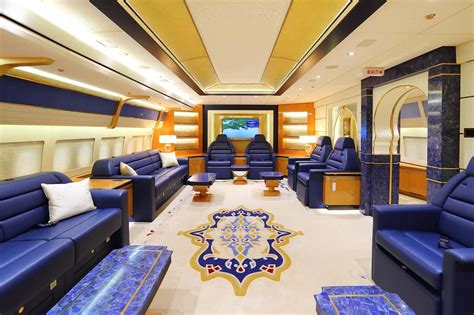
The royal aircraft operated by Qatar and Brunei exemplify this approach. Their Boeing 747-8 fleets are frequently described as airborne palaces because that is essentially what they are. Lavish interiors include private suites, conference halls, luxury lounges, marble finishes, and custom-designed furnishings intended to showcase extraordinary wealth.
Unlike the American VC-25A, these aircraft prioritize luxury over military command capability. They communicate prestige rather than battlefield resilience.
For Gulf monarchies, this extravagance reflects the political structure of the state itself. The ruler is not merely a public servant but a central embodiment of national power and continuity. Displaying immense wealth becomes part of reinforcing legitimacy and influence.
Historically, this mindset was also visible in pre-revolutionary Iran. The Shah famously invested heavily in luxury aviation, including acquiring a Boeing 747 and ordering the supersonic Concorde. Such purchases symbolized Iran’s ambition to appear modern, elite, and globally dominant before the 1979 Revolution completely transformed the country’s political identity.
Egypt’s acquisition of a Boeing 747-8 similarly reflects a desire for regional prestige. Large VIP aircraft often act as strategic theater. They create an image of importance even when economic realities may appear more complicated.
Modest Aircraft And Democratic Accountability
While some governments embrace airborne grandeur, others intentionally avoid it. In Northern Europe especially, political culture strongly discourages excessive displays of privilege.
Norway offers perhaps the clearest example. Despite being among the wealthiest countries on Earth thanks to its sovereign wealth fund and energy resources, Norwegian ministers frequently fly commercial airlines alongside ordinary passengers. This approach aligns with Scandinavian political traditions emphasizing equality, transparency, and restrained government spending.
The symbolism matters enormously domestically. Leaders traveling modestly reinforce the idea that politicians are accountable public servants rather than elite rulers separated from society.
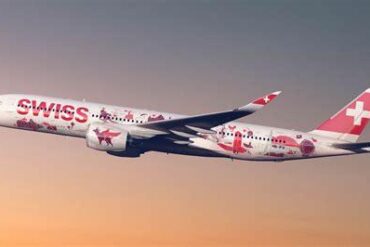
This culture extends across much of Northern Europe. Sweden, Denmark, Finland, Iceland, Luxembourg, Switzerland, and Ireland often rely heavily on commercial airlines or modest government transport arrangements rather than dedicated luxury fleets.
The sight of a prime minister waiting at a boarding gate with minimal security would appear shocking in many countries. In Scandinavia, it can be politically beneficial.
That does not mean security concerns disappear entirely. Norway and similar countries still use military aircraft when necessary, particularly during sensitive diplomatic missions or elevated threat situations. But the baseline expectation remains one of restraint rather than spectacle.
Mexico dramatically amplified this philosophy when it sold its presidential Boeing 787 Dreamliner. The aircraft had become politically toxic because many citizens viewed it as a symbol of government excess. President Andrés Manuel López Obrador instead promoted commercial airline travel as evidence of fiscal responsibility and anti-elitism.
The political message was unmistakable: leadership should not appear disconnected from ordinary citizens.
Britain’s Balancing Act Between Prestige And Pragmatism
The United Kingdom occupies a fascinating middle ground between royal symbolism and democratic caution. Britain possesses immense historical prestige and could easily justify maintaining lavish dedicated VIP aircraft. Yet public opinion remains deeply sensitive to perceived government extravagance.
The solution emerged in the form of the RAF Voyager Vespina, a modified Airbus A330 MRTT tanker aircraft that performs dual roles. When not transporting the prime minister or royal family, the aircraft conducts aerial refueling and military transport operations for the Royal Air Force.
This arrangement allows Britain to maintain dignified state transport capabilities while avoiding accusations of wastefulness. The aircraft serves practical military functions in addition to VIP duties, making its existence easier to politically defend.
The strategy reflects broader British political culture, where displays of wealth are often tolerated only when paired with visible practicality or tradition.
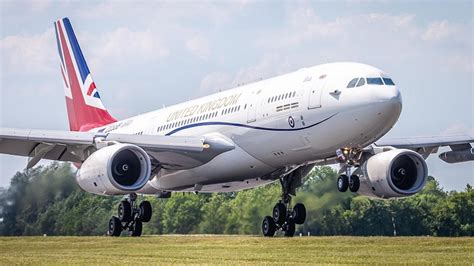
King Charles III’s use of the smaller Airbus A321neo nicknamed the “Baby Voyager” further demonstrates this balancing act. Smaller aircraft project greater efficiency and environmental awareness while still preserving state dignity.
New Zealand has adopted a somewhat similar approach. Its aging Boeing 757 fleet serves both military and governmental functions, though reliability issues have increasingly highlighted the limitations of trying to stretch modest budgets across multiple priorities.
One particularly embarrassing breakdown stranded Prime Minister Christopher Luxon overseas before Air New Zealand assisted. Yet even amid these failures, New Zealand’s political culture continues prioritizing fiscal caution over luxurious leadership transport.
In many democracies, politicians risk far greater damage from appearing extravagant than from enduring inconvenience.
China’s Aviation Ambition And Strategic Contradiction
Among major powers, China occupies the most intriguing position. It aspires to global superpower status yet still relies heavily on foreign-built VIP aircraft, including modified Boeing 747s and Airbus jets.
That contradiction is becoming increasingly uncomfortable for Beijing.
China has invested enormous resources into developing domestic aerospace manufacturing through COMAC, aiming to reduce dependence on Western aviation giants. The introduction of the C909 regional jet and C919 narrowbody airliner marked major symbolic milestones in that effort.
However, producing a globally competitive widebody aircraft capable of replacing presidential Boeing 747s remains vastly more difficult.
Widebody aircraft require advanced engine technology, supply chains, certification systems, and long-term operational reliability that only a handful of nations have historically mastered. The United States, Europe, and the Soviet Union dominated this sector for decades precisely because the technical barriers are so immense.
China’s planned C929 and C939 programs represent attempts to break into that elite category. If successful, they could eventually allow China to field entirely domestically produced VIP fleets, reinforcing national prestige and reducing strategic vulnerability.
The symbolism would be enormous. A Chinese leader arriving overseas aboard a Chinese-built ultra-long-range flagship aircraft would signal industrial maturity and geopolitical confidence.
Yet replacing the highly modified Boeing 747-8 remains a daunting challenge. The 747’s massive internal space makes it uniquely suited for conversion into airborne command centers and VIP transports. Even Boeing itself no longer produces anything directly comparable after ending 747 production.
China’s path forward therefore reflects a broader geopolitical reality: rising powers seek not only military strength but also technological independence.
Aircraft As National Personality Traits
Viewed collectively, VIP aircraft fleets resemble psychological profiles of entire nations.
The American approach prioritizes survivability, command capability, and overwhelming symbolic presence. Air Force One embodies a country that views itself as the indispensable global superpower, constantly prepared for crisis and projection of force.
Russia’s Il-96 fleet reflects strategic self-reliance and lingering great-power identity despite economic limitations. France’s Airbus-centered fleet showcases industrial nationalism and state support for domestic aerospace champions.
Britain’s dual-use aircraft reveal a country carefully navigating between imperial heritage and modern democratic accountability. Scandinavian nations demonstrate cultural discomfort with hierarchy and visible privilege.
Meanwhile, Gulf monarchies use airborne luxury to reinforce royal authority and display wealth openly as part of political legitimacy.
These choices are rarely accidental. Governments understand the messages aircraft send both domestically and internationally.
Even the size of an aircraft matters psychologically. Large four-engine jets appear more prestigious and authoritative than smaller twin-engine alternatives, regardless of actual capability. The continued attraction of the Boeing 747 for VIP transport stems partly from this emotional impact. The aircraft simply looks important.
That visual power explains why so many governments continue operating 747-based fleets despite rising operational costs and declining commercial popularity.
Why Commercial Flights Work For Some Leaders But Not Others
One of the clearest dividing lines in VIP transport philosophy involves whether leaders can realistically fly commercial.
For smaller countries with relatively low security threats, commercial travel can reinforce accessibility and humility. Scandinavian leaders frequently benefit politically from appearing approachable and ordinary.
For the President of the United States, however, commercial travel is effectively impossible.
The logistical and security demands surrounding the American presidency are enormous. Air Force One operates alongside cargo aircraft carrying vehicles, communications equipment, security personnel, and support infrastructure. Entire operational ecosystems accompany presidential movement.
Even Richard Nixon’s famous 1973 commercial airline flight was largely symbolic theater. Extensive support arrangements remained necessary behind the scenes.
Modern security realities make genuine commercial travel nearly inconceivable for leaders facing elevated threat levels. Nations confronting terrorism risks, geopolitical hostility, or domestic instability typically require specialized aircraft and extensive protection measures.
This reality creates a fascinating paradox. In some countries, modest travel strengthens legitimacy. In others, heavily protected aircraft symbolize stability and continuity.
Neither approach exists in a vacuum. Each reflects national circumstances, political expectations, and historical experiences.
The Future Of Presidential Aviation
The next generation of VIP aircraft will increasingly reflect technological competition as much as political symbolism.
China’s aerospace rise could dramatically reshape the balance of prestige within global aviation. If COMAC successfully develops advanced long-range widebody aircraft, Beijing may eventually eliminate reliance on Boeing and Airbus for high-profile government transport.
Environmental pressure will also influence future fleet choices. Large four-engine aircraft like the Boeing 747 face growing criticism over fuel consumption and emissions. Governments may increasingly adopt smaller, more efficient aircraft to align with climate commitments and changing public expectations.
At the same time, security requirements continue expanding. Modern VIP aircraft now require cyber defenses, encrypted communications, anti-missile systems, and hardened operational networks capable of functioning during global crises.
This means future presidential aircraft will likely become even more technologically sophisticated while simultaneously facing pressure to appear fiscally and environmentally responsible.
Balancing those competing priorities will define the next era of state aviation.
What A Nation’s Aircraft Ultimately Says About Itself
Presidential aircraft occupy a unique space where engineering, politics, symbolism, and national identity collide. They are among the most visible tools governments possess for communicating values without words.
A giant Boeing 747 converted into a flying fortress communicates power, permanence, and military reach. A dual-use tanker reflects practical compromise. A commercial airline boarding pass signals egalitarianism and restraint. A luxury airborne palace announces wealth and centralized authority.
Every choice carries meaning.
In some nations, leaders are expected to stand apart from society, elevated by ceremony and prestige. In others, leaders gain legitimacy by appearing indistinguishable from ordinary citizens. Aircraft reveal these expectations with remarkable clarity.
At 40,000 feet, politics becomes visible in aluminum, engines, and paint schemes. The aircraft carrying a nation’s leader is never merely transportation. It is a declaration of what the country believes about power itself.