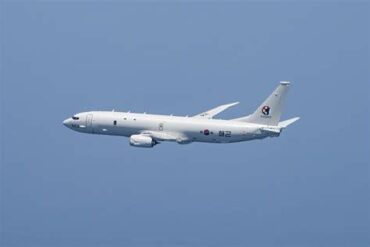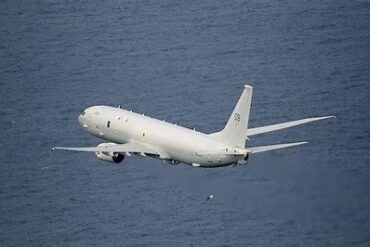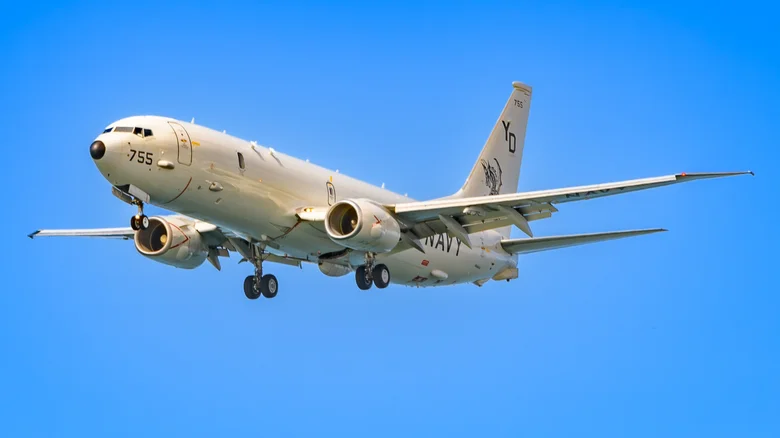
The appearance of a U.S. Navy P-8A Poseidon over Miami skies on January 19, 2026, caught the attention of aviation enthusiasts and residents alike. While military aircraft are hardly rare in American airspace, this particular jet is not designed for routine overflight of dense urban centers. Its presence marked a rare domestic mission tied directly to heightened national security requirements during a high-profile presidential visit.
On the day of the flight, the P-8 Poseidon provided Incident Awareness and Assessment (IAA) support for the U.S. Secret Service as President Donald Trump attended the College Football Playoff National Championship at Hard Rock Stadium. IAA missions focus on broad-area surveillance, real-time data collection, and rapid information sharing—capabilities critical for safeguarding major public events. Although no official agency statement detailed why this aircraft type was selected, the mission underscores how adaptable modern military platforms have become.
Traditionally, the Boeing-built P-8 Poseidon is a maritime patrol and reconnaissance aircraft optimized for anti-submarine warfare, surface surveillance, and long-range ocean monitoring. Derived from the commercial Boeing 737-800, it combines civilian airframe efficiency with an advanced military sensor suite. Operating over a major city like Miami places it far outside its usual patrol environment, which is why the flight immediately stood out.
A Maritime Hunter Repurposed for Homeland Security
The Poseidon’s effectiveness in this role lies in its endurance and sensor integration. The aircraft can remain airborne for extended periods, covering vast areas while fusing radar, electro-optical, and signals intelligence data into a single operational picture. Even though these systems are primarily engineered for maritime use, their flexibility allows the aircraft to support domestic security operations when required. In this case, the P-8’s ability to quietly monitor wide airspace made it an efficient asset for a temporary security umbrella.
This was not the first time a Poseidon has ventured inland. In early 2025, P-8A aircraft conducted reconnaissance flights along the U.S.–Mexico border, supporting the Department of Homeland Security. Such missions remain uncommon and are rarely publicized, reinforcing the idea that the Miami flight was an exception driven by specific operational needs rather than a shift in doctrine.
Growing Global Demand for the P-8 Poseidon
Beyond U.S. borders, the Poseidon continues to gain traction among American allies seeking to modernize their maritime patrol capabilities. In January 2026, the U.S. State Department approved the sale of up to four P-8A Poseidons to Singapore, along with weapons and mission systems, in a deal valued at approximately $2.3 billion. The acquisition will replace Singapore’s aging patrol fleet and strengthen regional maritime security in Southeast Asia.
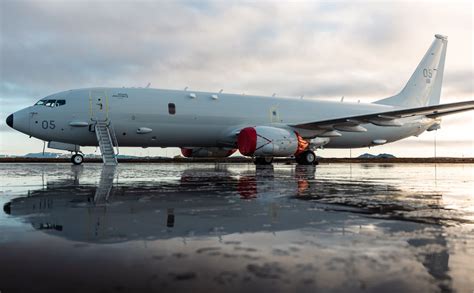
Just weeks earlier, Denmark received approval for a separate $1.8 billion package covering up to three Poseidon aircraft, training, and long-term support. These deals highlight a broader strategic trend: allies are prioritizing long-range surveillance platforms capable of persistent operations in contested maritime environments.
What the Miami Flight Signals
The Miami mission does not suggest the P-8 Poseidon will become a regular fixture over U.S. cities. Instead, it illustrates how multi-mission military aircraft can be rapidly reassigned to meet evolving security demands. For a brief moment, a jet built to hunt submarines became a silent guardian over a packed stadium—an example of modern airpower’s quiet versatility.