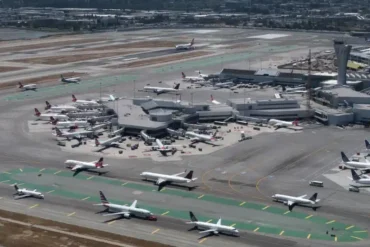
San Francisco International Airport (SFO) has long been a gateway not only to California but to the world. As the largest airport in the San Francisco Bay Area and the second-busiest in California, SFO functions as both a vital economic engine and a historical landmark in U.S. aviation. Owned by the City and County of San Francisco yet located in San Mateo County, the airport has consistently stood at the crossroads of innovation, policy, and global connectivity since its opening on May 7, 1927.
Origins of an Aviation Hub
SFO began its journey as Mills Field Municipal Airport, initially occupying just 150 acres. Its formal dedication occurred in 1927, and by 1930, the field had expanded to more than 1,100 acres. The airport was renamed San Francisco Airport in 1931 and later designated “International” after World War II, reflecting its growing ambitions and operational scope.
The early years were defined by pioneering carriers such as Western Air Express, Maddux Air Lines, and Century Pacific Lines. The arrival of United Airlines in 1934 marked a significant turning point. By January 1937, United had launched DC-3 service connecting Los Angeles and New York, supported by a Public Works Administration (PWA)-funded passenger terminal.
The Strategic Role During World War II
During the global conflict, SFO became a critical military asset, transforming into a Coast Guard base and Army Air Corps training ground, known as the Naval Auxiliary Air Facility Mills Field. In 1944, Pan American World Airways (Pan Am) relocated its seaplane operations from Treasure Island to SFO, paving the way for post-war commercial service, including Honolulu flying-boat routes.
Launching International Connectivity
The postwar years saw SFO asserting itself on the global stage. On September 15, 1946, Australian National Airways inaugurated the airport’s first foreign flight using a DC-4. This was quickly followed by Pan Am’s global circumnavigation service, United’s DC-6s to Hawaii, and Philippine Airlines’ transpacific flights to Manila.
By the 1950s and 1960s, global airlines like Qantas, BOAC, Japan Airlines, and Lufthansa introduced long-haul jet services, ushering in the Jet Age at SFO. Braniff took over routes to South America while CP Air connected Canadian cities non-stop. These operations not only diversified the airport’s destination map but also solidified its role as a premier transpacific hub.
Domestic Growth and Airline Evolution
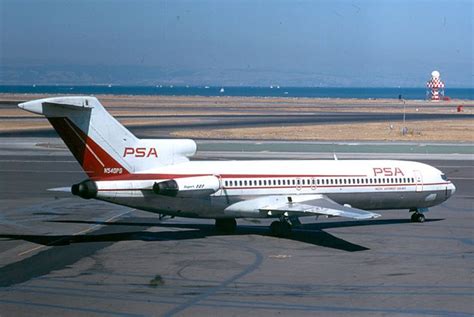
Domestically, the 1950s marked substantial infrastructure growth. The Central Terminal opened in 1954, and by 1957, United Airlines alone had 71 weekday departures. New competitors like Western, TWA, American Airlines, and PSA built strong presences at the airport.
The evolution of regional air travel was also reflected in the journey of Southwest Airways, which transitioned into Pacific Air Lines, and then merged into Air West and later Hughes Airwest before being acquired by Republic Airlines in 1980. These consolidations paralleled the overall national trend of airline mergers.
Jet Age and Infrastructure Modernization
In March 1959, TWA launched Boeing 707 nonstops to New York, solidifying SFO’s role in the emerging Jet Age. By July of that year, the first jetway bridge had been installed, providing efficient boarding directly from terminals. Helicopter shuttles using Sikorsky S-62s also began service, underscoring the airport’s technological ambition.
By the 1970s, carriers like PSA and Air California were connecting SFO to virtually every corner of the state with Electras, 727s, and DC-9s. Despite growth, the 1989 Loma Prieta earthquake exposed infrastructure vulnerabilities, prompting temporary closures and sparking long-term resilience planning.
Controversial Expansion and Environmental Pushback
SFO’s rapid ascent during the 1990s, which made it the sixth-busiest airport globally, also led to ambitious but contentious plans to extend runways into the San Francisco Bay. Though intended to relieve congestion and improve reliability during poor weather, the plan drew strong opposition due to environmental concerns and skyrocketing costs—from $1.4 billion to $2.2 billion.
The expansion debate became a flashpoint in airport planning, ultimately limiting further Bay encroachment but underscoring the need for capacity solutions. Meanwhile, the post-9/11 air traffic downturn dealt a heavy blow, temporarily dropping SFO out of the top 20 global airports.
Transit Integration and Terminal Innovation
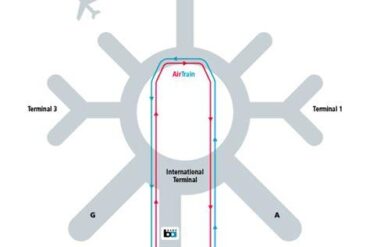
Recognizing the importance of multimodal access, the airport launched two transformative transportation projects in 2003. On February 24, the AirTrain people mover system began operating, enhancing internal connectivity. Then, on June 22, the Bay Area Rapid Transit (BART) extension reached SFO, linking the airport directly to the broader regional transit network.
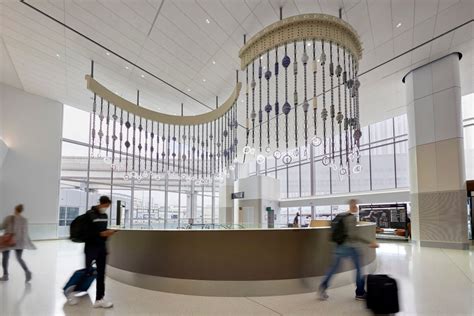
SFO also embarked on extensive terminal modernization. The $2.4 billion upgrade of Terminal 1, now named the Harvey Milk Terminal 1, completed in 2024, emphasized accessibility and sustainability. Terminal 2, with LEED Gold certification, boasts the SkyTerrace observation deck, while Terminal 3 has undergone a $2.6 billion seismic and design upgrade starting in 2024.
A Resilient and Award-Winning Facility
Despite challenges, SFO has continually earned accolades. In 2008, it was named Best International Airport in North America by Skytrax, and in 2009 it secured second place. Following the COVID-19 pandemic, which significantly reduced passenger numbers, the airport leveraged the lull to enhance low-visibility operation protocols and runway use optimization.
In 2022, the Wall Street Journal ranked SFO as the #1 Large U.S. Airport, praising its reliability and convenience. A major rebranding initiative followed, and on August 6, 2024, the airport unveiled a new logo and identity, signaling a new chapter focused on passenger experience, innovation, and environmental leadership.
Runway Configuration and Operational Strategy
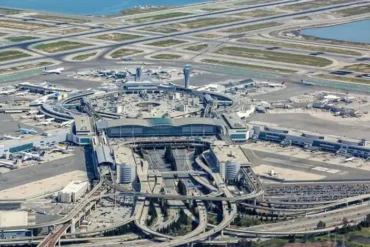
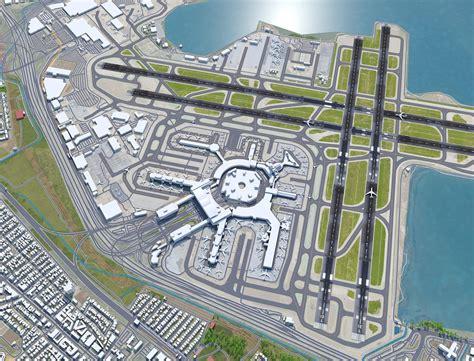
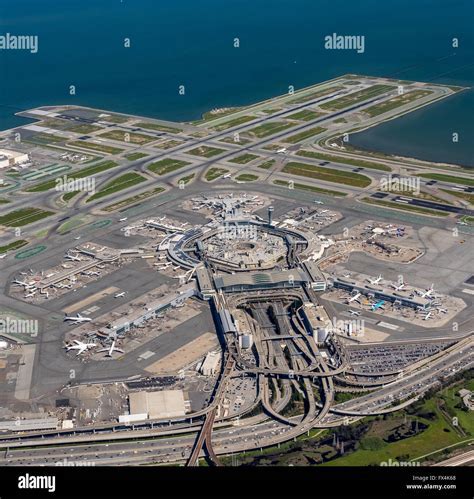
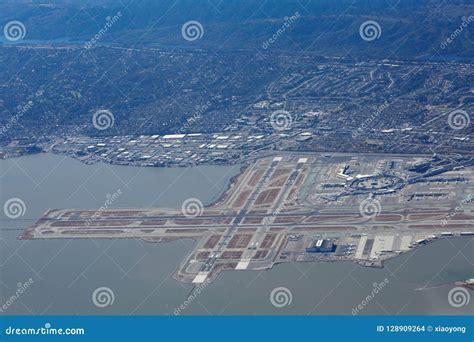
Spanning 5,207 acres and situated just 13 feet above sea level, SFO’s four parallel runways enable high-density operations but present challenges in low visibility due to only 750 feet of lateral separation between sets. Runways 10L/28R and 10R/28L serve as the primary long-haul and precision instrument approaches.
To manage weather-related limitations, SFO relies on the West Plan (departures via 1L/1R, arrivals via 28L/28R) and the Southeast Plan during wind shifts. Precision Runway Monitoring and offset ILS approaches are also deployed to preserve throughput during Instrument Flight Rules (IFR) conditions.
Aircraft Operations and Noise Mitigation
In the 12-month period ending February 29, 2024, SFO recorded 385,543 operations, with 90% commercial, 7% air taxi, 2% general aviation, and less than 1% military flights. Notably, only 11 aircraft are based at the airport—6 helicopters and 5 military units—highlighting its primary function as a transit, rather than home, base.
SFO takes its environmental responsibilities seriously. The Jon C. Long Fly Quiet Program actively grades airlines on noise compliance. Since the early 1980s, the FAA has insulated over 15,000 homes in nearby communities at a cumulative cost of $153 million. The launch of a Sustainable Aviation Fuel (SAF) initiative with Shell and SkyNRG in 2018 further exemplifies its green strategy.
The Architecture of Connection: Terminals
SFO comprises four terminals—1, 2, 3, and the International Terminal—containing seven concourses and 121 gates. Each terminal reflects a blend of design legacy and modernization:
- Terminal 1 (Harvey Milk Terminal 1): 37 gates; complete transformation finished in 2024; serves Alaska, Southwest, American, and JetBlue.
- Terminal 2: 14 gates; reopened in 2011 with sustainable materials and smart design.
- Terminal 3: 31 gates; under seismic overhaul; features solar roofing and energy-efficient systems.
- International Terminal: The largest international terminal in North America when it opened; remains a critical node for global routes.
Conclusion: The Future Anchored in Legacy
San Francisco International Airport stands today not just as a transit hub but as a symbol of Bay Area ingenuity, global outreach, and civic resilience. Its continuous evolution—from a 1920s airstrip to a globally ranked mega-hub—epitomizes what modern aviation infrastructure must aspire to: sustainability, operational efficiency, and unmatched passenger experience. As SFO moves further into the 21st century, its blend of technological innovation, environmental stewardship, and cultural integration ensures it remains a leader in global air travel.