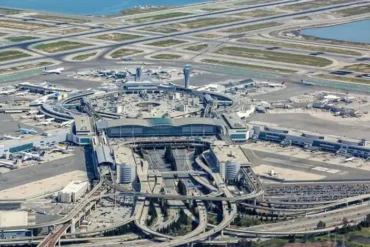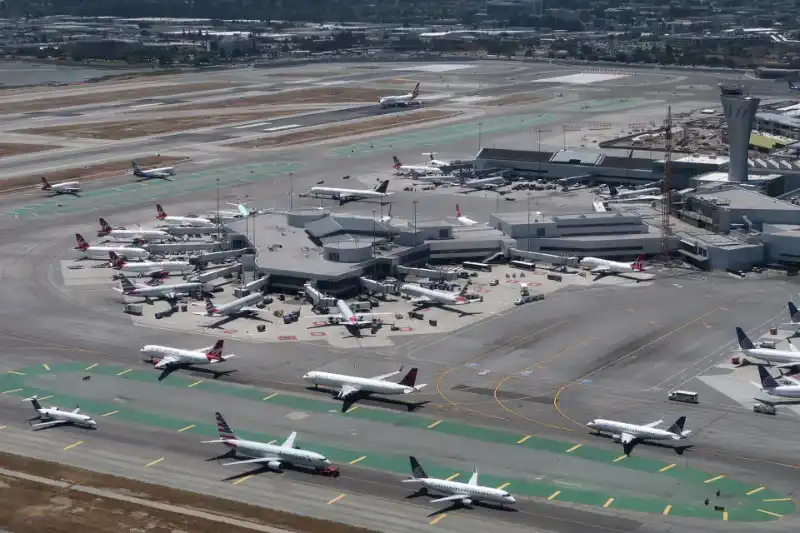
San Francisco International Airport (SFO) is set to embark on an ambitious $180 million runway renovation project that will see Runway 1R/19L temporarily closed for six months starting March 30, 2026. This move marks the third major runway improvement at SFO in four years, reflecting a consistent commitment to modernizing critical airport infrastructure for both operational efficiency and enhanced safety.
The closure, scheduled to last until October 2, 2026, comes during the peak summer travel season, a challenging period for any major airport to undergo capacity reduction. Despite the potential strain, SFO authorities anticipate minimal disruption, citing recent experience with similar infrastructure projects.
The Scope and Significance of the Runway 1R/19L Project
The upcoming refurbishment will target four key elements:
- Complete resurfacing of Runway 1R/19L, which currently serves as one of the airport’s primary departure paths for narrowbody aircraft.
- Upgraded lighting systems to improve visibility and safety, especially in low-visibility conditions.
- Enhanced taxiway connections, streamlining aircraft ground movement and improving departure efficiency.
- Repainting of runway markings, ensuring compliance with FAA visibility and safety standards.
This work is more than just cosmetic; it’s vital for long-term operational reliability. Over time, runways experience immense stress from the constant weight and velocity of aircraft. Repaving helps prevent dangerous surface deterioration, such as cracks and rutting, which could threaten aircraft tires or landing gear.
Funding and Federal Support
Of the $180 million total cost, 50% will be funded by the Federal Aviation Administration (FAA) under its Airport Improvement Program (AIP), reinforcing the federal government’s investment in maintaining aviation infrastructure nationwide. The remaining budget will be financed by local airport revenues and bonds.
This project aligns with a broader national trend. In recent years, airports across the United States have directed billions into runway overhauls, terminal upgrades, and safety enhancements. SFO, in particular, is steadily progressing toward having three out of four runways fully modernized by 2026.
Impact on Flights and Passenger Experience
Runway 1R/19L is typically used in parallel operation with Runway 1L/19R, predominantly for narrowbody aircraft departures. Its closure will require aircraft to reroute to Runways 1L, 28L, and 28R. Since Runway 1R allows for simultaneous northbound departures, its temporary absence will result in a reduction in departure throughput, particularly during peak hours.
Despite this, SFO management expects the effect on overall traffic to be manageable. Historical data from runway renovations in 2023 (Runway 1L/19R) and 2024 (Runway 10R/28L) has helped refine operational strategies. Based on these precedents, the airport forecasts less than 10% of total flights will be delayed as a direct result of the closure.
While airlines will have to adapt by adjusting departure slots and possibly rescheduling certain flights, passengers are unlikely to experience dramatic disruptions. Peak congestion periods may see longer taxi-out times, and there may be temporary increases in noise levels for some nearby neighborhoods, especially where rerouted departures increase traffic density.
Technical Layout: A Unique Four-Runway Configuration
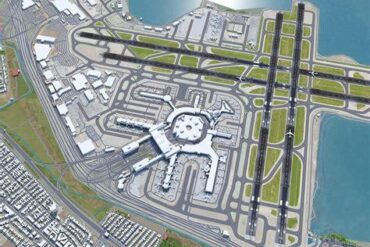
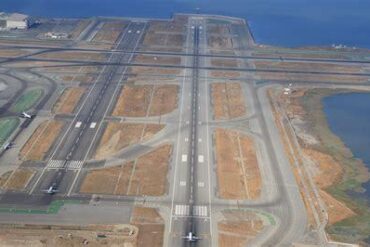
SFO’s airfield operates on a four-runway configuration, two sets of intersecting parallels:
- Runways 1L/19R and 1R/19L are the shorter pair, mainly used for takeoffs.
- Runways 10L/28R and 10R/28L are the longer pair, accommodating widebody aircraft and serving as the primary arrival corridors.
With 1R/19L offline, all northbound takeoffs must be coordinated through 1L or the longer 28L/28R, which can handle both narrow and widebody aircraft. This shift in traffic will require tight coordination between Air Traffic Control (ATC) and ground operations to avoid cascading delays.
Lessons from Past Renovations
SFO’s confidence stems from its recent runway overhauls:
- In 2023, the Runway 1L/19R project provided a critical trial run, involving similar repaving and lighting enhancements.
- In 2024, attention shifted to Runway 10R/28L, one of the airport’s longest and most heavily used runways for long-haul international traffic.
Both projects were completed on time, with minimal passenger impact, and offered valuable insights into operational logistics during partial airfield closures. These lessons will inform the Runway 1R/19L project’s execution, ensuring a data-driven, efficiency-focused strategy.
Noise Implications and Community Considerations
One of the inevitable consequences of a major runway shutdown is the redistribution of air traffic, which in turn affects airport-adjacent communities. During the closure of Runway 1R, areas to the east and south of SFO may experience increased aircraft noise, especially during early morning or late evening hours.
The airport has pledged to work with local stakeholders, including San Mateo County officials and noise abatement advocacy groups, to monitor and mitigate disruptions. Real-time noise tracking systems and hotline reporting will remain active throughout the six-month window, ensuring transparency and community responsiveness.
Broader Trends in U.S. Airport Infrastructure Investment
SFO’s $180 million project is part of a larger wave of infrastructure renewal sweeping across U.S. airports. With aging facilities under growing pressure from increased travel demand, many airports are prioritizing runways and terminals alike:
- Norfolk International Airport repaved its main runway in 2024.
- Newark Liberty International Airport completed an overhaul of Runway 4L/22R in early 2025.
- Chicago O’Hare, Denver International, and Los Angeles International Airport (LAX) have each committed billions to long-term modernization efforts.
The bipartisan Infrastructure Investment and Jobs Act, passed in 2021, has enabled many of these projects, unlocking federal grants to back critical airport upgrades.
Safety and Long-Term Value
Beyond operational efficiency and scheduling precision, the repavement project serves a deeper purpose: aircraft safety. Runway degradation over time can result in pavement cracking, pooling water, and FOD (foreign object debris)—each a serious threat to aircraft on takeoff or landing.
The new surface will be constructed with high-strength asphalt, built to withstand the constant load and friction of daily operations. Combined with updated LED lighting and new taxiway signage, the outcome will be a safer, more resilient, and more modern runway environment.
Final Thoughts: Preparing for the Future
As San Francisco International Airport gears up for one of its most ambitious runway projects to date, the focus is clear: build infrastructure that meets future demand while minimizing present-day disruption. With air travel rebounding post-pandemic and passenger volumes rising, forward-looking investments like this one are vital.
By October 2026, SFO will stand as a model of how to balance modernization with continuity, keeping one eye on the tarmac and the other on the horizon.