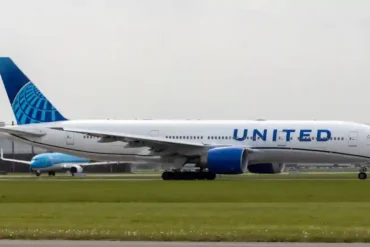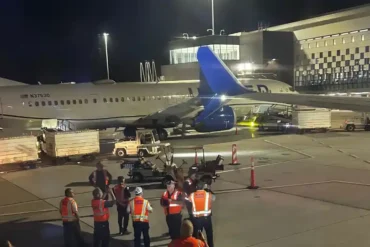
In a rare and unsettling event early Tuesday morning, two United Airlines international flights were forced to cancel operations after their wingtips made contact at San Francisco International Airport (SFO). The incident, which occurred at approximately 12:35 a.m., involved United Flight 863, destined for Sydney, Australia, and United Flight 877, scheduled to depart for Hong Kong. Although no injuries were reported among the passengers or crew, the occurrence has raised concerns over airport ground operations and safety procedures.
How the Incident Unfolded
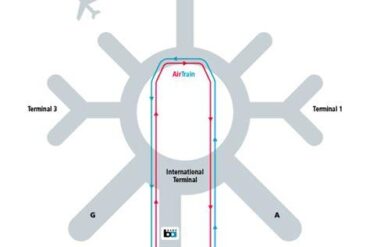
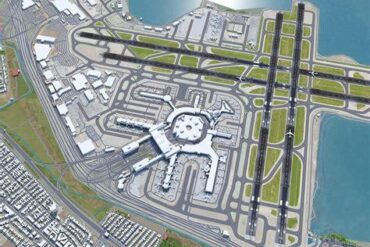
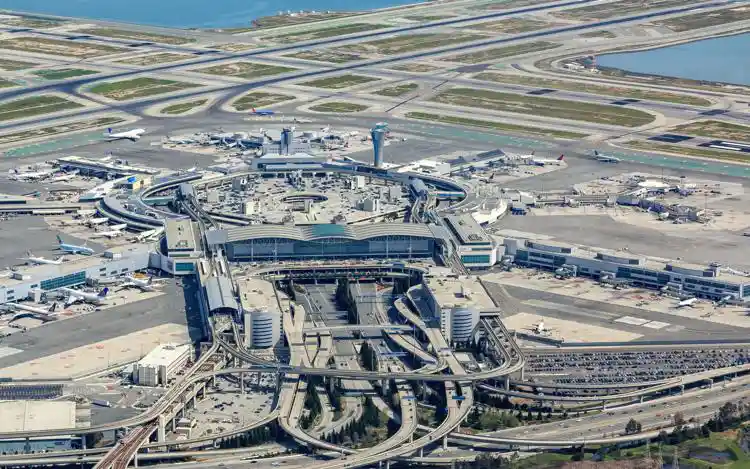
The collision took place in a section of the airport described as “near a gate,” a transitional zone where aircraft maneuver between active taxiways and their final boarding positions. According to a statement released by the Federal Aviation Administration (FAA), Flight 863’s left wingtip struck the right wingtip of Flight 877. The FAA highlighted that this occurred “in an area where air traffic controllers do not communicate with flight crews,” leaving ground handling and the flight deck team fully responsible for spatial awareness.
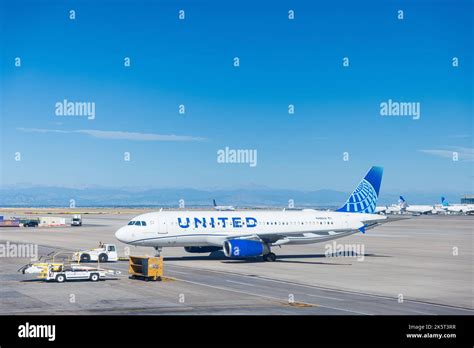
While no official statement has been issued by United Airlines at the time of writing, standard aviation protocol dictates that any such incident involving structural contact between aircraft triggers an immediate investigation, aircraft inspection, and, if necessary, decommissioning of the affected planes until full airworthiness is restored.
Ground Control Procedures and Safety Oversight
The FAA’s note that this happened outside of active air traffic controller zones underscores the critical role of ground handling crews, marshallers, and pilots in maintaining safety margins on the ground. Typically, areas around gates involve tight maneuvering, especially at busy international hubs like SFO, where wide-body jets often operate in close quarters. The lack of direct communication with tower controllers in these areas places significant responsibility on the flight deck and ground support teams to coordinate via visual cues, radio communications with ground services, and adherence to standard operating procedures.
In crowded environments, especially with large aircraft like the Boeing 777 or 787 models commonly used on transpacific routes, the wingtips can extend more than 60 meters, making clearances extremely tight even under normal circumstances.
FAA Investigation and Likely Outcomes
The FAA has already launched an investigation into the event. Key areas of focus will likely include:
- Crew actions and communication logs during the incident window.
- Ground operations footage from airport surveillance cameras.
- Environmental factors, such as lighting conditions and visibility at the time.
- Aircraft technical reports and maintenance history to rule out mechanical factors.
These investigations are standard practice and aim not only to assign responsibility but also to enhance procedural safeguards to prevent recurrence. Findings often lead to updated best practices for taxiing in congested zones, and in some cases, physical redesigns of gate layouts or stricter operational limits during certain hours.
Passenger Impact and Response
Passengers aboard both flights experienced immediate disruptions, with their travel plans delayed by at least 24 hours pending rebooking. United Airlines’ standard compensation policy for international flight disruptions typically includes accommodation, meal vouchers, and expedited rebooking assistance. Some travelers have voiced frustration on social media, citing lack of timely communication from the airline in the hours following the incident.
For frequent flyers and aviation observers, the incident also highlights how even well-established airlines operating at top-tier airports can encounter unforeseen logistical challenges. The scale and complexity of operations at SFO, especially given its role as a major Pacific gateway, amplify the risks inherent in taxiway and apron maneuvering.
Broader Safety Context: Taxi Incidents in Aviation
While high-profile air crashes dominate headlines, ground collisions involving aircraft remain a persistent safety concern in aviation. According to FAA data, taxiing incidents involving minor collisions or close calls happen more frequently than the flying public might expect, though serious damage or injuries are rare. These events typically involve human factors, spatial misjudgments, or occasionally mechanical failures.
Experts have called for increased use of advanced ground radar systems, augmented reality guidance for pilots, and enhanced marshaller training to minimize the risk of such incidents. Airports like SFO have invested heavily in recent years in improved ground surveillance technology, but the sheer physical dimensions of modern aircraft present ongoing challenges.
Conclusion: Lessons and Forward Steps
As investigations continue, the focus will be on understanding what contributed to the mishap at SFO. Both United Airlines and the FAA have a history of rigorous safety compliance and transparent reporting, which provides some assurance that lessons will be learned and corrective actions taken. For the aviation industry, the incident serves as a reminder that ground safety is as critical as in-flight safety, and that continuous vigilance is required at every stage of an aircraft’s journey.
Passengers planning future travel out of SFO or on United’s international routes should feel reassured that despite the disruption, the airline and regulators are committed to ensuring that such incidents remain rare exceptions in an otherwise robust system.