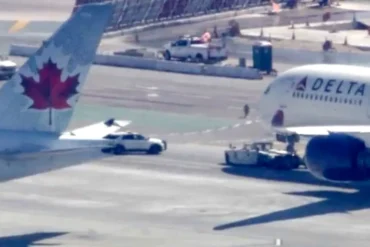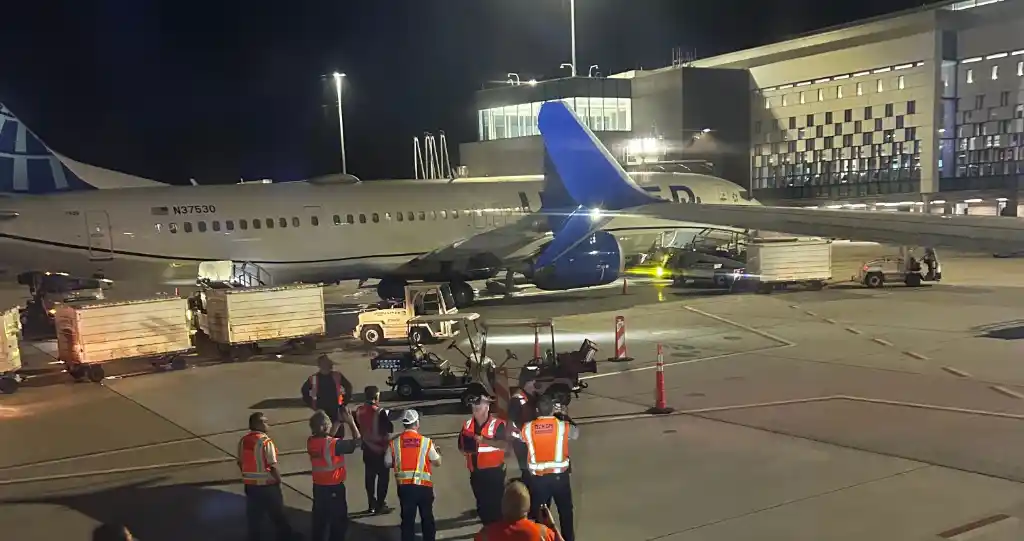
A routine evening at Houston George Bush Intercontinental Airport (IAH) turned into a logistical and financial headache for United Airlines when two of its Boeing 737-900ER aircraft collided during pushback operations, causing significant winglet damage and disrupting travel plans for hundreds of passengers.
The incident occurred on the evening of Tuesday, November 18, as United flight UA544, destined for Cleveland, and United flight UA2451, en route to Orlando, were being pushed back from their respective gates. The aircraft involved—tail numbers N69806 and N68843, aged 12 and 10 years respectively—were both Boeing 737-900ERs with a maximum capacity of 179 passengers.
A Critical Pushback Error
The chain of events leading to the collision stemmed from a miscalculated pushback maneuver. UA2451 was being pushed directly rearwards on a parallel taxiway. At the same time, ground crew guiding UA544 attempted to execute a turn onto the same taxiway. During this motion, the right winglet of UA2451 sliced into the left winglet of UA544, severing its tip.
The damage, while minor in the broader scope of aviation safety, was immediately visible. Passengers onboard UA544 reportedly pointed out the torn winglet to the cabin crew, though it was likely spotted first by vigilant ground personnel. The pilots were informed, and both aircraft were promptly returned to their gates. Passengers were safely deplaned and rebooked onto replacement aircraft.
The Passenger Fallout
The collision led to substantial delays:
- UA544 eventually departed at 9:27 PM, arriving in Cleveland at 12:46 AM, over 2.5 hours late.
- UA2451 departed at 9:21 PM, landing in Orlando at 12:04 AM, with a 2-hour delay.
To compensate for the grounded planes, United deployed substitute aircraft—N78438 for UA544 and N38459 for UA2451—allowing operations to resume with minimal overnight disruption.
Maintenance And Investigation
Following the incident, both damaged aircraft were towed to United’s maintenance hangars for thorough inspection. Notably, N69806, which suffered the most visible damage, was returned to service on November 21 after expedited repairs. Meanwhile, N68843 remains out of service, with no flights scheduled as of this writing. Whether its extended downtime is due to structural damage or limited hangar resources remains unclear.
Broader Implications: A Pattern Of Ground Incidents
This incident is not isolated. It continues a worrying trend of ground collisions involving U.S. carriers:
- In October 2025, a United 737-700 struck the tail of a parked 767-300ER in Chicago.
- Earlier that month, two Delta CRJ-900s collided at LaGuardia, injuring a flight attendant.
- In September 2025, a United 737 collided with another 737 during pushback at San Francisco.
Unlike in-flight incidents, pushback and taxiway collisions are typically attributed to ground crew errors, such as poor coordination or situational awareness. In the Houston case, both aircraft had their engines off and were under the control of tug vehicles and marshaling crews—a critical period where precise communication and visibility are vital.
Operational And Financial Impact
While no injuries occurred, the ripple effect of the accident was palpable:
- Up to 358 passengers faced delays and were rerouted.
- Aircraft maintenance costs surged due to unscheduled inspections.
- Operational efficiency was hampered, with two jets temporarily removed from service.
This is a stark reminder that even low-speed, ground-based incidents can result in substantial economic costs, safety reviews, and reputational concerns.
Conclusion: A Call For Apron Awareness
The Houston winglet collision underlines the necessity for enhanced vigilance during ground operations. As aircraft turnaround times shrink and airports grow busier, the margin for error narrows. Airlines, ground handling providers, and airport authorities must reaffirm their commitment to ground safety protocols, ensuring that apron activity does not compromise passenger safety or operational integrity.