Aviation does not tolerate ambiguity. At 35,000 feet, moving at nearly 500 knots, clarity is not a luxury—it is survival. Every word transmitted between cockpit and control tower is engineered for precision, stripped of vagueness, and tested under the harshest conditions imaginable. Within that tightly controlled linguistic system, one term stands out as both simple and profoundly important: Zulu time.
To the uninitiated, it may seem odd that pilots prefer saying “Zulu” instead of the technically accurate UTC (Coordinated Universal Time). But in aviation, language is not chosen for technical purity. It is chosen for clarity, speed, and zero margin for misinterpretation. Zulu time exists at the intersection of military history, radio communication science, and global standardization—and its continued use reveals exactly how aviation became one of the safest forms of transport in the world.
The Origin of Zulu Time: A Military Solution to a Global Problem
Long before commercial aviation became routine, military operations faced a fundamental challenge: coordinating actions across multiple time zones without confusion. When missions spanned continents, relying on local time was a recipe for disaster. Orders could be misinterpreted, synchronization could fail, and operations could collapse under something as simple as a time conversion error.
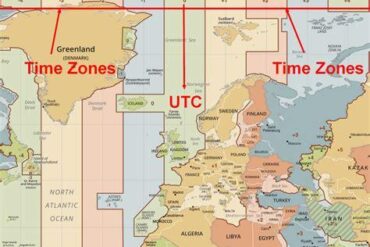
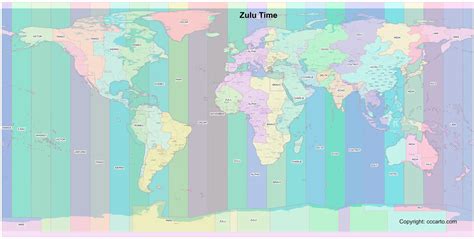
The solution was elegant. Every time zone on Earth was assigned a single letter designation, forming a global system centered on the Prime Meridian at zero degrees longitude. This reference point became the anchor for all timekeeping.
- Letters A through M represented time zones east of Greenwich
- Letters N through Y represented time zones west
- The central reference—zero offset—was assigned the letter Z
That “Z” became synonymous with Greenwich Mean Time (GMT) and later transitioned seamlessly into UTC when the modern atomic-based time standard replaced GMT in 1960. The letter didn’t change. The system didn’t change. Only the scientific precision behind it improved.
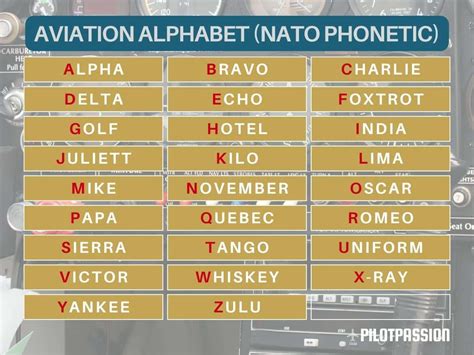
And when spoken over radio, the letter “Z” needed a clear, unmistakable pronunciation. That word became “Zulu.”
Why “Zulu” Works Better Than “UTC” in Real Cockpits
At first glance, saying “UTC” might seem more logical. It is the official term, after all. But aviation does not reward logic that fails under pressure. It rewards communication that survives noise, accents, fatigue, and stress.
“Zulu” succeeds where “UTC” struggles for several key reasons.
First, phonetic clarity. The word “Zulu” is part of the NATO phonetic alphabet, specifically designed so each word is distinct, recognizable, and resistant to distortion. Over a crackling radio signal, “Zulu” remains clear. “UTC,” by contrast, requires spelling out individual letters—“Uniform Tango Charlie”—which takes longer and introduces more room for error.
Second, speed of transmission. In high-traffic airspace, every second matters. Saying “one four zero zero Zulu” is faster and cleaner than spelling out a full abbreviation. Aviation communication favors brevity, but never at the cost of clarity.
Third, global consistency. Pilots and controllers come from every linguistic background imaginable. A single, universally recognized word eliminates ambiguity. “Zulu” sounds the same regardless of accent, while abbreviations can be misheard or misinterpreted.
The result is simple: Zulu time is not just tradition—it is optimization.
The NATO Phonetic Alphabet: Engineering Language for Survival
The adoption of “Zulu” is inseparable from the development of the NATO phonetic alphabet, a system born out of necessity during international military cooperation. Before its standardization in 1956, different countries used their own spelling alphabets. Miscommunication was common, especially in joint operations.
The International Civil Aviation Organization (ICAO) rigorously tested candidate words under real-world conditions. The criteria were unforgiving:
- Words had to be distinct even over poor radio signals
- They had to be easily pronounced by non-native English speakers
- They needed minimal similarity to other words in the alphabet
“Zulu” passed all tests. It is short, sharp, and acoustically unique. It doesn’t blur into other sounds. It doesn’t get confused with numbers or commands. It simply works.
This is why aviation communication often sounds unusual to outsiders. Words like “Kilo,” “Foxtrot,” and “Bravo” are not stylistic choices. They are precision tools.
Aviation’s Dependence on a Single Universal Time Standard
Modern aviation operates across continents in a continuous, interconnected system. A single flight can pass through multiple countries, air traffic control regions, and weather systems—all within a few hours.
Without a universal time reference, chaos would be inevitable.
Consider a long-haul flight departing London for Los Angeles. During its journey, it interacts with controllers in Europe, the North Atlantic, Canada, and the United States. Each region operates in a different local time zone. Yet every instruction, every report, and every coordination point must align perfectly.
Zulu time eliminates the need for conversion. It ensures that:
- Flight plans are interpreted identically worldwide
- Air traffic control clearances reference the same moment in time
- Weather reports are synchronized globally
There is no guesswork. No mental math. No opportunity for error.
Weather Reporting and the Critical Role of Zulu Time
Weather is one of aviation’s most unpredictable variables, and accurate timing is essential. Reports must not only be precise—they must be universally understood.
This is where Zulu time becomes indispensable.
METARs (Meteorological Aerodrome Reports) and TAFs (Terminal Aerodrome Forecasts) are issued using Zulu timestamps. A pilot reading weather data for an airport halfway across the world knows exactly when that observation was recorded.
There is no need to convert between time zones. No risk of misinterpreting outdated information. In aviation, even a small timing error can have large consequences, especially when dealing with rapidly changing conditions like storms, fog, or wind shear.
Zulu time ensures that every pilot, everywhere, is looking at the same clock.
Flight Planning Without Zulu Time: A Hypothetical Disaster
Imagine a world where aviation relied on local time instead of a universal standard. A pilot files a flight plan in Tokyo using local time. Air traffic control in Anchorage reads it in Alaska time. Controllers in Los Angeles interpret it in Pacific time.
The result? A cascade of misalignment.
Departure times could be misunderstood. Fuel calculations could be off. Arrival slots could be missed. The entire system would become fragile and error-prone.
Zulu time prevents this by acting as a single source of truth. Every timestamp in a flight plan—departure, en route checkpoints, fuel endurance—is anchored to UTC. It does not matter where the aircraft is. The reference never changes.
This consistency is one of the invisible pillars supporting global aviation safety.
The Tenerife Disaster: When Language Fails, Consequences Follow
The importance of standardized communication in aviation is not theoretical. It has been written in tragedy.
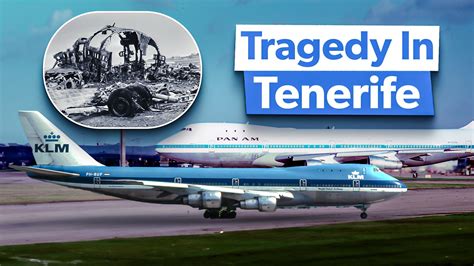
In 1977, two Boeing 747 aircraft collided on a fog-covered runway at Tenerife, resulting in the deadliest accident in aviation history. A key factor was miscommunication between the flight crew and air traffic control.
Ambiguous phrasing created uncertainty about whether one aircraft had begun its takeoff roll. The misunderstanding was not corrected in time.
That disaster became a turning point. It accelerated efforts to enforce standard phraseology, mandate English as the global language of aviation, and eliminate ambiguous expressions.
Zulu time fits directly into this philosophy. It removes one more variable. One more opportunity for confusion. One more risk.
In aviation, systems are often refined through hard lessons. Zulu time is part of that refinement.
Why Not Just Say “UTC”? The Subtle but Critical Difference
Technically, Zulu time and UTC refer to the same standard. But in aviation, the difference lies in how the information is transmitted, not what it represents.
“UTC” is a technical term. It belongs in documentation, regulations, and scientific contexts. But spoken communication demands something else entirely.
“Zulu” is:
- Audibly distinct
- Quick to say and recognize
- Universally standardized in pronunciation
In high-stakes environments, these qualities outweigh technical naming conventions. Aviation does not optimize for correctness on paper. It optimizes for correctness in action.
The Broader Language of Aviation: A System Built on Precision
Zulu time is just one piece of a much larger linguistic system designed to minimize misunderstanding.
Words like “Roger,” “Wilco,” and “Mayday” each carry precise meanings:
- “Roger” confirms receipt—not agreement
- “Wilco” confirms compliance
- “Mayday” signals distress with absolute clarity
These terms exist because natural language is often too flexible, too ambiguous, and too dependent on context. Aviation strips language down to its most functional form.
Zulu time fits perfectly within this framework. It is not just a way of telling time—it is a tool for eliminating doubt.
The Psychological Advantage of Standardization
Beyond technical benefits, Zulu time also provides a psychological advantage. Pilots operate in environments where workload can spike rapidly. Reducing cognitive load is critical.
By removing the need for time zone conversion, Zulu time allows pilots to focus on flying, not calculating. It simplifies decision-making, reduces mental strain, and minimizes the risk of human error.
This is a subtle but powerful benefit. In aviation, small improvements in clarity can produce large improvements in safety.

Why Zulu Time Endures in the Age of Automation
Modern aircraft are equipped with advanced avionics, GPS systems, and automated flight management computers. These systems can easily handle time conversions.
Yet Zulu time remains unchanged.
Why?
Because automation does not eliminate the need for human communication. Pilots still talk to controllers. Controllers still coordinate with each other. Decisions are still made in real time.
Zulu time continues to serve as a common linguistic anchor, ensuring that every human interaction in the system remains aligned.
Technology evolves. Communication principles endure.
Conclusion: Zulu Time as a Symbol of Aviation’s Relentless Precision
Zulu time is more than a convention. It is a reflection of aviation’s core philosophy: eliminate ambiguity wherever possible.
It represents decades of refinement, shaped by operational experience, technological advancement, and hard-earned lessons. It exists because it works—reliably, globally, and without compromise.
In a world where aircraft cross oceans and continents with seamless coordination, something as simple as a single word—“Zulu”—plays a critical role in keeping everything synchronized.
And that is the essence of aviation: complex systems made safe through uncompromising clarity.