Understanding the Meaning of “Remove Before Flight”
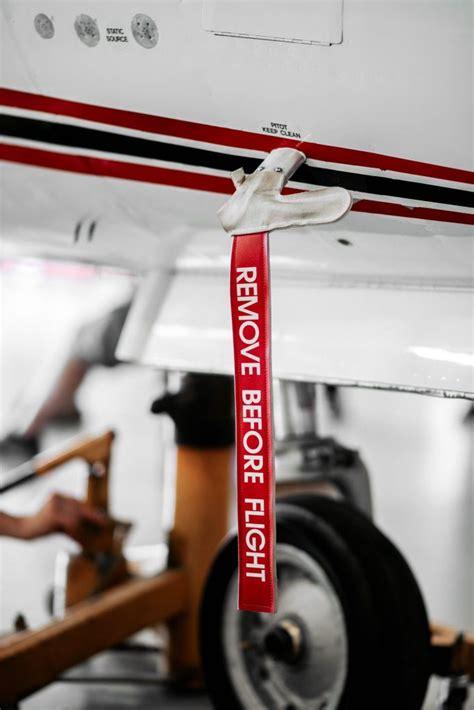
The phrase “Remove Before Flight” carries a weight far beyond its six simple syllables. It is not merely an instruction; it is a critical aviation safety protocol used worldwide in both military and civilian aerospace environments. The red ribbon tag bearing this phrase is attached to removable safety devices or protective covers on aircraft and spacecraft. These components, commonly referred to as “red tag items,” play a pivotal role in ensuring that aircraft are properly secured while stationary and then fully operational when cleared for flight.
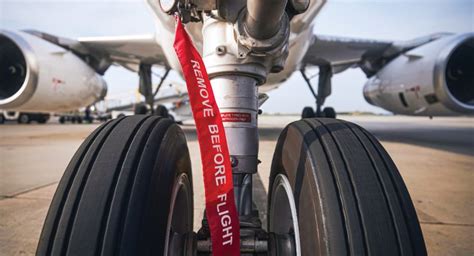
Historically, the tag has prevented countless accidents. However, the inverse is also true — when ignored, it has led to tragedy. Aviation accidents such as Aeroperú Flight 603, which crashed in 1996 due to unremoved pitot tube covers, underline the importance of this simple instruction. The unassuming red ribbon is often the last line of defense between a secure takeoff and catastrophic mechanical failure.
The Origins of “Remove Before Flight”
The term originated in military aviation, where the complexity of aircraft systems demanded visible, unmistakable cues for safety. As jets evolved to incorporate ejector seats, inlet blanks, gust locks, and pitot tube covers, the need to remove temporary protective components before takeoff became a standardized part of maintenance procedures. These components are not designed to endure flight conditions — their continued presence could damage critical systems or yield false instrument readings.
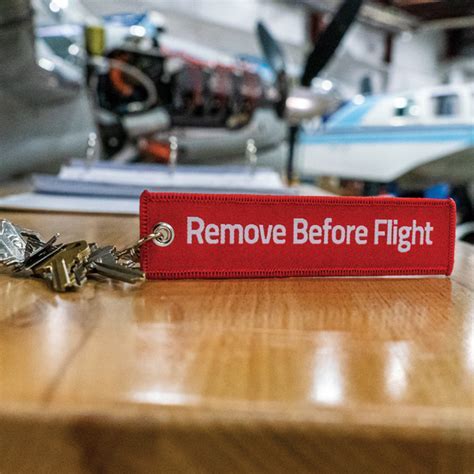
The red color and bold white typography are intentional: they stand out against any background, and their durability ensures visibility even in extreme weather conditions. The phrase is written in English due to its international adoption as the default language of aviation, as standardized by the International Civil Aviation Organization (ICAO).
Critical Applications and Components
“Remove Before Flight” ribbons are typically attached to:
-
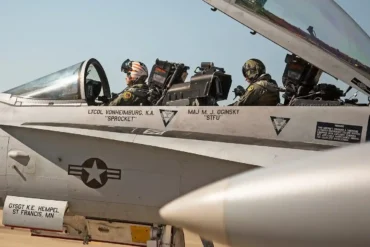
Ejector seat pins: Prevent accidental ejection during maintenance
-
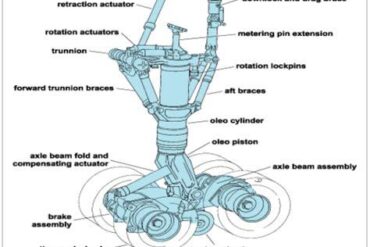
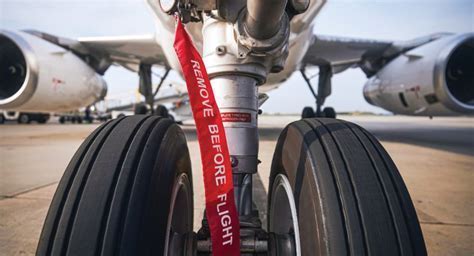
Landing gear pins: Lock gear into place on the ground to prevent collapse
-
Pitot tube covers: Protect airflow sensors from debris and insects
-
Gust locks: Immobilize flight control surfaces like ailerons or rudders
-
Intake/inlet blanks: Shield engines from foreign object damage (FOD)
Each of these components has one thing in common: they serve an essential purpose while the aircraft is grounded, but must be removed before flight.
The Ground Crew Checklist Protocol
Aircraft ground handling teams follow strict protocols. When performing a pre-flight inspection, a checklist system is employed to verify the removal of every red-tagged item. In high-risk operations — such as military sorties or spacecraft launches — the tag itself is often attached to the checklist as proof of compliance. In some cases, aircraft will not be cleared for flight until all such tags are accounted for physically and procedurally.
Failure to follow this process can result in:
-
Instrument failure (e.g., blocked pitot tubes)
-
Mechanical obstruction (e.g., jammed flight controls)
-
In-flight emergencies and, in worst cases, fatal crashes
The Royal Nepal Airlines crash in 1975, which killed the wife and daughter of Sir Edmund Hillary, was also caused by a forgotten red-tagged safety device. These incidents serve as grave reminders that human factors in aviation safety — especially oversight during maintenance — must be mitigated through visible, mandatory warnings.
From Function to Symbolism: Cultural and Commercial Adoption
While originally a technical warning, “Remove Before Flight” has evolved into a cultural symbol representing precision, safety, and engineering excellence. In recent years, the tag has transcended its original purpose:
-
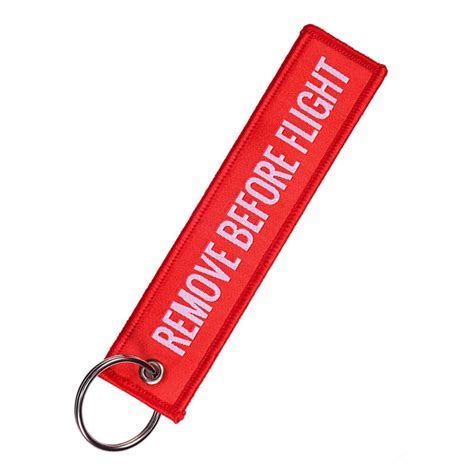
Keychains: Aviation enthusiasts often carry replicas of the tag
-
Apparel: Jackets, hats, and bags sporting the phrase are common in pilot subcultures
-
Merchandising: Automotive, space, and drone manufacturers adopt similar tags to emphasize high-performance engineering
The phrase conveys an unspoken code of responsibility and readiness. It symbolizes a transition — from grounded to airborne, from dormant to active.
Modern Relevance in Civil Aviation and Spaceflight
With the rise of commercial space travel and private aviation, “Remove Before Flight” retains its critical function. Companies such as SpaceX, Blue Origin, and Virgin Galactic use similar visual cues for pre-launch checklists. While spacecraft systems are largely automated, human crews and technicians still rely on physical markers like these to ensure multi-redundant safety verification.
In general aviation, particularly for smaller aircraft where pilots may personally perform walkarounds, the presence of these tags ensures:
-
Pitot-static systems remain free of obstructions
-
Engine inlets and exhausts are protected on the ground
-
All control surfaces are mobile and unlocked before engine startup
Failure to comply with even one item on a “remove before flight” checklist can result in loss of aerodynamic performance, engine failure, or navigation error.
The Engineering Behind the Tag
The standard “Remove Before Flight” tag is designed with both form and function in mind:
-
Color: High-visibility red with white block lettering
-
Material: Nylon or polyester with fray-resistant edges
-
Length: Typically between 6 to 18 inches to ensure visibility
-
Attachment Method: Often includes a split ring, clip, or lanyard hook
Tags are also weatherproof, ensuring legibility in rain, snow, and high humidity. Certain military versions use fire-retardant materials, especially in high-risk combat zones or hangar storage areas.
Digital Checklists vs. Physical Tags
As aviation becomes more digitized, many aircraft now rely on tablet-based checklist systems, often connected to onboard diagnostic sensors. Still, physical “Remove Before Flight” tags persist because they are immune to software errors, cannot be forgotten in a system crash, and serve as tactile, visual confirmations.
They also act as redundant safety features, ensuring that even if a technician overlooks a checklist, the physical presence of a red tag forces immediate attention. In the aviation world, where redundancy saves lives, these tags are indispensable.
Conclusion: Why “Remove Before Flight” Still Matters
Despite advancements in aerospace technology, the “Remove Before Flight” tag remains an irreplaceable standard. It encapsulates the essence of safety, discipline, and human accountability in one simple directive. The red ribbon reminds us that no system is foolproof and that attention to detail is the final safeguard before any aircraft breaks the bounds of Earth.
From military jets and commercial airliners to spacecraft and hobbyist drones, the universal message is clear: some components are meant to protect only when stationary — once airborne, their presence becomes a liability.
Remove it. Check it. Then fly.
FAQs About “Remove Before Flight”
What happens if a “Remove Before Flight” tag is not removed?
Failing to remove a tagged component can cause instrument failure, control surface lockups, or engine damage, depending on the part involved. This oversight has led to serious accidents, such as the Aeroperú Flight 603 tragedy, where a pitot tube cover was left in place, causing the pilots to receive false airspeed readings.
Are “Remove Before Flight” tags used outside of aviation?
Yes. Industries such as automotive racing, aerospace testing, and even drone manufacturing now employ similar tags for pre-operation safety verification. They are also used in motorsports to indicate components or sensors that must be disengaged before the vehicle becomes active.
Why is the phrase always in English, even on foreign aircraft?
English is the international language of aviation, as defined by the ICAO. All commercial and military pilots are trained to communicate in English, ensuring that safety instructions are universally understood regardless of nationality or operating region.