American Airlines is approaching one of the most consequential widebody fleet decisions in its modern history. The carrier has already established the Boeing 787 Dreamliner as the foundation of its long-haul operation, but its fleet still contains a substantial number of older Boeing 777s that will eventually need to be replaced. At the same time, the airline has not committed to any next-generation widebody larger than the 787-9, leaving it as the only member of the US Big Three without a clear commitment in that category.
That position is becoming increasingly important as Delta Air Lines and United Airlines build out their next-generation international fleets. United has expanded its 787 family to include the larger 787-10, while Delta is preparing to introduce both the Boeing 787-10 and Airbus A350-1000. American, meanwhile, is evaluating what size aircraft it actually needs rather than simply following the same path.
The timing has become even more interesting because Boeing appears to have made a fresh move in its effort to bring American into the 777X program. An American Airlines test pilot was reportedly seen flying the Boeing 777-9 during the aircraft’s ongoing certification campaign and subsequently described the aircraft as “AAmazing.” That does not establish that American intends to order the aircraft, but it provides another intriguing connection between the airline and Boeing’s largest next-generation twinjet.
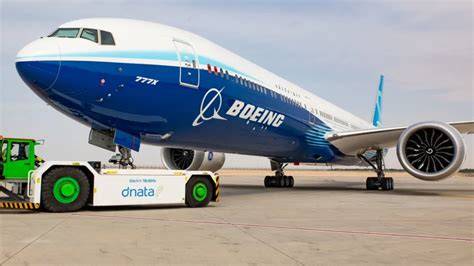
For Boeing, winning American would have significance well beyond the size of the order. The 777X program has endured years of development and certification delays, and despite the enormous installed base of 777 aircraft among major US airlines, no US carrier has yet committed to the new-generation 777X. American is therefore a particularly important potential customer because it already operates a large 777 fleet and remains one of Boeing’s biggest customers across both widebody and narrowbody categories.
For American, however, the decision is more complicated than simply replacing an aging aircraft with a newer and larger version. The airline must consider the structure of its international network, the number of passengers it can consistently fill, aircraft utilization, premium-cabin demand, fleet commonality and the economics of operating a very large aircraft. The future of American’s widebody fleet could therefore come down to a fundamental question: does the airline need a true 777 replacement, or does it need more flexible aircraft built around the 787’s size?
American Airlines’ Current Widebody Fleet Is Split Between 777s and 787s
American’s active widebody fleet already provides a clear picture of the transition taking place inside the airline. As of 2026, its long-haul fleet consists entirely of Boeing aircraft, with the older generation represented by the 777 and the newer generation dominated by the 787 Dreamliner.
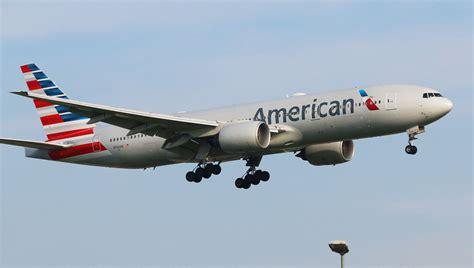
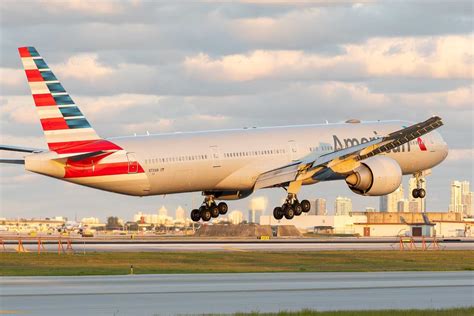
American operates 67 Boeing 777s, including 47 777-200s and 20 777-300ERs. The age difference between those two groups is substantial. The 777-200 fleet averages roughly 25.8 years old, while the 777-300ER fleet averages approximately 12.6 years. The older 777-200s are consequently the most obvious candidates for eventual replacement as American moves deeper into the 2030s.
The 777-300ERs present a different challenge because they are significantly newer and substantially larger. These aircraft can carry around 330 passengers in American’s configuration, with more than 100 seats dedicated to business class and premium economy. Replacing that capacity with a much smaller aircraft would require American to rethink how it serves its highest-demand international markets.
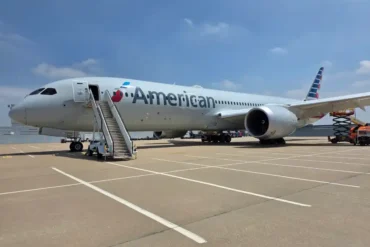
The other half of the fleet is much younger. American operates approximately 37 Boeing 787-8s and 33 Boeing 787-9s, giving it around 70 Dreamliners already in service. Their average ages are only about 8.3 and 6.4 years respectively. These aircraft have become central to American’s international operation and have effectively replaced much of the complexity that once existed in the airline’s widebody fleet.
That simplification was accelerated during the pandemic. Before 2020, American operated Boeing 767s and Airbus A330s alongside its 777s and 787s. The airline retired the 767 and A330 fleets during the dramatic reduction in international flying, using the disruption to accelerate its fleet renewal strategy. The result was a much younger and more concentrated widebody fleet centered on Boeing’s 787 and 777 families.
This creates an unusual situation today. American has already made its long-term commitment to the 787 clear, but it has not yet identified the aircraft that will ultimately fill the gap above the 787-9. That gap matters because the airline’s largest remaining aircraft are also among its oldest.
Boeing 777-9 Could Give American the Capacity It Is Missing
The Boeing 777-9 is the most obvious aircraft capable of filling that gap. Once certified, the aircraft is expected to carry approximately 426 passengers in a typical two-class configuration. American would almost certainly configure it differently, particularly if it continues expanding its premium economy offering, but the basic capacity advantage would remain enormous.
The aircraft is also designed for long-range missions. Boeing expects the 777-9 to achieve a range of approximately 8,000 nautical miles, or about 14,820 kilometers. Its GE Aerospace GE9X engines and aerodynamic improvements are intended to deliver substantially better efficiency than earlier-generation 777s despite the aircraft’s larger size.
For American, the attraction would be particularly obvious on routes where demand consistently supports a large aircraft. London is the clearest example. The United Kingdom is one of American’s most important international markets, and dense routes between the United States and London can support aircraft significantly larger than the 787-9.
A 777-9 could also provide additional capacity on selected routes to major European and Asian destinations without requiring American to operate multiple frequencies simply to accommodate demand. That could become particularly useful if the airline decides to increase the proportion of premium seats in its international fleet.

Yet the aircraft’s greatest advantage is simultaneously its greatest drawback. The 777-9 is very large, and American’s network does not necessarily require that capacity on a broad range of routes.
The airline’s international network is considerably more concentrated than United’s. In Asia and Oceania, American serves destinations including Tokyo, Seoul, Shanghai, Delhi, Sydney, Auckland and Brisbane, while United has developed a much broader transpacific network. United’s extensive international operation gives it more opportunities to deploy very large aircraft across different markets.
American’s strength is more concentrated in the Americas, particularly through Dallas/Fort Worth and Miami. Those markets generate enormous connectivity across Latin America and the Caribbean, but many of those routes are better served by smaller aircraft than a 777-9.
American’s International Network Could Decide the Aircraft Size
The fleet decision cannot be separated from American’s international strategy. A widebody aircraft is only economically useful when an airline has enough routes capable of filling it consistently at attractive yields. Buying a larger aircraft simply because it has more seats would not necessarily produce the best fleet economics.
American currently operates a relatively focused long-haul network. In Asia, its destinations include Tokyo, Seoul, Shanghai and Delhi, while its Oceania network includes Sydney, Auckland and Brisbane. Its European operation is considerably broader, but it remains centered largely on major markets, with some seasonal service to smaller destinations.
This network structure favors flexibility. A 787-9 can be deployed across a much wider range of routes because its capacity is easier to match with varying levels of demand. That flexibility becomes particularly valuable when international markets fluctuate seasonally.
The 787 also gives American the ability to operate long-distance routes that would not support a 777-9. This is one reason the Dreamliner has become so important to the carrier. Instead of asking whether a destination can support a very large widebody, American can use a smaller aircraft and adjust frequencies according to demand.
The airline is also introducing the Airbus A321XLR into its international network. Although the aircraft is narrowbody rather than widebody, its long range gives American another tool for opening routes where a 787 would be too large. That creates an increasingly flexible fleet structure, with the A321XLR covering thinner long-haul markets and the 787 handling routes requiring more capacity.
The question is therefore whether American actually needs an aircraft substantially larger than the 787-9. If the answer is no, a huge 777X order could create unnecessary capacity and reduce some of the flexibility that has become central to the airline’s international strategy.
More Boeing 787s Could Be the Simpler Solution
One of the strongest alternatives to the 777X is remarkably straightforward: buy more 787s.
American already has approximately 70 787s in service and more than a dozen additional aircraft on order. The airline has maintenance infrastructure, trained pilots, cabin crews and operational experience built around the family. Adding another large batch would therefore involve considerably less fleet complexity than introducing an entirely new widebody type.
A potential order of as many as 65 additional 787s would be transformative. Combined with aircraft already delivered and on order, American’s total 787 commitment could reach approximately 154 aircraft, putting the carrier among the world’s largest Dreamliner operators.
The question then becomes which version American would choose. Additional 787-9s would preserve the existing fleet’s commonality and provide more long-haul flexibility. However, the 787-10 could be particularly interesting because it offers greater passenger capacity than the 787-9 while remaining within the same basic Dreamliner family.
The 787-10 does not provide the range of the 787-9, so it cannot simply replace every route served by the larger 777 family. But for dense international routes where range is less demanding, it could provide a useful middle ground between the 787-9 and 777-300ER.
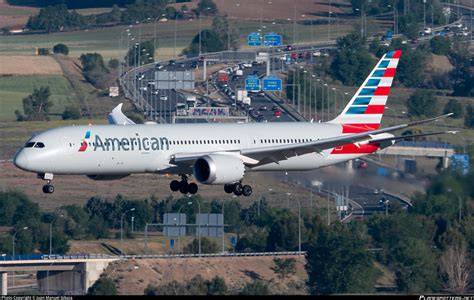
That middle ground could be exactly what American needs. Rather than replacing every 777 with an aircraft of similar or greater size, the airline could divide the replacement mission among several aircraft types. The 787-9 could handle longer and thinner routes, while a 787-10 could absorb higher-demand missions where additional seats are needed.
Such a strategy would also allow American to keep its widebody fleet relatively simple. That matters because fleet commonality affects more than pilot training. Maintenance planning, spare parts, simulators, crew scheduling and operational recovery all become easier when an airline can move resources across a smaller number of aircraft families.
The Airbus A330-900neo Remains an Alternative
Boeing is not the only manufacturer with an aircraft that could fit American’s requirements. The Airbus A330-900neo offers another potential solution, particularly if American prioritizes delivery timing and acquisition cost over maintaining an exclusively Boeing widebody fleet.
The A330-900neo is broadly comparable in size to the 787-9 and offers a long-range capability suitable for many of American’s existing international markets. It would therefore not solve the 777 replacement problem in exactly the same way as a 777-9, but it could provide additional capacity while keeping the airline focused on aircraft closer to the size of its existing Dreamliners.
One factor that makes the A330neo particularly interesting is delivery availability. The aircraft has been available for airlines looking for relatively near-term widebody capacity, while the 777X program has experienced substantial delays. If American wants to accelerate fleet renewal rather than wait for the 777X production system to mature, Airbus could potentially offer a different timetable.
There is also an unusual connection through American’s leadership. Chief Commercial Officer Nat Pieper previously served as Delta Air Lines’ VP of Fleet Strategy & Transactions during the period when Delta ordered the A330neo. That does not indicate what American will ultimately choose, but his experience with the aircraft gives the A330neo an interesting connection to the airline’s fleet-planning leadership.
An Airbus widebody order would also represent a major strategic shift. American’s active widebody fleet is currently entirely Boeing, so introducing the A330neo would add another aircraft family and manufacturer to an operation that has spent years moving toward simplification.
United and Delta Show Two Different Paths for American
American’s decision becomes clearer when viewed alongside United and Delta. The two airlines have taken noticeably different approaches to their future widebody fleets.
United has built its strategy around the 787 family while retaining a substantial 777 fleet. It operates the 787-8, 787-9 and 787-10, with the 787-10 providing additional capacity without requiring the airline to move directly into a larger aircraft such as the 777-9 or A350-1000.
United’s fleet includes roughly 92 Dreamliners and 96 777s, giving it considerable flexibility across its large international network. The combination of different 787 variants allows United to match aircraft size with route demand while maintaining considerable commonality.
Delta has followed a more diversified path. Its widebody fleet includes Airbus A350-900s, A330ceos, A330neos and Boeing 767s, while the airline is preparing to add the A350-1000 and 787-10. The A350-1000 will give Delta an aircraft significantly larger than the 787-10 and is expected to become the largest aircraft operated by a US airline.
American has not followed either model completely. It has pursued substantial 787 fleet growth but has not ordered an aircraft equivalent to the A350-1000 or 777-9. That leaves the carrier at an important crossroads.
Boeing’s 777X Opportunity Is Bigger Than One Aircraft Order
The reported appearance of an American Airlines test pilot flying the 777-9 is therefore noteworthy, but it should not be interpreted as evidence that an order has already been decided. Airline pilots participate in manufacturer testing, operational assessments and human-factors evaluations for many reasons.
Still, Boeing has a clear incentive to put the 777-9 in front of American’s decision-makers. The manufacturer needs additional customers for a program that has faced years of delays, and American represents an unusually strong potential customer because of its existing 777 operation.
For American, the 777-9 would offer something no current 787 can provide: a next-generation replacement for its largest widebodies with substantially greater capacity. It could preserve the high-capacity role currently performed by the 777-300ER while delivering a much more modern aircraft platform.
But the airline could also decide that its future does not require a direct replacement of every 777 with another large widebody. Instead, it could gradually reduce the role of the largest aircraft and build its international fleet around the 787 family, supported by the A321XLR for thinner long-haul routes.
That would be a very different fleet philosophy from simply replacing the 777-200ER with the 777-9.
American Airlines’ Next Widebody Order Will Define Its Long-Haul Strategy
The significance of American’s upcoming widebody decision extends far beyond the aircraft themselves. The order will reveal how the airline sees its international network developing through the 2030s and beyond.
If American chooses the 777-9, it would signal that the airline expects enough high-demand international flying to justify a next-generation aircraft in the upper 300-seat range. It would also give Boeing an important US customer for the 777X and provide American with a modern successor to its largest 777s.
If American instead orders substantial numbers of 787-9s or 787-10s, the message would be different. The airline would be reinforcing a strategy built around smaller, more flexible widebodies and using frequency and network flexibility rather than aircraft size to expand its international operation.
An A330-900neo order would introduce another possibility, combining relatively large-scale fleet renewal with a move away from American’s current all-Boeing widebody structure.
The aging 777-200 fleet makes the decision increasingly difficult to postpone. Those aircraft cannot remain the foundation of American’s long-haul fleet indefinitely, while the 777-300ERs will eventually require a long-term successor as well. At the same time, American has no obligation to replace every large aircraft with an aircraft of equal size.
That is ultimately why Boeing’s apparent move with the 777-9 is so interesting. American Airlines does not simply need a new widebody; it needs to decide what role large widebodies will play in its future network. The answer could produce a 777X order, another major Dreamliner commitment, an Airbus surprise, or a combination of different aircraft.
Whatever American chooses, the decision will define the shape of its long-haul fleet for decades and determine whether the airline finally joins Delta and United in committing to a next-generation widebody larger than the 787-9.