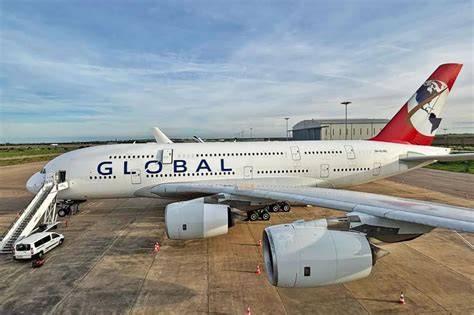
Global Airlines built its entire commercial ambition around an aircraft that has become one of the most difficult assets in modern aviation to operate economically: the Airbus A380. The British startup envisioned using pre-owned superjumbos to launch long-haul passenger services, promising a return of the four-engine giant to routes where established carriers have gradually reduced or eliminated it. But the company’s ambitious plan is now facing a far more immediate challenge than aircraft availability or passenger demand. A High Court winding-up petition in London has put the company’s survival itself under scrutiny.
The dispute centers on Global Airlines’ financial position and its ability to satisfy creditors while its only aircraft remains grounded. The aircraft, registered as 9H-GLOBL, has been sitting at Tarbes-Lourdes-Pyrénées Airport in France since July 16, 2025. Chief Executive Officer James Asquith has continued to say that the aircraft could return to service before Christmas 2026, potentially supporting new routes between the United Kingdom and the Maldives. Yet the company’s legal and financial circumstances make that timetable increasingly difficult to separate from the much bigger question of whether Global Airlines will still exist to operate it.
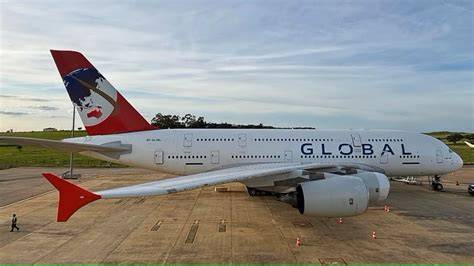
The latest proceedings are not the first indication that the startup has been under financial pressure. A previous winding-up petition was filed in August 2025 and was eventually resolved outside court. The new petition, however, represents a renewed escalation. On May 29, 2026, winding-up petition CR-2026-004213 was filed in the High Court of Justice. Hearings before Insolvency Judge Barber took place on July 15 and September 2, putting the company’s future under increasingly serious legal scrutiny.
The timing is particularly significant because Global Airlines has generated only a tiny amount of actual flying compared with the scale of its ambitions. Its A380 completed just two round trips, representing four flights in total, under a damp-lease arrangement with Hi Fly Malta. The aircraft accumulated approximately 62 flight hours over 20 operational days before returning to storage. For a startup attempting to establish an international airline around an A380, that is an extremely limited operational foundation.
Global Airlines’ A380 Dream Meets a London Insolvency Challenge
The fundamental problem facing Global Airlines is straightforward even though the legal details are complicated. An airline startup can survive a period without meaningful revenue if it has substantial funding, a clear route toward certification and investors willing to finance the development phase. It becomes considerably more difficult when an expensive aircraft is sitting idle, maintenance bills continue accumulating and creditors are simultaneously seeking payment through the courts.
A winding-up petition is particularly serious because it can ultimately result in compulsory liquidation. The purpose is not simply to encourage a company to pay an overdue invoice. If the court orders liquidation, the company’s assets can be realized for the benefit of creditors and the business can cease operating as an independent enterprise. For Global Airlines, that raises a question far beyond its next flight: what happens to 9H-GLOBL if the company can no longer finance its return to service?
The company has continued to present a much more optimistic operational outlook. Asquith has repeatedly attributed the aircraft’s prolonged grounding to the severe global backlog affecting heavy maintenance facilities. A twelve-year inspection and associated work on an A380 are not minor maintenance events. They can involve extensive structural examinations, systems inspections and other work necessary to establish that an aging widebody remains suitable for continued commercial operation.
That explanation does not eliminate the financial consequences of the delay, however. An aircraft that does not fly still costs money. Parking, insurance, preservation, corrosion protection, maintenance planning and other technical requirements continue even when the aircraft produces no passenger revenue. The longer the aircraft remains grounded, the greater the amount of capital that has to be committed before the first meaningful commercial flight can generate cash.
Why Parking an Airbus A380 Creates a Serious Cash Problem
The attraction of secondhand A380s initially appears obvious. New-generation widebody aircraft require enormous capital expenditure, while used A380 airframes can trade at dramatically lower prices. Estimates in the reference material place used A380 values broadly in the $25 million to $60 million range, depending on condition, configuration, history and remaining useful life.
But the purchase price of a used superjumbo is only the beginning.
An A380 that has been parked for an extended period cannot simply be pulled from storage, filled with passengers and sent across the Atlantic. Returning such an aircraft to commercial service requires extensive technical work. Engines must meet applicable requirements, aircraft systems must be inspected and tested, structural condition must be verified and scheduled maintenance must be completed. The precise scope depends on the aircraft’s history and maintenance status, but the costs can quickly become substantial.
For Global Airlines, this creates an especially difficult financial equation. The company needs capital to restore 9H-GLOBL, but the aircraft cannot generate significant revenue until the necessary work has been completed. Every additional month of delay therefore pushes the break-even point farther into the future.
The location of the aircraft adds another dimension. Tarbes-Lourdes-Pyrénées Airport has become closely associated with stored and retired A380s because the airport has hosted multiple superjumbos awaiting maintenance, dismantling or another operational future. For Global Airlines, however, the aircraft’s presence there represents a continuing expense rather than an operating asset.
The economic problem becomes particularly severe when an aircraft has four engines. The A380’s size and complexity were designed around a business model in which large numbers of passengers could be carried between major international hubs. That works differently for a startup with one aircraft and no established network.
Global Airlines must therefore solve two problems simultaneously: make the A380 airworthy and create enough commercial demand to justify operating it. Either problem alone would be challenging. Together, they create a substantial funding requirement before the company can establish a stable revenue stream.
Global Airlines Still Does Not Have Its Own UK Air Operator Certificate
Another major weakness in the original business model is Global Airlines’ regulatory position. The startup has not formally obtained its own United Kingdom Air Operator Certificate, meaning it does not operate as a conventional independent airline controlling its own fleet and flight operations.
Instead, the company used a damp-lease arrangement with Hi Fly Malta to place 9H-GLOBL into commercial service. Under that structure, another certified airline provides key operational resources, allowing an aircraft to fly without the startup immediately having to build the entire operational infrastructure of a traditional carrier.
That approach can make sense during an airline’s early development. It can provide access to experienced crews, maintenance arrangements and operational certification through an established operator. But it also comes with costs.
Global Airlines effectively had to carry the financial burden associated with its own aircraft while paying another operator to provide the operational capability needed to fly it. The result was a particularly demanding cost structure: ownership and storage expenses continued while wet-lease operating costs were also incurred.
The four completed round trips demonstrate the limitation of that strategy. The aircraft did fly passengers, but the operation never developed into the sustained schedule required to transform the A380 from an expensive asset into a recurring revenue generator.
Without its own AOC, Global Airlines also lacks the operational independence that established carriers take for granted. Regulatory approval, aircraft availability, crew arrangements, maintenance capacity and route planning all have to fit together before a sustainable network can emerge.
The September 30 Accounts Deadline Adds More Pressure
The company’s financial position is likely to become more visible when its 2025 audited accounts are due at Companies House on September 30, 2026. Corporate accounts do not by themselves determine whether an airline succeeds or fails, but they provide creditors, investors and the wider aviation industry with a clearer view of the company’s financial condition.
That transparency arrives at an uncomfortable moment.
The High Court proceedings are already examining creditor concerns, while Global Airlines continues to carry the costs associated with an aircraft that has been inactive for more than a year. The company’s board has also undergone changes. OnlyFans co-founder Tom Stokely and former Chief Commercial Officer Richard Stephenson have departed, while Michael Joseph Belitz and Dylan Salamon were appointed as directors in May 2026.
Leadership changes are not automatically evidence of financial distress, but in the context of active insolvency proceedings they become relevant to understanding how the startup is being managed during a critical stage of its development.
For creditors, the central question is ultimately whether further funding can realistically convert the A380 into a productive commercial asset. For Global Airlines, the answer depends on completing maintenance, establishing regulatory capability, securing suitable routes and generating enough revenue to support the aircraft’s exceptionally high fixed costs.
Why the A380 Is Becoming More Valuable as a Parts Source
There is another factor working against the revival plan: the shrinking global A380 fleet.
Airbus ended A380 production after completing 251 aircraft. That limited production run means that the supply chain for the type is fundamentally different from that of much larger aircraft families such as the A320 or 737. Airlines still operating A380s must maintain aircraft that are increasingly rare, and obtaining certain components can become more complicated and expensive as the global fleet ages.
This has created an unusual secondary market for retired A380s. An aircraft that cannot economically return to passenger service may still contain engines, landing gear, avionics, flight-control components and other equipment with significant value to active operators.
That changes the calculation for a distressed aircraft owner.
A creditor looking at 9H-GLOBL does not necessarily need Global Airlines’ passenger operation to succeed. If the aircraft itself contains valuable certified components, dismantling the airframe can potentially provide a more immediate route toward recovering money than waiting for a financially uncertain airline startup to complete a long and expensive return-to-service program.
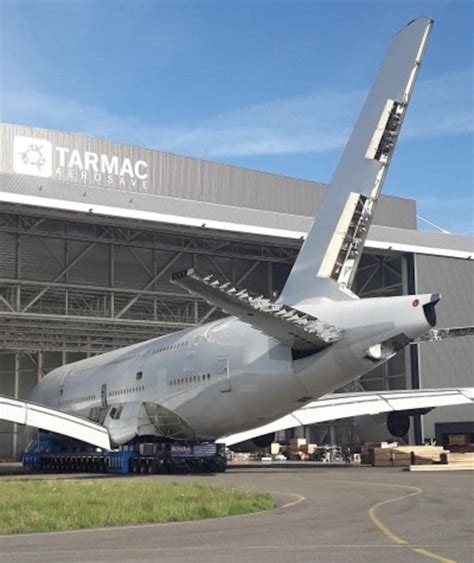
This is one reason the A380’s future can look very different depending on who is evaluating it. To Global Airlines, 9H-GLOBL represents the foundation of an airline. To an aircraft-parts specialist, it could represent an inventory of valuable components. To a creditor, it is an asset that must be evaluated according to how much recoverable value it can provide.
Those three perspectives do not naturally point toward the same outcome.
Why Converting 9H-GLOBL Into a Freighter Is Not an Easy Escape
One possible alternative for many aging widebody aircraft is conversion from passenger service to cargo operations. Boeing 767s, Airbus A330s and other twin-engine widebodies have found second lives carrying freight after passenger operations became less attractive.
The A380 is different.
Its double-deck architecture was never designed around conventional main-deck freighter loading. Converting an A380 into a practical cargo aircraft would require enormous engineering work and investment, while the aircraft’s size would create additional airport and operating constraints.
That substantially reduces the number of possible rescue scenarios for 9H-GLOBL if Global Airlines collapses.
An A330 can potentially attract passenger operators, cargo operators and leasing companies. An A380 has a much narrower market. Only a relatively small number of airlines have the infrastructure, passenger demand and network scale needed to justify the type.
This makes the secondary A380 market unusually unforgiving. If an aircraft cannot find an operator willing to invest in its return to service, dismantling it can become economically rational even when the airframe itself remains physically capable of flying.
The Earlier Hi Fly A380 Provides a Warning
There is a useful precedent in the history of 9H-MIP, the A380 previously operated by Hi Fly. The aircraft demonstrated that a secondary-market A380 could undertake specialized operations, including charter and humanitarian flying, outside the traditional major-airline model.
Yet when the aircraft was no longer economically viable in active service, it eventually went to Tarbes and was dismantled for valuable components.
That history is relevant because Global Airlines is attempting something even more ambitious. Rather than using the A380 for occasional specialized missions, the startup intends to build a scheduled passenger airline around the aircraft.
The difference is enormous.
A charter aircraft can be profitable when it flies selectively during periods of high demand. A scheduled airline must maintain predictable operations, sell tickets continuously, manage airport slots, support customer service, establish distribution channels and absorb the costs associated with flights that do not fill every seat.
For an A380 startup, maintaining that structure with only one aircraft is particularly difficult. If the aircraft becomes unavailable for maintenance, the entire passenger operation effectively disappears.
What Could Happen to Global Airlines’ A380
The immediate future of 9H-GLOBL depends heavily on the outcome of the London proceedings and the company’s ability to satisfy or otherwise resolve creditor claims. If the winding-up petition results in compulsory liquidation, the aircraft could become one of the startup’s most important assets available for recovery.
In that scenario, the aircraft could potentially be sold as a complete airframe, transferred to another operator or dismantled for components. The final decision would depend on the aircraft’s technical condition, maintenance requirements, market demand and the value creditors believe can be recovered.
A sale to another passenger operator would require someone to accept the same fundamental economic challenge that Global Airlines has struggled to overcome: the cost of returning an aging A380 to service and operating it profitably.
That is a significant hurdle.
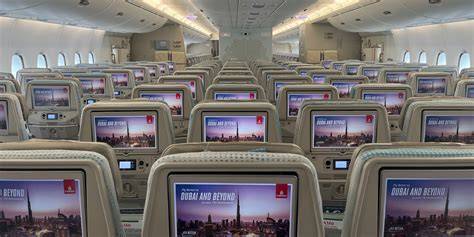
The aircraft has an unusual configuration, limited potential operators and substantial maintenance requirements. Its refurbished interior may increase its appeal, but a modern cabin cannot eliminate the underlying economics of four engines, large crews, extensive ground handling and heavy maintenance.
If the aircraft instead becomes a parts donor, its components could support the remaining global A380 fleet. That outcome would be less dramatic than seeing the aircraft carry passengers under Global Airlines’ colors, but it would reflect the changing economics of the superjumbo itself.
The Bigger Problem With Building an Airline Around One A380
The Global Airlines experiment illustrates a much broader challenge in commercial aviation. An airline cannot be built around an aircraft alone.
A successful long-haul operation requires an interconnected system of aircraft, maintenance, crews, airport access, slots, regulatory certification, distribution, partnerships and passenger demand. The aircraft is only one component of that system.
The A380 makes that challenge even more demanding because its economics depend heavily on scale. The aircraft can be extremely effective when operated on dense routes with strong connecting traffic, premium-cabin demand and high utilization. Established A380 operators can spread maintenance, training, engineering and fleet-management costs across multiple aircraft and large international networks.
A startup with one aircraft cannot enjoy the same economies of scale.
That does not make the A380 impossible for an independent operator. It does, however, mean that the business needs a carefully structured source of capital and a highly reliable operating plan before the first flight takes place.
Global Airlines has so far struggled to move beyond the first stage of that process.
A London Courtroom May Decide More Than One Airline’s Future
The significance of the High Court proceedings extends beyond Global Airlines itself. The case is becoming a real-world test of whether a privately funded startup can revive a large, aging widebody outside the traditional airline ecosystem.
The company still says that 9H-GLOBL can return to service, with ambitions extending into 2026 and beyond. But its aircraft has been grounded since July 2025, it has accumulated only a handful of commercial flights, it remains without its own UK AOC, and creditors have escalated their demands through the courts.
Those facts leave Global Airlines facing a narrow path forward.
To survive, the company needs to resolve its immediate legal problems while continuing to fund the aircraft, complete the necessary maintenance and develop a regulatory and commercial structure capable of supporting scheduled long-haul operations. Each step requires money, and each delay increases the cost of reaching the next one.
For the Airbus A380 itself, the outcome could be equally revealing. The superjumbo remains capable of carrying hundreds of passengers across oceans, but technical capability and commercial viability are not the same thing. The aircraft’s future increasingly depends on operators that possess the scale and network economics necessary to keep it productive.
Global Airlines wanted to prove that a smaller independent company could give an A380 a new life. The London court proceedings now place that experiment under its most serious pressure yet. If the startup survives, 9H-GLOBL could still become the centerpiece of an unusual new airline. If it does not, the aircraft may instead join the growing number of A380s whose final commercial contribution comes not from carrying passengers, but from supplying the parts needed to keep other superjumbos flying.