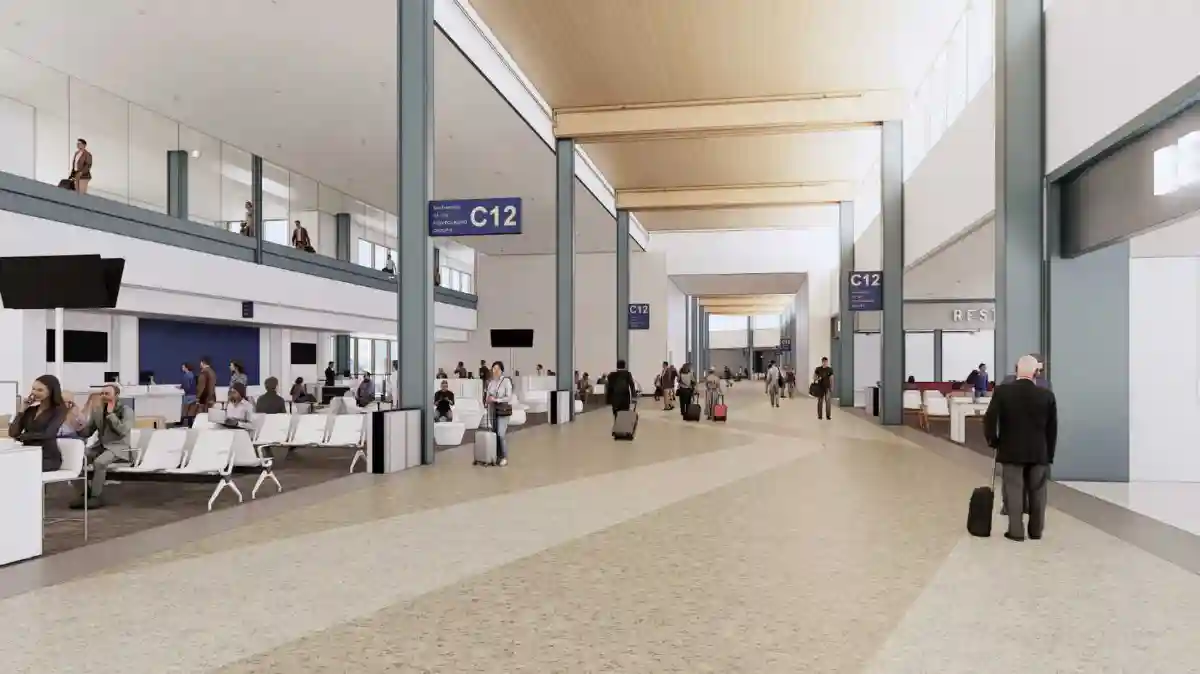
San Antonio International Airport has quietly pulled off one of the most striking financing coups in the recent history of American aviation, turning a $1.7 billion terminal construction program into the most heavily oversubscribed airport revenue bond sale the United States has seen in years. The deal, tied to the airport’s Elevate/SAT capital improvement plan, drew a wave of institutional money that dwarfed the amount the airport actually needed to borrow, and it did so at a moment when the underlying passenger numbers at the airport were not rising at all.
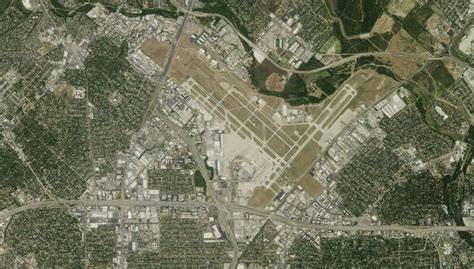
The story begins with ambition. San Antonio International Airport, universally known by its three-letter code SAT, is midway through a $2.5 billion transformation that touches nearly every corner of its campus. The centerpiece is Terminal C, a brand-new third airline terminal that broke ground in December 2024 and now sits roughly a quarter of the way toward completion. Around it, the airport has layered a series of complementary upgrades: a newly completed Ground Load Facility for Terminal A that opened in March 2026, expanded federal inspection capabilities, renovated concourses, and reconfigured roadways designed to untangle decades of accumulated congestion.
To finance the biggest piece of that puzzle, the airport went to the municipal bond market in July 2026 with $866.44 million in airport revenue and refunding bonds. At the time, Terminal C carried an estimated price tag of $1.4 billion. What happened next startled even seasoned municipal finance desks. Investors submitted approximately $3.9 billion in orders for that $866.44 million offering, a ratio of about $4.50 of demand for every dollar of bonds available. In a market where a two-to-one book is considered healthy and a three-to-one book is considered a triumph, SAT’s result landed somewhere beyond the usual vocabulary of underwriting.

Why 61 New Institutional Investors Backed San Antonio Terminal C
The composition of that order book matters as much as its size. Of the 78 participating institutions, a remarkable 61 were first-time investors in the airport’s debt. That is not the profile of a sleepy regional credit being rolled over by the same handful of local buyers year after year. It is the fingerprint of a credit that has suddenly entered the national consciousness of insurance companies, bond funds, and separately managed accounts hunting for yield in the Sun Belt.
What attracted them was not romance about aviation but arithmetic. Airport revenue bonds are secured by the airport’s own income rather than by the full faith and credit of a city or state. That income flows from airline use and lease agreements, from financial reserves, and from debt service coverage ratios that covenant holders scrutinize line by line. A bondholder in an airport deal is not betting that the airport will become the next Dallas/Fort Worth or Houston Intercontinental. A bondholder is betting that the airport can reliably generate enough cash to service its obligations, on time, for thirty years.
That distinction explains why the oversubscription is less a verdict on San Antonio’s destiny as a global hub and more a verdict on the structure of the deal itself. The terms offered, combined with the airport’s contractual relationships with its tenant airlines and its own growth projections, presented investors with a credit they judged to be relatively safe. The bonds did not need SAT to triple its traffic. They needed SAT to remain a functioning, revenue-generating spoke with signed leases and a credible plan.
The Terminal C Design That Justifies a $1.7 Billion Wager
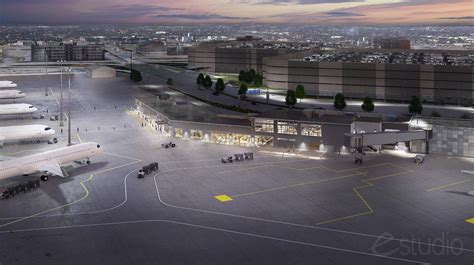
Terminal C is not a cosmetic refresh. It is a genuine capacity expansion, and its specifications explain why the airport believes the money will come back many times over. The building will span more than 850,000 square feet and will ultimately provide up to 18 gates, capable of handling both domestic and international departures. A Federal Inspection Station will allow international arrivals to clear customs on site, while a substantially larger central screening area will replace the bottlenecked checkpoints that have long frustrated passengers in Terminals A and B.
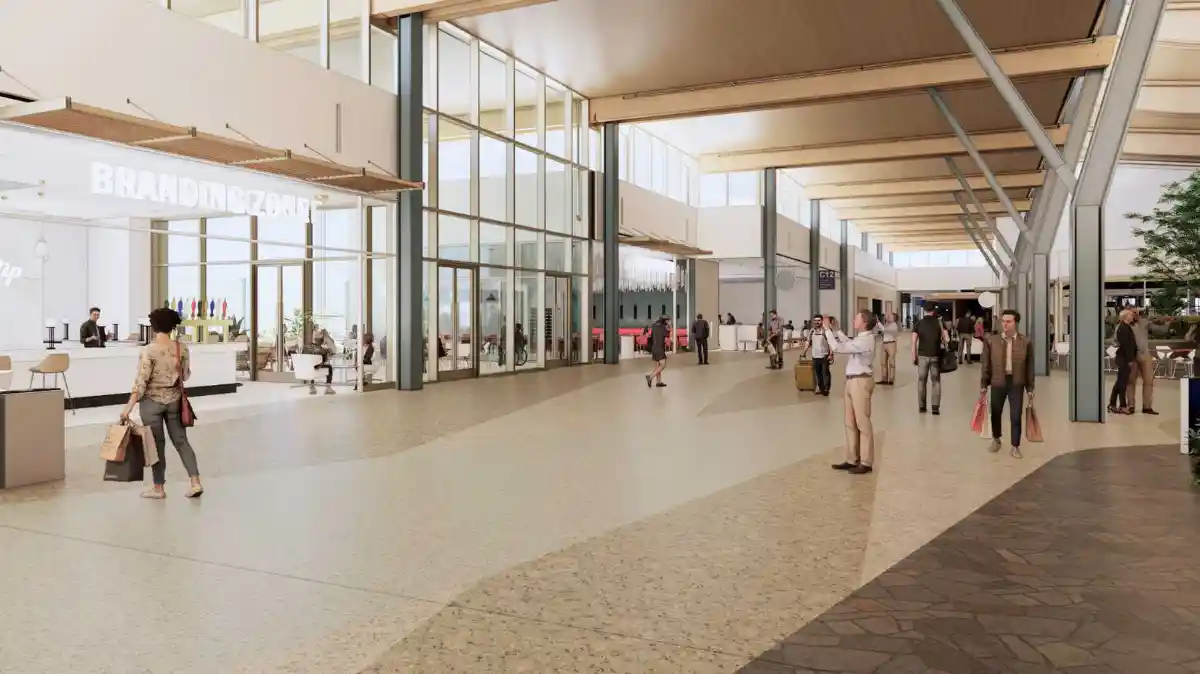
Passenger comfort figures prominently in the design brief. The terminal allocates 29,000 square feet of lounge space, of which 10,000 square feet is split between a new American Airlines Admirals Club and a new Delta Air Lines SkyClub, alongside a third lounge whose operator has not yet been disclosed. Roughly 41,000 square feet is reserved for new dining options, with a deliberate emphasis on local San Antonio vendors rather than the interchangeable national chains that dominate so many concourses.
The architectural choices lean into the region’s identity. Abundant natural lighting, open seating arrangements, an indoor courtyard, and gate waiting areas noticeably larger than those in the existing terminals all point toward a facility designed for lingering rather than sprinting. Improved roadway geometry on the approach will reduce the curbside congestion that has become a defining feature of peak hours at SAT. The topping-off ceremony is expected before the end of the fall 2026 season, with a public opening targeted for the second quarter of 2028.
How Southwest Airlines Settled Its Gate Dispute and Rescued the Bond Story
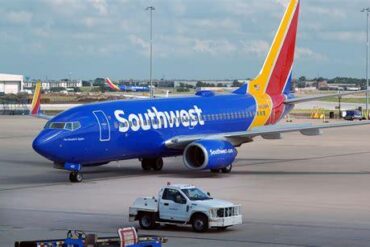
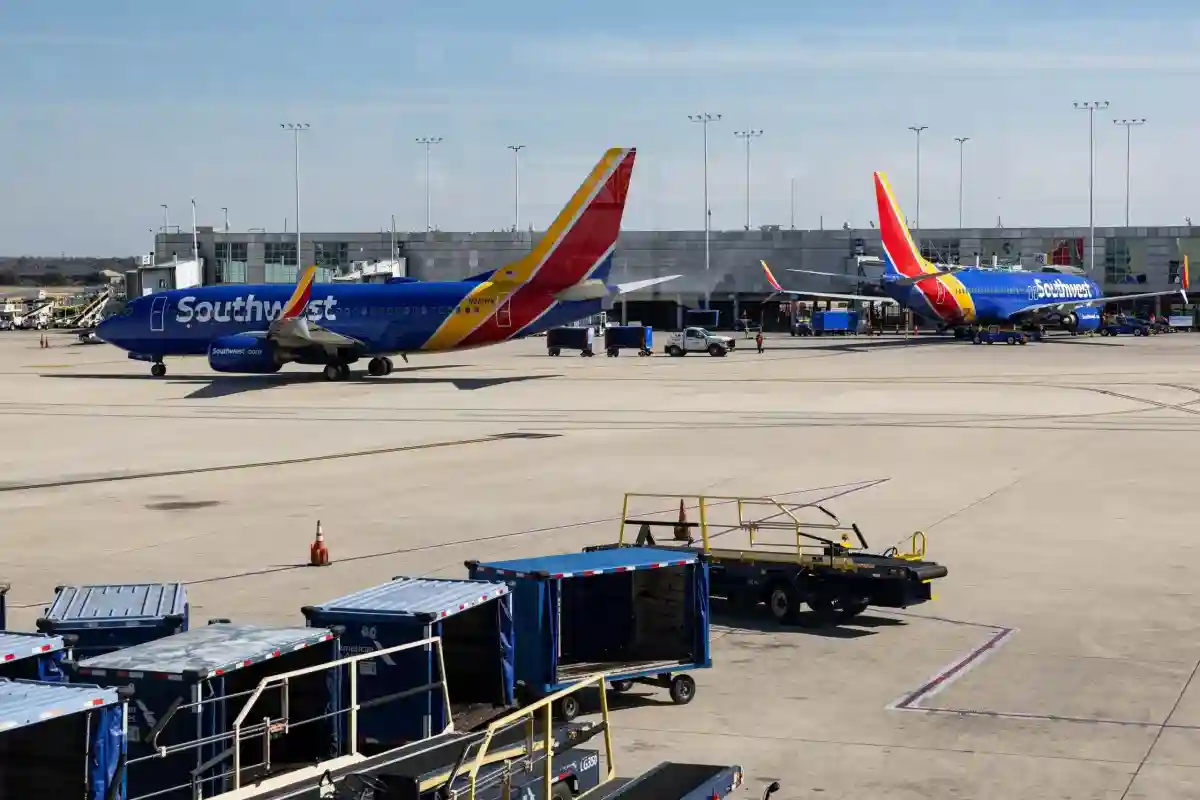
No account of this financing is complete without the two-year war between the airport’s dominant carrier and the city that owns it. Southwest Airlines controls approximately 37 percent of the market at SAT, making it by far the largest single airline in San Antonio. When the city began firming up gate allocations for Terminal C, Southwest cried foul, and in 2024 the Dallas-based carrier filed a lawsuit against the City of San Antonio alleging that officials had reneged on verbal commitments about which airlines would receive gates in the new building.
For nearly two years, that litigation hung over the project like a weather system. An unresolved gate dispute on a terminal under construction is precisely the kind of ambiguity that makes bond counsel nervous, because gate access is the mechanism through which an airport converts airline interest into contractual revenue. Then, in May 2026, the two sides reached a settlement, and the city approved an Airline Use and Lease Agreement guaranteeing Southwest at least three gates in Terminal C as well as three gates in the updated Terminal B. Southwest’s access to the new facility was fully secured, and the largest source of uncertainty hanging over the project evaporated roughly two months before the bond sale.
The timing was not lost on investors. A settled lease with the market’s dominant carrier, signed and sealed, materially strengthened the airport’s revenue case. Notably, SAT is not an operating base for Southwest, which means the carrier’s commitment there is a statement about the San Antonio market rather than about crew or maintenance logistics. The resolution did not guarantee the bond sale would succeed, but it removed the single largest reason a cautious institutional buyer might have stayed on the sidelines.
The Passenger Numbers That Complicate the San Antonio Airport Bond Narrative
Here the story takes an uncomfortable turn. For all the enthusiasm in the order book, SAT has not been growing. In 2025, annual passenger numbers actually declined slightly, and the first six months of 2026 showed another modest decline compared with the same period a year earlier. The airport’s all-time record, set in 2024, was just over 11 million passengers. Its stated ambition is to handle roughly 14.5 million annually by 2040.
That gap between current trajectory and future projection is the central risk in the credit. A new terminal that adds eighteen gates to an airport whose traffic is contracting is not an obviously safe proposition on its face, and the situation is compounded by the fact that SAT operates in the shadow of Austin Bergstrom International Airport, a nearby rival that has absorbed a disproportionate share of Central Texas growth. Meanwhile, the project’s cost has climbed relentlessly. The original 2023 estimate priced Terminal C at $1 billion. By the time of the bond issuance in July 2026, that figure had risen to $1.4 billion. The most recent projections place it at $1.7 billion, driven by changes in the project’s scope.
Construction risk remains live. Cost escalation on an unfinished building is a genuine threat to any investor, because scope changes and delays translate directly into larger capital requirements and thinner coverage. Yet the fact that investors flooded the deal anyway, in the face of declining passenger counts and a cost curve bending upward, arguably makes the oversubscription more impressive rather than less. The market was not buying growth. It was buying structure, covenants, and the deep demographic momentum of the region surrounding the airport.
Elevate/SAT: The Broader Airport Modernization Behind the Bond
Terminal C is the largest component of the Elevate/SAT initiative, but it is far from the only one. Earlier in 2026, the airport added new ground loading positions, a Federal Inspection Station, expanded passenger seating, and additional dining options to Terminal A, improvements deliberately calibrated to appeal to budget carriers that prefer walking across the apron to boarding through a jet bridge. Those changes lower the cost of serving SAT for low-fare airlines, which in turn broadens the airport’s route map without requiring a single new gate.
Beyond that, both Terminal A and Terminal B will be renovated for greater operational efficiency and a better passenger experience, with the explicit goal of extending their useful lives past 2048. That date is not arbitrary. By renovating rather than replacing its older assets, the airport avoids the enormous capital burden of building two additional terminals while still delivering a coherent, modern passenger journey across the campus. Airfield safety enhancements and roadway improvements round out a program that treats the airport as a single integrated system rather than a collection of disconnected buildings.
The strategic logic underneath all of this is geography. SAT sits inside the fastest-growing region of the United States, in a state whose population and economy continue to expand at a pace that most of the country cannot match. Texas, Arizona, Florida, and the Carolinas are all absorbing domestic migration at scale. Austin has boomed spectacularly, and while AUS captured most of that surge, San Antonio has benefited at the margins. As the largest hubs become progressively more constrained by slot limits, gate scarcity, and terminal congestion, the appeal of flying nonstop to a smaller, less crowded airport grows. Passengers will pay a premium for a nonstop that spares them a connection, and airlines face lower operating costs at airports where they are not queuing for a runway slot.
What the Order Book Says About Regional Airports and Sun Belt Debt
The San Antonio bond sale belongs to a broader pattern that has been building for several years. Regional and midsize airports that once struggled to attract institutional capital are now issuing debt at scales that would have seemed implausible a decade ago. Investors have noticed that the Sun Belt is where American traffic demand is migrating, and they have begun pricing that migration into the credits of airports that are not named Atlanta, Chicago, or Los Angeles.
What makes SAT’s result stand out is the combination of conditions under which it happened. This was not a refinancing of existing, proven facilities. It was a brand-new terminal at an airport with modest traffic, built to replace nothing, financed while still under construction, against a backdrop of two consecutive years of flat-to-declining passenger numbers and a cost estimate that had grown 70 percent since 2023. Underwriting a deal like that at $4.50 of demand per dollar of supply requires investors to believe something specific: that the airport’s lease structure, reserve position, and debt service coverage are strong enough to survive a scenario in which traffic does not materialize as projected.
That belief appears to be well founded, at least in the near term. San Antonio continues to receive federal support for airfield improvements, which reduces the capital burden that must be carried by airport revenue alone. The airport is actively courting new nonstop routes and additional airline service, each of which adds incremental revenue without requiring proportional increases in operating cost. And the settlement with Southwest converted the airport’s most important commercial relationship from a courtroom liability into a signed contract.
None of this makes SAT a future mega-hub. It will not rival Dallas/Fort Worth or Houston, and it will continue to compete with Austin for the same regional demand. But the bond market was never asked to underwrite hub status. It was asked to underwrite a revenue stream, and on that question, institutional investors from across the country answered decisively. The most oversubscribed airport bond in America right now belongs to a midsize Texas airport betting $1.7 billion that the Sun Belt’s next two decades look like its last two, and that a terminal built for eighteen gates will find the passengers to fill them.