
American Airlines has signaled a decisive turn in its commercial direction with the departure of network planning chief Brian Znotins, an executive whose tenure became synonymous with the carrier’s preference for domestic strength over international ambition. The news surfaced through Jon NYC on X before the airline and CEO Robert Isom confirmed the leadership change, giving the industry an early window into a restructuring that has been building for months.
Znotins built his reputation on a network philosophy that favored domestic and short-haul international flying, leaning heavily on narrowbody utilization rather than committing capital to distant long-haul destinations served by costlier widebody jets. That approach kept aircraft productive and costs contained, but it also left American thinly positioned in the markets where the industry’s most profitable customers actually spend their money. Isom now appears to be steering the airline in the opposite direction, rebuilding a route structure designed to challenge Delta Air Lines and United Airlines, both of which have spent years deepening their international portfolios while American retreated.
Nat Pieper and the Push to Reverse American’s Network Retreat
Chief Commercial Officer Nat Pieper, Znotins’ superior, wants to reverse American’s network direction entirely, restoring the carrier’s presence in major markets and competing aggressively for premium travelers once again. Within the industry, Znotins’ exit is widely read as the closing chapter in American’s effort to dismantle the controversial strategy engineered by former Chief Commercial Officer Vasu Raja, the architect of a radical rethinking of how the airline sold and flew its product.
Raja, removed from American in June 2024, had poured investment into sprawling Sun Belt hubs such as Dallas-Fort Worth (DFW) and Charlotte (CLT) while expanding domestic regional flying at a rapid clip. His aggressive booking restrictions alienated major corporate and leisure accounts, prompting entire travel programs to drop American as a preferred carrier and pushing high-value customers directly toward United and Delta. The former management team effectively treated American like a low-cost domestic operator; the new commercial leadership treats its aircraft as premium instruments built to win back the travelers who pay the most.

A Leadership Overhaul Driven by a Widening Profit Gap
Znotins’ departure follows a sweeping corporate restructuring launched roughly two months ago under Isom, a direct response to the substantial profit gap separating American from Delta and United. The reshuffling has not been limited to network planning. Chief Communications Officer Ron DeFeo stepped down, Senior Vice President of Technical Operations Kevin Brickner retired, and Executive Vice President of Corporate Real Estate and Government Affairs Nate Gatten left for another company. The overhaul is unfolding under intense labor pressure as well, after the flight attendants’ union issued a unanimous vote of no confidence in management, citing lagging profits and operational failures.
For years, Znotins defended and managed a risk-averse retreat from international markets, prioritizing the domestic schedule over long-haul expansion under Raja’s guidance. Pulling back from coastal hubs severely damaged American’s ability to capture lucrative premium international business travelers.
Premium Cabins and the Fleet Built to Win High-Paying Travelers
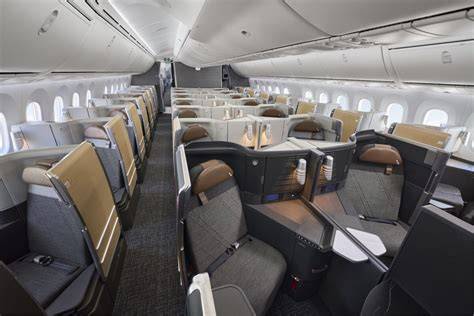
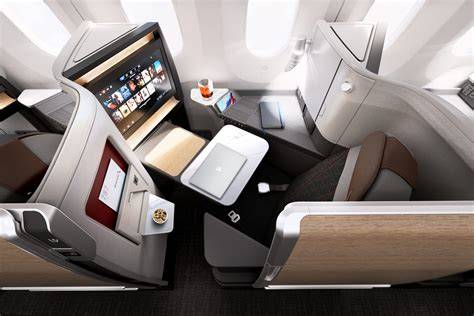
American has standardized its fleet around a privacy-focused design, anchored by the new Flagship Suite, which offers fully enclosed lie-flat seats with sliding privacy doors. The Boeing 777-300ER retrofit removed international First Class from the airline’s flagship widebody, replacing it with 70 Flagship Suite business-class seats and 44 Premium Economy seats. New Boeing 787-9 deliveries arrive with 51 Flagship Suite seats and 32 Premium Economy seats, configured to capture booming premium leisure and business demand.
Using those newly delivered 787-9s, American is expanding premium seating capacity from LAX to Tokyo Haneda (HND) by more than 45%. The airline is also introducing the long-range, fuel-efficient Airbus A321XLR, configured like a mini-widebody with 20 lie-flat Flagship Suites and 12 Premium Economy seats, deployed to challenge rivals on key transcontinental business routes including New York JFK to Los Angeles, JFK to San Francisco, and Boston to Los Angeles.
Los Angeles as the Rebuilt Pacific Gateway
American is actively reclaiming ground in major coastal hubs, rolling out a blueprint that reverses the retreat policy. Pieper recently confirmed that the carrier will once again make Los Angeles International Airport (LAX) its primary Pacific gateway, an about-face on pandemic-era downscaling. The airline is awaiting completion of the multi-year Terminal Four overhaul and the rebuilding of Terminal Five ahead of the 2028 Olympics. Once finished, American plans to control 25 gates across both terminals, with an ultimate goal of securing all 30. According to Cranky Flier, American intends to add roughly 50 daily flights, lifting its LAX operation from its current 130 to 140 daily departures back toward its historic peak of 200.
The message to the market is unmistakable. American is no longer optimizing for defensive domestic density; it is rebuilding a network around premium demand, long-haul reach, and the coastal gateways that feed both.