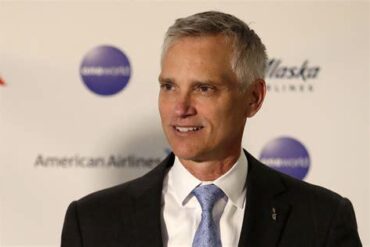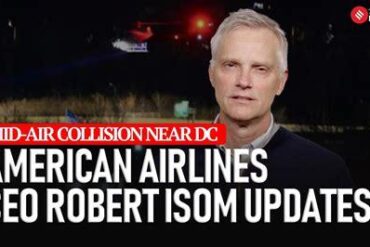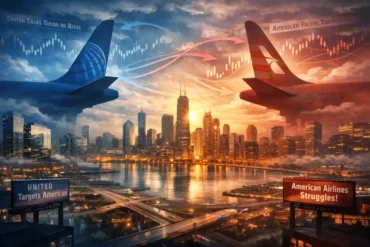
American Airlines entered 2026 carrying the weight of expectation—and a fair amount of skepticism. After a bruising financial performance in 2025 that lagged behind chief rivals Delta Air Lines and United Airlines, CEO Robert Isom has stepped forward with a message of reassurance: the airline’s recovery will come not from radical reinvention, but from doubling down on initiatives already in motion. The promise is stability, profitability, and a restored premium reputation. The controversy lies in whether continuity is enough in an industry defined by relentless competitive escalation.
The airline’s underwhelming results last year triggered ripple effects across its workforce. Profit sharing for many employee groups came in at a mere 0.3%, a figure that landed with a thud inside an organization already grappling with operational disruptions and morale concerns. Labor unrest soon followed. American’s flight attendant union issued a historic vote of no confidence in Isom, while the pilot union called for “decisive action” from leadership and sought direct dialogue with the board. In a company where labor relations shape operational reality, such signals carry strategic weight.
Against this backdrop, Isom released a recorded address to employees outlining the path forward. The tone was measured, forward-looking, and anchored in optimism. Yet for many observers, the substance felt less like a strategic pivot and more like a reaffirmation of existing plans.
Financial Recovery Framed as Operational Continuity
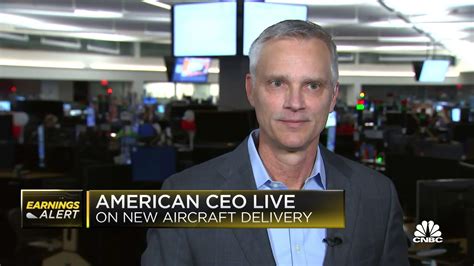
Isom’s central thesis is straightforward: the groundwork for recovery has already been laid. Investments made over the past several years—in fleet renewal, customer experience upgrades, and network expansion—are expected to mature into meaningful financial gains. Leadership forecasts that 2026 will be “solidly profitable,” a milestone positioned as beneficial not only for shareholders but also for employees through improved profit sharing.
The framing matters. Rather than presenting a disruptive turnaround blueprint, Isom characterized the airline’s trajectory as an upward curve temporarily interrupted by external pressures—weather events, operational strain, and macroeconomic headwinds. In this narrative, 2025 becomes an aberration, not a structural warning.
This interpretation has strategic implications. If leadership views recent underperformance as cyclical rather than systemic, then the logical response is execution, not reinvention. The risk, critics argue, is misdiagnosing the illness and prescribing efficiency where transformation may be required.
Customer Experience as a Competitive Lever
A major pillar of the plan centers on passenger experience enhancements. American is investing in free onboard Wi-Fi, upgraded lounges, expanded food and beverage options, and improved digital tools designed to manage disruptions more smoothly. Hub facilities—particularly Dallas/Fort Worth, Los Angeles, and Miami—are undergoing significant upgrades intended to modernize the ground experience.
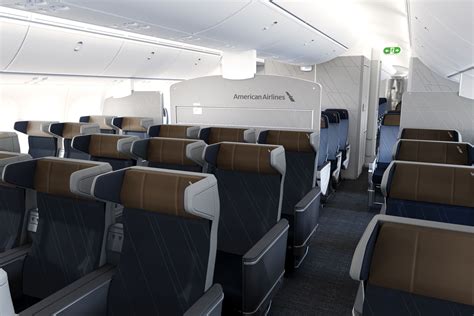
Net promoter scores, a metric measuring customer advocacy, have shown improvement, according to company leadership. From an internal perspective, this suggests that investments are resonating with travelers.
Yet the competitive dimension complicates the narrative. Delta and United have spent years—and billions—building premium ecosystems encompassing lounges, cabin interiors, loyalty perks, and tech infrastructure. In that context, American’s upgrades may represent necessary parity rather than differentiating advantage. Enhancing Wi-Fi and lounges is strategically sound, but it is also industry baseline in 2026’s premium aviation market.
Network Expansion and Fleet Modernization
Isom’s message highlighted growth as both opportunity and proof of confidence. American is expanding capacity at one of its fastest rates in years, with particular emphasis on Philadelphia, Miami, Phoenix, and Chicago. The U.S. domestic market remains the world’s most lucrative aviation arena, and American intends to defend—and extend—its footprint.
Supporting this expansion is an influx of personnel. The airline has hired thousands of frontline employees in recent years, including more than 7,500 flight attendants and over 5,000 pilots. Operational staffing, long a bottleneck during pandemic recovery, is being fortified to sustain schedule reliability.
Fleet investment forms the hardware backbone of the strategy. Hundreds of new aircraft have entered service, with dozens more arriving in 2026 alone. High-profile additions include the Boeing 787-9 and Airbus A321XLR, both configured with Flagship Suites aimed squarely at premium long-haul travelers.
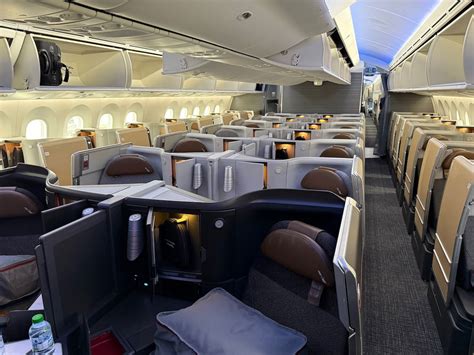
Simultaneously, existing aircraft are undergoing retrofits to standardize cabin quality across the network. The objective is consistency: passengers booking premium products should encounter a uniform experience regardless of route or aircraft type.
Loyalty Economics and Credit Card Partnerships
Few assets in modern aviation rival the financial power of loyalty programs, and American’s AAdvantage remains one of the industry’s largest. Isom underscored the program’s historical significance—it effectively pioneered airline loyalty—and its future revenue potential.
A renewed co-branded credit card partnership with Citi, launched in early 2026, is positioned as a major growth engine. These agreements generate billions through mileage sales to financial institutions, often delivering higher margins than ticket sales themselves. Strengthening this ecosystem deepens customer stickiness while diversifying revenue streams beyond seat inventory.
In strategic terms, loyalty monetization acts as both cushion and catalyst. It stabilizes cash flow during demand volatility and funds capital investments elsewhere in the business.
Corporate Sales and Product Distribution
Another focus area is corporate travel revenue, historically a high-yield segment. American reports regaining share among business clients after pandemic erosion. Leadership intends to push further by refining distribution tools and sales infrastructure, making premium products more visible and easier to book.
This initiative intersects with broader industry battles over distribution channels, including direct booking incentives and new digital merchandising platforms. Airlines increasingly seek retail-style control over how seats, upgrades, and bundles are sold.
The underlying bet is that improved sales architecture can unlock latent demand without requiring entirely new products—again reinforcing the theme of optimization over reinvention.
Operational Reliability and Hub Rebanking
Operational performance remains both a reputational and financial variable. Flight disruptions cascade into compensation costs, crew misalignment, and customer dissatisfaction. Isom acknowledged last year’s irregular operations and committed to smoother recovery processes.
One technical adjustment involves “rebanking” Dallas/Fort Worth International Airport, American’s largest hub. Rebanking restructures flight arrival and departure waves to reduce congestion peaks, improving connection reliability and resource allocation.
Additional buffers—spare aircraft, reserve crews, schedule padding—are being introduced to absorb disruptions. These measures reflect a systems-engineering approach: resilience through redundancy.
Labor Relations and the Morale Equation
While operational and financial levers dominate the plan, labor sentiment may prove equally decisive. Airline performance is inseparable from workforce engagement. Pilots, flight attendants, mechanics, and gate agents collectively shape the customer experience minute by minute.
Here lies one of the sharpest critiques of Isom’s message. Many employees hoped for acknowledgment of cultural and motivational challenges inside the airline. Instead, the address emphasized pride, partnership, and existing progress.
The disconnect is psychological as much as strategic. Workers facing minimal profit sharing and operational strain often seek validation before inspiration. Without that recognition, even well-funded initiatives can struggle to generate internal momentum.
Premium Strategy in a Premium-Saturated Market
American’s ambition to “reclaim” its status as the world’s premium global airline is rhetorically powerful. The competitive reality, however, is crowded. Delta has spent over a decade refining its premium segmentation, from Delta One suites to Sky Club expansions. United has accelerated Polaris cabin rollouts, lounge investments, and international route upgrades.
In this environment, premium is less differentiator than prerequisite. Airlines must exceed baseline luxury expectations while maintaining cost discipline—a delicate balancing act in a capital-intensive industry.
American’s fleet upgrades and lounge investments move it closer to parity, but closing perception gaps requires sustained execution over years, not quarters.
Growth Versus Profitability Tension
Expansion into competitive hubs introduces another strategic tension. American’s intensified presence in Chicago positions it directly against United’s fortress hub. While growth can capture market share, it often compresses margins in the near term due to fare competition and startup costs.
This raises a fundamental turnaround question: should recovery prioritize profitability stabilization before aggressive expansion? Isom’s strategy attempts both simultaneously—a high-wire act requiring precise capacity management.
Board Confidence Amid External Doubt
Despite labor unrest and investor scrutiny, American’s board has expressed support for Isom’s leadership. Governance backing provides strategic continuity and shields management from abrupt directional shifts.
Board confidence often reflects long-term investment cycles. Fleet orders, lounge construction, and IT overhauls span years; leadership turnover midstream can disrupt capital deployment. Stability, in this view, protects sunk investments until returns materialize.
Yet governance insulation can also slow responsiveness if market conditions demand sharper pivots.
The Communication Gap
Turnaround efforts live or die not only by strategy but by narrative. Employees, investors, and customers must believe improvement is both possible and imminent.
Critics argue that Isom’s address lacked galvanizing clarity. The initiatives outlined—Wi-Fi, lounges, fleet renewal, loyalty growth—are tangible but familiar. Absent was a defining idea that reframed American’s competitive identity.
Airline history offers examples where cultural repositioning proved as impactful as capital investment. Southwest’s employee-first ethos, Delta’s operational obsession, and Emirates’ luxury branding all fused narrative with execution.
American’s current messaging emphasizes competence. Skeptics wonder whether it needs inspiration.
Operational Foundations Already in Motion
Supporters of Isom’s approach counter that aviation rewards disciplined continuity more than theatrical reinvention. Fleet modernization, hub optimization, and loyalty monetization are multi-year arcs. Abrupt strategic swings risk derailing progress already funded and underway.
From this vantage point, the CEO’s message reflects managerial realism. Transformation is happening—but incrementally, through capital deployment and operational refinement rather than sweeping घोष declarations.
Investor Optics and Market Patience
Financial markets evaluate airlines through margins, unit revenue, and return on invested capital. American’s lag behind Delta and United sharpens scrutiny on capital efficiency.
Investors typically tolerate underperformance if a credible pathway to convergence exists. The question surrounding Isom’s plan is whether incremental gains can close a gap widened over years of divergent strategy and balance sheet positioning.
The Road to 2026 Profitability
Isom’s confidence in 2026 profitability rests on converging variables: matured fleet investments, stabilized staffing, loyalty revenue growth, and improved operations. If these align, margin expansion becomes plausible without radical restructuring.
Execution risk remains the wild card. Aviation systems are exquisitely sensitive to disruption—weather, labor actions, supply chains, and fuel volatility can erode forecasts quickly.
Strategic Identity at a Crossroads
American Airlines stands in a liminal space between recovery and reinvention. Its assets are formidable: a vast domestic network, powerful loyalty engine, and ongoing fleet renewal. Its challenges are equally real: labor friction, perception gaps, and aggressive competitors.
Isom’s strategy effectively argues that the airline does not need a new map—only steadier navigation of the one it already has.
Conclusion: Continuity as Turnaround Doctrine
Robert Isom’s turnaround vision is notable less for what it introduces than for what it reaffirms. Customer experience upgrades, fleet investment, loyalty monetization, corporate sales growth, and operational refinements form a coherent, if familiar, blueprint.
The tension surrounding his leadership stems from belief versus fatigue. Management sees foundations ready to yield results. Many employees and observers see unfinished catch-up in a race already well underway.
Whether continuity proves corrective or complacent will be measured in operational metrics, profit margins, and workforce morale over the coming quarters. In aviation, altitude gains are rarely sudden—they are earned through sustained thrust, precise calibration, and the patience to let long-range strategy reach cruising speed.