The aviation industry has long faced a paradox: it connects the world with unmatched efficiency, yet leaves behind invisible environmental consequences that are only now being fully understood. Among these, contrails—those thin white streaks trailing behind high-altitude aircraft—have emerged as a surprisingly potent contributor to global warming. What once looked like harmless sky art is now recognized as a significant climate force, capable of trapping heat and amplifying atmospheric warming.
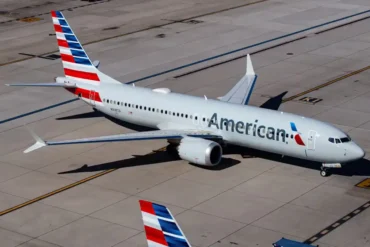
In response, American Airlines has taken a bold step forward, partnering with Google to deploy artificial intelligence as a weapon against contrail formation. This is not a theoretical experiment or distant ambition—it is a live, data-driven initiative already delivering measurable results. And if scaled globally, it could redefine how aviation tackles its climate footprint.
Understanding Contrails: The Hidden Climate Multiplier
Commercial aircraft typically cruise between 30,000 and 43,000 feet, a sweet spot where thinner air reduces drag and optimizes fuel efficiency. Yet, this same altitude band also provides the perfect atmospheric conditions for contrail formation.
Contrails occur when hot exhaust gases—primarily water vapor and carbon dioxide—mix with cold, low-pressure air. The rapid cooling causes water vapor to condense and freeze into ice crystals, forming cloud-like trails. While this process is simple in principle, its environmental implications are anything but.
There are three primary types of contrails:
- Short-lived contrails, which dissipate quickly and have minimal climate impact
- Persistent non-spreading contrails, which linger but remain narrow
- Persistent spreading contrails, which expand into cirrus-like clouds and trap heat for hours or even days
It is this last category that poses the greatest threat. These artificial clouds act like thermal blankets, trapping outgoing infrared radiation and warming the Earth’s surface—especially during nighttime when solar reflection is minimal.

What makes contrails particularly concerning is their outsized impact relative to their visibility. Studies suggest that a small percentage of flights produce the majority of warming contrails, meaning targeted intervention could yield disproportionately large environmental benefits.
AI Meets Aviation: A New Era of Smart Flight Planning
The collaboration between American Airlines and Google represents a fundamental shift in aviation strategy—from reactive emissions reduction to predictive environmental avoidance.
At the heart of this initiative is an AI-driven forecasting system that integrates:
- Atmospheric data modeling
- Satellite observations
- Open-source contrail prediction frameworks from Breakthrough Energy
This system generates real-time contrail forecast maps, identifying regions of the atmosphere where contrails are most likely to form. These insights are then seamlessly integrated into existing flight planning software used by pilots and dispatchers.
Instead of flying blindly through contrail-prone zones, pilots receive actionable recommendations, such as:
- Adjusting altitude by a few thousand feet
- Slightly altering flight paths
- Timing route changes to avoid high-risk atmospheric layers

The brilliance of this approach lies in its simplicity and scalability. No new aircraft, no radical infrastructure overhaul—just smarter decision-making powered by data.
Proven Results: Measurable Reductions Without Major Trade-Offs
Early trials have produced remarkably strong results, reinforcing the viability of AI-driven contrail avoidance.
In a 2023 study involving approximately 70 flights, the system achieved a 54% reduction in contrail formation. Subsequent trials expanded the dataset and refined the methodology, culminating in a 2025 study analyzing 112 transatlantic flights. The findings were striking:
- 62% reduction in contrail production
- 69% reduction in associated warming effects
- Minimal increase in fuel consumption
This last point is crucial. Aviation operates on razor-thin margins, where even small increases in fuel burn can have significant economic consequences. Yet, contrail avoidance routes resulted in fuel penalties ranging from negligible to just 2%, with system-wide implementation estimated at as low as 0.3% additional fuel usage.
In practical terms, this translates to a high-impact, low-cost climate solution—a rare combination in an industry often constrained by technical and financial limitations.
Why Contrails Matter More Than You Think
Contrails are often overshadowed by carbon dioxide emissions in climate discussions, but their impact is both immediate and intense. Unlike CO₂, which accumulates over decades, contrails exert their warming influence within hours to days, making them a critical lever for short-term climate mitigation.
They are especially potent under specific conditions:
- Nighttime flights, where heat-trapping dominates over solar reflection
- Winter months, when atmospheric conditions favor persistent contrail formation
- High-humidity regions, where ice crystals can spread and persist

In fact, when accounting for non-CO₂ effects, including contrails, aviation’s total climate impact rises significantly—estimated at over 4% of global warming contributions. That makes contrails not just a side issue, but a central challenge in aviation sustainability.
Scaling the Solution: From Pilot Programs to Industry Standard
For AI-driven contrail avoidance to reach its full potential, it must transition from isolated trials to industry-wide adoption. Fortunately, the barriers to scaling are relatively low.
Because the system integrates with existing flight planning tools, airlines can adopt it without:
- Purchasing new aircraft
- Retraining entire pilot workforces
- Overhauling operational infrastructure
The cost of implementation is equally compelling. Estimates suggest that avoiding contrails could cost between $5 and $25 per ton of CO₂ equivalent, making it one of the most cost-effective climate interventions available in aviation.

However, challenges remain. Accurately predicting which specific flight paths will generate high-impact contrails is still a complex task. While AI models can identify high-risk regions, refining predictions to the level of individual flights is an ongoing area of research.
Google and its partners are actively working to improve:
- Satellite-based verification systems
- High-resolution atmospheric modeling
- Automated route optimization algorithms
The goal is clear: create a system so precise and reliable that contrail avoidance becomes a standard operating procedure across global aviation.
Complementary Technologies: SAF, Hydrogen, and Beyond
While AI offers a powerful tool for avoiding contrails, it is not the only solution under development. The aviation industry is pursuing a multi-pronged strategy to reduce its environmental impact.
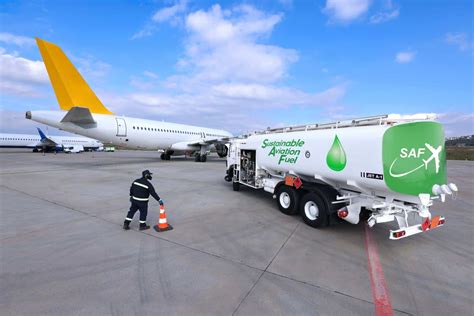
One of the most promising approaches is Sustainable Aviation Fuel (SAF). Unlike conventional jet fuel, SAF produces significantly less soot, which plays a key role in contrail formation by providing nuclei for ice crystals.
Airlines such as United Airlines, Virgin Atlantic, and All Nippon Airways are actively investing in SAF, with milestone flights demonstrating its viability. In some cases, SAF has been shown to reduce or even eliminate contrails under certain conditions.
Hydrogen propulsion is another frontier. While it promises zero carbon emissions at the point of use, hydrogen engines produce more water vapor, potentially shifting rather than eliminating contrail dynamics. Projects like Airbus’ ZEROe initiative aim to better understand these trade-offs.
Meanwhile, manufacturers are exploring innovations such as:
- Humidity sensors to detect contrail-prone conditions
- Engine modifications to reduce particulate emissions
- Advanced aerodynamics to optimize flight efficiency
These efforts, combined with AI-driven avoidance, form a holistic strategy to tackle aviation’s climate impact from multiple angles.
The Strategic Advantage: Precision Over Reduction
What makes AI-driven contrail avoidance particularly compelling is its precision-focused philosophy. Instead of broadly reducing emissions across all flights, it targets the specific conditions and routes that generate the most harm.
This approach aligns with a key insight: not all flights are equal in their environmental impact. By identifying and mitigating the worst offenders, airlines can achieve maximum climate benefit with minimal operational disruption.
It’s a strategy that mirrors advances in other industries, where data analytics and machine learning enable surgical interventions rather than blunt-force solutions.
A Glimpse Into Aviation’s Future
The integration of AI into flight operations marks a turning point for aviation sustainability. It demonstrates that meaningful environmental progress does not always require revolutionary technology—sometimes, it simply requires using existing systems more intelligently.
For American Airlines, this initiative is more than a technical upgrade; it is a strategic repositioning. By embracing AI-driven solutions, the airline is not only reducing its environmental footprint but also setting a precedent for the entire industry.
The implications extend far beyond contrails. As AI continues to evolve, it could reshape:
- Fuel optimization strategies
- Air traffic management systems
- Predictive maintenance and operational efficiency
In this context, contrail avoidance is just the beginning—a proof of concept for a smarter, more sustainable aviation ecosystem.
Conclusion: From Invisible Problem to Intelligent Solution
Contrails may be invisible in their impact, but their consequences are anything but. They represent a hidden layer of aviation’s climate challenge, one that has gone largely unaddressed—until now.
Through its partnership with Google, American Airlines has demonstrated that artificial intelligence can transform how we approach this problem, turning uncertainty into actionable insight and inefficiency into precision.
The results speak for themselves: dramatic reductions in contrail formation, minimal operational cost, and a clear pathway to масштабable implementation. In an industry often constrained by physics and economics, this is a rare breakthrough.
As adoption spreads and models improve, AI-driven contrail avoidance could become a standard feature of global aviation, quietly reshaping the skies—and the climate—one optimized flight at a time.