Airport security in the United States is undergoing one of its most significant technological transformations since the introduction of liquid restrictions and enhanced screening procedures after the early 2000s. While millions of passengers continue to move through checkpoints every week without noticing dramatic visual changes, a massive $781.2 million Transportation Security Administration investment is quietly reshaping how travelers pack, how baggage rules are enforced, and even how identities are verified before entering secure areas.
The centerpiece of this modernization effort is the nationwide deployment of advanced Computed Tomography (CT) scanners, a technology that fundamentally changes the way carry-on luggage is examined. Combined with expanding biometric identity verification systems, the rollout marks the beginning of a new era in airport security—one that promises faster processing, greater detection capabilities, and a significantly different passenger experience.
For decades, airport security followed a routine that became second nature to frequent flyers. Travelers approached screening lanes prepared to remove laptops, separate liquids, empty pockets, and reorganize their belongings before placing everything into plastic bins. Those procedures were largely dictated by the limitations of conventional two-dimensional X-ray technology. Today, however, the TSA is steadily replacing those systems with equipment capable of generating detailed three-dimensional images, allowing security officers to inspect bags in ways that were previously impossible.
The result is a security checkpoint that looks familiar on the surface but operates very differently behind the scenes.
After years of incremental changes, this rollout represents a rare moment when technology is directly altering traveler behavior at scale.
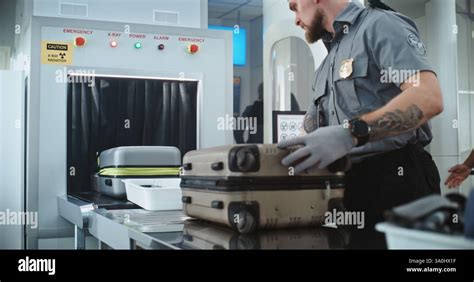
How TSA’s New CT Scanners Work Differently From Traditional X-Ray Machines
The foundation of the TSA’s modernization effort lies in the replacement of conventional X-ray screening systems with advanced CT scanners. Although the machines resemble traditional airport screening equipment, the technology inside is dramatically more sophisticated.
Traditional X-ray machines create flat, two-dimensional images that security officers must interpret from limited perspectives. Dense objects can overlap, conceal details, or require additional inspections. This often forces passengers to separate electronics and liquids so screeners can obtain clearer views of potentially suspicious items.
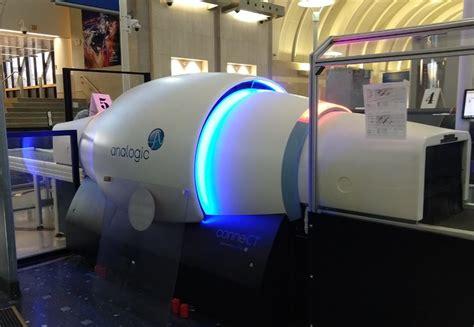
CT scanners eliminate much of that limitation. Similar to the imaging systems used in hospitals, these scanners capture hundreds of individual image slices and combine them into highly detailed three-dimensional renderings. Security personnel can rotate images, zoom into specific areas, inspect contents from multiple angles, and analyze individual objects with far greater precision.
Rather than relying on passengers to assist the screening process by unpacking their belongings, the machine itself performs much of the heavy lifting.
This technological leap significantly improves threat detection while reducing the amount of physical handling required at checkpoints. It allows officers to spend less time interpreting cluttered images and more time evaluating potential risks with enhanced visual information.
The shift may seem subtle from a passenger perspective, but it fundamentally changes the relationship between travelers and airport security procedures.
The End of the Laptop-and-Liquids Ritual
Among all the changes introduced by CT technology, none is more visible than the gradual disappearance of one of air travel’s most universally disliked traditions: unpacking carry-on bags at security.
For nearly two decades, travelers developed packing strategies specifically designed around airport checkpoints. Laptops were positioned near the top of backpacks. Toiletry bags were stored in easily accessible pockets. Electronics were arranged for quick removal. Entire luggage layouts were designed not for convenience during travel, but for convenience during screening.
That mindset is beginning to disappear.
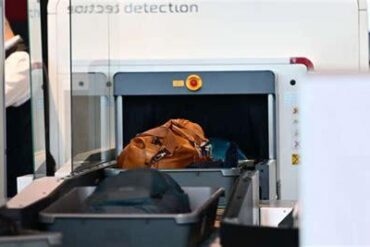
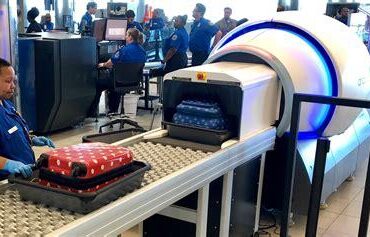
At airports equipped with CT scanners, passengers increasingly leave laptops, tablets, cameras, chargers, and approved liquids inside their bags. Instead of stopping at the conveyor belt to remove multiple items and place them into separate bins, many travelers simply place their carry-on luggage directly onto the scanner belt.
The impact extends beyond convenience.
Security lines often slow down because travelers need time to unpack and repack. When dozens of passengers perform the same task simultaneously, congestion quickly develops around screening lanes. Removing that requirement reduces bottlenecks and improves overall passenger flow.
The experience feels noticeably smoother. Travelers spend less time organizing belongings, fewer items are accidentally left behind, and screening areas become less chaotic during peak travel periods.
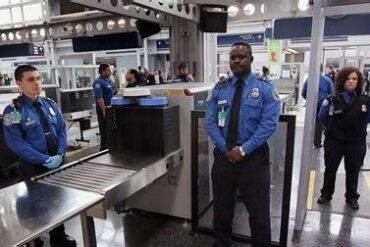
Major airports including LaGuardia Airport, Los Angeles International Airport, and Hartsfield-Jackson Atlanta International Airport have already integrated CT technology into portions of their screening operations, giving millions of travelers a preview of what may eventually become the national standard.
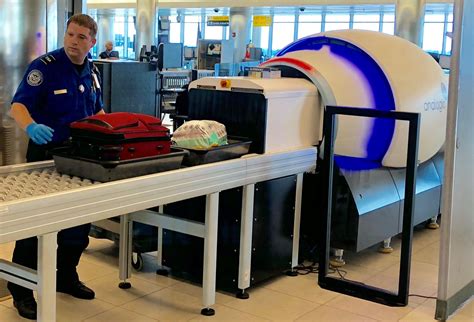
Why Packing Habits Are Quietly Changing Across America
The transition to CT screening is producing behavioral changes that extend far beyond the checkpoint itself.
For years, airport travelers packed with security screening in mind. Certain items needed immediate accessibility, which often dictated how carry-on luggage was organized. The new screening environment removes much of that pressure.
Electronics can now be packed wherever they fit best rather than where they can be retrieved fastest. Toiletries no longer need dedicated quick-access compartments. Camera equipment can remain integrated with other belongings instead of being strategically positioned for inspection.
This may sound insignificant, but for frequent travelers who fly dozens of times each year, it represents a meaningful shift.
Carry-on luggage is becoming optimized for travel rather than security procedures.
Business travelers can pack more efficiently. Families moving through checkpoints with children face fewer interruptions. International passengers carrying multiple devices spend less time rearranging luggage before and after screening.
The cumulative effect is a more streamlined journey from curbside to departure gate.
Yet the transition remains uneven. Not every airport has completed CT installation, and not every checkpoint within an upgraded airport uses the new equipment. Travelers therefore face a temporary period where security procedures vary depending on location, terminal, and even individual screening lane.
The familiar instruction to remove laptops and liquids has not disappeared entirely—it simply appears less frequently as modernization expands.
The Unexpected Side Effect: Carry-On Bags Face Stricter Reality Checks
While passengers generally welcome the convenience offered by CT scanners, the technology has introduced an unexpected consequence that many travelers do not discover until arriving at the checkpoint.
The newer scanners often feature entry openings that are less forgiving than older X-ray systems.
Historically, enforcement of carry-on size limits was inconsistent. Airlines maintained official dimensions, but actual enforcement frequently depended on gate agents, airline staff discretion, or luggage sizing frames positioned near boarding areas.
Many travelers learned to push those boundaries.
Soft-sided suitcases were overstuffed. Roller bags exceeded dimensions slightly. Travelers relied on flexibility, assuming small violations would go unnoticed.
The new scanners are changing that equation.
Every carry-on must physically pass through the scanner. If a bag is too large to fit into the machine, screening cannot proceed. Security personnel may direct passengers back to airline counters to check oversized luggage before returning to the checkpoint.
In practical terms, the scanner itself has become an enforcement mechanism.
The widely recognized domestic carry-on standard of 22 x 14 x 9 inches has not changed. What has changed is the likelihood that oversized luggage will encounter problems earlier in the travel process.
Instead of discovering a baggage issue at the gate, travelers may now encounter it at security.
This subtle shift effectively transforms checkpoint screening equipment into an additional layer of baggage compliance.

Why Film Photographers Are Concerned About CT Technology
Most travelers benefit from CT deployment, but a small and increasingly vocal group faces a very different reality.
Film photographers have emerged as one of the few communities negatively affected by the rollout.
Unlike digital cameras, photographic film remains vulnerable to advanced imaging systems. Traditional airport X-ray machines already presented some risk to unprocessed film, particularly at higher ISO ratings. However, CT scanners generate significantly more powerful imaging capable of causing damage even after a single scan.
The consequences can be severe.
Film may experience fogging, reduced contrast, image degradation, loss of detail, or complete ruin. The damage is permanent and often becomes apparent only after development, when valuable images cannot be recovered.
For professional photographers, documentary filmmakers, artists, and enthusiasts who continue using analog equipment, airport travel now requires additional planning.
Film should be removed from carry-on luggage before reaching security. Travelers should request a hand inspection and inform TSA officers that they are carrying undeveloped photographic film. This process has become increasingly important as CT technology expands nationwide.
Ironically, while digital travelers enjoy a more streamlined screening experience, film photographers now face additional steps and greater awareness requirements than before.
The issue highlights a broader reality of technological modernization: improvements for the majority sometimes create new challenges for specialized users.
Facial Recognition Is Becoming Part of the Standard Checkpoint Experience
The TSA’s transformation extends beyond baggage screening.
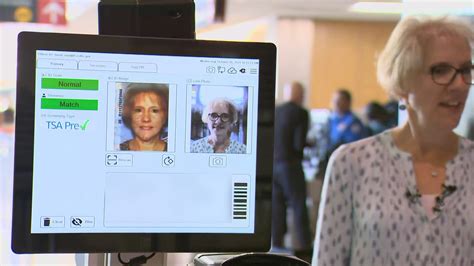
Simultaneously, the agency is deploying Credential Authentication Technology 2 (CAT-2) systems across hundreds of airports. These devices integrate facial recognition capabilities directly into the identity verification process.
For passengers, the experience often feels almost invisible.
A traveler presents a driver’s license, passport, or other approved identification document. A camera captures a facial image. The system automatically compares the live image against identification records and verifies whether the traveler matches the credential presented.
The entire process typically takes only seconds.
Previously, TSA officers manually compared faces against photographs printed on identification documents. While effective, manual inspections depend heavily on human observation, consistency, and speed.
CAT-2 systems automate much of that work.
The technology is already present at more than 350 airports and continues expanding throughout the country. Major hubs including Miami International Airport and Denver International Airport have incorporated the systems into routine operations.
As deployment accelerates, facial recognition is gradually transitioning from pilot program status to a standard feature of the American airport experience.
The Connection Between REAL ID and Airport Biometrics
The expansion of biometric screening coincides with another major change in domestic aviation security: the implementation of REAL ID enforcement.
Beginning in 2025, travelers were required to present REAL ID-compliant identification or another approved credential for domestic air travel. The initiative aimed to strengthen identity verification standards nationwide.
Facial recognition systems complement that objective.
Together, REAL ID requirements and CAT-2 technology create a layered verification process that combines physical credentials with biometric confirmation. The approach reduces reliance on manual document inspection while improving confidence in identity authentication.
For airport operators and security agencies, the combination promises faster throughput and improved operational efficiency.
For travelers, the process often feels seamless.
Instead of prolonged visual comparisons and manual reviews, verification occurs almost instantly through integrated technology platforms.
The result is an airport environment increasingly shaped by automation, data validation, and digital identity systems.
Travelers Still Have the Right to Decline Facial Recognition
One of the least understood aspects of TSA biometric deployment is that participation remains voluntary for domestic travelers.
Many passengers assume facial recognition is mandatory because the technology is integrated directly into the standard checkpoint process. In reality, travelers may choose not to participate.
The opt-out procedure is straightforward.
Passengers can inform a TSA officer that they prefer not to use facial recognition before presenting identification. The officer then conducts traditional identity verification procedures using manual document checks instead of biometric comparison.
Choosing this option does not prevent travel, trigger penalties, or result in denied access to security screening.
The traveler simply follows a different verification path.
This distinction is important because public awareness often lags behind technological adoption. As facial recognition becomes increasingly common, many travelers remain unaware that alternatives continue to exist.
The availability of manual verification reflects an effort to balance technological efficiency with passenger choice.
The Future Airport Checkpoint Will Feel Very Different
The TSA’s $781 million scanner deployment is about far more than replacing aging equipment. It represents a fundamental redesign of how security checkpoints operate.
Passengers are gradually abandoning old habits that defined modern air travel for nearly twenty years. Removing laptops from bags is becoming less common. Organizing luggage around security convenience is becoming unnecessary. Oversized carry-on bags face earlier scrutiny. Identity verification is becoming increasingly automated.
What appears to be a routine equipment upgrade is actually transforming the entire checkpoint ecosystem.
The modern security experience is evolving into a system where advanced imaging, biometric verification, artificial intelligence-assisted analysis, and streamlined passenger processing work together behind the scenes. Travelers may notice fewer bins, fewer interruptions, and shorter interactions with security personnel, but those visible changes are only the surface manifestation of a much larger technological shift.
As CT scanners continue replacing traditional X-ray machines and biometric systems become more widespread, the airport checkpoint of the future will likely look familiar while operating in ways that would have seemed remarkably advanced just a decade ago.
For millions of passengers, the transformation is already underway every time they step into a security line.