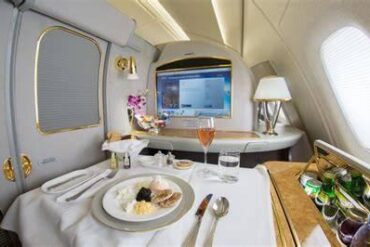
The slow disappearance of First Class cabins from major airlines is not an accident, nor is it nostalgia colliding with modern minimalism. It is a strategic recalibration rooted in cold mathematics, shifting passenger psychology, and the relentless economics of aviation. For decades, first class symbolized the pinnacle of air travel—caviar service, enclosed suites, vintage champagne at 35,000 feet. Today, that same space is being redesigned, repurposed, or removed entirely. The question is no longer why some airlines are cutting first class. The sharper question is why so many believe they are better off without it.
Airlines operate in a world where every square meter of cabin space must generate measurable yield. In that environment, prestige alone cannot justify real estate. A single first class suite can occupy the footprint of two or even three business class seats. When those business seats consistently sell at strong fares and higher occupancy rates, the math begins to favor practicality over symbolism.
The transformation has been gradual but unmistakable. Carriers once competed over whose first class offered the most extravagant shower, the widest suite, or the rarest wine. Now they compete over which business class product delivers near-first class privacy at a fraction of the operational cost. This shift reveals something deeper than a design trend—it exposes a structural rethinking of what premium travel actually means.
The Economics Behind the Disappearing First Class Cabin
Airline profitability hinges on a metric called revenue per available seat mile (RASM). In plain language, it measures how much money an airline earns for every seat flown per mile. When a first class cabin flies half-empty—as it often does outside flagship routes—it drags that number down. Even high fares cannot compensate for low load factors.
Historically, first class functioned as a brand halo. It attracted wealthy travelers and signaled exclusivity. Yet branding does not pay fuel bills. Modern long-haul aircraft such as the Boeing 787 or Airbus A350 are engineered for efficiency, and airlines increasingly optimize them for balanced premium cabins. Business class, not first class, has become the revenue engine of long-haul flying.
Corporate travel policies illustrate this shift clearly. Companies once permitted executives to fly first class on ultra-long-haul routes. Today, most corporate contracts restrict travel to business class. The reasoning is straightforward: business class now delivers flat beds, direct aisle access, and premium dining at significantly lower fares. The comfort gap has narrowed, but the price gap remains wide.
When airlines analyze cabin profitability, business class consistently outperforms first class in revenue density. A fully sold business cabin generates predictable income. A half-empty first class cabin generates regret.
How Business Class Evolved Into a Luxury Product
The most decisive blow to traditional first class did not come from budget airlines or economic downturns. It came from innovation inside business class itself. Over the past decade, business cabins have transformed from angled seats and modest meal upgrades into enclosed suites with sliding doors and curated tasting menus.
Qatar Airways introduced Qsuite, redefining privacy standards. All Nippon Airways unveiled “The Room,” offering one of the widest business seats in the sky. Lufthansa launched its Allegris Business Class, focusing on personalization and differentiated seating options. These developments were not cosmetic—they were strategic.
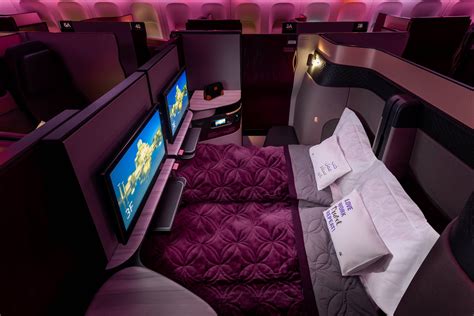
As business class approached first class in comfort and privacy, the incentive to pay double for incremental luxury diminished. For many premium travelers, the difference between an excellent business class and a traditional first class became symbolic rather than practical.
This convergence reshaped demand patterns. Airlines observed that passengers willingly paid for superior business class products but hesitated at first class fare multiples. The sweet spot of profitability moved down one cabin tier.
Passenger Behavior Is Driving Structural Change
Travel demand in 2024 revealed a striking pattern. International premium travel—combining business and first class—grew 11.8 percent year over year, slightly outpacing economy growth at 11.5 percent. Yet first class alone remains a tiny fraction of total passengers. Globally, premium travelers account for roughly 6 percent of international flyers, and most of them sit in business class.
Regional patterns deepen the story. Asia-Pacific has experienced rapid growth in premium travel, though economy expansion there remains even faster. The Middle East holds the highest share of premium passengers at nearly 15 percent, reflecting a strong appetite for luxury. Europe leads in absolute premium passenger numbers.
The growth is real—but it favors business class and premium economy, not traditional first class.
Corporate travel managers increasingly scrutinize costs. Even affluent leisure travelers, flush with post-pandemic disposable income, evaluate value more carefully. Many choose premium economy for moderate upgrades or business class for full-flat comfort. First class, with its steep fare premium, becomes harder to rationalize unless exclusivity itself is the primary objective.
Long-Haul Strategy: Where the Decision Matters Most
First class historically thrived on ultra-long-haul routes. A 14-hour journey from London to Singapore justified extravagant service. Widebody aircraft provided ample space to showcase luxury suites. Yet these routes are also the most expensive to operate.
Fuel, crew, catering logistics, and maintenance complexity compound on flights exceeding 12 or 16 hours. Airlines therefore demand consistent, high-yield occupancy in premium cabins. Business class meets that requirement more reliably.
Ultra-long-haul travel has introduced new design priorities. Passengers demand rest, privacy, and efficient layouts. Airlines now experiment with business class suites that mimic first class privacy while maintaining higher seat density. This approach balances comfort with revenue efficiency.
Premium economy further complicates the equation. Positioned between economy and business class, it captures travelers willing to pay for extra legroom and improved service without entering the top-tier price bracket. As premium economy expands, it reduces the incentive to preserve a small first class cabin.
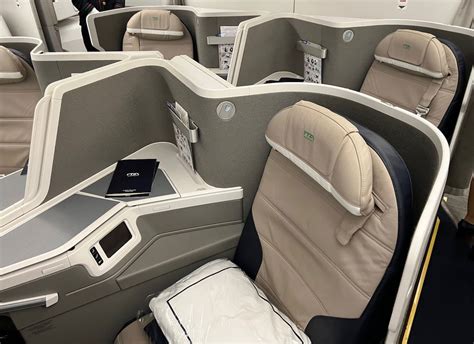
The result is a cabin hierarchy optimized for yield layering: economy for volume, premium economy for incremental upgrades, business class for high-margin revenue, and only selective retention of first class where branding or regional demand justifies it.
Cost Structures and Operational Complexity
First class is expensive beyond the seat itself. Suites require elaborate materials, custom engineering, and advanced privacy mechanisms. Onboard service demands specialized catering—often including premium wines, caviar, and bespoke plating. Additional crew training and staffing levels raise operational costs.
Ground infrastructure adds another layer. Dedicated first class lounges, chauffeur services in certain markets, and exclusive check-in facilities contribute to overhead. When passenger numbers in that cabin shrink, the per-passenger cost climbs dramatically.
American Airlines eliminated first class on international long-haul flights and replaced it with expanded Flagship Suites business class. Korean Air reduced first class on most routes after the pandemic. Thai Airways announced plans to discontinue Royal First Class during restructuring. These decisions reflect economic realism rather than aesthetic preference.
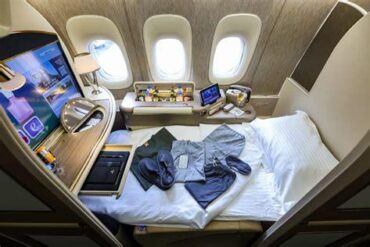
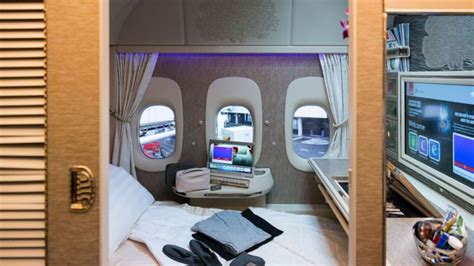
At the same time, a few airlines move in the opposite direction. Emirates continues to invest in fully enclosed first class suites, complete with virtual windows on certain aircraft. Air France revitalized La Première as a hyper-exclusive experience. Lufthansa reintroduced high-end first class suites under Allegris. These carriers treat first class as a strategic differentiator in select markets, not a universal offering.
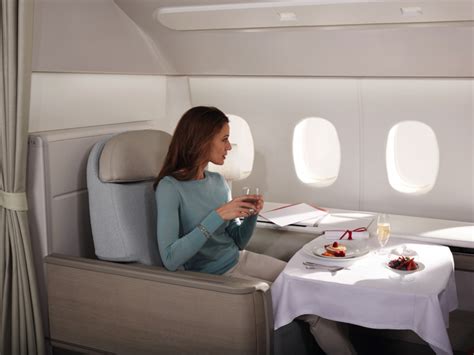
The divergence reveals that first class is not vanishing everywhere. It is concentrating where it makes strategic sense.
Branding Versus Balance Sheet
Airlines operate in a dual reality. They are both transportation providers and global luxury brands. First class once served as the ultimate expression of brand identity. It signaled ambition and prestige.
Today, brand perception increasingly hinges on consistency across business class. A superior business product influences a larger number of high-paying passengers. From a branding standpoint, elevating business class delivers broader reputational returns.
Digital personalization, improved seat ergonomics, noise reduction technology, and refined catering have reshaped passenger expectations. The emphasis has shifted from theatrical opulence to functional excellence. Luxury is no longer about excess; it is about seamless experience.
Sustainability pressures further complicate cabin design. Airlines face mounting expectations to reduce emissions and optimize weight. First class suites are heavy. More seats with slightly lower individual mass can improve overall fuel efficiency per passenger. Environmental accountability reinforces economic incentives to streamline.
The Future of Premium Travel Without Traditional First Class
Premium travel is not declining. It is evolving. Business class continues to expand in footprint and sophistication. Premium economy grows steadily, absorbing travelers seeking incremental comfort. First class persists selectively, often in ultra-luxury markets where exclusivity commands consistent demand.
The likely trajectory is specialization. Airlines with strong Middle Eastern or European luxury markets may retain small first class cabins as flagship showcases. Others will allocate space entirely to advanced business class suites. Narrowbody long-range aircraft such as the Airbus A321LR increasingly feature premium-heavy layouts without traditional first class.
This transformation signals a philosophical shift. The most profitable premium cabin is no longer the most extravagant one. It is the one that balances comfort, density, and consistent demand.
The golden age of sprawling first class cabins may be fading, but premium air travel itself is thriving. The modern traveler seeks privacy, efficiency, and intelligent design more than ritualized extravagance. Airlines have responded accordingly.
First class is not disappearing because passengers dislike luxury. It is disappearing because luxury has been redefined. Business class absorbed its most compelling features and delivered them to a broader, more reliable customer base. In aviation, romance yields to arithmetic. And arithmetic, at 35,000 feet, always wins.