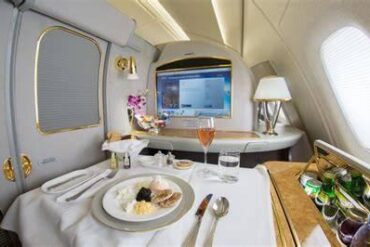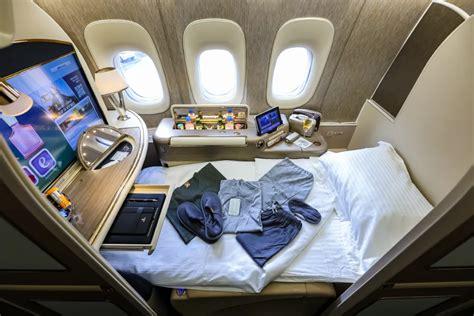
For decades, international first class represented the pinnacle of commercial aviation. It was the cabin of private suites, fine wines, premium lounges, chauffeur transfers, and personalized service designed to make passengers feel as though they were traveling on a private jet. Sitting in the front row of a Boeing 747 or Airbus A380 was not simply about transportation—it was about status, exclusivity, and access to an experience that few travelers could afford.
Today, that iconic cabin is disappearing at a remarkable pace.
Major airlines across North America and Europe are removing first class from their fleets, while others are shrinking it to only a handful of routes. On the surface, the trend appears surprising. Global wealth has increased, premium travel demand remains strong, and luxury tourism continues to expand. Yet despite the presence of affluent travelers willing to pay for comfort, airlines are abandoning a product that once symbolized the highest level of air travel.
The explanation lies in a profound transformation of airline economics, passenger expectations, corporate travel policies, and aircraft design. Far from signaling the death of luxury aviation, the decline of traditional first class reveals how airlines have discovered a more profitable way to deliver many of the same benefits.
The modern premium travel market has evolved beyond the rigid cabin hierarchy that dominated aviation for decades. Instead of maintaining separate luxury ecosystems, airlines are increasingly focusing on maximizing revenue from every square foot of cabin space while preserving the privacy and comfort that premium travelers demand.
By understanding why first class is vanishing, it becomes clear that the future of luxury air travel is not disappearing—it is simply being reinvented.
The Golden Age of First Class Is Coming to an End
For much of aviation history, first class occupied a unique position within airline fleets. It served as the ultimate showcase for an airline’s brand, often featuring amenities that seemed almost extravagant.
Passengers enjoyed oversized reclining seats long before lie-flat beds became common. Exclusive dining experiences included caviar service, premium champagne, and restaurant-style menus. Dedicated airport lounges offered private check-in areas, luxury amenities, and personalized assistance.
The purpose of first class extended beyond generating ticket revenue. It functioned as a powerful marketing tool. Even travelers who never flew first class associated airlines offering such products with prestige and quality.
However, maintaining these cabins has always been expensive.
A first-class suite consumes a tremendous amount of space. In many configurations, one first-class passenger occupies an area that could otherwise accommodate multiple business-class travelers. As aircraft economics became increasingly important, airlines began questioning whether the prestige of first class justified the lost revenue potential.
What emerged was a realization that would fundamentally reshape premium aviation.
Business class was becoming too good.
How Business Class Became First Class in Everything but Name
The most significant factor behind the decline of first class is the extraordinary evolution of business class cabins.
Ten or fifteen years ago, business class occupied a clear middle ground between economy and first class. Travelers received larger seats, improved meals, and additional service, but the experience remained noticeably inferior to what was available in first class.
That distinction has largely vanished.
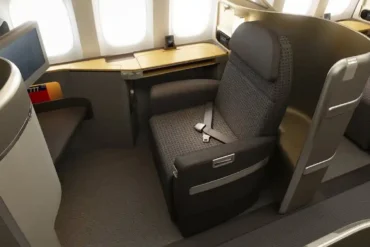
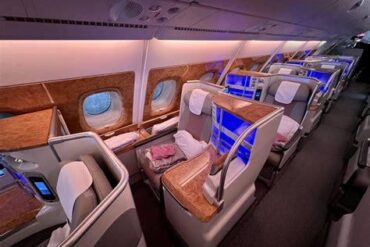
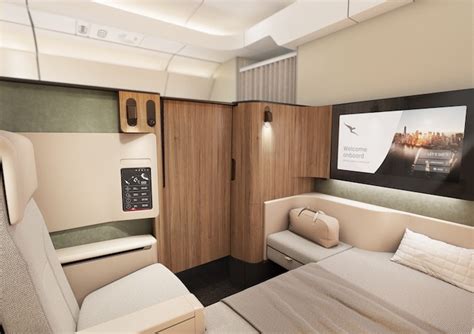
Modern business-class products now feature amenities that were once exclusive to elite front-row cabins. Travelers can enjoy fully enclosed suites with sliding privacy doors, direct aisle access, wireless charging systems, large entertainment screens, luxury bedding, and sophisticated seat designs capable of transforming into fully flat beds.
Some airlines have pushed these innovations even further.
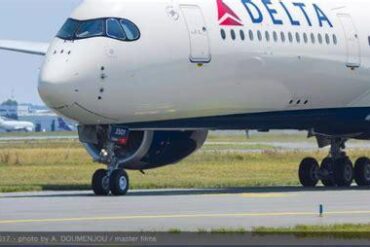
All Nippon Airways introduced “The Room,” a revolutionary business-class product offering unprecedented personal space. Qatar Airways transformed premium travel expectations with its Qsuite concept. Delta Air Lines, Singapore Airlines, and many others followed with increasingly sophisticated suites designed to rival first-class experiences.
The result is a cabin that fulfills the primary needs of long-haul travelers exceptionally well.
Passengers seek three things above all else on intercontinental flights:
- Privacy
- Comfort
- Sleep quality
Modern business-class suites now provide all three.
When travelers can close a door, stretch out on a fully flat bed, enjoy premium dining, and arrive rested after a twelve-hour flight, the incentive to spend several times more for first class becomes increasingly difficult to justify.
For airlines, this overlap creates a problem.
The better business class becomes, the less necessary first class appears.
The Revenue Mathematics Airlines Cannot Ignore
Behind every aircraft interior lies a complex financial equation.
Airlines operate within strict physical limitations. Aircraft fuselages cannot be expanded once delivered, meaning every seat must justify the space it occupies. As a result, airlines carefully evaluate the revenue generated per square foot throughout the cabin.
Traditional first class performs poorly under this calculation.
A luxury suite can occupy the same area as three or four business-class seats. To compensate, airlines must sell first-class tickets at dramatically higher prices.
Increasingly, travelers are unwilling to pay those premiums.
Many first-class cabins flew with empty seats. Others relied heavily on mileage redemptions or complimentary upgrades rather than full-fare passengers.
From a profitability standpoint, these cabins often represented inefficient use of valuable aircraft real estate.
The transformation of American Airlines’ Boeing 777-300ER fleet provides a powerful example.
Rather than maintaining eight first-class seats, the airline chose to eliminate the cabin entirely. The resulting redesign allowed American to significantly increase the number of business-class suites and premium economy seats throughout the aircraft.
The outcome was straightforward: more premium seats, higher occupancy rates, and stronger overall revenue generation.
This strategy reflects a broader industry shift.
Airlines increasingly prefer a larger number of consistently sellable premium seats rather than a small collection of ultra-luxury suites that may remain empty.
Why Corporate Travel Policies Changed Everything
Another critical factor often overlooked by travelers involves the influence of corporate travel departments.
Large multinational corporations spend billions of dollars each year on airline tickets. Their employees fill premium cabins across major international routes, making corporate contracts enormously valuable for airlines.
However, corporate travel policies have evolved significantly.
Many organizations explicitly prohibit employees from purchasing tickets labeled as first class.
These restrictions frequently apply regardless of seniority, route length, or ticket cost.
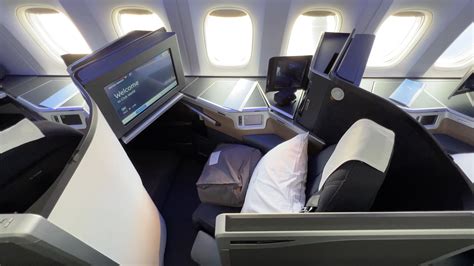
Business class, on the other hand, is often fully approved for long-haul international travel. Companies recognize that employees arriving rested and productive can justify the additional expense.
This distinction created an unexpected problem.
The term “first class” itself became a commercial obstacle.
Airlines discovered that maintaining the first-class label excluded them from large segments of corporate travel spending. Even if a first-class ticket delivered exceptional value, many procurement systems automatically rejected such bookings.
By offering highly luxurious products under a business-class designation, airlines gained access to enormous corporate budgets while preserving attractive profit margins.
This strategic rebranding helps explain why major U.S. carriers abandoned international first class years ago.
The move was not simply about cutting costs.
It was about aligning premium products with the purchasing rules of the world’s largest travel buyers.
The Rise of Revenue Density as a Strategic Priority
Modern airlines increasingly focus on a concept known as revenue density.
Rather than measuring success by ticket prices alone, airlines evaluate how much revenue each section of an aircraft can consistently generate.
Under this framework, first class faces serious challenges.
A cabin containing only a handful of suites depends on a very small customer base. Demand can fluctuate dramatically depending on economic conditions, seasonal trends, and route performance.
Business class offers much greater stability.
Premium economy adds another layer of predictable demand.
Together, these cabins create a diversified premium portfolio that appeals to a broader range of travelers.
Airlines can serve:
- Corporate travelers
- Affluent leisure passengers
- Frequent flyers
- Small-business owners
- Premium vacation travelers
This diversification reduces risk while maximizing overall revenue potential.
As competition intensifies and margins remain thin, airlines increasingly favor predictable income streams over prestige-driven products.
The numbers consistently support this approach.
Why Some Airlines Still Believe in First Class
Despite the broader industry trend, first class is not disappearing everywhere.
In fact, several airlines continue investing heavily in ultra-premium experiences.
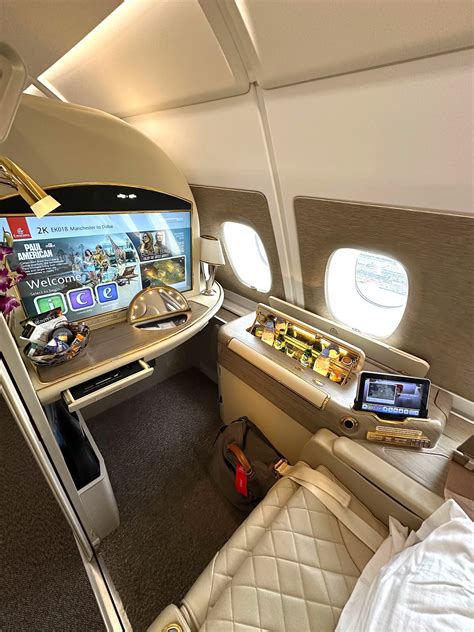
Lufthansa’s Allegris concept, Emirates’ enhanced first-class suites, Singapore Airlines’ flagship products, and premium offerings from Japan Airlines demonstrate that first class still has a place in global aviation.
The difference lies in strategy.
These airlines do not view first class primarily as a direct revenue generator. Instead, they see it as a brand halo.
A flagship first-class product elevates the perception of the entire airline.
Even travelers flying economy may choose a carrier because its reputation for luxury enhances trust in the brand.
For airlines based in major global hubs such as Dubai, Singapore, Tokyo, and Frankfurt, first class also supports high-profile government travel, corporate executives, royalty, celebrities, and ultra-high-net-worth individuals.
However, even among these carriers, deployment is becoming increasingly selective.
Rather than installing first class throughout entire fleets, airlines restrict it to strategically important routes connecting major financial centers.
Flights between cities such as New York, London, Tokyo, Singapore, Paris, and Dubai continue to attract sufficient demand to justify ultra-premium cabins.
Elsewhere, business class dominates.
Premium Economy: The Unexpected Winner
While most discussions focus on first class and business class, the greatest beneficiary of this transformation may actually be premium economy.
Over the past decade, premium economy has evolved from an experimental concept into one of the industry’s most profitable products.
Its appeal is remarkably simple.
Premium economy requires only a modest increase in cabin space compared with standard economy seating. Yet airlines can often charge fares that are substantially higher.
This creates an attractive balance between cost and revenue.
Passengers receive wider seats, additional legroom, enhanced dining, priority services, and a noticeably more comfortable experience.
For travelers unwilling to pay business-class prices, premium economy represents an appealing middle ground.
The economics are powerful.
The space once occupied by a single first-class suite can accommodate multiple premium economy passengers. This dramatically increases revenue potential while serving a much larger customer base.
As airlines redesign cabins, premium economy frequently becomes a central component of long-haul profitability strategies.
Its growth is not temporary.
It reflects a permanent shift in how airlines structure premium offerings.
The Emergence of “Business Plus”
Airlines are also exploring innovative ways to satisfy luxury demand without restoring traditional first class.
One increasingly popular solution is the development of business-plus products.
These offerings occupy the front rows of business-class cabins and utilize space that naturally exists around aircraft bulkheads.
Passengers receive enhanced amenities such as larger suites, expanded storage areas, bigger entertainment screens, companion dining options, and additional privacy.
Importantly, these seats remain part of the business-class cabin.
This allows airlines to maintain operational simplicity while offering a premium experience for travelers willing to pay more.
The approach delivers many advantages associated with first class without requiring a separate cabin, dedicated service structure, or specialized inventory management.
As airlines seek efficiency, business-plus concepts are likely to become increasingly common.
The Future of Luxury Air Travel
The disappearance of traditional first class does not mean luxury aviation is fading away.
Quite the opposite.
Luxury travel remains one of the strongest segments of the airline industry. Demand for privacy, comfort, exclusivity, and personalized service continues to grow.
What has changed is the method of delivery.
Rather than separating luxury into a distinct cabin occupying enormous amounts of space, airlines are embedding premium experiences within highly efficient business-class ecosystems.
New-generation aircraft such as the Airbus A350-1000 and Boeing 777X are accelerating this transition. Their cabins are being designed around flexible premium configurations that maximize revenue while satisfying evolving passenger expectations.
The iconic first-class label may continue disappearing from aircraft seat maps. Yet the characteristics travelers truly value—space, privacy, exceptional service, and comfort—remain very much alive.
The hidden reason first class is disappearing is not that luxury has lost its appeal. It is that airlines discovered a more profitable way to sell luxury to far more people.
In the modern aviation industry, the future belongs not to the largest suites or the most extravagant labels, but to premium experiences that balance exclusivity with economic efficiency. First class is fading from view, yet its DNA now exists throughout the premium cabin ecosystem, quietly reshaping how the world flies.