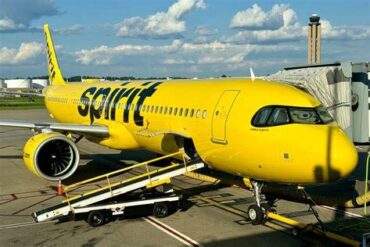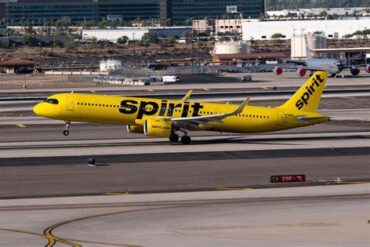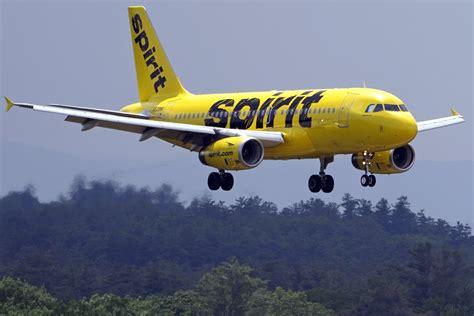
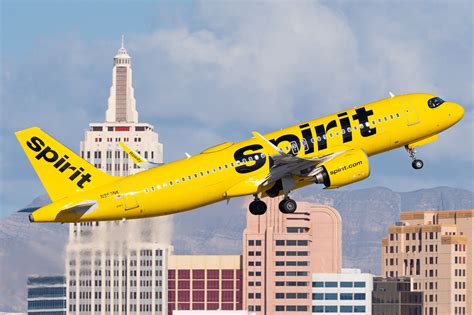
Spirit Airlines, the U.S.-based ultra-low-cost carrier known for its all-Airbus fleet, is facing fresh turbulence in its attempt to rebuild after bankruptcy. The airline, which recently emerged from Chapter 11 restructuring, has warned that new U.S. tariffs on European imports could force it to postpone or cancel future Airbus aircraft deliveries, posing a significant risk to its already delicate financial recovery.
A Fragile Recovery Threatened by Policy Volatility
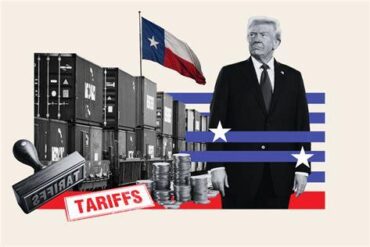
The warning stems from a 10-Q filing in which Spirit Airlines disclosed the potential impact of the Trump-era tariffs that were briefly suspended but may soon return with full force. In April, the administration had announced a 20% tariff on imports from the European Union, only to suspend it for 90 days beginning April 9. As that suspension expires in early July, Spirit now finds itself in a precarious position, heavily dependent on Airbus with no domestic alternative supplier.
The filing explicitly notes that should these tariffs become permanent, they will likely increase the cost of new Airbus aircraft and parts, exerting further pressure on Spirit’s financial stability. The airline states:
“The imposition of tariffs will increase the cost of imported new Airbus aircraft and parts, which in turn could have a material adverse effect on our business, financial condition and/or results of operations.”
This stark reality reflects more than a temporary operational hiccup—it signals a strategic crisis for an airline whose fleet and growth plans are entirely bound to a European aircraft manufacturer.
The Cost of Doing Business in a Tariff-Laden World
Spirit Airlines has committed to receiving 92 additional Airbus A320-family aircraft through 2031, a plan that now risks becoming prohibitively expensive. With each A320neo carrying a baseline cost of $110 million, even the 10% tariff currently in place equates to an additional $1 billion in acquisition costs.
The airline’s reliance on Airbus’s A320, A320neo, A321, and A321neo variants has historically allowed it to streamline operations and minimize training costs. But this operational advantage has transformed into a liability in the face of international trade policy instability. The inconsistency in tariff implementation—often weaponized in broader trade negotiations—has left Spirit with no pricing certainty on future aircraft deals.
The Shrinking Fleet: A Measured Retreat
Spirit’s all-Airbus fleet, totaling 213 aircraft as of June 2025, is already being pared down. During the bankruptcy process in 2024, the airline sold off aircraft and deferred deliveries to reduce capital expenditure and manage its liabilities. The current fleet comprises:
- 63 A320-200s (average age: 10.5 years)
- 91 A320neos (average age: 3.8 years)
- 29 A321-200s (average age: 8.2 years)
- 30 A321neos (average age: 1.1 years)
Initially forecasting 219 aircraft by the end of 2025, Spirit has now revised that figure downward to 196, citing the planned retirement or sale of older A320-200 and A321-200 models.
Fleet Modernization Plans Deferred Into the Next Decade
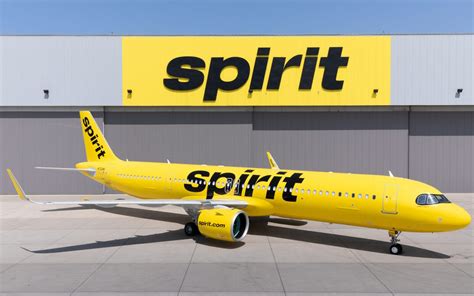
The airline’s long-term growth strategy had envisioned a steady transition toward a newer, more fuel-efficient fleet. This included major Airbus deliveries scheduled for 2025 and 2026, but those have since been pushed back to 2030 and 2031. That shift buys Spirit some breathing room financially, but it also delays its competitive edge in operating cost per seat mile—a crucial metric for any low-cost carrier.
The Airbus A320neo and A321neo are central to this transition. They offer better fuel economy, lower emissions, and improved passenger amenities. But with tariffs potentially adding millions to each delivery, Spirit must evaluate whether the economic advantage of fleet modernization is negated by the steep rise in acquisition costs.
Headwinds That Extend Beyond Tariffs
Spirit’s challenges are not limited to tariffs alone. In 2024, the airline posted a staggering $1.2 billion loss, and the first quarter of 2025 did little to brighten the outlook. It reported a $289 million operating loss, and though a Chapter 11-related accounting maneuver allowed it to record a $61 million net profit, the underlying business remains deeply in the red.
The airline carries $3.3 billion in debt, a burden that restricts its maneuverability. Compounding the issue, Spirit has cut its summer 2025 schedule by 25% compared to the previous year, further hampering revenue generation.
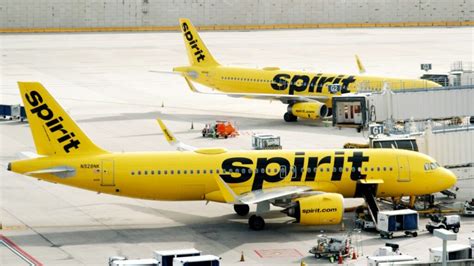
This reduction in available seat miles (ASM) not only shrinks operational revenue but also diminishes its visibility and presence in key competitive markets, notably its hubs in Fort Lauderdale, Orlando, and Las Vegas.
Strategic Dilemmas and Limited Alternatives
Given its ultra-low-cost model, Spirit operates with razor-thin margins. Every percentage point increase in aircraft acquisition cost has an outsized effect on its overall cost structure. The idea of switching aircraft manufacturers—for instance, pivoting to Boeing—is impractical in the short term. Not only are training, maintenance, and certification costs prohibitively high, but Boeing itself has struggled to fulfill existing orders due to production delays and regulatory oversight.
Spirit’s lack of fleet diversity means that any disruption to its Airbus pipeline is disproportionately painful. Without a domestic supplier that can deliver equivalent aircraft at scale and with short lead times, the airline is effectively hostage to the EU–US trade relationship.
A Risk Management Nightmare in the Making
For an airline already walking a financial tightrope, the ambiguity around tariffs creates an environment that is antithetical to long-term strategic planning. Spirit’s leadership has little visibility into whether they will be paying 10%, 20%, or more in duties by the time their next aircraft batch is ready for delivery. This unpredictability undermines contractual negotiations, financing, and budgetary forecasts.
Moreover, investors and analysts closely monitoring the 10-Q filings are interpreting this disclosure as a warning signal—not just about tariffs, but about Spirit’s broader ability to stay solvent under shifting macroeconomic conditions.
Looking Ahead: Navigating Uncertain Skies
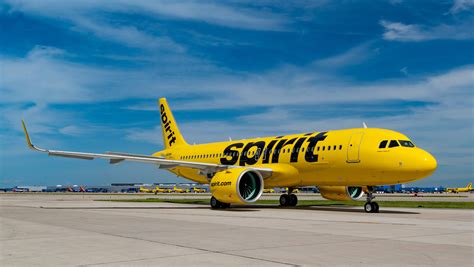
Despite the warning signs, Spirit has not yet officially canceled any Airbus orders. Its current posture appears to be one of cautious observation—evaluating the trade environment, staying in close contact with Airbus, and recalibrating its delivery timelines.
In a more favorable scenario, the Biden administration or its successors could re-evaluate trade penalties that disproportionately affect U.S. companies dependent on EU-manufactured components. Alternatively, Airbus could absorb some of the tariff impact through price adjustments or concessions to maintain its long-standing relationship with Spirit.
However, neither of these outcomes is guaranteed. For now, the airline must plan for a worst-case scenario that could undermine the foundation of its recovery.
Conclusion: Spirit at a Strategic Crossroads
Spirit Airlines’ warning about potentially canceling its Airbus orders is not a negotiating tactic—it’s a reflection of the complex geopolitical and financial entanglements that small carriers must navigate. With its entire fleet strategy hinging on European aircraft, the airline now faces a risk-laden decision: absorb skyrocketing costs and press forward, or pull back and risk stagnation.
What is certain is that Spirit’s path forward will be shaped as much by politics and policy as by passenger demand or fuel prices. In an industry where capital decisions are made years in advance, today’s tariff uncertainty threatens to become tomorrow’s operational paralysis. And for Spirit, which has only just emerged from financial purgatory, this could not have come at a worse time.