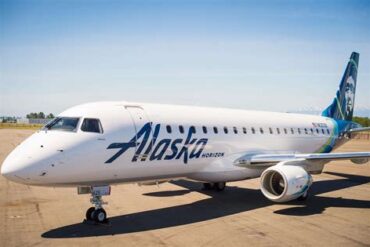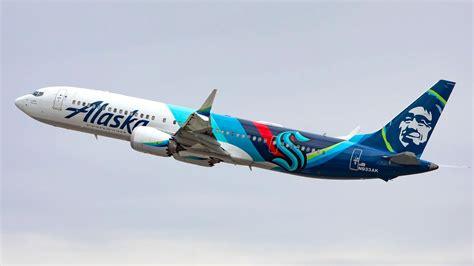
Alaska Airlines has taken the rare step of delaying the delivery of two Embraer E175 regional jets, a move driven by growing concerns over U.S. import tariffs. The aircraft, intended for its subsidiary Horizon Air, were expected to be in service by May 2025, but as tensions around international trade policies mount, the jets remain grounded in Brazil. The decision highlights the increasing fragility of global supply chains in aviation, particularly under the pressure of geopolitical maneuvering and economic protectionism.

Tariff Uncertainty Grounds Embraer E175 Deliveries
At the center of the delay is the Trump administration’s announcement of escalating import tariffs, which threatens to raise costs on foreign-manufactured goods, including commercial aircraft. Embraer, headquartered in São José dos Campos, Brazil, is among the manufacturers directly impacted. Currently, U.S. tariffs on select aircraft imports stand at 10%, but proposed adjustments could raise them substantially, placing additional financial pressure on airlines operating on tight margins.
Alaska Airlines confirmed in a statement to The Seattle Times that it would not proceed with deliveries that come burdened with unanticipated tariff-related costs. The airline cited the policy’s unpredictability as a major concern, effectively halting its near-term expansion of the regional fleet. The two delayed Embraer E175s were meant to be crucial components of its summer 2025 flight schedule, now significantly disrupted.
“We are not going to accept delivery of aircraft under an environment of unpredictable and increasing tariffs,” a spokesperson for Alaska said, summarizing the company’s firm stance.
Operational Disruptions and Fleet Limitations
The consequences of the halted delivery are immediate. With summer demand increasing and Alaska Air Group expecting no further E175 deliveries for the remainder of 2025, the regional fleet will remain at 87 aircraft—comprised of 45 operated by Horizon Air and 42 by SkyWest Airlines. The airline has already had to cancel several summer routes, directly attributing the reduction in available aircraft to the delay from Embraer.
This limited flexibility places a greater operational burden on Alaska’s mainline fleet, which will see the addition of seven Boeing 737 MAX aircraft this year. However, these larger jets do not fill the regional gaps the E175s were meant to cover, potentially affecting feeder routes and reducing connectivity across smaller markets in the Pacific Northwest and beyond.
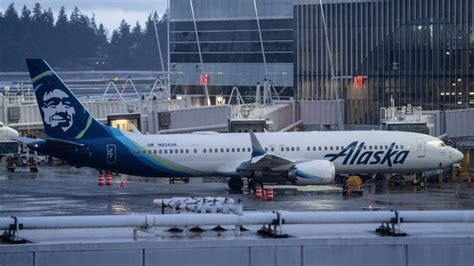
Alaska Airlines Bets on Boeing While Delaying Regional Expansion
Alaska Airlines has long maintained a diversified fleet strategy, but Boeing remains its primary supplier. Alongside the pending 737 MAX deliveries, the airline also looks forward to adding a Boeing 787 Dreamliner—although this widebody jet will go to newly acquired Hawaiian Airlines, further strengthening Alaska’s long-haul capabilities rather than regional connections.
The continued integration of Hawaiian into the Alaska Group portfolio adds complexity to fleet planning, especially at a time when smaller aircraft like the E175 are critical for maintaining frequency on regional routes. Alaska’s current decision underscores a preference for predictability and long-term cost stability over aggressive fleet expansion in uncertain conditions.
Spirit Airlines Faces Similar Crossroads Over Airbus Orders
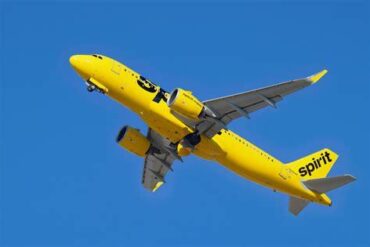
While Alaska’s troubles stem from South America, another U.S. carrier is facing turbulence from Europe. Spirit Airlines, the ultra-low-cost carrier based in Florida, is considering postponing or canceling future Airbus deliveries. As the company attempts to rebuild after emerging from Chapter 11 bankruptcy, it must now contend with the specter of 20% tariffs on European imports.
Spirit’s entire fleet relies on Airbus aircraft, primarily from the A320neo family. The carrier currently anticipates receiving four A320neo jets in 2025, part of a larger 92-aircraft order scheduled to be fulfilled through 2031. However, the expiration of a 90-day tariff reprieve in July 2025 could dramatically alter cost assumptions, placing the affordability of these orders in serious jeopardy.
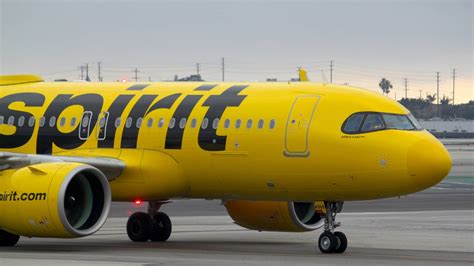
Post-Bankruptcy Realities and Financial Prudence
In filings submitted to the U.S. Real Estate Commission, Spirit Airlines laid out its concerns in detail, emphasizing the negative financial impact of any tariff increase. For a carrier that has just stabilized operations post-bankruptcy, the possibility of absorbing additional costs from a 20% surcharge is untenable.
Spirit’s leadership is reportedly engaged in active reassessments of its 2025 fleet plan. While no final decisions have been announced, a pause in aircraft acquisition is under serious consideration, a move that could significantly affect the company’s competitiveness as it seeks to regain market share in the budget travel segment.
Tariffs Cast Long Shadows on U.S. Airline Planning
What unites the cases of Alaska and Spirit is a growing anxiety over tariff-driven volatility. Airlines, by nature of their capital-intensive operations and long lead times on equipment procurement, are particularly vulnerable to sudden shifts in trade policy. In this environment, even temporary tariffs can cause long-lasting operational and financial consequences.
Beyond aircraft, import fees affect the entire supply chain—from engine parts to in-flight technology systems. Delays or cancellations in aircraft deliveries can also impact maintenance schedules, route planning, staffing needs, and fuel management strategies.
The situation exposes the fragile balance between protectionist economic policies and the globalized realities of modern aviation. U.S. airlines increasingly depend on a mix of domestic and international suppliers, and the imposition of tariffs threatens to destabilize this equilibrium.
Aviation Industry Advocates Call for Predictability
Trade and aviation analysts have urged the federal government to provide clearer guidance and long-term trade frameworks to protect airline investments. With global aviation rebounding after pandemic-era downturns, stability in procurement channels is more crucial than ever.
Industry trade groups like Airlines for America (A4A) and the Regional Airline Association (RAA) are lobbying for tariff exemptions or at least gradual phase-ins that allow carriers to adjust contracts without absorbing sudden, crippling costs. While these discussions are ongoing, airline executives remain in a holding pattern, awaiting clarity that could define their expansion trajectories for years.
Outlook: Strategic Patience or Forced Retrenchment?
For Alaska Airlines, the path forward may involve shifting more focus toward mainline expansion while reevaluating the role of outsourced regional flying. The Embraer E175 delay is not just a logistical hiccup—it’s a reflection of the challenges airlines face in executing strategic fleet growth under unstable regulatory conditions.
Spirit, meanwhile, must walk a finer line. Any delay in fleet expansion could impede its capacity to reclaim market share, especially as competitors ramp up operations. On the other hand, reckless spending in an unpredictable tariff environment could plunge the carrier back into financial distress.
Both carriers represent distinct business models—premium hybrid and ultra-low-cost—but are equally caught in a policy storm not of their making. As the July tariff deadline approaches, the broader U.S. aviation industry watches closely, keenly aware that these decisions may only be the beginning of deeper restructuring across fleets, partnerships, and procurement strategies.