Just weeks before a 50% import tariff was set to devastate the Brazilian aerospace manufacturer Embraer, the United States government has issued a special exemption that will spare the planemaker from the crushing trade penalty. This move comes after urgent lobbying by key regional airlines such as Republic Airways and SkyWest Airlines, which rely heavily on Embraer’s regional jet fleet and refused to absorb the projected tax costs.
Embraer, headquartered in São Paulo and founded in 1969, faced an existential threat if the tariffs had moved forward as planned. The proposed trade measures, championed by the Donald Trump administration, would have added approximately $9 million USD per aircraft, crippling Embraer’s competitiveness in its largest market: the United States.
Embraer in the Crosshairs of Tariff Policy
At the heart of the issue was a massive tariff package targeting Brazilian imports, including coffee, crude oil, aviation fuel, and aircraft. Embraer, which sells over 50% of its commercial and executive jets to U.S. clients, was poised to suffer a loss of up to $3.6 billion USD by 2030 had the tariffs been enacted. The consequences extended far beyond corporate losses—mass layoffs, halted deliveries, and disruptions to regional air travel networks in the U.S. loomed large.
The impact would have been especially harsh for regional carriers contracted by the “big three” U.S. airlines—American Airlines, Delta Air Lines, and United Airlines—who rely on subcontractors like Mesa Airlines, SkyWest, Envoy, and Republic to operate E170, E175, and E190 regional jets.
Airline Industry Pushback
Faced with soaring costs, U.S. regional carriers began to push back. SkyWest’s Chief Commercial Officer, Wade Steel, told Aviation Week:
“If the 50% tariff with Brazil is implemented, we plan on working with our major partners and Embraer to delay delivery until the tariff situation is resolved. All parties are motivated to work together on the tariff issue.”
That collaboration was instrumental in swaying policy direction. The U.S. Department of Transportation, led by Secretary Sean Duffy, also weighed in publicly against the tariffs, emphasizing the need to maintain zero-duty aerospace trade agreements, some of which date back to 1979. Duffy cited the deeply integrated nature of the global aerospace industry, noting that such tariffs would boomerang, harming U.S. suppliers, airlines, and consumers alike.
Global Aerospace Under Siege
The Embraer exemption is just the latest episode in a broader geopolitical battle over aerospace trade. Airbus CEO Guillaume Faury has voiced similar concerns, stating that tariffs on aerospace goods “hurt everyone, but damage the U.S. aerospace industry the most.” Airbus, which expects to deliver 820 aircraft in 2025, has already taken steps to avoid tariff exposure by adjusting its supply chain and delivery routes.
U.S.-based aerospace giant Boeing, though historically a competitor to Embraer, has echoed calls to roll back tariffs, emphasizing that aviation is an inherently globalized sector, relying on seamless cross-border parts exchange and cooperative innovation. Boeing’s tacit support for Embraer’s case underscores the existential nature of the threat.
The tariffs, though framed as economic leverage, risk disrupting critical supply chains, causing bottlenecks in maintenance, production, and operations. U.S. airlines, in particular, stand to lose competitive edge if forced to operate under higher aircraft acquisition costs, maintenance delays, and possible fleet shortages.
Embraer’s Role in U.S. Regional Aviation
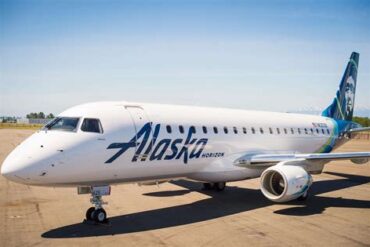
What makes Embraer’s exemption even more significant is its centrality to U.S. regional aviation. The Embraer E170, E175, and E190 platforms are the backbone of regional routes across the country. These jets offer right-sized capacity, fuel efficiency, and operational flexibility—key for connecting smaller cities to hub airports.
Republic Airways alone operates more than 200 Embraer jets, while SkyWest boasts a fleet of over 180 Embraer E175 aircraft. These planes service high-frequency routes under the United Express, Delta Connection, and American Eagle banners. Without Embraer’s steady delivery pipeline, maintaining those essential connections would be extremely difficult.
Moreover, Embraer’s reach in the U.S. goes beyond civil aviation. It includes the delivery of special mission aircraft to the U.S. Air Force, adding a strategic and defense dimension to its operations that may have influenced the exemption.
The Fuel Factor: Tariffs Extend Beyond Planes
One aspect of the tariff dispute that has garnered less attention—but could prove just as disruptive—is the inclusion of Brazilian oil and aviation fuel in the tariff scope. The U.S. currently imports both sustainable aviation fuel (SAF) and standard jet fuel from Brazil. Should these products remain subject to steep tariffs, the resulting cost surges at the pump would ripple across the airline industry.
In that scenario, even airlines with Airbus or Boeing fleets would be affected, creating a compound crisis where fuel and aircraft costs spike simultaneously. Ironically, the fuel used in the Embraer jets exempt from aircraft tariffs may still be impacted, creating a partial win that only goes so far.
A Fragile Victory Amid Broader Tensions
While the exemption is being celebrated by Embraer and its U.S. partners, the larger trade war remains unresolved. The Trump administration has continued to pursue punitive tariffs across a range of Brazilian exports, signaling that aerospace may be a temporary reprieve rather than a full policy reversal.
Further complicating matters, U.S.-Brazilian trade negotiations remain tense, with no immediate sign of long-term agreement on aerospace goods. The 1979 duty-free agreement referenced by both Secretary Duffy and Airbus’s Faury is not a binding treaty, but a mutual understanding that can be revoked.
Industry watchers warn that a return to punitive tariffs remains possible, especially if bilateral talks falter or political winds shift post-election.
Conclusion: Why This Exemption Matters
The temporary exemption granted to Embraer is a crucial win for U.S. regional airlines, the Brazilian aerospace sector, and for those advocating for a return to rational global trade in civil aviation. It prevents immediate disruption in regional air services, protects jobs on both sides of the hemisphere, and maintains the integrity of complex aerospace supply chains.
But it’s also a fragile win—one that exists within a broader climate of economic nationalism, protectionist sentiment, and evolving geopolitical tensions. The industry must remain vigilant, advocate collectively, and remind policymakers that aerospace is not just another commodity. It’s an ecosystem where cooperation, not confrontation, fuels progress.
For now, Embraer jets will continue to fly across American skies without the weight of a 50% penalty. Whether that remains true next year, or even next quarter, depends not on engineers or airline executives—but on policymakers and diplomats.
The skies may be clear for now, but turbulence may yet return.