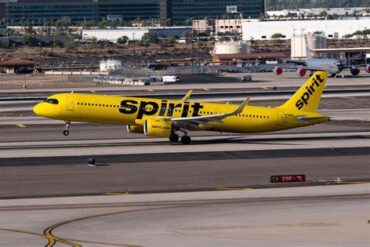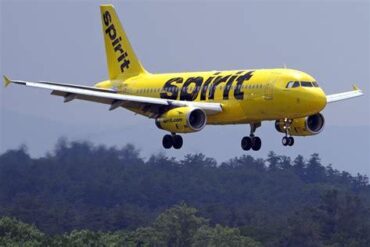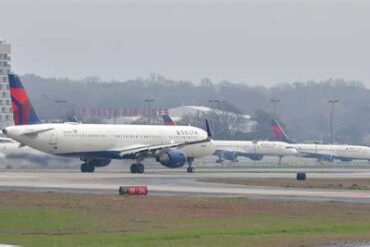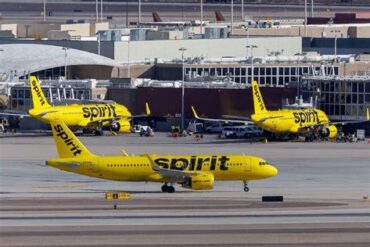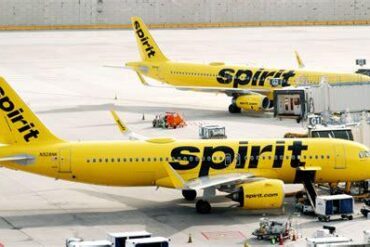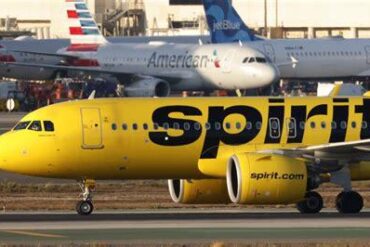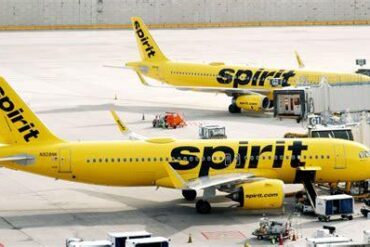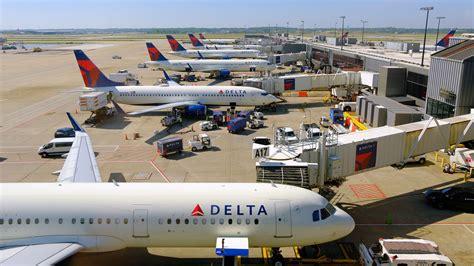
Delta Air Lines is poised to strengthen its already commanding position at Hartsfield-Jackson Atlanta International Airport after reaching an agreement to acquire Spirit Airlines’ leasehold rights to two airport gates for $12 million. The transaction, which remains subject to final bankruptcy court approval, represents another significant step in the dismantling of Spirit Airlines’ operational footprint as the former ultra-low-cost carrier continues liquidating assets to satisfy creditors.
The proposed acquisition covers Gates C4 and C6 on Concourse C, along with the associated ticketing lobby, check-in facilities, office space, and operational support areas. Although the airport itself remains owned by the City of Atlanta, Delta would assume Spirit’s existing lease through 2031, giving the airline additional flexibility at its largest and most strategically important hub.
The sale highlights the contrasting priorities shaping the aviation industry. For Spirit’s bankruptcy estate, maximizing proceeds for creditors is the overriding objective. For Delta, securing valuable infrastructure inside the world’s busiest airport offers long-term operational advantages in an increasingly capacity-constrained environment.
Delta Expands Its Dominance At Atlanta’s Largest Hub
Atlanta has long served as the centerpiece of Delta Air Lines’ global network. The carrier already accounts for approximately 80 percent of passenger traffic at Hartsfield-Jackson Atlanta International Airport, making it one of the most dominant airline hubs anywhere in the world. Every additional gate provides greater scheduling flexibility, improved aircraft utilization, and increased resilience during irregular operations.
The acquisition does not involve ownership of the gates themselves. Instead, Delta is purchasing Spirit’s leasehold interests, allowing it to operate from Gates C4 and C6 until the current lease expires in 2031. Alongside the gates, Delta would gain access to supporting infrastructure that would otherwise require years of planning and substantial investment to replicate.
For an airline operating hundreds of daily departures from Atlanta, even two additional gates can significantly improve aircraft rotations, reduce ground congestion, and provide greater scheduling efficiency during peak travel periods.
Bankruptcy Sale Delivers The Highest Offer For Spirit’s Creditors
Spirit Airlines selected Delta’s proposal after concluding that it represented the strongest financial offer received during the bidding process. According to bankruptcy filings, another airline also competed for the assets, although that carrier has not been publicly identified.
Spirit explained that only a limited number of airlines possessed both the operational capability and commercial need to assume the existing lease agreement. As a result, Delta emerged as the successful bidder with an offer valued at $12 million, providing immediate cash that will ultimately be distributed among the bankrupt airline’s creditors.
The deadline for objections to the proposed sale expired without major developments, leaving a bankruptcy court hearing scheduled to determine final approval. Assuming the transaction proceeds as expected, Delta will officially take over Spirit’s facilities shortly afterward.
Why Two Airport Gates Carry Outsized Strategic Value
Airport gates at major hubs have become some of the aviation industry’s most valuable operational assets. Unlike aircraft, which airlines can purchase relatively easily, gates at congested airports are often unavailable because terminals have reached practical capacity.
At Atlanta, every gate represents opportunities for additional departures, smoother aircraft turns, and greater scheduling flexibility throughout the day. Even incremental increases in gate availability can produce measurable improvements in operational reliability, particularly during weather disruptions or periods of heavy passenger demand.
Because Delta’s Atlanta operation functions as the primary connecting point for thousands of passengers every hour, expanding gate access allows the airline to optimize network performance across domestic and international routes simultaneously.
The End Of Spirit Raises Concerns Over Airline Competition
While Delta views the purchase as a logical operational investment, regulators remain concerned about the broader implications of Spirit Airlines’ disappearance from the marketplace.
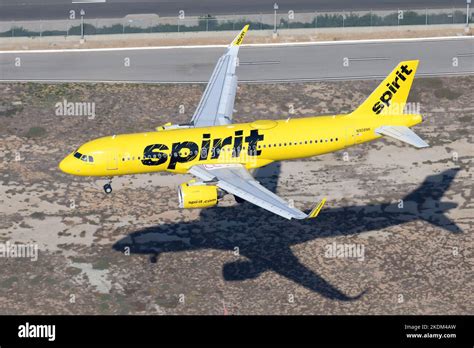
For years, Spirit helped drive down airfare by introducing aggressively low base fares into markets dominated by legacy airlines. Industry observers frequently referred to this pricing pressure as the “Spirit Effect,” describing how competitors often reduced fares whenever Spirit entered a route.
With Spirit no longer operating, many analysts fear average ticket prices could gradually increase as one of America’s largest ultra-low-cost competitors disappears. Similar competitive dynamics have historically been observed in other regions where airlines such as Ryanair and Jetstar have challenged established full-service carriers.
The loss of Spirit therefore represents more than the disappearance of one airline—it potentially reshapes pricing across numerous domestic markets.
FAA Watches Spirit Asset Sales Closely
The Federal Aviation Administration has openly acknowledged concerns about preserving competition as Spirit’s remaining airport assets are sold.
FAA Administrator Bryan Bedford has indicated that regulators would prefer airport infrastructure formerly controlled by Spirit to remain available for low-cost competitors wherever possible. The agency has even suggested that certain airport slots could be retired rather than transferred to another dominant legacy airline if doing so would better preserve future competition.
Those comments have attracted significant attention because they represent an unusually aggressive regulatory position regarding airport access and market concentration.
Some aviation analysts have questioned whether similar concerns should apply in Atlanta, where Delta already maintains overwhelming market share. Others argue that bankruptcy proceedings require Spirit’s legal representatives to maximize financial recovery regardless of broader competitive considerations.
Why Federal Antitrust Action Appears Unlikely
Despite debate surrounding market concentration, industry experts generally believe federal intervention remains improbable.
The purchase price falls well below the financial threshold that would automatically trigger federal antitrust review under existing merger notification requirements. While regulators theoretically retain authority to challenge the transaction under broader antitrust laws, no indication has emerged that such action is currently being considered.
That distinction is important because the acquisition involves lease rights rather than ownership of airport infrastructure. Once the lease expires in 2031, the City of Atlanta could potentially allocate the gates to another airline depending on future airport planning and competitive priorities.
The Next Major Test Comes At New York LaGuardia
Although the Atlanta agreement appears close to completion, aviation observers are increasingly focused on Spirit’s remaining assets at New York’s LaGuardia Airport.
Unlike two airport gates, LaGuardia’s package includes 22 highly valuable daily takeoff and landing slots, assets estimated to be worth approximately $87 million. Because slot availability at LaGuardia is exceptionally limited, the outcome of that auction could have far-reaching consequences for airline competition in one of America’s busiest aviation markets.
Regulators have already suggested they may take a far more active role if ultra-low-cost carriers fail to secure those slots, making the New York proceedings one of the most closely watched developments in Spirit’s ongoing bankruptcy liquidation.
Delta Strengthens Its Fortress While Spirit’s Legacy Fades
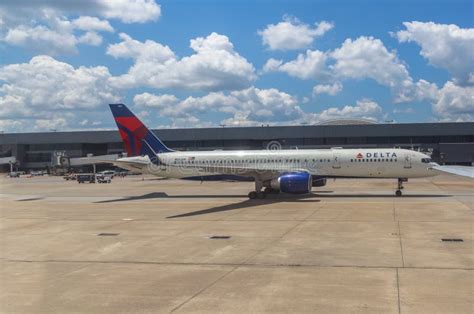
The proposed $12 million acquisition illustrates two parallel stories unfolding across the U.S. airline industry. Delta continues reinforcing its operational dominance at Atlanta by securing scarce airport infrastructure that supports long-term network growth. Meanwhile, Spirit Airlines’ once-expansive presence is steadily being dismantled through bankruptcy sales designed to maximize returns for creditors.
Whether regulators ultimately become more aggressive in protecting low-cost competition remains uncertain. What is already clear, however, is that every Spirit asset sold reshapes the competitive landscape. As additional gates, aircraft, and airport slots transfer to new owners, the effects will extend well beyond individual transactions, influencing airline competition, network planning, and airfare dynamics across the United States for years to come.