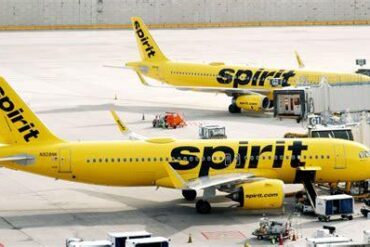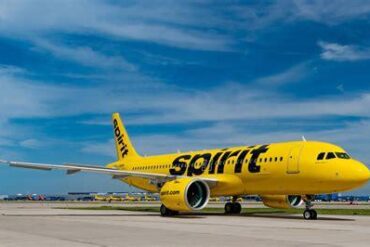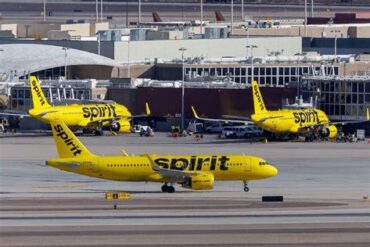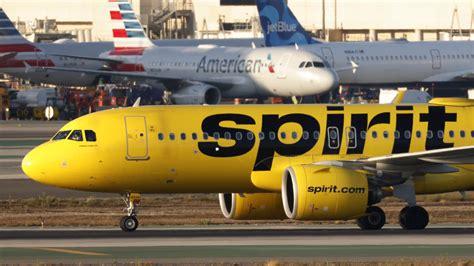
Spirit Airlines is facing one of the most consequential moments in its four-decade history, as the ultra-low-cost carrier struggles to stabilize operations while navigating its second Chapter 11 bankruptcy filing in less than a year. With liquidity tightening and strategic options narrowing, labor leaders are now stepping directly into the financial conversation, warning that the airline’s survival depends on immediate action from its creditors.
On January 14, the Air Line Pilots Association (ALPA) released a public letter addressed to Spirit Airlines’ bondholders, calling for continued financial support to allow the carrier to complete its restructuring process. The appeal reflects mounting concern among frontline employees that without fresh funding, Spirit could be forced into liquidation, a scenario that would ripple far beyond the airline itself.
Spirit’s troubles did not emerge overnight. Since the COVID-19 pandemic, the airline has faced compounding pressures from volatile fuel prices, shifting travel demand, engine reliability issues, and an increasingly unforgiving competitive environment for budget carriers. While many low-cost airlines have struggled, Spirit’s losses have been deeper and more persistent, prompting fleet reductions, route cuts, and workforce downsizing.
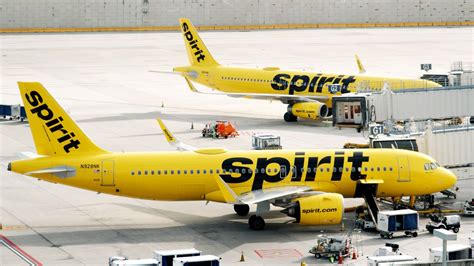
The current bankruptcy process is designed to give Spirit breathing room, allowing it to renegotiate debt obligations while maintaining flight operations. From the passenger perspective, flights continue to operate, albeit on a slimmer network. Behind the scenes, however, the airline’s financial runway is shrinking rapidly, elevating the urgency of ALPA’s message.
ALPA’s Direct Appeal to Spirit’s Creditors
ALPA’s open letter is notable not only for its tone, but for its target audience. Rather than focusing on management or regulators, the union is addressing bondholders directly, including major investment firms such as Miami-based Citadel. Representing nearly 3,000 Spirit pilots, ALPA frames the request as both a financial and social imperative, emphasizing that significant restructuring milestones have already been achieved.
According to the union, pilots and other employees have absorbed concessions, operational changes, and prolonged uncertainty in order to keep the airline viable. ALPA argues that withdrawing funding now would undermine months of progress and erase the value that remains in the airline as a going concern. The letter underscores that liquidation would instantly eliminate thousands of jobs, devastate families, and destabilize local economies tied to Spirit’s operations.
Why Liquidation Would Be a High-Cost Outcome
The union’s warning is grounded in historical context. Large-scale airline liquidations in the United States are rare, with the last major collapses occurring in 1991 when Eastern Air Lines and Pan Am ceased operations. Since then, bankrupt airlines have typically restructured, merged, or been acquired, preserving at least part of their workforce and route networks.
For Spirit, liquidation would mean the immediate end of operations, the loss of a major South Florida employer, and cascading effects on small businesses connected to tourism, maintenance, and airport services. ALPA positions continued funding as the less risky option, arguing that even creditors stand to recover more value through restructuring or acquisition than through asset liquidation.
Spirit Airlines’ Current Bankruptcy Landscape
Chapter 11 bankruptcy allows companies to reorganize debts while remaining operational, but success depends heavily on sustained financing. Spirit has already downsized its fleet, deferred aircraft deliveries, and reduced capacity to align costs with demand. These measures, while painful, are presented by ALPA as evidence that the airline is taking decisive steps toward stabilization.
The concern now is timing. Funding that once seemed sufficient is under pressure, and any interruption could derail the restructuring plan entirely. ALPA’s letter suggests that discussions with bondholders have become more uncertain, prompting the union to go public in defense of its members’ livelihoods.
Potential Paths Forward for Spirit Airlines
Despite the gravity of the situation, industry observers widely believe Spirit still has options. One likely outcome is additional financing from existing bondholders, particularly if they are convinced that restructuring is nearing completion. Another possibility is consolidation. Frontier Airlines renewed merger discussions with Spirit in December 2025, signaling renewed interest in combining operations to achieve scale and cost efficiencies.
While previous talks failed to produce a deal, Spirit’s deepening financial strain could shift negotiating dynamics. In a market increasingly hostile to ultra-low-cost carriers, consolidation may represent the most realistic path to preserving jobs and maintaining competition.
For now, ALPA’s message is clear and urgent. Continued funding is not merely a financial decision, but a determining factor in whether Spirit Airlines survives as an employer, a competitor, and a fixture of the U.S. aviation landscape.