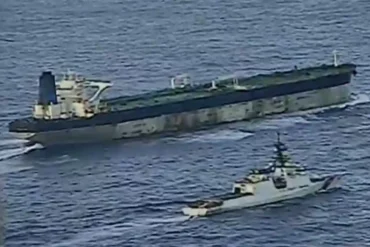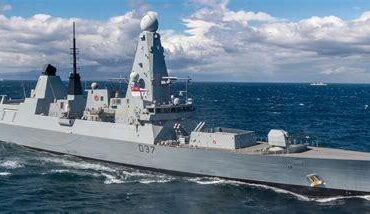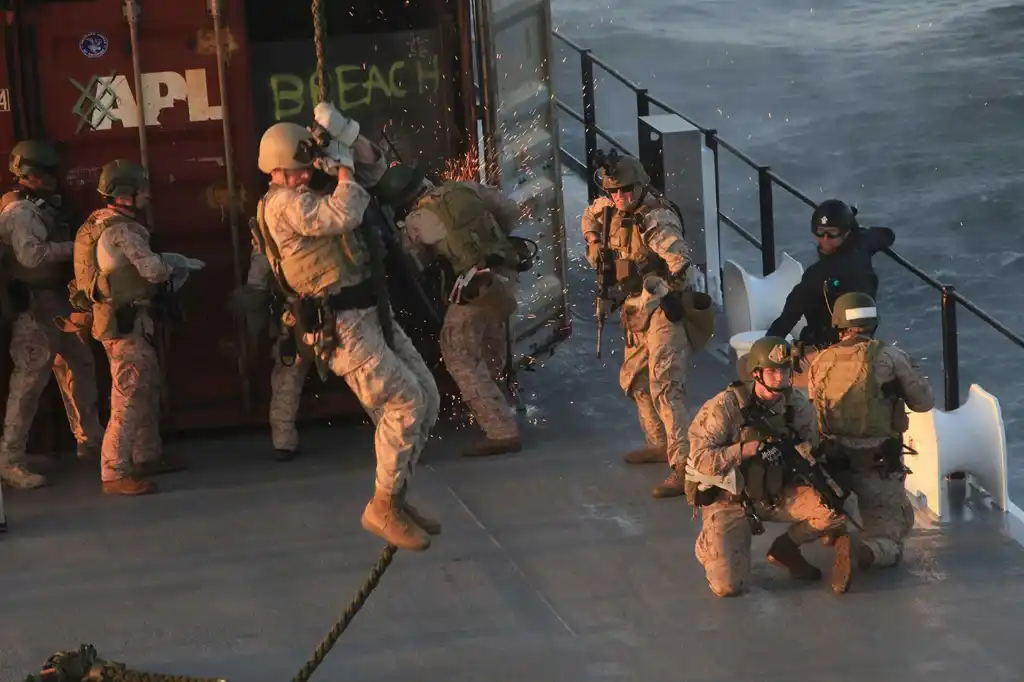
In a clandestine maritime operation in the Indian Ocean, U.S. Special Forces intercepted a Chinese-origin cargo en route to Iran, seizing components tied to Iran’s expanding missile program. The operation, executed last month and reported on December 12, 2025, highlights mounting tensions in the Middle East and deepening concerns over China-Iran defense cooperation.
Maritime Interdiction Off Sri Lanka: Seizure of Dual-Use Missile Components
The boarding took place several hundred miles off the coast of Sri Lanka, where a U.S. special operations team, supported by conventional forces, intercepted a vessel believed to be transporting military-grade, dual-use equipment. According to unnamed officials cited by the Wall Street Journal, this mission targeted a shipment suspected of aiding Iran’s missile infrastructure — particularly after Iran sustained extensive damage during its 12-day war with Israel and the United States in June 2025.
After intelligence had traced the cargo’s origin to China, U.S. forces confiscated the items, allowed the ship to continue its course, and reportedly destroyed the seized materials. The anonymity of the vessel and its ownership underscores the covert nature of such global arms trade and logistics networks. Intelligence officials confirmed that the cargo was destined for Iranian firms known to operate as procurement arms for Iran’s ballistic missile program, linking the interdiction to broader supply-chain disruption.
Strategic Timing: Tehran’s Missile Recovery Post-Conflict
The U.S. action is strategically timed. Following the June 2025 conflict, which reportedly inflicted severe damage on Iran’s missile and nuclear infrastructure, Iranian military planners appear to be moving swiftly to reconstitute their missile capabilities. According to U.S. assessments, the interdicted cargo would have contributed directly to missile component manufacturing, possibly including guidance systems or solid-propellant inputs.
This interdiction also aligns with the international reimposition of a U.N. arms embargo on Iran, activated in September 2025, which bans most forms of arms trade with Tehran. Officials noted that such maritime enforcement operations have intensified, both to constrain Iran’s weapon acquisitions and to choke off illicit oil revenues — a key funding stream for the Islamic Revolutionary Guard Corps (IRGC).
Escalating Maritime Pressure: Oil, Arms, and Sanctions Enforcement
The missile component seizure occurred just weeks before the U.S. intercepted a sanctioned Venezuelan oil tanker, suspected of transporting crude to Iran. That operation marked the first oil seizure from Venezuela since 2019, signaling a more aggressive U.S. posture in maritime enforcement across multiple theaters.
According to officials, the interdiction forms part of a cohesive maritime strategy targeting both Iran’s weapons procurement routes and its energy-based revenue streams. The decision to destroy the seized cargo reflects the high-risk nature of the components and their proximity to direct weaponization.
Longstanding China-Iran Military Ties: From Silkworms to Satellites
Iran’s partnership with China in military and dual-use technology transfer is not new. Since China’s recognition of the post-1979 Islamic Republic, the two nations have maintained a deep defense partnership. During the 1980s, amid the Iran-Iraq War and U.S. arms embargoes, China became a principal supplier of Iranian weaponry, including:
- J-6 and F-6 fighter jets
- Type 59 and Type 69 tanks
- HY-2 “Silkworm” anti-ship missiles
- Artillery and rocket systems
Reports from the era claim that Silkworm missiles were launched at U.S. and Kuwaiti vessels, prompting the Reagan administration to impose technology export restrictions on China in 1987. Despite diplomatic pressure, China’s arms transfers to Iran peaked at over $500 million annually by the late 1980s.
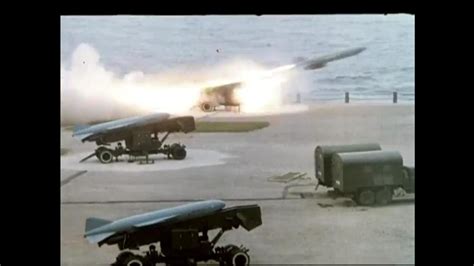
The 1990s saw another surge in Chinese arms shipments as Iran rebuilt its forces post-war, acquiring fighter jets, missile boats, and short-range ballistic missiles. This era also laid the foundation for Iran’s domestic missile production capabilities, modeled on Chinese designs such as the M-7 missile and Nasr-1 anti-ship systems derived from China’s C-704.
Evolving Cooperation in the 2000s–2020s: Components Over Complete Systems
International pressure, particularly U.N. resolutions such as 1737 (2006), 1747 (2007), and 1929 (2010), significantly restricted the direct arms pipeline from China to Iran. These resolutions called for vigilance in dual-use exports and enforced inspections of suspect cargo. While major arms deals dwindled, covert component transfers and dual-use exports filled the vacuum.
In 2015, Iran and China signed a strategic cooperation agreement tied to the Joint Comprehensive Plan of Action (JCPOA). This included Iran’s access to China’s BeiDou 2 satellite navigation system, used for both civilian and military applications. The strategic deal expanded further in 2021, envisioning 25 years of defense and industrial cooperation, technology transfers, and potential joint production.
Despite sanctions, evidence mounted in subsequent years of Chinese components embedded in Iranian drones, and of chemical exports like sodium perchlorate — a key element in solid-fuel missile propellants — reaching Iran via Chinese firms. These flows culminated in U.S. Treasury sanctions in April 2025 on a web of Iranian and Chinese entities engaged in such transfers.
A Pattern of Interdictions: Yemen, Hormuz, and Beyond
This most recent seizure follows several other high-profile interdictions:
- In January 2024, U.S. Central Command forces intercepted a shipment near Somalia containing Iranian-made ballistic and cruise missile parts destined for Houthi forces in Yemen.
- In 2020 and 2023, U.S. authorities seized Iranian oil cargos, citing connections to the IRGC’s Quds Force, which funds regional militias and missile units.
- In November 2025, Democratic lawmakers pushed for investigations into chemical shipments from China to Iran, again raising red flags about dual-use propellants and raw materials.
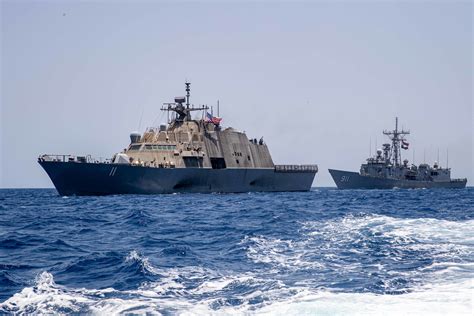
Such actions underscore a consistent U.S. intelligence and enforcement focus not only on full missile systems but on component-level interdictions—a strategic move to target the supply chains that underpin Iran’s weapons architecture.
Beijing’s Silence and Washington’s Next Steps
The Wall Street Journal reported that both Iranian and Chinese government spokespeople declined to comment on the December interdiction. Their silence contrasts sharply with U.S. messaging, which frames the operation as a necessary response to Iran’s missile regeneration and Chinese complicity.
U.S. officials now see these maritime actions as part of a broader containment architecture—blending direct military interdiction, economic sanctions, and international diplomacy. As Iran reportedly accelerates preparations for a future conflict with Israel, these actions may multiply, targeting both the flow of weapons and the revenue mechanisms that fund them.
Moreover, the focus on Chinese components suggests a potential escalation in U.S.-China tensions, particularly if future interdictions uncover deeper state involvement or bypasses of export controls. With maritime shipping lanes as the battleground, the U.S. Navy’s strategic footprint in the Indian Ocean and Persian Gulf may grow increasingly aggressive.
Conclusion: A Shadow War of Components and Carriers
The December seizure reflects more than a single tactical victory. It represents a broader evolution in counter-proliferation tactics, where intelligence, naval dominance, and surgical enforcement converge to dismantle networks long before weapons are assembled. By targeting shipments that may appear civilian but serve covert military ends, the U.S. seeks to choke the arteries of Iran’s missile resurgence.
As this shadow conflict unfolds across international waters, the interplay of Chinese industry, Iranian procurement, and American naval power will define the next chapter in Middle Eastern strategic deterrence. This is a conflict not of armies, but of supply chains, sanctions, and stealth.