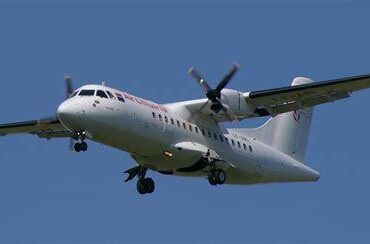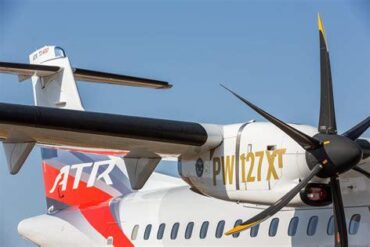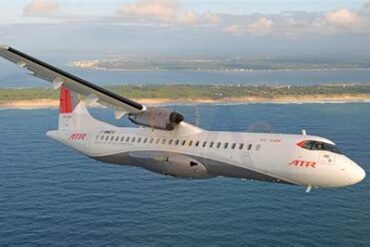
Regional aviation in the United States has been quietly hollowed out over the past decade. Beneath the headline growth of mega-hubs and transcontinental routes lies a stark reality: hundreds of thinner, sub-500 nautical mile links have vanished. Communities once stitched together by frequent short-haul flights now rely on long drives or inconvenient connections. Into that vacuum steps ATR, the Franco-Italian manufacturer of the world’s best-selling regional turboprops, with a clear ambition—to recreate “destroyed” regional connectivity and redefine the economics of short-haul flying in America.
The company’s 2025 full-year results reveal a manufacturer at an inflection point. ATR secured 60 gross orders, netting 50 after cancellations, and maintained an order backlog exceeding 160 aircraft. While delivery rates tracked lower than planned, the broader trajectory signals resilience and strategic positioning. With a production ramp-up slated for 2026, ATR is not merely stabilizing; it is preparing for expansion—particularly across the Atlantic.
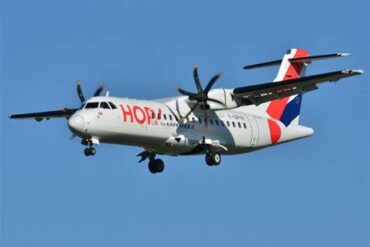
That ambition crystallized when JSX placed an order for 15 ATR 42-600 aircraft, marking a meaningful step into the US market. The first of these aircraft has already entered service, symbolizing more than a transaction. It represents a test case for a different vision of American regional aviation—one that prioritizes efficiency, right-sized capacity, and sustainable economics over speed for speed’s sake.

The 500-Nautical-Mile Sweet Spot: Economics Reclaimed
ATR’s leadership has repeatedly emphasized a specific figure: 500 nautical miles. Within that range, turboprops deliver their greatest advantage. Unlike regional jets optimized for higher cruise speeds and longer legs, turboprops such as the ATR 42-600 and ATR 72-600 thrive on shorter sectors where climb and descent phases dominate flight time.
In practical terms, the difference is profound. On routes under 500 nautical miles, regional jets often burn significantly more fuel per seat than modern turboprops. Operating economics on thinner routes—where passenger loads may not justify 70- to 90-seat jets—become unforgiving. Airlines facing rising fuel costs and pilot shortages have increasingly withdrawn from these markets.
ATR argues that this shift away from turboprops to small regional jets has inadvertently “destroyed” connectivity. When cost structures no longer align with demand, routes disappear. The aircraft did not fail; the economics did.
The upcoming retirement wave of approximately 300 50-seat regional jets in the US over the next decade further sharpens this opportunity. These aircraft—once the backbone of short-haul networks—are aging, less efficient, and increasingly difficult to justify operationally. Replacing them with similar jets would perpetuate the same structural inefficiencies. Replacing them with turboprops, however, reshapes the equation entirely.
Reversing a Structural Shift in US Aviation
Over the past ten years, roughly 30% of US routes below 500 nautical miles have vanished. This statistic captures more than lost frequencies; it reflects a systemic reorientation of airline fleets and network strategies.
As regional airlines transitioned toward jets, partly driven by passenger perception and scope clause dynamics, they gained speed but sacrificed cost flexibility. Jets are faster, but on a 300-nautical-mile leg, the time difference may amount to mere minutes. Those minutes come at a disproportionate cost in fuel burn and emissions.
ATR’s thesis is straightforward: restore aircraft-market alignment. By deploying turboprops on short, thin routes, airlines can reduce direct operating costs and reopen markets previously deemed unviable. Santa Monica to Las Vegas, frequently cited as an example, illustrates the point. The sector is short, demand is consistent but not massive, and speed is less critical than frequency and affordability.
This is not nostalgia for the turboprop era. It is a data-driven recalibration of fleet strategy.
JSX as a Catalyst for a Turboprop Revival
JSX’s commitment to the ATR 42-600 is strategically significant. JSX operates under a semi-private model, blending charter-style service with scheduled routes. Its emphasis on convenience, secondary airports, and premium customer experience aligns naturally with turboprop economics.
The ATR 42-600, configured for approximately 30 passengers in JSX’s layout, offers short-field performance, lower fuel consumption, and access to smaller airports. These capabilities are not peripheral advantages; they are central to reopening underserved city pairs.

By entering service in the United States, the aircraft becomes a living demonstration. Airlines, investors, and regulators can evaluate performance metrics in real-world conditions rather than theoretical models. If load factors remain stable and operating margins improve, the case for broader adoption strengthens.
Environmental and Operational Advantages in a Carbon-Constrained Era
Beyond pure economics, turboprops deliver measurable environmental benefits. On sectors under 500 nautical miles, ATR aircraft can achieve up to 40% lower CO2 emissions per trip compared to similar-sized regional jets, depending on configuration and mission profile.
In a regulatory landscape increasingly focused on decarbonization, this matters. Scope 3 emissions, sustainable aviation fuel integration, and carbon pricing mechanisms are reshaping airline decision-making. Aircraft that inherently consume less fuel provide immediate emissions reductions without waiting for next-generation propulsion breakthroughs.
Operationally, ATR aircraft also offer advantages in runway performance and airport accessibility. Many regional airports across the United States possess shorter runways and limited infrastructure. Turboprops are uniquely suited to these environments, enabling point-to-point connectivity without reliance on congested hubs.
A Strong 2025 Foundation and Global Momentum
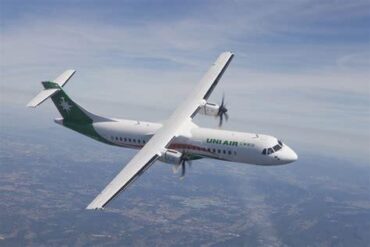
ATR’s broader 2025 performance reinforces its strategic credibility. Major orders from Air Algérie (16 ATR 72-600s) and UNI Air (19 ATR 72-600s) accounted for a significant portion of its intake. These commitments underline global confidence in the platform.
The delivery of Canada’s first ATR 72-600 to Rise Air marked another milestone, expanding North American presence beyond the United States. Additionally, over 90 second-hand ATR transactions in 2025 reflect strong residual value and market liquidity—critical indicators for airline CFOs evaluating fleet investments.
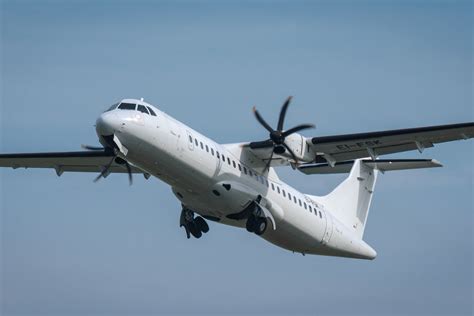
While delivery rates lagged initial targets, the backlog exceeding 160 aircraft provides revenue visibility. The planned production ramp-up in 2026 aims to convert that backlog into tangible fleet expansion.
Rebuilding Connectivity as Strategy, Not Slogan
ATR’s American ambition is neither speculative nor sentimental. It rests on converging realities: the retirement of 50-seat jets, the erosion of short-haul routes, rising environmental scrutiny, and a renewed focus on network profitability.
The central claim is bold yet pragmatic: regional connectivity was not eliminated by lack of demand, but by mismatched aircraft economics. If that assessment holds true, the reintroduction of efficient turboprops could reopen dozens—perhaps hundreds—of city pairs.
The success of this strategy will depend on airline willingness to challenge entrenched perceptions about propeller aircraft. Modern turboprops are quieter, more comfortable, and technologically advanced compared to their predecessors. Passenger acceptance, once a concern, may prove secondary to convenience and price.
In this context, ATR’s “American Dream” is not about dominating headlines. It is about methodically restoring links between communities that once relied on air service as an economic lifeline. If executed effectively, the result will not simply be aircraft sales—it will be the revival of a regional aviation ecosystem that balances efficiency, sustainability, and accessibility.
The next decade will reveal whether turboprops can reclaim their place in the United States. The economic logic is compelling. The fleet replacement cycle is imminent. And for ATR, the runway toward renewed American connectivity is finally clear.