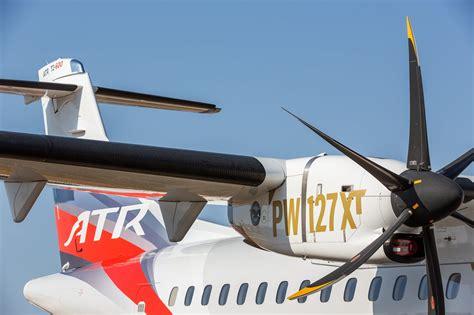
The Genesis of a Regional Aviation Powerhouse
ATR—short for Avions de Transport Régional or Aerei da Trasporto Regionale—was born in 1981 from a strategic partnership between two industrial giants: France’s Aérospatiale (now part of Airbus) and Italy’s Aeritalia (now integrated into Leonardo). From its headquarters in Blagnac, France, ATR has grown into the world’s leading manufacturer of regional turboprop aircraft, with a fleet of over 1,700 aircraft delivered to more than 200 operators across the globe. With a reported US$1.2 billion in revenue in 2023, ATR’s trajectory illustrates the enduring strength of turboprop technology in short-haul regional aviation.

The company’s success stems from its focused design philosophy: efficient, reliable aircraft optimized for short takeoff and landing (STOL) performance, low operating costs, and exceptional versatility in rugged and remote environments.
Strategic Manufacturing Backbone
ATR aircraft are the result of a distributed European manufacturing ecosystem. The fuselage and tail sections are produced by Leonardo in Pomigliano d’Arco, Italy, while the wings come from Sogerma, an Airbus subsidiary, in Bordeaux, France. Final assembly, testing, and certification take place at ATR’s Toulouse facility, the nerve center where design precision and customer customization converge before delivery.
This modular approach to manufacturing not only ensures high quality but also leverages the industrial strengths of both parent companies. With Airbus and Leonardo providing advanced aerostructures, ATR benefits from continual technological transfer and supply chain synergy.
Evolution Through the Decades
1980s: Pioneering Regional Connectivity
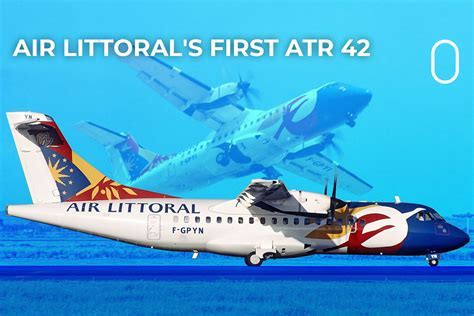
ATR’s story began with early feasibility studies labeled AS 35 and AIT 230, culminating in the landmark November 1981 cooperation agreement. The ATR 42-200 made its first flight on August 16, 1984, achieving certification in September 1985. This marked the birth of a new regional workhorse. Its first delivery, the ATR 42-300, went to Air Littoral on December 3, 1985.
By January 1986, the larger ATR 72 was launched, reflecting market demand for increased capacity. The ATR family quickly gained traction: 200 deliveries were completed by 1988, and by September 1989, ATR had logged its 400th aircraft sale.
1990s: Incremental Innovation and Market Expansion
The 1990s were characterized by performance improvements and fleet growth. The ATR 42-320 introduced the more powerful PW121 engines, while the −300QC variant supported quick-change passenger-to-cargo missions. The ATR 42-500 debuted in 1994, offering a quieter cabin and improved short-field performance. It was certified in July 1995, and deliveries commenced that October.
By 1997, the 500th ATR aircraft had been delivered to American Eagle, underlining ATR’s global reach, particularly in North American regional markets.
2000s: Consolidation and the Launch of the −600 Series
ATR entered the new millennium with its 600th delivery in April 2000. In 2001, its parent companies merged their regional airliner operations under ATR, streamlining governance and enhancing industrial integration. The company also achieved ISO 9001-2000 and EN/AS/JISQ 9100 certification in 2003, further solidifying its reputation for quality.
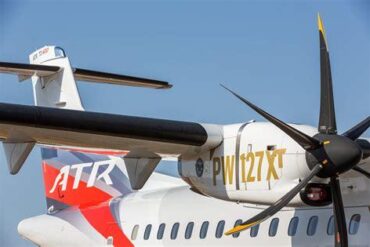
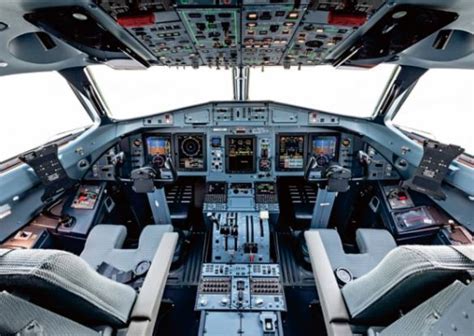
The major turning point came in 2007 with the launch of the ATR −600 series, featuring a glass cockpit, improved avionics, and Pratt & Whitney Canada PW127M engines. Its first flight occurred on March 4, 2010, ushering in a new era of digitalized flight decks and increased operational efficiency.
2010s: Dominating the Turboprop Segment
By 2010, ATR had delivered its 900th aircraft, and two years later, the 1,000th unit went to Air Nostrum. A landmark came in 2015 when ATR signed its 1,500th contract, further cementing its role as a market leader with over 75% share of the global turboprop segment.
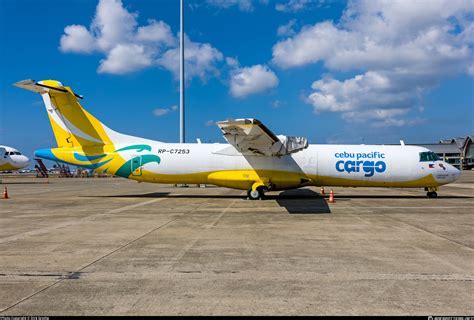
Under the leadership of Christian Scherer (appointed CEO in 2016), ATR introduced new high-density configurations such as the ATR 72-600 High Capacity, delivered to Cebu Pacific. Environmental leadership was also on display: Sweden’s BRA conducted the first ATR biofuel flight on February 1, 2017.
This period also marked growing momentum in the cargo sector, as FedEx’s order backlog helped ATR maintain a production rate of around 80 aircraft annually.
2020s: Green Ambitions and Strategic Realignments
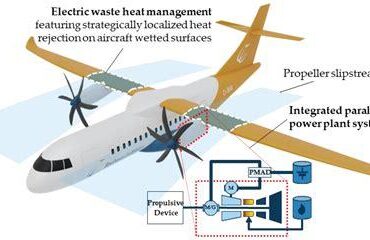
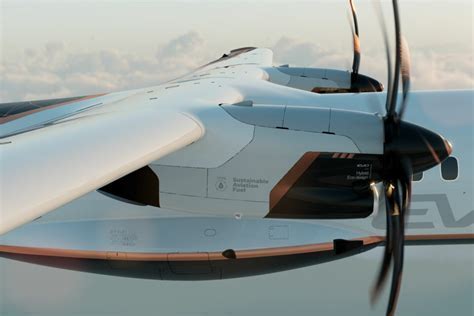
Facing increasing pressure to decarbonize, ATR announced in May 2022 its study of the hybrid-electric “Evo” variant, targeting a 20% reduction in fuel burn and compatibility with 100% sustainable aviation fuel (SAF). This ambition became reality on June 21, 2022, with a 100% SAF-powered ATR flight, demonstrating technical maturity and future readiness.
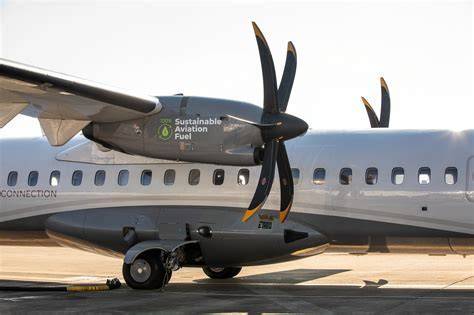
Leadership transitioned again in September 2022, with Nathalie Tarnaud Laude taking the helm. Under her tenure, the company made a decisive move: canceling the proposed STOL (Short Take-Off and Landing) variant in 2024 to refocus on refining and expanding the performance of its core ATR 42/72 family.
ATR 42-600 and ATR 72-600: The Heart of the Product Line
Today, ATR’s lineup is anchored by two primary models:
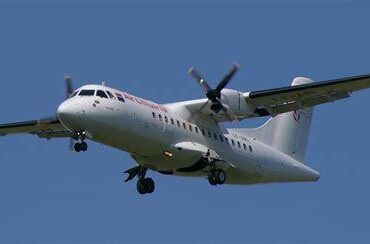
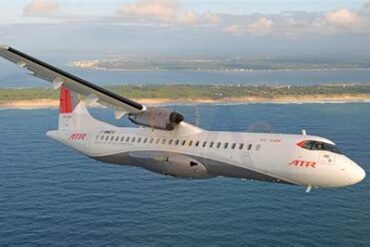
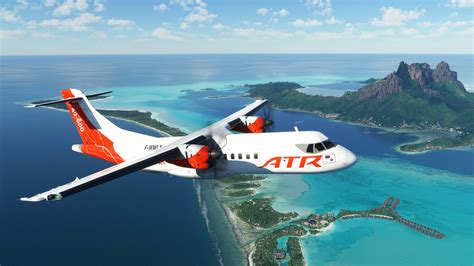
- ATR 42-600: Featuring 48 seats, a 22.67 m fuselage, and PW127M engines, it is optimized for routes with lower demand and challenging terrain.
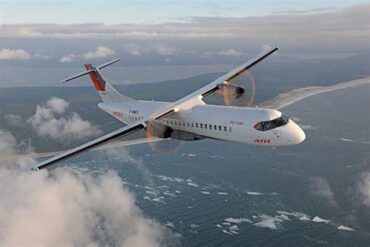
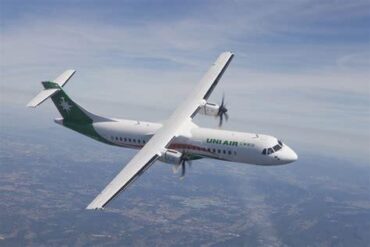
- ATR 72-600: With seating for up to 70 passengers, a 27.17 m fuselage, and enhanced range and payload capacity, this variant dominates high-frequency regional routes across Asia, Africa, and Europe.
Both aircraft offer superior fuel efficiency, low noise emissions, and the ability to operate from unprepared runways—a critical feature for emerging markets.
Concepts That Never Flew
Over the years, ATR has explored a number of intriguing but ultimately shelved aircraft concepts:
- ATR 52/52C: A cargo-focused variant with a rear-loading ramp, designed for military and humanitarian operations.
- ATR 82 and ATR 92: Concepts aimed at creating 86–105 seat turboprops or turbofans for medium-haul routes.
- Between 2007 and 2017, ATR conducted feasibility studies on a stretched 90-seat aircraft and clean-sheet designs, but rising R&D costs and market uncertainty led to their cancellation in 2018.
These explorations reflect ATR’s ongoing dialogue with regional carriers, but also underscore its strategic discipline in sticking with proven designs.
A Vision Rooted in Regionalism and Sustainability
ATR’s unwavering commitment to regional air mobility, environmental stewardship, and industrial excellence has allowed it to remain the dominant turboprop manufacturer in the world. While other OEMs have exited or retreated from the regional turboprop space, ATR continues to double down on innovation, lean manufacturing, and hybrid propulsion technologies.
As the world pivots toward net-zero aviation, ATR is uniquely positioned to provide climate-conscious connectivity to remote and underserved communities. With plans to introduce hybrid-electric aircraft by 2030 and a legacy of over four decades of operational success, ATR’s influence is set to extend far beyond the runways of today.
In a future where sustainability and accessibility are paramount, ATR is not just surviving—it is leading.