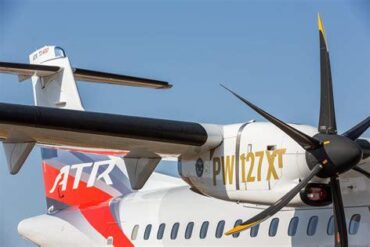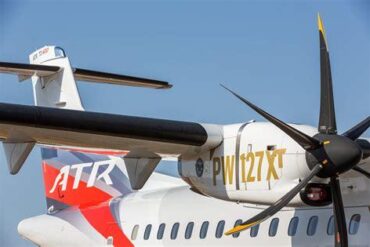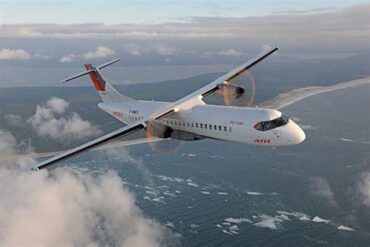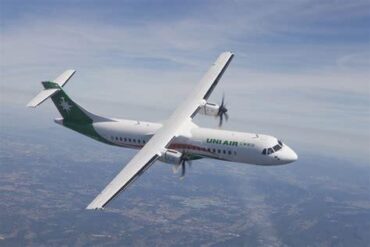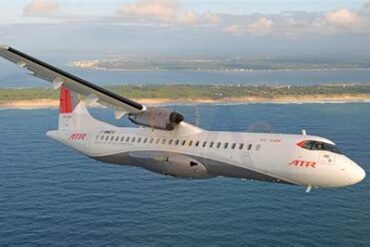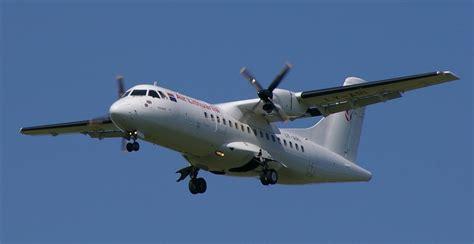
The ATR 42, a twin-engine turboprop regional airliner, emerged from a bold Franco-Italian partnership between Aérospatiale of France and Aeritalia of Italy. It was a pioneering response to the rising demand for short-haul, fuel-efficient aircraft in the early 1980s. First flown on 16 August 1984 and introduced into commercial service by Air Littoral on 3 December 1985, the aircraft marked the beginning of a new era in regional connectivity.
The Vision Behind the ATR 42
The formation of ATR (Avions de Transport Régional) on 4 November 1981 unified two conceptual aircraft designs — the AS 35 from Aérospatiale and the AIT 230 from Aeritalia. This joint venture aimed to offer a turboprop that could undercut jet rivals on operating cost and fuel burn while maintaining comparable acquisition pricing. The result was a 42-seat high-wing regional aircraft that burned approximately 430 kg of fuel per 200 nautical miles, significantly outperforming the typical 790 kg burn rate of its contemporaries.
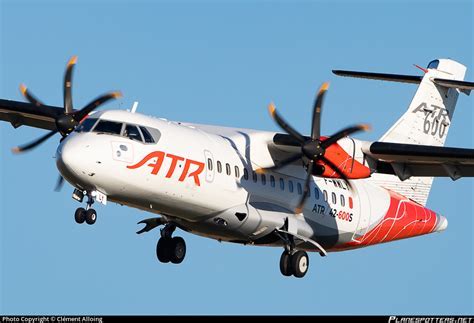
The early strategic planning included ambitions for a 58-seat stretch, which eventually materialized in the ATR 72, a larger sibling of the ATR 42. The original ATR 42 design was not merely a proof of concept but a carefully engineered aircraft that could serve diverse geographies, from mountainous routes to tropical islands.
Evolution Through Technical Refinement
The ATR 42 family has undergone several evolutionary leaps since its introduction. The original ATR 42-300, certified by French and Italian authorities in September 1985, laid the groundwork for future enhancements. The -320 variant introduced Pratt & Whitney Canada PW121 engines, offering better hot-and-high performance. Quick-change versions, such as the ATR 42-300QC, added versatility by switching between passenger and cargo configurations.
However, the most defining leap came with the ATR 42-500, launched in June 1993. This model brought a suite of upgrades including PW127 engines, six-bladed composite propellers, reduced cabin noise, and refined interiors. Certification came in July 1995, with the first delivery made on 31 October 1995.
Later, the ATR 42-600, introduced in 2012, marked a generational upgrade. Featuring a fully digital glass cockpit, enhanced avionics, and the PW127M engines with a boost function, the -600 became the modern standard for short-haul turboprops. Production capacity scaled up rapidly, with facilities capable of producing over 100 aircraft annually by 2015, supporting a backlog exceeding 300 orders.
A niche offshoot, the ATR 42-600S, was conceived for Short Takeoff and Landing (STOL) operations on runways as short as 800 meters. It successfully flew in May 2022, but the program was discontinued in November 2024 due to shifting market priorities.
Engineering and Design Highlights
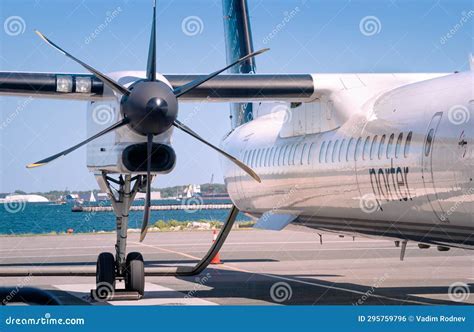
Every aspect of the ATR 42 reflects an efficient, utilitarian design philosophy. The aircraft features a straight high-mounted wing and a T-tail, improving ground clearance and short-field performance. The main landing gear is housed in fuselage fairings, which reduces drag and allows for easy maintenance.
Notably, the ATR 42 does not have an Auxiliary Power Unit (APU). Instead, it uses a propeller brake on the starboard engine, allowing it to function as a ground power unit while the aircraft is on the apron — a practical solution that reduces weight and complexity.
The cabin is 2.57 meters wide, allowing for a four-abreast seating configuration. With 48 seats pitched at 30 inches, the aircraft provides a compact yet serviceable layout ideal for hour-long hops. The wing area spans 54.5 square meters, with a maximum takeoff weight (MTOW) of 18,600 kg and a cruising speed of around 300 knots.
Fuel economy remains a hallmark feature, achieving 1.46 kg/km per seat, making it one of the most economical regional aircraft in operation.
A Proven Workhorse Across Continents
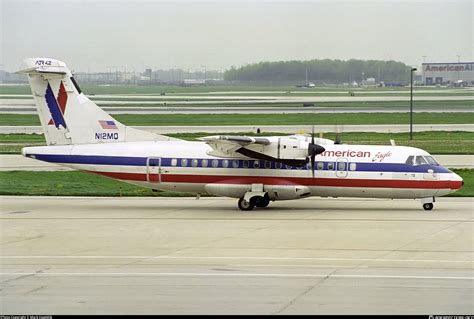
Operational history reveals a robust and adaptable aircraft. Major early orders, such as American Eagle’s purchase of 41 ATR 42s and 59 ATR 72s in 1990, and Texas Air’s acquisition of 50 ATR 42-300s in 1988, propelled global deployment. By 1988, the 100th ATR aircraft had been delivered to Trans World Express, and the 500th ATR was delivered in September 1997.
By the year 2000, ATR 42s had completed over 10 million flights, transporting an estimated 450 million passengers. Orders surged, with a record 113 units sold in 2007 and another high in 2011. By 2013, ATR had secured 48% of the 50–90 seat regional aircraft market. The aircraft found particular favor in Africa, Latin America, and island nations, where short, rugged runways and high frequency routes were common.
Freighter Conversions and Market Longevity
As early models aged, several were converted for cargo operations. Firms like Aeronavali, M7 Aerospace, and Aeroconseil developed freighter conversions — both bulk and Unit Load Device (ULD) compatible. By 2012, more than 20% of first-generation ATR 42s had been converted to freighters, prolonging their operational life by another decade.
Notably, the ATR 42 is still being integrated into new fleets. In January 2017, Japan Air Commuter became the first Japanese operator of the -600. Silver Airways in the U.S. followed in April 2019, reinforcing the aircraft’s viability in regulated markets. Buddha Air of Nepal retired its last ATR 42-320 in September 2024, having flown over 70,000 flight cycles — a testament to the platform’s durability.
Safety Record and High-Profile Incidents
While generally considered safe, the ATR 42 has been involved in 47 accidents, including 34 hull losses and 276 fatalities. Several events have shaped its safety narrative:
- ATI Flight 460 crashed on 15 October 1987, killing 37 people.
- RAM Flight 630 spiraled out of control in 1994, causing 44 deaths.
- Conviasa Flight 2350, in 2010, claimed 17 lives in Venezuela.
- Trigana Air Service Flight 267 went down in Indonesia in 2015, killing all 54 on board.
- PIA Flight 661 crashed in 2016 due to engine failure, resulting in 47 fatalities.
- Precision Air Flight 494, tragically crashed into Lake Victoria in November 2022, with 19 deaths.
These incidents, while devastating, have led to procedural and technical improvements that enhanced the safety profile of later ATR models.
Specifications of the ATR 42-600
- Crew: 2
- Passenger Capacity: 48 seats @ 30-inch pitch
- Dimensions: 22.67 m (length), 24.57 m (wingspan), 7.59 m (height)
- Empty Weight: ~11,750 kg
- Maximum Takeoff Weight (MTOW): 18,600 kg
- Engines: 2 × Pratt & Whitney PW127M, 2,400 shp (boosted to 2,750 shp)
- Cruising Speed: 300 knots (556 km/h)
- Range: Approximately 680–794 nautical miles
- Fuel Capacity: 4,500 kg
Conclusion: A Lasting Legacy in Regional Aviation
The ATR 42 has carved a unique space in the history of commercial aviation. As a fuel-efficient, rugged, and versatile aircraft, it has fulfilled the mission it was built for — connecting underserved regions, supporting economies with limited infrastructure, and operating where jets could not. Its development legacy, operational success, and global footprint ensure that the ATR 42 remains an enduring symbol of intelligent aircraft design in the regional turboprop segment.