Regional aviation is entering a decisive new chapter, and at the center of this shift is a machine many once dismissed as outdated: the turboprop. For decades, sleek regional jets dominated short-haul routes, promising speed and modernity. Yet beneath that polished image, economics, infrastructure realities, and environmental pressures have been quietly rewriting the rules. Today, turboprop aircraft are no longer relics of a bygone era—they are rapidly becoming the most rational and forward-looking solution for regional connectivity.
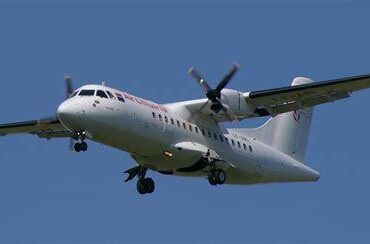
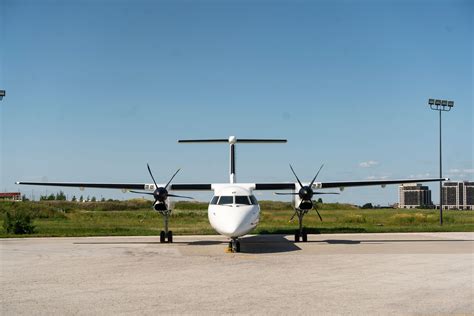
The renewed interest in turboprops is not driven by nostalgia. It is driven by hard numbers, operational efficiency, and a growing urgency to reduce aviation’s environmental footprint. Aircraft like the De Havilland Dash 8-400, ATR 42, and the next-generation Deutsche Aircraft D328eco are proving that propeller-driven aviation can outperform jets where it matters most: on short, high-frequency routes that define regional travel.
In markets where margins are thin and competition is relentless, airlines are rediscovering a simple truth: the fastest aircraft is not always the most profitable. On routes of 200 to 300 miles, turboprops deliver nearly identical travel times while dramatically reducing fuel burn, maintenance costs, and operational complexity. That combination is not just attractive—it is transformative.
Why Turboprops Outperform Jets on Short-Haul Routes
The advantage of turboprops begins with physics. Propellers are inherently more efficient at lower speeds and altitudes—the exact conditions that define regional flights. While jet engines excel at high-speed cruising over long distances, they are far less efficient during the phases that dominate short trips: taxi, climb, and descent.
On a typical regional route, the cruise phase may last only fifteen minutes. That leaves little opportunity for jets like the Embraer E175 or CRJ900 to leverage their speed advantage. The result is almost comical: a jet might arrive only five to ten minutes earlier than a turboprop while consuming significantly more fuel.
This marginal time saving comes at a steep cost. Turboprops offer:
- Lower fuel consumption, often reducing burn by 30–40% on short sectors
- Reduced acquisition and leasing costs, easing financial pressure on airlines
- Simplified maintenance, thanks to less complex engine systems
- Lower landing fees, enabled by lighter airframes
These factors compound into a decisive economic edge. In an industry where profitability can hinge on a few percentage points, turboprops are not just competitive—they are often superior.
Accessing Airports Jets Cannot Reach
Another critical advantage lies in versatility. Turboprops are engineered to operate from shorter runways, including those at remote, mountainous, or island airports. This capability opens routes that jets simply cannot serve economically—or at all.
For airlines, this means more than operational flexibility. It means unlocking entirely new markets. Smaller airports often charge lower fees and face less congestion, allowing for quicker turnaround times and improved schedule reliability.
For passengers, the benefits are equally tangible. Instead of driving hours to a major hub, travelers can depart from local airfields, dramatically reducing total journey time. This is particularly impactful in regions where geography complicates ground transportation, such as archipelagos or sparsely populated territories.
The Economic Backbone of Regional Aviation
In countries like the United States, regional aviation plays a foundational role in the broader transportation ecosystem. Hundreds of smaller communities depend on air service to maintain access to major economic centers. Without these connections, entire regions risk isolation.
Programs like American Eagle, Delta Connection, and United Express demonstrate how large carriers rely on regional networks to feed passengers into their hubs. This system not only sustains airline profitability but also supports a vast economic web.
Regional aviation contributes an estimated $100 billion annually to the U.S. economy and supports over one million jobs. These figures underscore a crucial point: regional aircraft are not peripheral—they are central to national mobility and economic resilience.
Turboprops enhance this system by making marginal routes viable again. As older regional jets retire and operating costs climb, turboprops provide a sustainable path forward, ensuring that smaller communities remain connected.
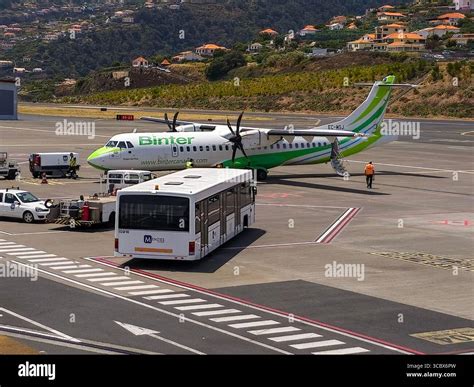
Global Demand: Where Turboprops Never Went Away
While the United States leaned heavily into regional jets, much of the world never abandoned turboprops. In fact, in regions defined by challenging geography and limited infrastructure, they have remained indispensable.
In Canada, vast distances and sparse populations make turboprops the backbone of regional travel. Airlines like Porter Airlines and WestJet Encore rely extensively on the Dash 8-400 to link remote communities with urban centers.
Across Southeast Asia, the case is even more compelling. Countries like Indonesia, with over 17,000 islands, depend on turboprops to sustain domestic connectivity. Similarly, the Philippines uses these aircraft to bridge fragmented geography where building extensive airport infrastructure is impractical.
Africa presents another stronghold. Many airports are located in “hot and high” environments—conditions that favor turboprop performance. Their ability to operate reliably under such constraints makes them the preferred choice for numerous African carriers.
Even in Europe, where infrastructure is more developed, turboprops thrive in niche but critical roles. Airlines like Widerøe in Norway and Loganair in Scotland use them to navigate rugged terrain and connect isolated communities. In Greece, Olympic Air depends on turboprops for island-hopping routes that would be inefficient for jets.
The New Generation: Smarter, Quieter, Greener
Modern turboprops bear little resemblance to their predecessors. Advances in aerodynamics, materials, and avionics have transformed them into sophisticated, passenger-friendly aircraft.
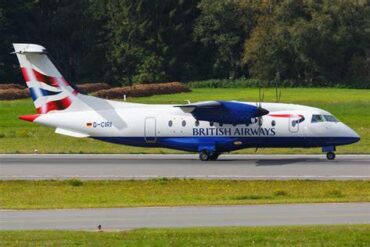
The Deutsche Aircraft D328eco exemplifies this evolution. Built on the legacy of the Dornier 328, it combines speed, efficiency, and environmental performance in a compact platform. With cruising speeds approaching 300 miles per hour, it challenges the outdated perception that turboprops are significantly slower than jets.
Inside the cabin, improvements are equally striking. Enhanced pressurization systems, reduced noise levels, and redesigned interiors deliver a passenger experience that rivals—and sometimes surpasses—regional jets.
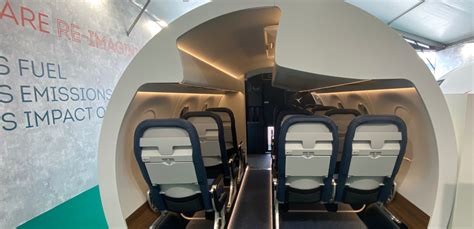
The aircraft’s technical features further reinforce its appeal:
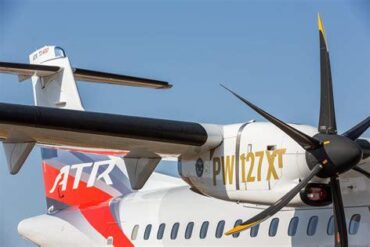
- Powered by the Pratt & Whitney Canada PW127XT engine, optimized for efficiency
- Equipped with Garmin G5000 avionics, offering advanced flight management capabilities
- Designed for 100% Sustainable Aviation Fuel (SAF) compatibility
- Engineered for low trip costs, making it one of the most economical aircraft in its class
These innovations position the D328eco as more than just a replacement for aging fleets—it is a blueprint for the future of regional aviation.
Sustainability: The Driving Force Behind the Comeback
Environmental pressure is no longer a distant concern—it is an immediate operational constraint. Airlines face increasing regulatory scrutiny and public demand to reduce emissions. On short-haul routes, turboprops offer one of the most effective solutions available today.
By consuming significantly less fuel, turboprops produce fewer carbon emissions per passenger. When combined with SAF compatibility, their environmental advantage becomes even more pronounced.
This is not merely a marketing narrative. It is a strategic imperative. Airlines that fail to adapt risk falling behind both regulators and competitors. Turboprops provide a practical, scalable pathway to greener operations without sacrificing connectivity.
Military Validation: Proven in Extreme Conditions
The credibility of turboprop platforms extends beyond commercial aviation. The C-146A Wolfhound, a military variant of the Dornier 328, has demonstrated exceptional performance in demanding operational environments.
Used by the U.S. Air Force Special Operations Command, the aircraft is tasked with transporting personnel and cargo into semi-prepared airfields across multiple continents. Its reliability, flexibility, and rugged design have made it indispensable for missions ranging from troop deployment to medical evacuation.
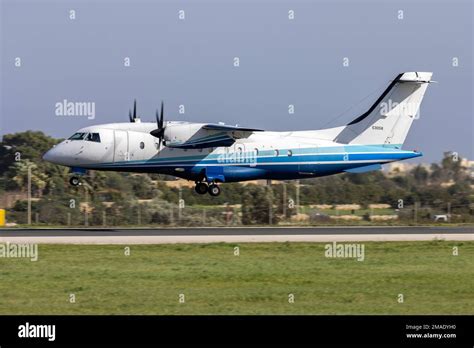
The Wolfhound’s capabilities highlight a critical advantage: turboprops are not just efficient—they are resilient. Their ability to operate in austere conditions translates directly into commercial benefits, particularly for routes serving remote or underserved regions.
The Competitive Landscape: Jets vs. Turboprops Revisited
Regional jets still dominate market share, but their position is no longer unchallenged. As fleets age and operating costs rise, airlines are reevaluating their strategies. The question is no longer whether turboprops can compete—it is where they outperform.
The answer is increasingly clear: short-haul, low-density routes. Here, turboprops deliver superior economics without meaningful sacrifices in travel time. As a result, they are poised to reclaim segments of the market once ceded to jets.
Manufacturers are responding accordingly. Investment in new turboprop designs is accelerating, signaling confidence in long-term demand. At the same time, airlines are placing renewed emphasis on fleet diversification, recognizing that a one-size-fits-all approach is no longer viable.
A Future Defined by Practicality and Precision
The resurgence of turboprop aircraft is not a temporary trend—it is a structural shift. As aviation confronts the realities of cost, sustainability, and infrastructure limitations, turboprops offer a solution grounded in practicality.
They are not trying to outpace jets. They are redefining what efficiency means.
By aligning aircraft capabilities with route requirements, airlines can optimize performance, reduce costs, and expand connectivity. In doing so, they are rediscovering the value of an aircraft type that was never truly obsolete—only overlooked.
The skies ahead will not belong exclusively to faster or larger aircraft. They will belong to those that are smarter, more adaptable, and economically aligned with the demands of modern travel. Turboprops, once underestimated, are now leading that transformation with quiet confidence—and a distinctive hum that signals their return.