Boeing Finalizes Strategic Reacquisition of Spirit AeroSystems
In a landmark deal that reshapes the commercial aviation supply chain, Boeing has officially completed its $4.7 billion acquisition of Spirit AeroSystems, reclaiming core manufacturing capabilities and tightening its grip on critical fuselage production. This acquisition, finalized after months of regulatory navigation and intense industry speculation, places Boeing at the helm of operations it once spun off two decades ago.
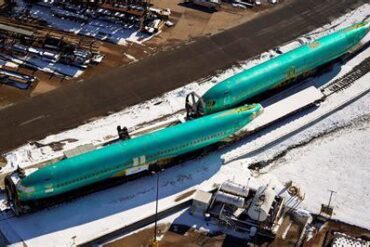
Spirit AeroSystems, once the largest independent supplier of aerostructures globally, had long been central to the fabrication of key Boeing aircraft parts—including fuselages for the 737, 767, 777, and 787 programs. Now, with the acquisition complete, these vital manufacturing operations return to Boeing’s direct oversight, marking a decisive shift toward increased vertical integration and supply chain stabilization.
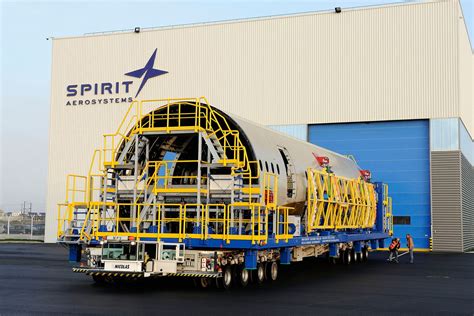
Reunification of Manufacturing Powerhouses
This strategic move underscores Boeing’s renewed commitment to quality control, safety, and production efficiency amid ongoing scrutiny over part defects and delivery delays. By bringing Spirit’s Boeing-related operations in-house, the aerospace giant consolidates one of its most vital supplier relationships, effectively turning a dependency into a core capability.
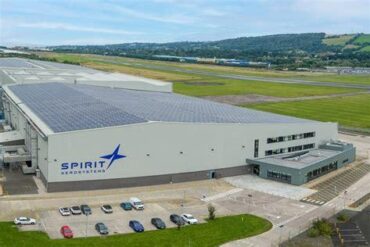
The reacquired assets include facilities in Wichita, Dallas, Tulsa, and Prestwick, where over 15,000 employees now transition under Boeing’s employment. These sites are instrumental in producing the large composite and metal structures that define Boeing’s commercial jetliners. The decision reflects a pragmatic shift from outsourcing to in-sourcing, driven by the need for consistent quality and streamlined production workflows.
Meanwhile, Spirit AeroSystems’ operations focused on Airbus aerostructures have been transferred to Airbus, ensuring a clean operational split. The European plane-maker now assumes control over sites in St. Nazaire (France), Casablanca (Morocco), Belfast (Northern Ireland), and Kingston (North Carolina), reflecting a mutually beneficial carve-up of Spirit’s extensive footprint.
Spirit Defense: An Independent Division Emerges
A noteworthy development in the acquisition is the establishment of Spirit Defense, a new, independent business entity carved out to focus on military and defense-related manufacturing. While Boeing absorbs the commercial operations, Spirit Defense will continue operating autonomously, ensuring uninterrupted support for existing contracts and defense clients.
Boeing’s decision to allow this division to operate independently signals its strategic focus on commercial aircraft and aftermarket services, while simultaneously preserving defense expertise and capacity. This structure also reflects sensitivity to defense customers and regulatory frameworks that often require operational independence from commercial entities.
The Belfast Subsidiary: Short Brothers Revived
One of the most historically significant aspects of this transaction is the future of Spirit’s Northern Ireland operations. The Belfast-based Short Brothers, one of the world’s oldest aerospace manufacturers, will now operate as an independent subsidiary of Boeing under the name “Short Brothers, a Boeing Company.” This move preserves a storied legacy while positioning it for future growth under Boeing’s stewardship.
The Belfast site’s expertise in wing technology, nacelles, and pylons aligns perfectly with Boeing’s long-term vision for advanced composite and metal aerostructure design. Its inclusion in Boeing’s network not only enhances capabilities but also strengthens the company’s footprint across Europe.
Supply Chain Stability and Production Resilience
One of the core motivations behind the reacquisition lies in resolving long-standing supply chain disruptions that have plagued Boeing’s commercial aircraft programs. Both Boeing and Airbus have provided financial support to Spirit in recent years, attempting to sustain operations amidst slowdowns in the 737 MAX and A350 programs. However, recurring quality issues and delivery inconsistencies forced a more permanent solution.
By internalizing Spirit’s Boeing-related work, the company seeks to gain tighter control over production timelines and part specifications. This could expedite aircraft deliveries, minimize rework cycles, and significantly improve downstream integration. The move aligns with Boeing’s ambition to rebuild trust with regulators, airlines, and the flying public after years of turbulence.
A Pivotal Moment for Boeing’s Future
Kelly Ortberg, Boeing’s President and CEO, described the acquisition as a “pivotal moment in Boeing’s history.” The deal is more than a structural change—it is a signal of Boeing’s broader strategy to reassert manufacturing dominance and move toward fully integrated design-to-delivery capabilities.
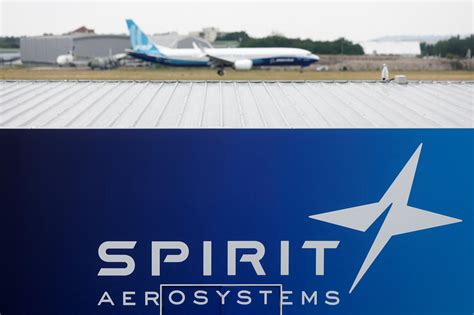
He emphasized that the integration effort would prioritize workforce stability, product excellence, and a seamless transition across all active programs. The addition of Spirit’s experienced talent pool is seen as a key asset, with Boeing now managing one of the largest aerospace workforces in the world under a unified corporate structure.
Political and Economic Implications
The acquisition has drawn praise from political leaders, particularly in Kansas where Spirit’s Wichita facility represents a cornerstone of the regional economy. Governor Laura Kelly noted that Kansas’ aerospace leadership “now stretches beyond its borders”, reinforcing the state’s role as a hub for advanced manufacturing and innovation.
Economically, the $4.7 billion deal will also likely have ripple effects across global aviation finance, as Boeing realigns supplier contracts, reissues internal performance standards, and reshapes long-term investment strategies. This integration could serve as a bellwether for how other aerospace giants respond to supply chain fragility in the post-pandemic world.
Historical Closure to a Two-Decade Separation
Ironically, Spirit AeroSystems began as part of Boeing until it was spun off in 2005 to private equity firm Onex Corporation for $900 million and $300 million in debt. Initially operating under the name Mid-Western Aircraft Systems, it quickly rose to become a vital global supplier. However, the burdens of financial losses and quality lapses in recent years pushed Boeing to reconsider the merits of that separation.
The decision to reacquire Spirit, announced in early 2024, now comes full circle—closing a two-decade loop with a high-stakes, high-value transaction aimed at repairing gaps left by past outsourcing strategies.
The Road Ahead: Integration, Innovation, and Impact
While the ink is dry on the deal, the work ahead is just beginning. Boeing faces the colossal task of integrating complex operations across multiple continents, harmonizing standards, and delivering on its promise of improved output and safety.
Yet, with full ownership of its most critical manufacturing functions, Boeing is better positioned to weather future disruptions, scale innovation, and accelerate the rollout of new-generation aircraft. For the aviation industry, this deal is not just a corporate reshuffle—it is a redefinition of how planes will be built, inspected, and delivered in the decades to come.