Airbus is set to secure nearly 3,000 aerospace jobs across the United Kingdom following a landmark carve-out deal with Spirit AeroSystems. This strategic acquisition, announced in early December 2025, will see the European aerospace giant absorb vital manufacturing sites in Belfast, Northern Ireland, and Prestwick, Scotland, in a move that not only strengthens Airbus’s supply chain but also safeguards industrial heritage and national capability.
The agreement unfolds as part of a broader realignment tied to Boeing’s acquisition of Spirit AeroSystems, a company that has long supplied key aerostructures to both global aircraft manufacturers. Amid regulatory pressures and fierce market competition, the carve-up of Spirit’s operations has enabled Airbus to take control of plants critical to its programs—while avoiding the disruption that could arise from its direct competitor acquiring those same assets.
Airbus’s Commitment to UK Aerospace Manufacturing
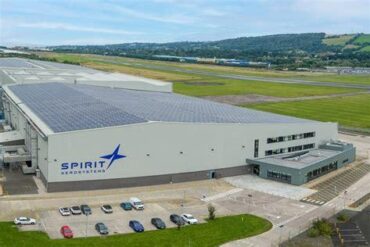
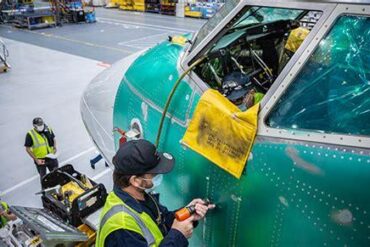
Under the terms of the deal, Airbus will assume control of approximately 1,550 employees in Belfast—where the company will retain operations dedicated to A220 wing production—and 1,200 staff in Prestwick, who manufacture wing-edge components for the A320 and A350 programs. These facilities, once operating under uncertain short-term arrangements, now stand at the core of Airbus’s long-term industrial strategy.
The Belfast site carries historical weight as it traces its roots back to the famed Short Brothers Aerospace Company, making this transition a symbolic continuity of legacy aerospace manufacturing. The Prestwick facility, meanwhile, has carved out a reputation for its precision engineering and role in high-volume Airbus wing production.
In conjunction with the asset transfer, Spirit AeroSystems will pay Airbus $439 million to offset losses associated with these operations. The deal reflects a pragmatic restructuring effort that balances financial sustainability with industrial continuity.
The Strategic Rationale Behind the Carve-Out
The origins of the transaction stem from Boeing’s 2024 decision to reacquire Spirit AeroSystems—an entity it had divested in 2005 for $4.7 billion. Due to regulatory and competitive dynamics, Airbus needed to retain control over operations tied directly to its aircraft lines to ensure an uninterrupted production pipeline.
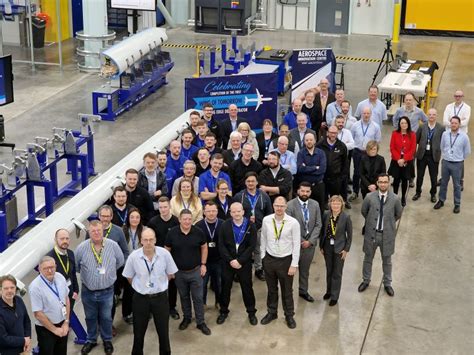
This joint solution between Airbus and Boeing demonstrates collaborative competition, a rare but necessary maneuver in high-stakes aerospace. While Boeing regains control of Spirit’s U.S.-based facilities servicing its own programs, Airbus is shoring up its own global manufacturing footprint to reinforce autonomy and minimize external dependencies.
Notably, the acquisition expands Airbus’s UK workforce to an estimated 14,000 employees, reaffirming Britain’s strategic role in Airbus’s global supply chain. The Belfast and Prestwick sites are expected to receive new investment, potentially evolving into centers of excellence for next-generation wing design and production.
A Global Consolidation Strategy
Airbus’s acquisition goes far beyond the UK. The deal includes international facilities that bolster its production infrastructure:
- Casablanca, Morocco – ramping up A321 and A220 component output.
- Kinston, North Carolina & Wichita, Kansas, USA – focused on A350 fuselage sections and A220 pylons.
- St. Nazaire, France – dedicated to A350 assemblies.
- Potential future inclusion of Subang, Malaysia, if a third-party buyer is not found.
To ease the transition, Airbus has also provided Spirit AeroSystems with non-interest-bearing credit lines of $200 million, ensuring continuity for its aircraft programs during this complex realignment.
Spirit AeroSystems: A Company Transformed
The carve-up of Spirit AeroSystems marks a defining moment in aerospace industry restructuring. As Boeing reabsorbs the portions relevant to its own aircraft lines and Airbus secures its supply needs, Spirit’s existence as an independent global supplier effectively comes to a close. Facilities not taken on by either giant are still under review, with Spirit indicating it is evaluating alternatives.
The split is emblematic of deeper forces at play in the aerospace industry: regulatory constraints, geopolitical considerations, and the ongoing demand for resilient, localized supply chains. The ability of Airbus and Boeing to collaborate tactically in the service of strategic independence reflects the complex interdependence at the heart of modern aerospace manufacturing.
What This Means for the Future of UK Aerospace
For the UK, this carve-out is more than a job-saving initiative—it’s a strategic recommitment to domestic aerospace capabilities. With investments anticipated in both engineering talent and advanced manufacturing technologies, Airbus’s growing UK presence promises to revitalize legacy sites and fuel innovation for years to come.
As global supply chains continue to face pressure, this deal stands as a model for intelligent corporate restructuring: one that protects workers, secures production continuity, and positions the aerospace sector for long-term resilience and growth.