Rolls-Royce’s dramatic revival has become one of the most closely watched corporate comebacks in modern British business, blending engineering heritage, financial discipline, and a high-stakes leadership gamble that appears to have paid off. Once battered by collapsing air travel, mounting debt, and operational complexity, the company has re-emerged as a profitable aerospace powerhouse riding the resurgence of global aviation. The rebound has not been a stroke of luck but the product of deliberate restructuring, tighter commercial terms, and a relentless focus on cash generation across its engine and services portfolio. As profits climbed and investors returned, the conversation shifted from survival to strategy, and from cost cutting to growth.
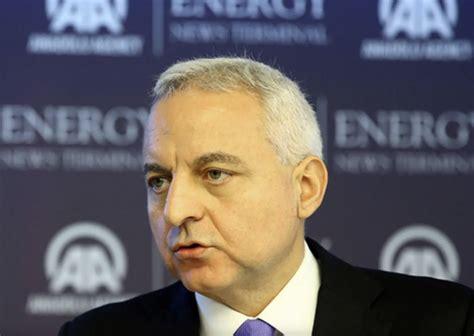
At the center of this transformation stands Chief Executive Tufan Erginbilgic, whose arrival in January 2023 marked a sharp break from Rolls-Royce’s cautious past. He reframed the company’s problems as existential rather than cyclical, treating inefficiency like a structural defect rather than a temporary bruise. By simplifying management layers, renegotiating contracts, and sharpening accountability, he accelerated a turnaround that many analysts previously believed would take far longer. The result has been a surge in earnings, stronger free cash flow, and a share price that has nearly doubled in little more than a year.
That success now carries a price tag that has ignited public debate: a potential $135 million (£100 million) long-term bonus tied largely to performance shares. Supporters see it as a reward for rescuing a national industrial icon, while critics argue it exemplifies excess in executive pay. The controversy reflects a broader tension in modern capitalism between incentivizing bold leadership and maintaining public trust, especially when thousands of workers have endured years of cost discipline.
Rolls-Royce Aerospace: The Real Engine of the Business
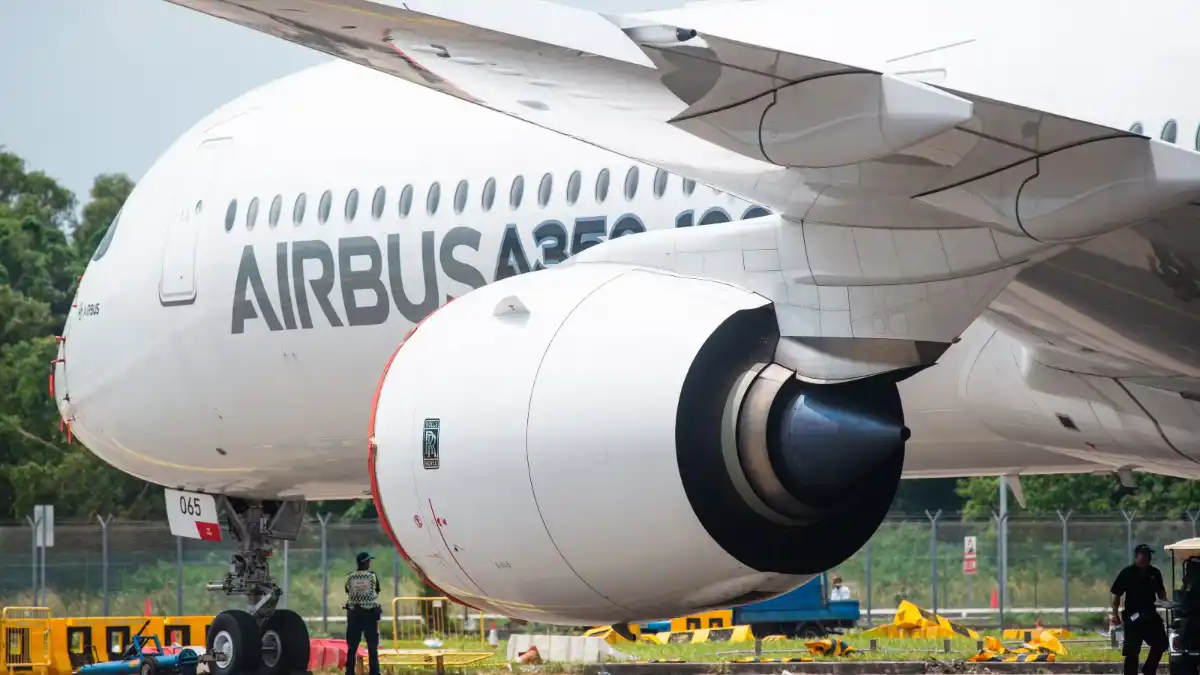
Although the Rolls-Royce name is globally associated with ultra-luxury cars, that business is legally and operationally separate, owned by BMW. The real economic core of Rolls-Royce Holdings PLC lies in aerospace and power systems, particularly commercial aircraft engines and their long-term servicing contracts. The company supplies propulsion systems to Boeing, Airbus, and a wide range of airlines, earning revenue not just from selling engines but from maintaining them over decades of flight.
This business model is crucial. Airlines typically pay Rolls-Royce based on “engine flying hours,” meaning revenue rises when planes are in the air and falls when fleets are grounded. When air travel booms, Rolls-Royce benefits disproportionately; when it collapses, the company suffers. This dynamic explains both the severity of its pandemic crisis and the strength of its recent recovery.
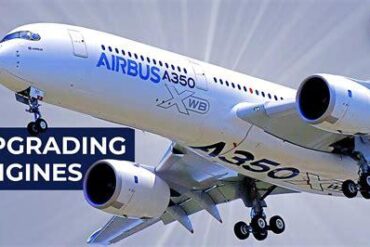
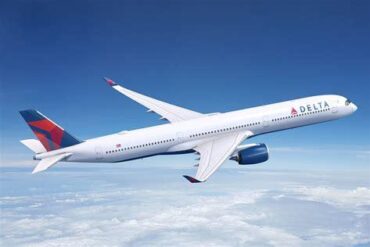
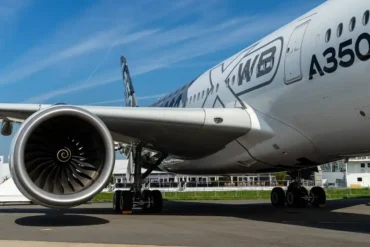
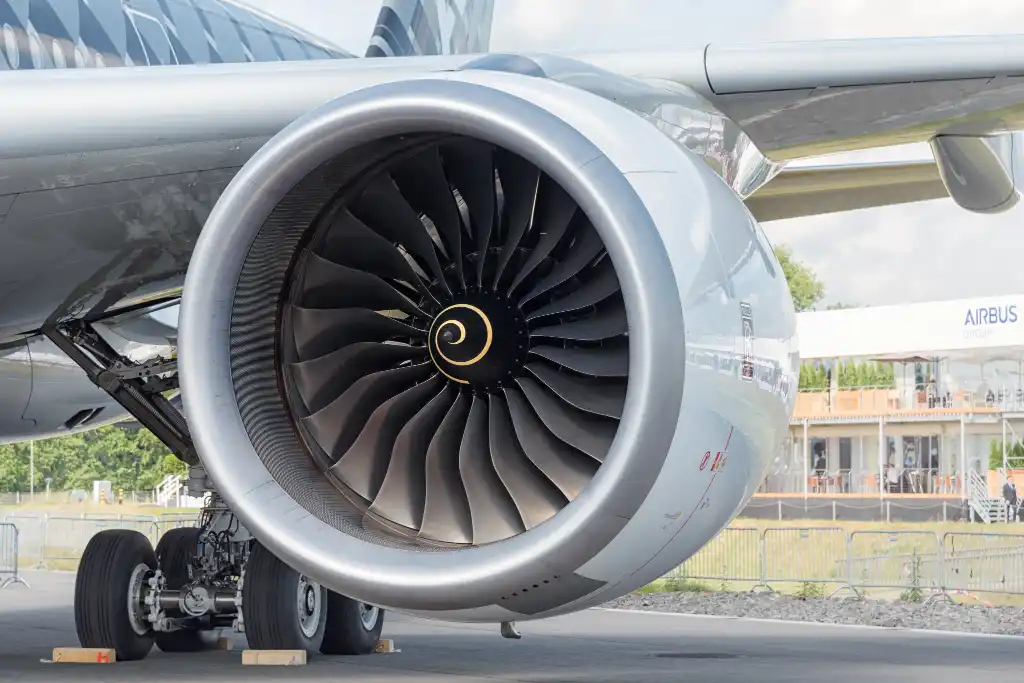
Historically, Rolls-Royce helped shape modern aviation. During the Second World War, its Merlin engine powered iconic aircraft such as the Spitfire and Hurricane, giving Britain a decisive edge in the skies. That legacy of precision engineering became a cultural touchstone for the brand and established a reputation that endures today. In the jet age, the RB211 pushed technological boundaries despite early setbacks, and the modern Trent family of engines now powers long-haul workhorses like the Airbus A350 and Boeing 787.
Today, Rolls-Royce competes head-to-head with Pratt & Whitney and General Electric in a highly concentrated market where reliability, fuel efficiency, and service economics matter more than headline horsepower. The company’s deep expertise in materials science, aerodynamics, and digital engine monitoring has helped it maintain a leading position despite periodic operational missteps.
Problems Before the Turnaround
Before 2023, Rolls-Royce was a company under severe strain. The COVID-19 pandemic caused global air travel to fall off a cliff, slashing engine flying hours and starving the company of its most profitable revenue stream. Unlike manufacturers that sell planes or cars outright, Rolls-Royce’s earnings are tightly linked to how often its engines operate, making it unusually vulnerable to aviation downturns.
Operational inefficiencies compounded the crisis. Complex organizational structures slowed decision-making, while legacy cost structures made it difficult to adapt quickly. Maintenance backlogs, supply chain disruptions, and engineering challenges added further pressure. At the same time, the company carried around £2 billion in net debt, limiting its financial flexibility just when it needed it most.
The pain was felt across the shareholder base. In 2020, Rolls-Royce suspended its dividend for the first time in years, signaling that survival had become the priority over returns. Investors watched nervously as the stock slid, questioning whether the company could ever regain its former strength without radical change.
Enter Tufan Erginbilgic
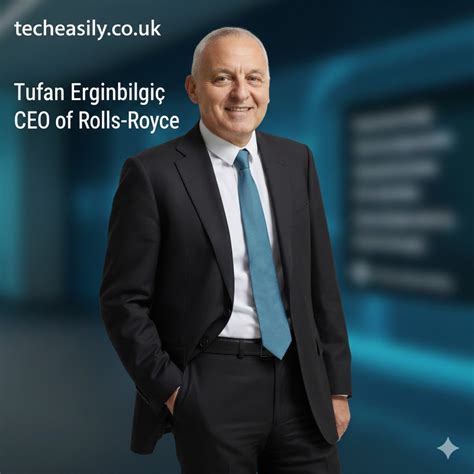
When Tufan Erginbilgic took the helm in January 2023, he did not sugarcoat the situation. He famously described Rolls-Royce as standing on a “burning platform,” a phrase meant to convey urgency rather than despair. Coming from more than two decades at BP, he brought a reputation for cutting through bureaucracy and driving measurable results.
His first moves were surgical. He streamlined management layers, clarified accountability, and imposed stricter financial discipline across divisions. Commercial terms were revisited, and performance metrics were tied more directly to cash generation. Instead of chasing growth for its own sake, Rolls-Royce focused on becoming leaner, faster, and more profitable.
The cultural shift was just as important as the financial one. Engineers and managers were encouraged to think commercially, not just technically. Decision-making became quicker, and incentives were aligned with long-term value creation rather than short-term volume.
Within months, the results began to show up in earnings reports. Analysts who once doubted the pace of recovery started revising forecasts upward, and the market took notice.
Financial and Operational Improvements
By 2024, the turnaround was no longer theoretical; it was visible in the numbers. Underlying operating profit jumped by roughly 57% to about £2.5 billion, a dramatic improvement that reflected stronger trading conditions and disciplined cost control. Revenue climbed into the £18 billion range, driven primarily by aerospace and defense.
Engine flying hours rebounded as airlines restored capacity, but the story went deeper than recovery alone. Rolls-Royce captured more value from aftermarket services, improved maintenance efficiency, and reduced operational waste. Cash generation strengthened, giving the company room to invest in next-generation technologies, including more fuel-efficient engines and low-carbon solutions.
Crucially, Rolls-Royce reinstated its dividend and launched a £1 billion share buyback program, concrete signals that management believed the worst was behind them. These moves were not just financial; they were symbolic, marking a return to confidence after years of austerity.
Share Price Surge and Investor Confidence
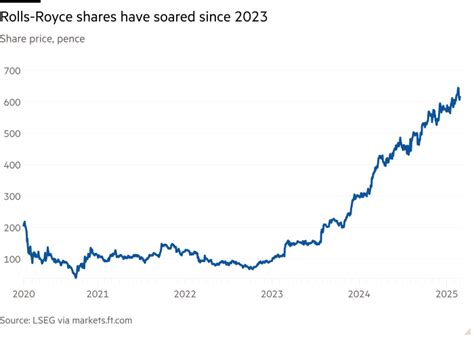
The market rewarded the comeback enthusiastically. By early 2025, Rolls-Royce shares traded around 725–740 pence, hitting record highs and significantly outperforming the FTSE 100. Over the previous year, the stock had nearly doubled, transforming it into one of London’s standout performers.
This rally reflected more than optimism about aviation’s recovery. Investors began to view Rolls-Royce as a structurally better company—simpler, more profitable, and better managed. The re-rating in valuation suggested growing belief that the turnaround was sustainable rather than temporary.
The $135 Million Bonus Debate
With success came scrutiny. Erginbilgic’s potential $135 million performance bonus, largely tied to long-term share awards, sparked immediate controversy. The payout depends on meeting stretching targets related to profitability, cash flow, and total shareholder return over several years.
Supporters argue that the scale of the reward is justified by the scale of the turnaround. They note that Erginbilgic took over a fragile company, stabilized it quickly, and created billions of pounds in shareholder value. In this view, the bonus is not a windfall but a contractual incentive aligned with long-term performance.
Critics see things differently. They point out that while executives may benefit enormously, many workers have faced cost controls, restructuring, and job uncertainty. Public sentiment in the UK has increasingly turned against outsized executive pay, especially at companies with strategic importance to the national economy.
The debate also raises deeper questions about corporate governance. Should turnaround leaders receive blockbuster rewards, or should there be tighter limits? Is stock performance alone an adequate measure of success, or should broader social impact matter more?
Beyond Aerospace: Defense, Power, and Nuclear
While aerospace drives the headlines, Rolls-Royce is far from a one-trick pony. Its Defense division supplies engines for military aircraft and naval propulsion systems, including components for submarines. This segment provides stable, long-term government contracts that help smooth out commercial aviation cycles.
The Power Systems business serves marine, energy, and industrial markets, supplying engines and power solutions for ships, data centers, and heavy equipment. Meanwhile, the company’s Nuclear unit is exploring small modular reactors, positioning Rolls-Royce as a player in the low-carbon energy transition.
Sustainability has become a central pillar of strategy. Rolls-Royce is investing in more efficient engines, alternative fuels such as sustainable aviation fuel (SAF), and technologies aimed at reducing emissions over time. The long-term ambition is net-zero operations, though achieving that across aviation remains an industry-wide challenge.
What Comes Next
The next chapter for Rolls-Royce will test whether its revival is durable or merely cyclical. Global air travel continues to grow, but economic slowdowns, geopolitical tensions, and regulatory shifts could affect demand. Competition from Pratt & Whitney and GE remains intense, especially in the narrowbody market where Rolls-Royce is seeking to re-enter more aggressively.
For Erginbilgic, the stakes are personal as well as professional. His legacy will depend not just on short-term profits but on whether Rolls-Royce can sustain innovation, reliability, and financial discipline over the next decade.
Whether or not he ultimately receives the full $135 million bonus, his impact on the company is already undeniable. He took a storied but struggling institution and pushed it back toward the forefront of global aerospace.
Conclusion
Rolls-Royce’s turnaround is a story of engineering excellence meeting financial realism. It illustrates how decisive leadership, disciplined execution, and favorable market conditions can combine to revive even the most troubled industrial giants. At the same time, the debate over executive pay reminds us that corporate success does not exist in a vacuum; it sits within a broader social and political context.
As the company moves forward, the challenge will be to balance profitability with fairness, innovation with responsibility, and shareholder returns with public trust. In that sense, Rolls-Royce’s comeback is not just a business case study—it is a mirror reflecting the values and contradictions of modern capitalism.